

Hot water mopping robot vacuum has quickly become a trending keyword because it promises deeper cleaning with less manual labor. But does this tech live up to the hype for sticky kitchen floors, and what should smart buyers really know before investing?
Key Takeaways
- True hot water mopping robots are rare—only a handful of premium models actually reach or exceed 140°F at their docks, and almost none maintain that at the floor.
- Heated water offers incremental cleaning benefits but won’t eliminate the need for manual scrubbing on dried or greasy kitchen messes.
- Noise, tank maintenance, and long-term reliability are common pain points—always check real-world tests, not just the marketing claims.
- What Is a Hot Water Mopping Robot Vacuum?
- How to Maximize Results With a Hot Water Mopping Robot Vacuum
- Advanced Analysis & Common Pitfalls
- Conclusion
- FAQ
What Is a Hot Water Mopping Robot Vacuum?
A hot water mopping robot vacuum is a robotic floor cleaner that can heat its cleaning water—sometimes up to or above 140°F (60°C)—to tackle sticky grime, dried stains, and kitchen residue more effectively than room-temperature systems. These robots typically combine suction, automated mopping, and self-cleaning docks that heat and wash the mop pad or roller.
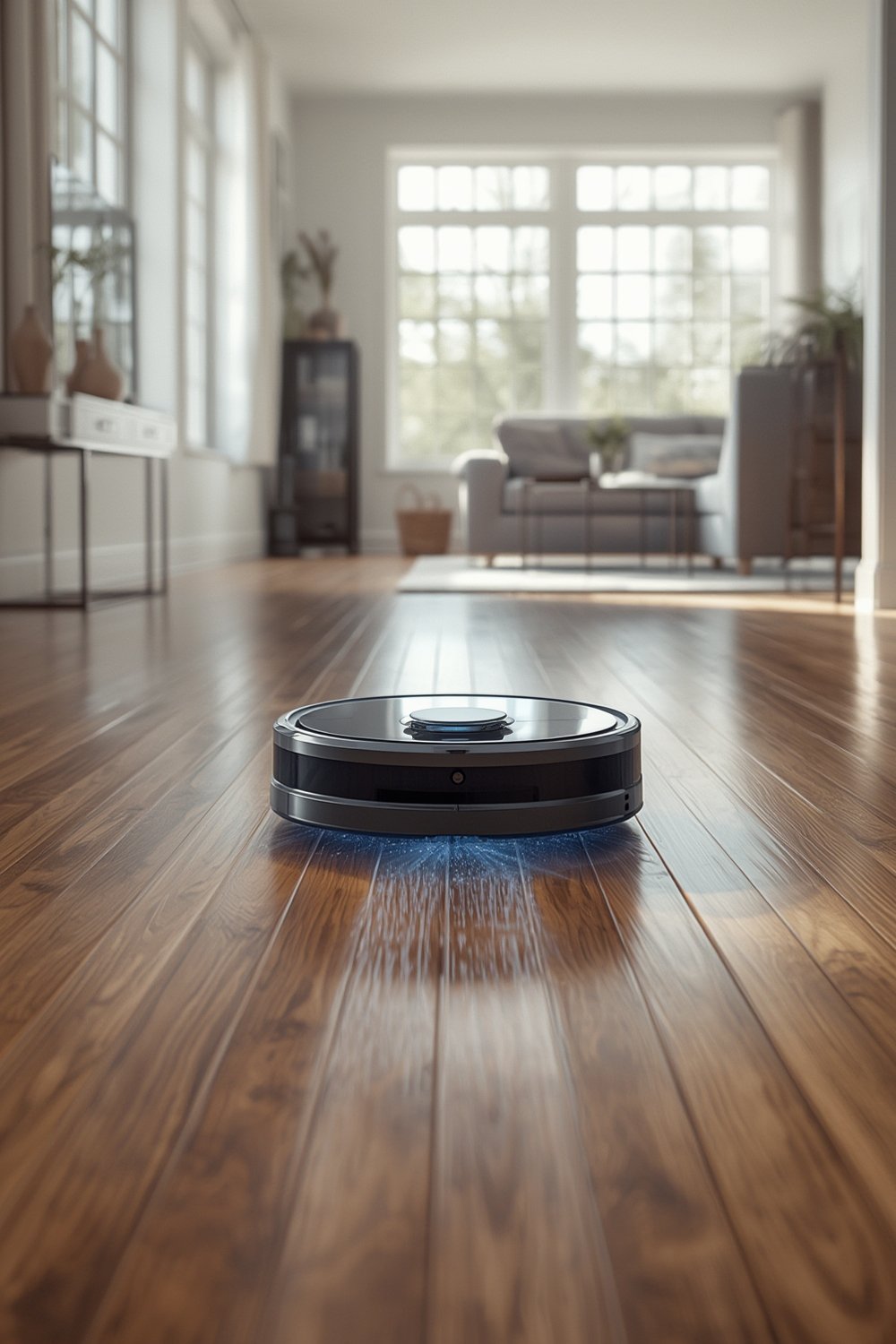
The true innovation lies in the heated water feature, but only a small percentage of 2023-2024 models go beyond gentle-warm water and reach those “hot mop” specs. Brands like Dreame, Ecovacs, Roborock, and Shark offer premium flagships with heated mop docks, yet most mainstream models still rely on unheated or just slightly warm water.
This feature is especially marketed to busy households, pet owners, and anyone tired of repeat manual cleaning. For those seeking the lowest-effort path to kid and pet friendly floors, options like roller mop robots and self-drying bases are also advancing alongside hot water designs. For even easier maintenance on area rugs, see our kid and pet friendly rug guide.
How to Maximize Results With a Hot Water Mopping Robot Vacuum
Getting the most out of your hot water mopping robot vacuum goes well beyond pressing “start.” Here is a realistic, actionable workflow to ensure consistently clean—and actually hygienic—floors.
-
Choose the Right Robot and Dock.
- Cross-check real test data—only a fraction of mopping robots actually reach 140°F at the dock, and most cool off before reaching your floor. Compare models directly, like in this ultimate robot vacuum and mop comparison.
- Prioritize designs with self-drying bases and advanced mop agitation, not just high temperature claims.
-
Use the Correct Water and (When Allowed) Detergent.
- Avoid using hard tap water for heated models. Scale is a key long-term reliability risk.
- Only use the specific cleaners approved for your dock—excess foam or residues can damage pumps or heaters.
-
Pre-Clear Obstacles and Focus on Hot Spot Cleaning.
- Move chairs, toys, and cables before a mopping run for better edge coverage. Most robots can’t hug toe-kicks or deep corners well.
- If your vacuum supports it, set a targeted kitchen or “zone” clean for sticky messes post-cooking.
-
Maintain Regular Pad/Dock Cleaning.
- Empty dirty water tanks promptly. Do not leave mop pads wet and idle—this encourages odor and bacteria, even with hot wash cycles. For kitchen areas, clean docks at least weekly.
-
Monitor for Warning Signs.
- Listen for abnormal heating, leaks, excessive noise, or drying fans that run unusually long. These can signal scaling, blockage, or wear that need attention.
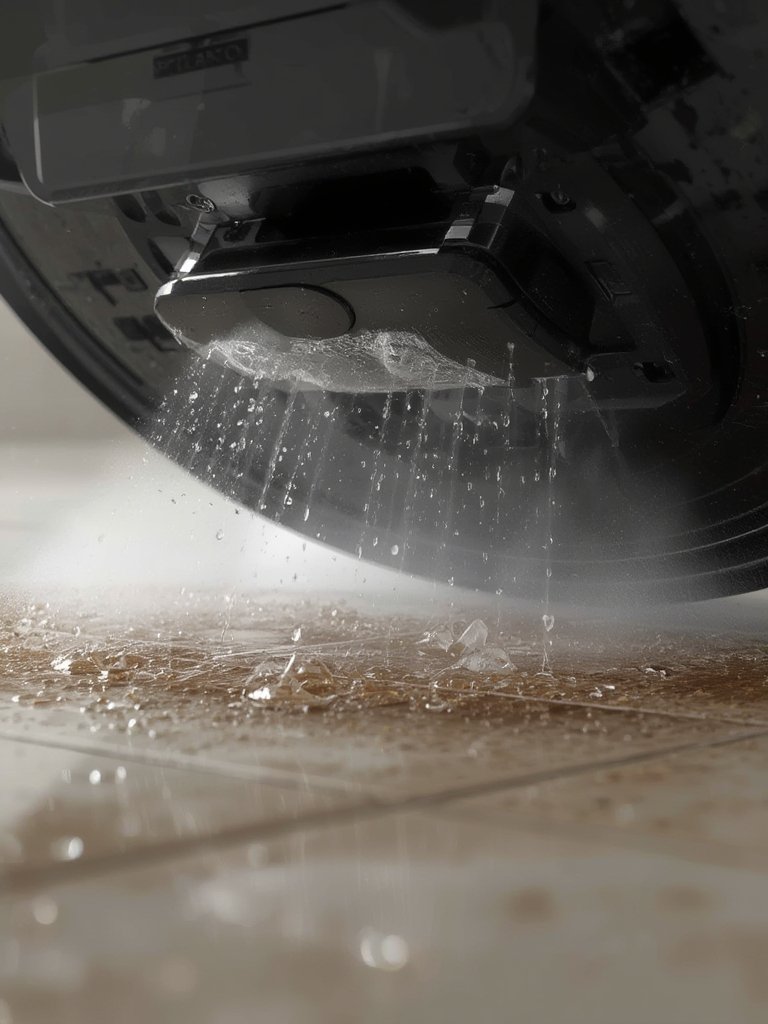
Consider pairing your robot with other smart cleaning upgrades—such as a reliable non-slip rug pad or fridge handle protector—to tackle the wider sources of kitchen and home grime. For deep cleaning routines on dense traffic pathways, a robot vacuum with roller mop offers even more agitation than basic pad models.
Advanced Analysis & Common Pitfalls
While the concept of hot water mopping robot vacuums sounds like a silver bullet for kitchen floors, real-world testing highlights several nuanced problems and limitations. Knowing these in advance can help you set the right expectations—and spot a worthwhile deal.
What Most Review Sites Miss
- Dock vs Floor Temperature: Nearly all published “140°F+” claims refer to wash dock temperature. By the time hot water reaches the floor, pad/roller temps drop dramatically—sometimes by 30°F or more. This makes a direct chemical cleaning advantage less pronounced than you might think. See Vacuum Wars’ dock temperature testing for measured details.
- Not a Complete Replacement for Manual Scrubbing: Even the most advanced heated robots leave behind residue on heavy grease, dried sauces, and at edges and corners. For these jobs, targeted spot cleaning and occasional manual follow-up are still needed. Smart Home Hookup tests confirm this repeatedly.
- Complex Maintenance and Usability Issues: Heated mopping robots boost cleaning convenience on one hand, but create more complex maintenance (tank changes, descaling needs, filter swaps, noise from drying fans) on the other.
- Reliability Concerns: Water pumps, heaters, sensors, and dries are all points of failure, particularly for busy kitchens or homes with hard water. Long-term part replacement costs are not yet well-documented.
| Issue | Heated Mop Robots | Traditional Pad Robots |
|---|---|---|
| Sticky/Stubborn Stain Cleaning | Better, but often still leaves residue, especially at edges and corners | Often similar, best models match heated performance with multi-pass routines |
| Dock Water Temp | Up to 212°F—rarely maintained at the floor | Room temp, no heating at all |
| Noise & Cycle Time | Longer cycles, noisy fans when drying | Quieter and quicker overall |
| Reliability Factors | Risk of scaling, more moving parts (heaters, pumps) | Simpler, fewer parts to fail |
| Pet/Kid Safety | Usually safe; most heat is dock-contained. Risk if dock leaks or is tampered with. | No heat or hot water; inherently safer for kids/pets |
| Annual Maintenance | Mop pad swaps, tank descaling, sensor checks, possible heater repairs | Mop pad swaps only, rarely any scaling or heater work |
| Price | $700-$1,500+ for advanced models | $300–$700 for basic-mop or unheated units |
Looking for more ideas to make home cleaning as frictionless as possible? Our recent guide on energy efficiency upgrades helps you target cost-cutting alongside cleaning convenience.
Flagship Models and Key Specifications
If you want the rare robots with true heated cleaning claims, look for models like Dreame Aqua 10 Ultra Roller, Ecovacs Deebot X11, or (for next-gen) the Narwal Flow 2 Ultra. Most real-world results, however, depend more on excellent roller agitation and drying cycles than just hitting a high dock temperature. See latest measured specs here.
Safety and Hidden Pain Points
- Burn risk is low but possible—especially if children or pets fiddle with the dock station right after a hot wash cycle.
- Water leaks are more serious for heated robots. Always place docks away from wall outlets and on a water-resistant surface.
- Some pets are attracted to water tanks! Close and secure all dock lids after maintenance.
- Hot air drying is noisy. Expect up to 30 minutes or more per mop run—be mindful in small apartments.
Innovation Corner: What’s Next?
2026 models like the Narwal Flow 2 Ultra are promising even better real-world 140°F+ floor contact (not just dock temps). If threshold crossings or multi-surface cleaning are critical for your home, explore robot vacuum for uneven floors and thresholds as a companion upgrade.
Conclusion
A hot water mopping robot vacuum delivers real value for day-to-day stickiness and damp messes, especially with self-drying, good agitation, and advanced mapping. That said, only a small number of 2024 models offer true “hot mop” performance, and none fully eliminate the need for periodic hands-on deep cleaning—especially in kitchens with grease, pets, or kids.
Ready to experience smarter, cleaner floors? Do your homework, choose for real-world features, and see if the hot water mopping robot vacuum is right for your home’s toughest mess zones.
FAQ
Is hot water mopping better than cold water mopping?
Hot water helps loosen greasy and sticky residues more effectively, but the improvement is moderate—not a total game changer. Overall mopping performance still depends heavily on pad pressure, agitation, number of passes, and detergent use.
Are hot water mopping robot vacuums safe for pets and kids?
Most designs keep the hottest water inside the dock, so the risk of burns is low. However, take care to keep pets and children from playing with the base station while in operation or right after a cleaning cycle.
How often do I need to clean or descale a heated mopping dock?
For homes with hard water, descale every 1–2 months. Softened or distilled water reduces this need. Mop pads and dirty tanks should be cleaned or replaced weekly for best hygiene.
Can I use any detergent with my heated mopping robot?
No. Only use cleaning solutions specifically approved by your robot’s manufacturer. Wrong detergents can create excess foam or damage internal pump and heater parts, especially at high temperatures.
Do heated mop robots work well on all floor types?
They are best for sealed hard floors (tile, vinyl, finished wood). On natural stone or unsealed surfaces, check manufacturer guidance—excess water or heat may cause damage.