


Robot vacuum finds lost items is a rapidly evolving concept that has captured the curiosity of both tech enthusiasts and busy homeowners. While AI object recognition in robot vacuums has made major strides in 2024, the ability to truly detect and alert you about lost items remains a challenging, mostly unsolved frontier.
Key Takeaways
- Most AI robot vacuum models in 2024 focus on obstacle avoidance, not explicit lost item detection or notification.
- Leading brands like Roborock and Samsung offer object recognition and small object handling, but lack user-accessible lost item alerts, image logs, or notifications.
- Major consumer pain points and security concerns around photo logs or privacy in lost item detection remain unaddressed across the industry.
The Core Concept: What Does It Mean When a Robot Vacuum Finds Lost Items?
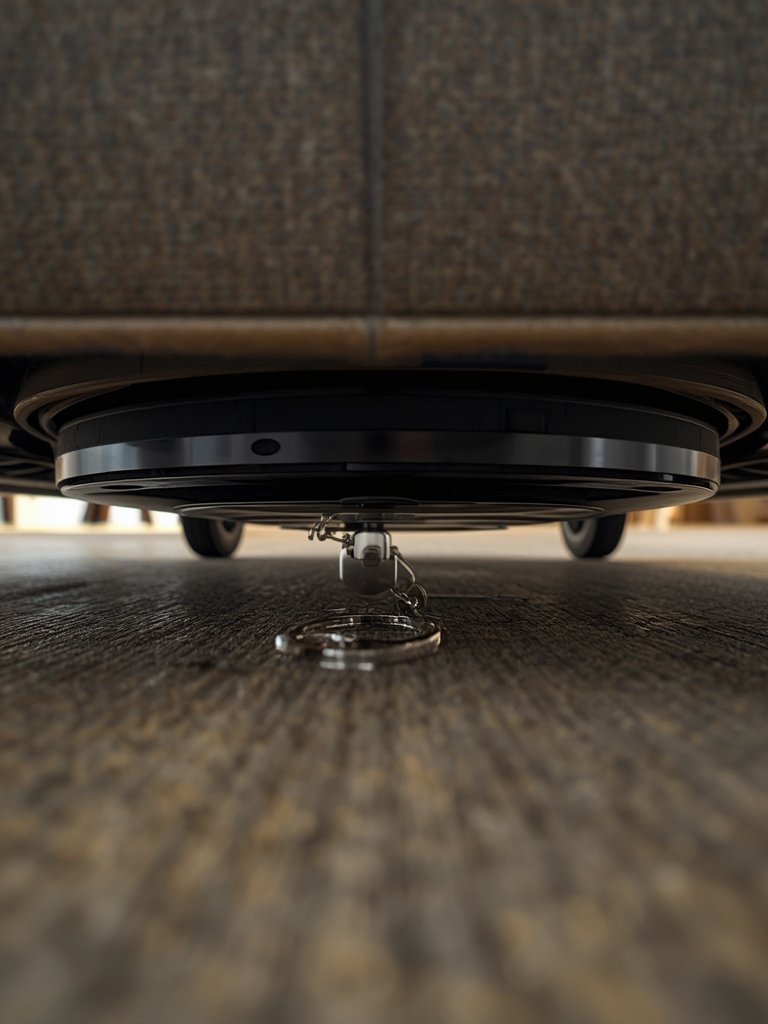
Today’s robot vacuums use sophisticated AI object recognition sensors to identify obstacles and avoid them. But the idea of a “robot vacuum finds lost items” goes beyond simply steering clear of socks or charging cords. Ideally, such a feature would allow the robot to scan for small, misplaced valuables—like jewelry, earphones, or phones—then alert you to their presence, or at minimum, log the location or provide a photo.

The problem? No mainstream robot vacuum on the market in 2024 fully delivers this. Brands like Roborock and Samsung’s Jet Bot AI+ have made object recognition a headline feature, with the ability to detect over 200 object types and avoid even tiny toys. Still, these capabilities stop short of actively finding and telling you about lost items.
For families or pet owners, the potential is huge: fewer lost earrings, saved kids’ toys, or avoiding phone mishaps. But privacy, technical hurdles, and a lack of user-accessible logs have stalled direct solutions.
Want to see how robot vacuums are evolving on other fronts? Explore features designed for deep-cleaning floors or mastering tricky thresholds in modern homes.
Step-by-Step Guide: Maximizing Your Robot Vacuum’s Lost Item Potential
If you’re hoping for more than just obstacle avoidance, here’s a realistic step-by-step playbook to squeeze the most lost-item utility out of your current AI robot vacuum:
- Check and Update Your Robot’s App: Newer models like Roborock and Samsung frequently release AI obstacle recognition updates. Open your app and ensure object profiles are current.
- Evaluate and Set Cleaning Zones: Use your map editor to create specific “trouble zones” where items commonly get lost. Label and separate these in your app for targeted cleaning sessions.
- Use Camera or AI Recognition Logs: While no brands currently offer explicit photo logs of found objects, monitor avoidance events in your robot’s app history. Clusters of avoidance and repeated back-up movements may signal a lost item.
- Manual Spot Checks: After your robot completes a run—especially in toy rooms, bedrooms, or beneath furniture—inspect locations where the vacuum paused, hesitated, or took a detour. It may be reacting to a small object.
- Leverage Accessories: Some advanced models have attachments or arms (such as Roborock Z70’s OmniGrip) to help clear or move lightweight obstacles without sucking them up. Use features like “rescue mode” if available.
Looking for a robot vacuum that can handle complicated cleaning tasks or pet hair with ease? Learn more at our guides on the best robot vacuum mop combos for the latest in automation, or discover no tangle pet hair solutions if fur is trapping your device.
Advanced Analysis & Common Pitfalls
Based on the most recent research (Business Research Insights, Future Market Insights), here are core barriers and reality checks for anyone hoping their robot vacuum will reliably find and alert them to lost items:
Common Pitfalls
- No True lost item detection: AI object recognition in 2024 excels at avoiding small obstacles, but does not offer lost item notifications or searchable logs. Expect avoidance—not active alerting or remembering.
- Limited Item Differentiation: Robots are trained to recognize shapes (toys, cables, shoes), not specific valuables like jewelry or phones. High-value small items are still often missed.
- No User-Accessible Image Logs: Not a single mainstream brand currently offers a feature where you can see photos, logs, or AI “memories” of detected objects for easy backtracking.
- Unresolved privacy concerns: Persistent concerns linger about image capture and cloud storage—but no major company publishes details about how object images, if they exist, are secured or accessible.
- App Confusion: Avoidance events displayed in the map app rarely indicate why your robot detoured—making it hard to know if it was a random sock or something valuable that was avoided.
Comparison Table: Robot Vacuum Object Detection vs. True Lost Item Recovery
| Feature | Standard Obstacle Avoidance (2024) | True Lost Item Detection |
|---|---|---|
| Detects small objects (2cm+) | Yes | Occasionally (if large enough) |
| User receives lost item alert | No | No (not in mainstream products) |
| Photo log or object gallery | No | No |
| Item identification (jewelry, phone) | No (toys, shoes only) | No |
| Privacy features/image security | No clear info | No clear info |
| Manual review possible via app | Indirectly (route history only) | No |
This gap is why guides for improving appliance hygiene with fridge door handle covers or maximizing cleaning efficiency with roller mop robot vacuums remain much more actionable for most households.

Conclusion
In summary, while the dream that a robot vacuum finds lost items is inching closer with cutting-edge object recognition, no mainstream vacuum in 2024 offers true lost item detection, notification, or user-accessible logs. Most current models avoid obstacles and identify common household clutter, but are not a reliable solution for tracking down valuables like jewelry or phones. If lost item recovery ranks high on your wishlist, manage expectations—or keep watching as new AI breakthroughs emerge.
Ready to futureproof your cleaning routine? Explore our latest guides for spotless edge cleaning solutions and other next-gen robot vacuum features to suit your needs today.
FAQ Section
Do any robot vacuums actually find and alert you about lost items?
No leading robot vacuum offers real-time lost item detection or notification as of 2024. Most focus on avoiding obstacles, not notifying owners or storing logs of found items.
How accurate is AI object recognition in identifying small valuables?
AI object recognition can reliably avoid larger items like toys or socks (as small as 2 cm on some models), but it struggles with identifying jewelry or distinguishing specific high-value objects.
Are there any privacy concerns if robot vacuums capture images?
Yes. If a future robot vacuum offers lost item detection via photo logs, privacy and security of stored images will be a significant concern. Currently, major brands do not disclose details of image storage or user access.
What should I do if I want to maximize lost item recovery using a robot vacuum?
Use your app to identify avoidance patterns, set cleaning zones in high-risk lost-item areas, and check where the vacuum hesitates or reroutes. Always supplement with manual checks, as no model actively recovers lost items.
Will this feature become more common in the next few years?
It’s likely as AI and home automation improve, but for now, focus on robots with advanced object recognition for fewer accidents—not guaranteed lost item alerts.