

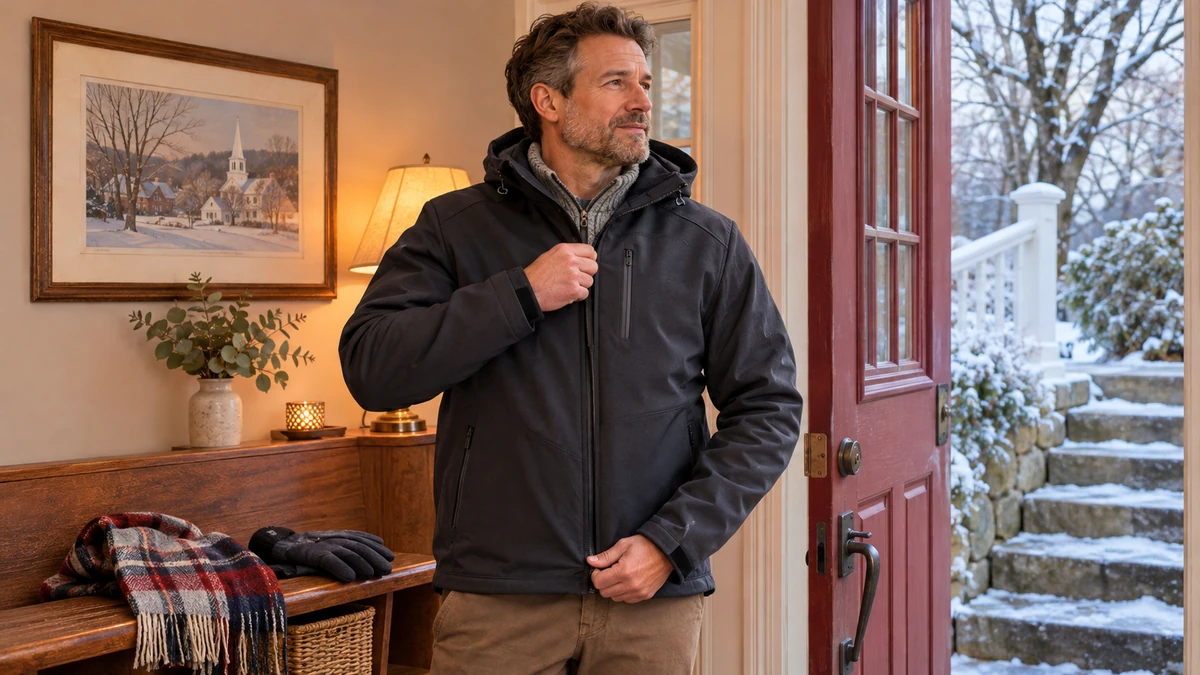
Disclosure: As an Amazon Associate, I earn from qualifying purchases. – Maya Bennett
Try a heated jacket over the clothes you already wear in winter. Check where it heats, whether the battery sits comfortably and what you need to recharge it.
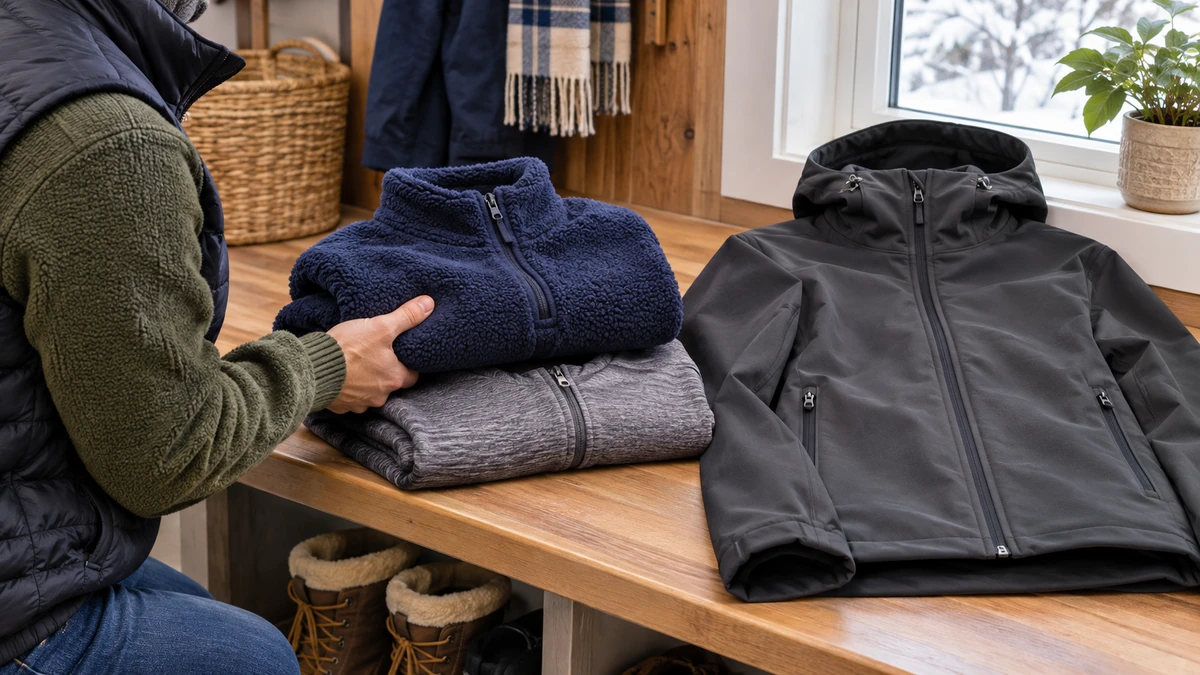
Fit the jacket around your winter layers
A jacket that fits over a T-shirt may pull across the shoulders once you add a fleece. Zip it over the layers you expect to wear, reach forward and sit down with the battery in its pocket. See whether the hem rides up or the pack presses into your side.Kansas State University Extension on layering
Think about the longest stretch you spend outside between warm stops. If you stand at a bus stop with your hands in your pockets, pocket or collar heat could be the reason to carry a battery. For a dry outing where your arms feel cold first, look for a diagram that marks the sleeves.
By the numbers
Estimated monthly US searches for best heated jacket
SourceEstimated monthly US searches for best heated jackets
SourceEstimated monthly US searches for best heated jacket for men
SourceSemrush US keyword difficulty estimate for best heated jacket
SourceLoose-fitting layers OSHA advises for workers in unavoidable cold
SourceSemrush US estimates checked November 13, 2026. The related search phrases overlap.
Read the heat setting beside the runtime
If the listing gives one maximum runtime, look for the setting and battery used to reach it. Compare figures at the same setting where possible. The useful number is the one that matches how you expect to wear the jacket.
Check the contents for the size and color you select. A battery, a cable and a wall adapter are separate items. Look up what the manual requires and what the box includes before you order.
| Heat layout | Useful for | Fit check | What to confirm |
|---|---|---|---|
| Collar, pockets and back | Waiting outside or short errands | Collar comfort when fully zipped | Look for each zone on the maker’s diagramSource |
| Torso and arms | Dry outings when your arms get cold | Elbow bend over your usual midlayer | Confirm a panel in each arm Source |
| Torso only | Everyday wear with front and back heat | Battery comfort when seated | Check the exact kit’s power and care instructionsSource |
Check where the jacket actually heats
Front and back panels make sense for torso heat. A collar or pocket panel puts warmth in places you may feel while standing still. If sleeves matter, verify that the exact model lists arm panels. A total zone count won’t tell you where the panels sit.
Pick an outer layer for the forecast and plan for the time the battery is off. The National Weather Service advises layers and dry clothing in extreme cold. For work, follow the protective equipment requirements for the task.National Weather Service cold-weather guidance
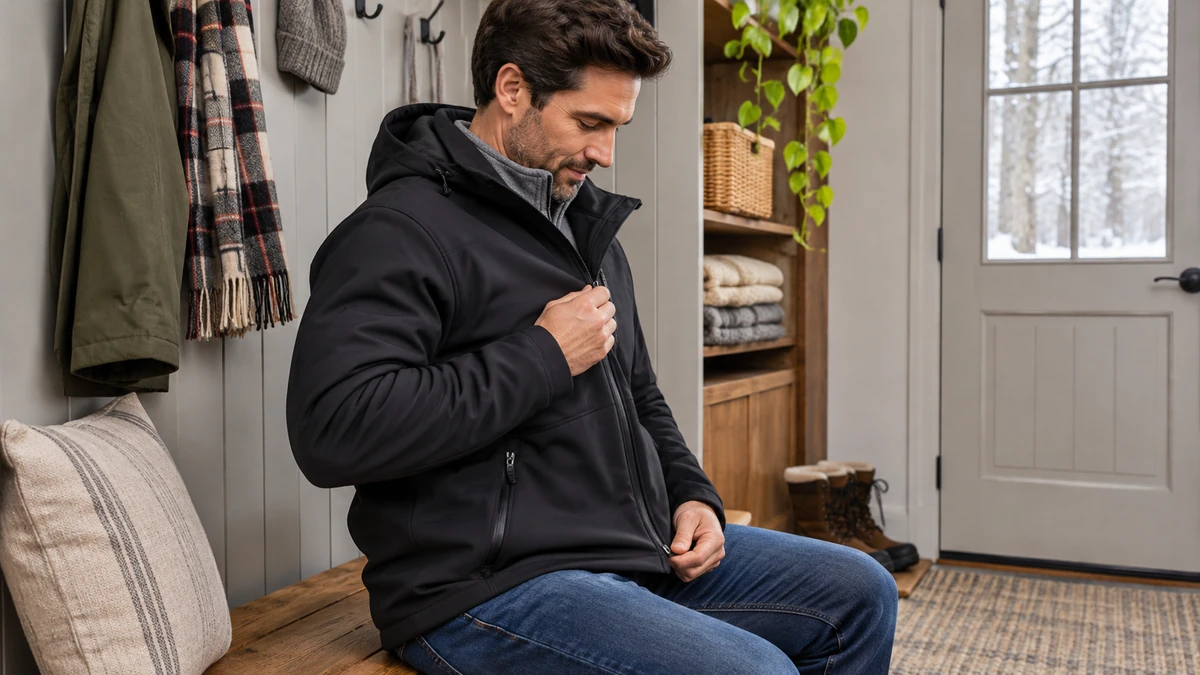
“We often recommend that people layer for the cold weather, rainy weather and wet season”
Kelsie Doty, Assistant professor of fashion studies, Kansas State University –Source
Check the care label and the kit
Find the garment’s instructions before buying. Check when to disconnect the battery, how to wash the shell and whether the manual limits use in wet conditions. Search the exact model in the CPSC recall database.CPSC recall search
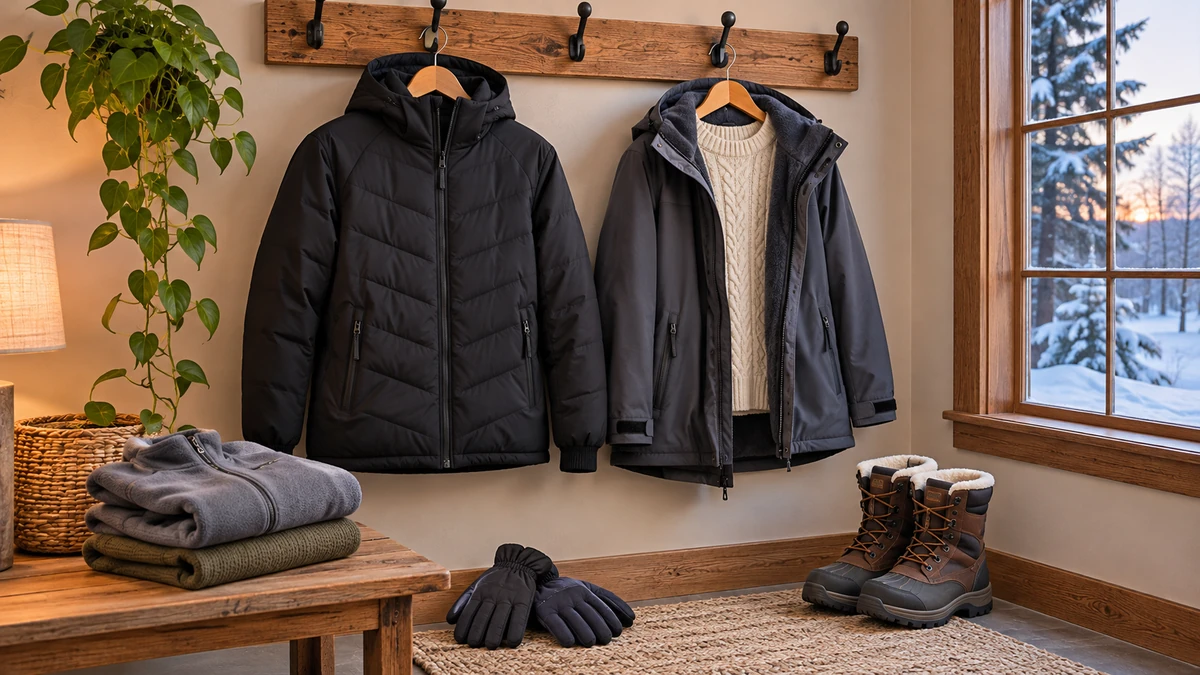
A quick buying checklist
Compare three battery-included jackets by heat placement, fit checks and what you get for the checked price.
Frequently Asked Questions
Should a heated jacket fit tight or loose?
Start with the exact size chart. Leave room for your usual layers and enough reach to move comfortably while zipped. Sit down with the battery in its pocket.
Does a heated jacket come with a battery?
It depends on the kit. Check the selected size and color for the listed battery, cable and compatible charging hardware.
Do more heat zones make a jacket warmer?
The count tells you how many panels the maker lists. Their placement, the shell, your layers and the heat setting all affect what you feel.
Can a heated jacket go in the washing machine?
Follow the exact garment’s instructions. Turn it off and disconnect and remove the battery before cleaning. Check the specified cycle and drying method.
Reporting by Maya Bennett for ReviewGuid. Sources include Kansas State University Extension, OSHA, the National Weather Service and dated US search estimates.
As an Amazon Associate, I earn from qualifying purchases.