

Affiliate disclosure: As an Amazon Associate, ReviewGuid earns from qualifying purchases. This does not change our product picks or editorial conclusions.
What HEPA Actually Does for a Home
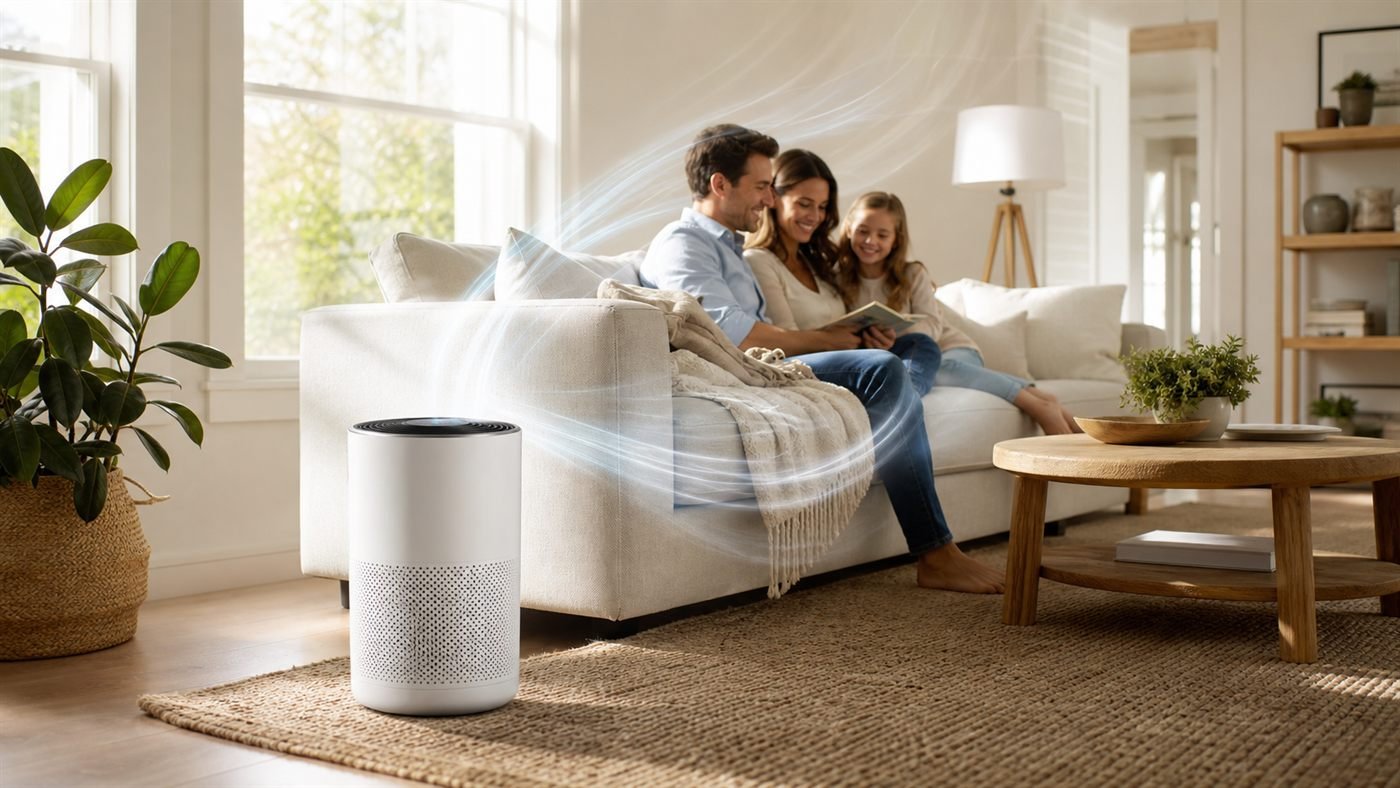
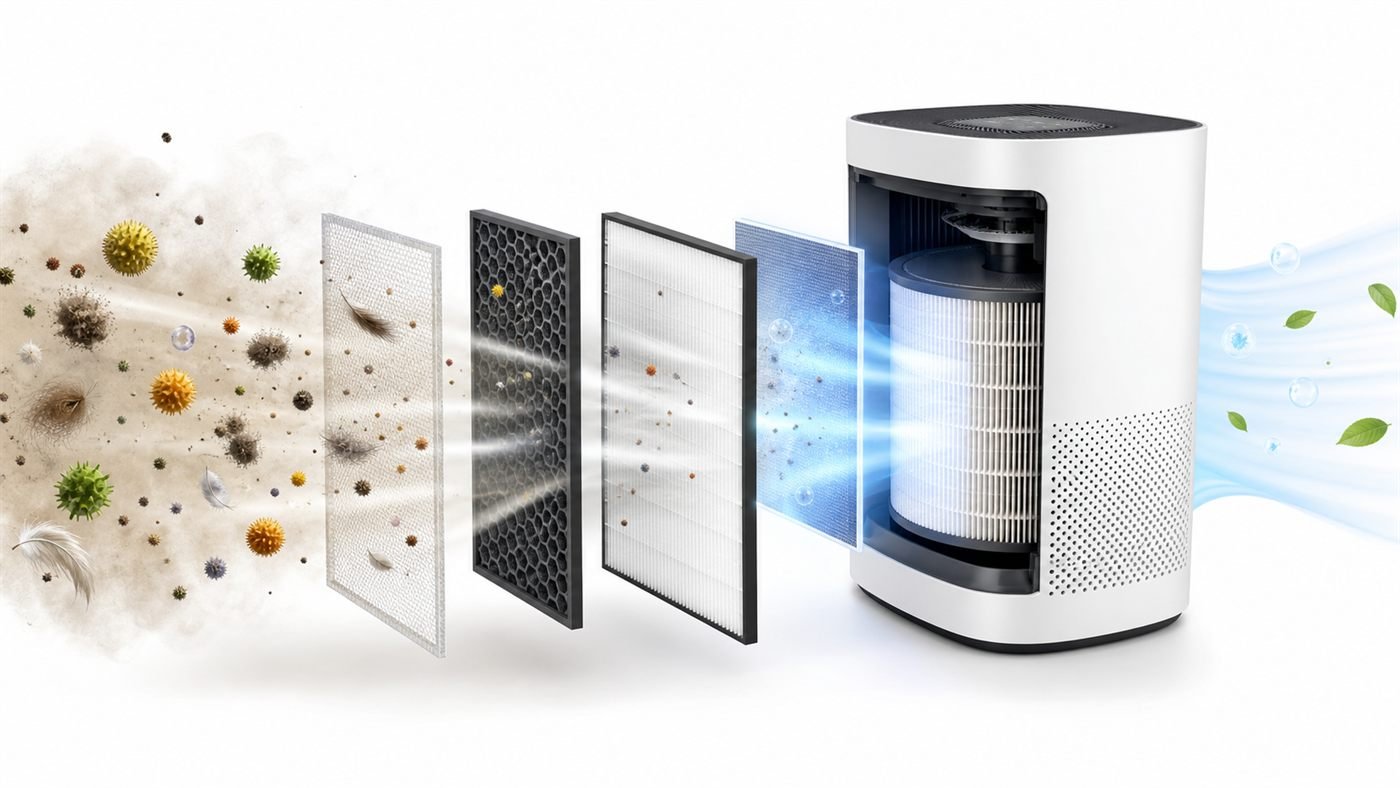
A good purifier does not make a room sterile. It continuously pulls room air through layered filters so fewer airborne particles keep circulating around beds, sofas, desks, and pet areas.
That is why room size matters: a small purifier can be excellent in a bedroom and disappointing in an open living room. Match the machine to the space first, then compare features.
| Pick | Best For | Why It Wins | Watch-Out |
|---|---|---|---|
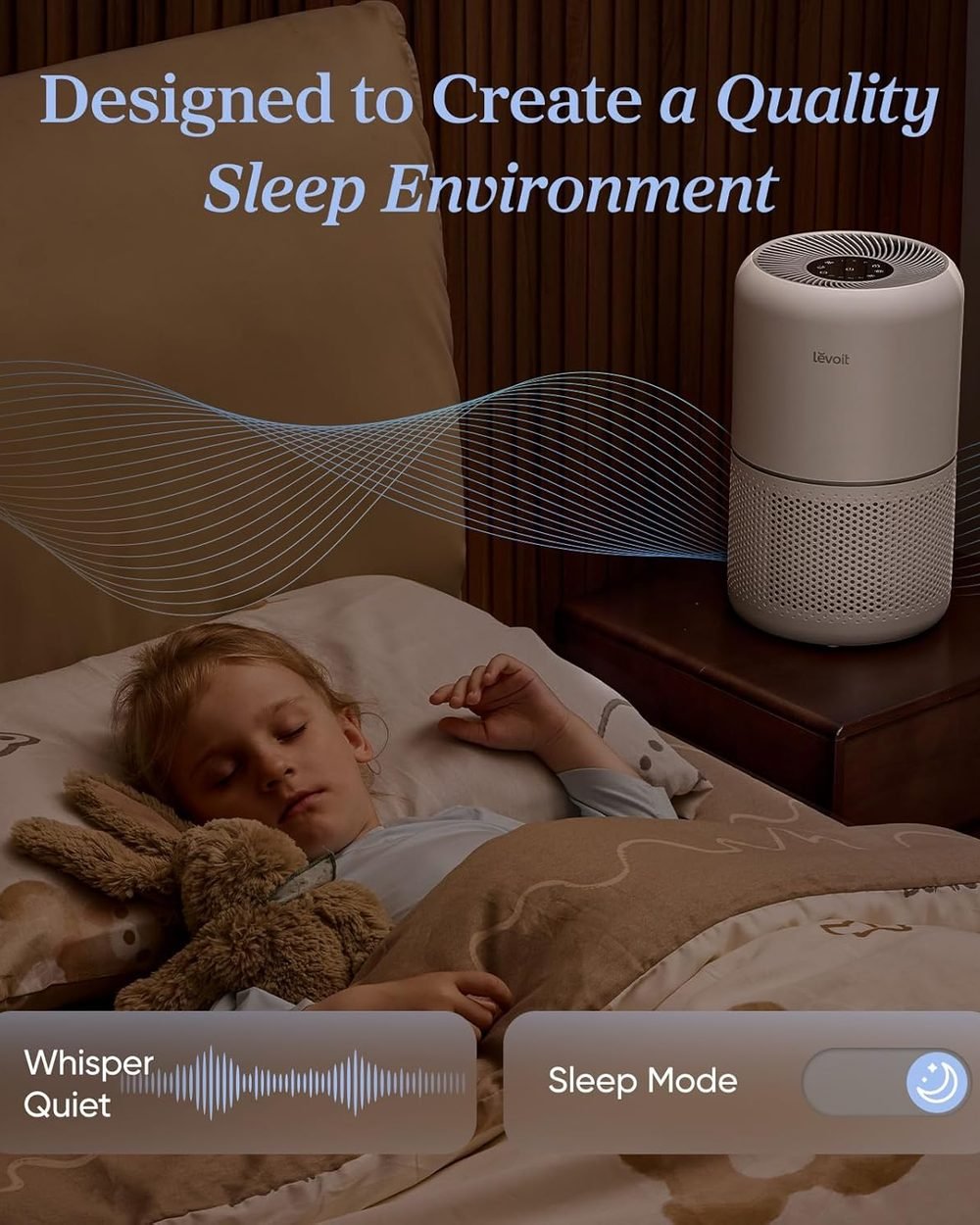
| LEVOIT Core 300 | Bedrooms and home offices | Quiet, compact, true HEPA value | Not ideal for large rooms |
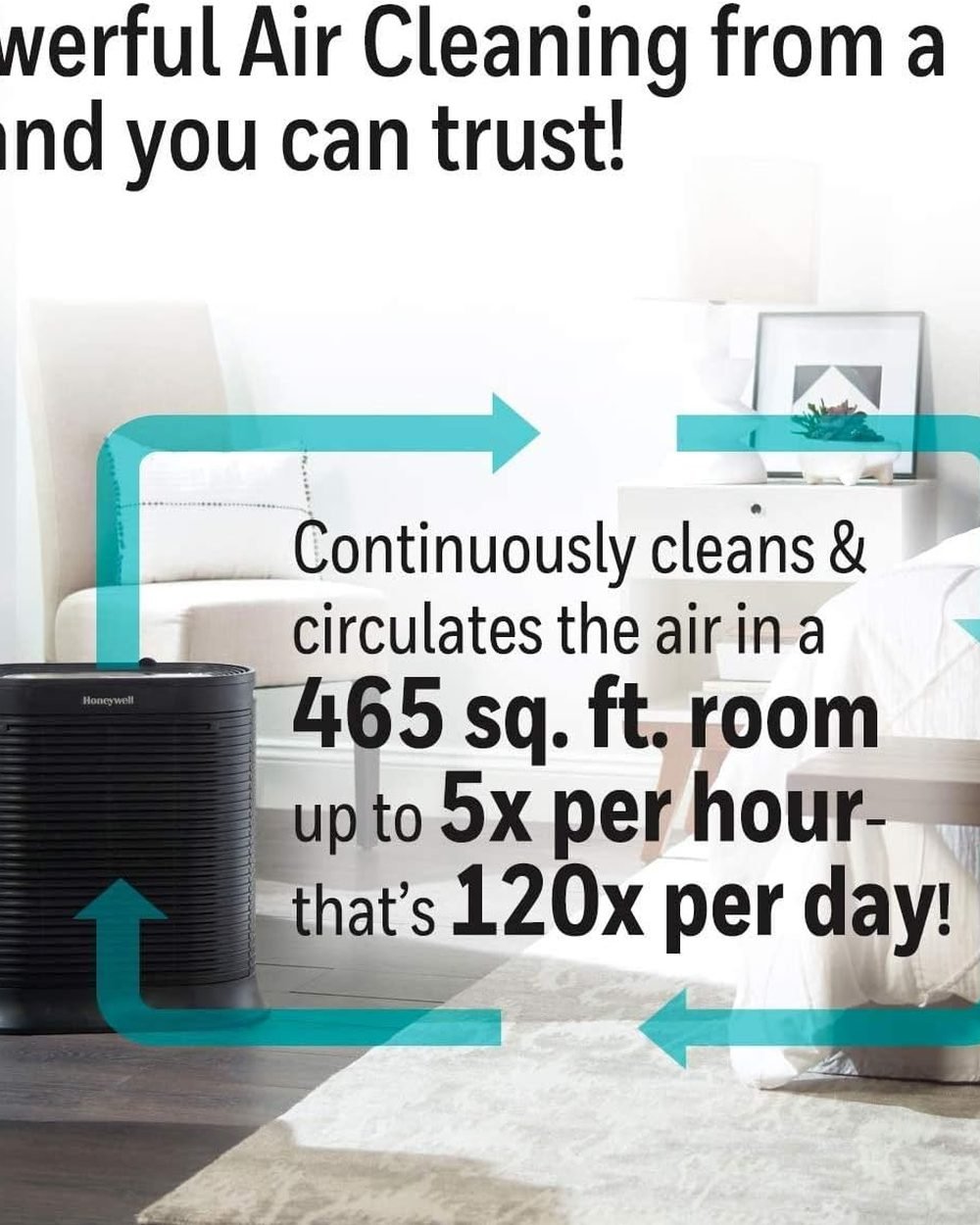
| Honeywell HPA300 | Large living rooms | Stronger airflow and coverage | Bulkier and louder on high |
| COWAY 2-in-1 | Apartments and warm rooms | Purifier plus fan convenience | Higher price for mixed use |
Home air purifiers are seeing record sales in U.S. homes in 2026, driven by wildfire smoke seasons, awareness of indoor air quality (IAQ), and the post-pandemic shift to permanent home offices. The category has matured beyond marketing claims to deliver real true-HEPA filtration at price points that didn’t exist 5 years ago. If you want the truth about which air purifier actually works for your space, this guide cuts through the marketing with honest comparisons.
Key Takeaways
- HEPA air purifier sales in U.S. homes are up 40% YoY in 2026, driven by wildfire seasons, allergies, and permanent remote work.
- LEVOIT Core 300 dominates the under-$100 segment; Honeywell HPA300 wins for large rooms (300-500 sq ft); COWAY 2-in-1 leads dual-function purifier+fan.
- True HEPA (99.97% at 0.3?m) is the minimum standard – avoid "HEPA-like" or "HEPA-style" marketing terms which are unregulated.
- Match the purifier to room square footage: 200 sq ft purifier in 500 sq ft room won’t deliver real air cleaning at any speed.
- What’s Driving the 2026 Air Purifier Boom?
- How to Choose the Right Air Purifier
- Real-World Issues, Pitfalls, and Honest Comparisons
- Conclusion
- Frequently Asked Questions
What’s Driving the 2026 Air Purifier Boom?
Three structural forces have made air purifiers a default purchase for U.S. households in 2026. First, wildfire smoke seasons are now multi-month events across the western half of the country, with PM2.5 particulate matter spikes that overwhelm normal home HVAC filtration. Second, the permanent shift to remote work means Americans spend more hours indoors than at any time in modern history – indoor air quality directly affects daily productivity. Third, allergy awareness has grown dramatically, with more households tracking pollen, dust mite, and pet dander concentrations.
What this growth displaces is more telling than what it adds. Pre-2020 home air quality was dominated by either basic HVAC filters (passive, infrequent replacement) or expensive whole-home systems ($1000+). The 2026 market has matured into a robust $80-300 standalone segment with true HEPA filtration that delivers professional indoor air quality results without whole-home installations.
The leading brands – LEVOIT, Honeywell, COWAY, Blueair – have segmented their offerings clearly. According to RTINGS, the under-$100 entry tier consistently goes to LEVOIT; the large-room workhorse segment to Honeywell HPA models; and the smart/2-in-1 segment to COWAY and similar dual-function devices.
How to Choose the Right Air Purifier
Step 1: Measure your room. Air purifier room coverage is rated in square feet at a specific Air Change per Hour (ACH) rate – usually 5 ACH (5 air changes per hour, the standard for allergy sufferers). A 200 sq ft purifier in a 400 sq ft room will only deliver 2.5 ACH, which is too slow for effective allergen reduction.
Step 2: Pick true HEPA, not “HEPA-like”. True HEPA is a regulated term meaning 99.97% capture of particles 0.3 microns or larger. Marketing terms like “HEPA-like”, “HEPA-style”, or “HEPA-type” are unregulated and often capture only 85-90% of particles. The LEVOIT Core 300, Honeywell HPA300, and COWAY 2-in-1 all meet true HEPA standards.
Step 3: Decide if you need extras (cooling fan, smart sensors). Dual-function purifiers like the COWAY 2-in-1 add a cooling fan that replaces a separate desk fan – useful in space-limited apartments. Smart air quality LED indicators help you visually track when air quality drops.
Step 4: Plan for filter replacement costs. HEPA filters last 6-12 months and cost $20-50 each. Plan on $40-80 annual cost per device. Pre-filters (activated carbon for odors) typically last 3-6 months and cost $10-20.
Step 5: Run it 24/7. Air purifiers work best in continuous operation. Turning it off for hours lets airborne particulates re-accumulate, undoing your filtration progress.
Step 6: Combine with source reduction. Air purifiers handle particles in air, but won’t fix the source. Vacuum regularly with a HEPA vacuum, change HVAC filters, and address moisture sources for mold prevention.
Real-World Issues, Pitfalls, and Honest Comparisons
The room size mismatch. The single most common buyer mistake in 2026 is buying a 200 sq ft purifier for a 400-500 sq ft room. The unit will run constantly without delivering real ACH-based air cleaning. If your living room is large, get the Honeywell HPA300 – or buy 2-3 LEVOIT Core 300s placed strategically.
The “HEPA-like” marketing trap. True HEPA is regulated. Marketing terms with prefixes (HEPA-like, HEPA-style, HEPA-type) are unregulated and typically capture only 85-90% of particles. For real allergen protection, only true HEPA matters.
| Feature | LEVOIT Core 300 | Honeywell HPA300 | COWAY 2-in-1 |
|---|---|---|---|
| Best for | Bedrooms under $100 | Large rooms (300-500 sq ft) | Apartments + cooling fan |
| True HEPA | ? 99.97% | ? 99.97% | ? 99.97% |
| Coverage | 219 sq ft | 465 sq ft | 250 sq ft |
| Starter price | ~$100 ? | ~$250 | ~$280 |
| Annual filter cost | ~$40-60 | ~$60-80 | ~$60-80 |
| Amazon rating | 4.5/5 (37k reviews) | 4.6/5 (3.7k) | 4.6/5 (815) |
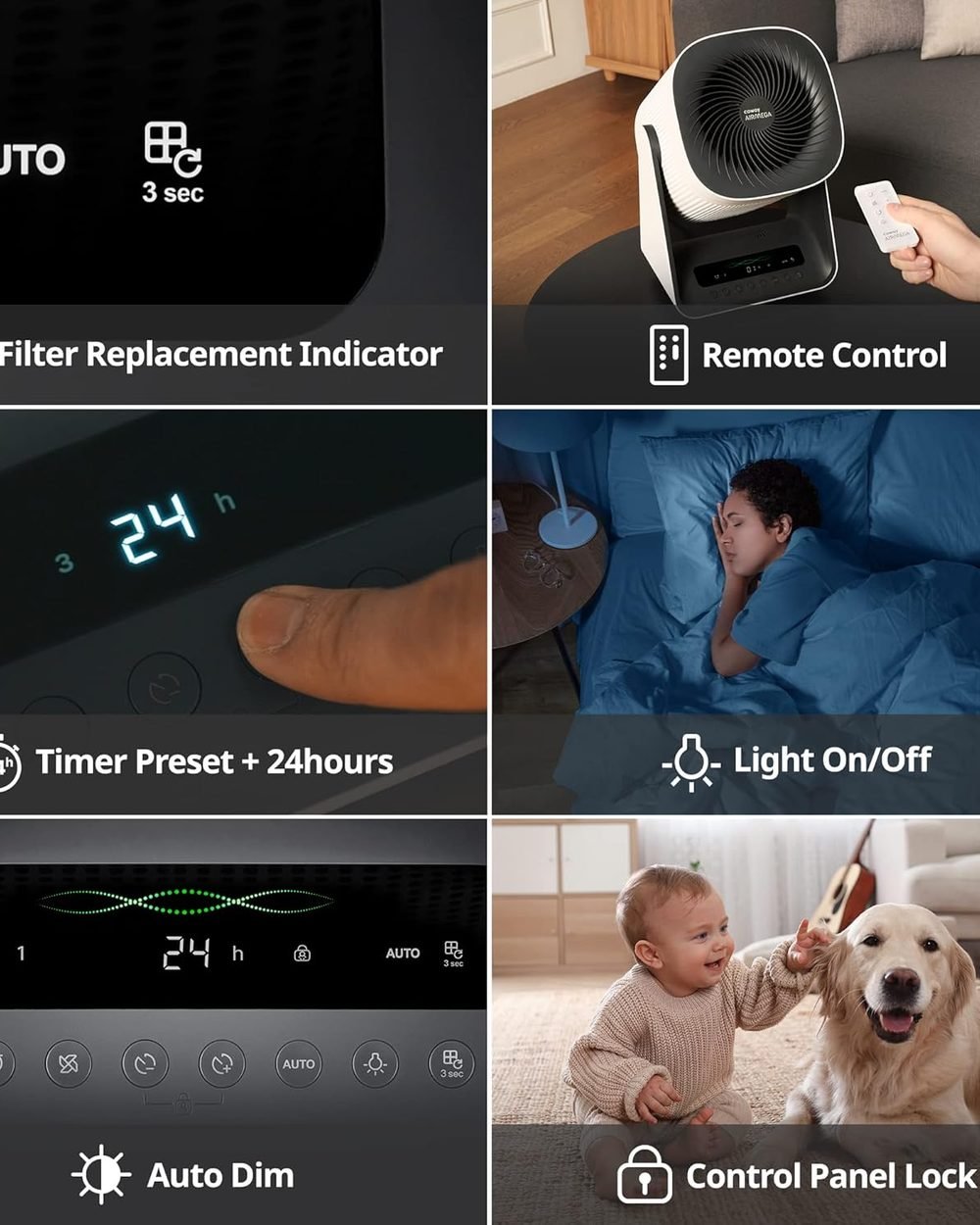
Filter replacement reality. Buyers often skip filter replacement to save money, then complain the unit “stopped working.” HEPA filters clog over 6-12 months and lose effectiveness. Set a calendar reminder when you buy the unit – this is a recurring $40-80/year cost regardless of brand.
The “ozone-generating” warning. Some cheap purifiers (under $50) use ionizers that generate ozone, which is itself a respiratory irritant. All three purifiers in this guide are ozone-free pure HEPA designs. Stick to verified HEPA models.
LEVOIT vs Honeywell vs COWAY, decided once. Under $100 and small room? LEVOIT Core 300 wins by a wide margin. Large room (300-500 sq ft)? Honeywell HPA300 is the only one that handles it. Want HEPA + cooling fan in one device for apartment? COWAY 2-in-1 is the unique pick.
Want our pick for air purifiers?
Read our full LEVOIT Core 300 Review for the under-$100 breakdown, or jump to our complete Best Air Purifier 2026 comparison covering all three category leaders.
Conclusion
The 2026 air purifier market is the most accessible it has ever been. Where premium air filtration used to require whole-home systems at $1000+, the $100-300 mid-range now delivers true HEPA filtration for the vast majority of home air quality needs. The category leaders all have clear use cases: LEVOIT Core 300 for budgets under $150, Honeywell HPA300 for large rooms, and COWAY 2-in-1 for apartments wanting dual functionality.
For shoppers ready to act, the question is no longer whether HEPA air purifiers are worth the investment – the post-pandemic data and wildfire smoke seasons have answered that. The question is which unit matches your room size, budget, and need for extras.
Frequently Asked Questions
- Why are air purifiers trending in 2026?
Wildfire smoke seasons, permanent remote work hours indoors, and growing awareness of indoor air quality drove a 40% YoY increase in U.S. household purchases. - Are these purifiers actually effective?
Yes – all three meet true HEPA standards (99.97% capture at 0.3 microns). Verified by RTINGS, Consumer Reports, and 40,000+ Amazon reviews combined. - Which brand is leading the category?
LEVOIT dominates under-$100, Honeywell leads large-room segment, COWAY is the smart 2-in-1 leader. No single brand wins all segments. - How much do they cost to run per year?
$40-80/year in HEPA filter replacement. Pre-filters add $10-20. Electricity is negligible (most use less than a small LED bulb). - Can I leave them on all the time?
Yes – air purifiers work best in continuous operation. Most are designed for 24/7 runtime without overheating.