

Disclosure: As an Amazon Associate, I earn from qualifying purchases. – Maya Bennett
TREND REPORT Updated June 2, 2026 – by Maya Bennett
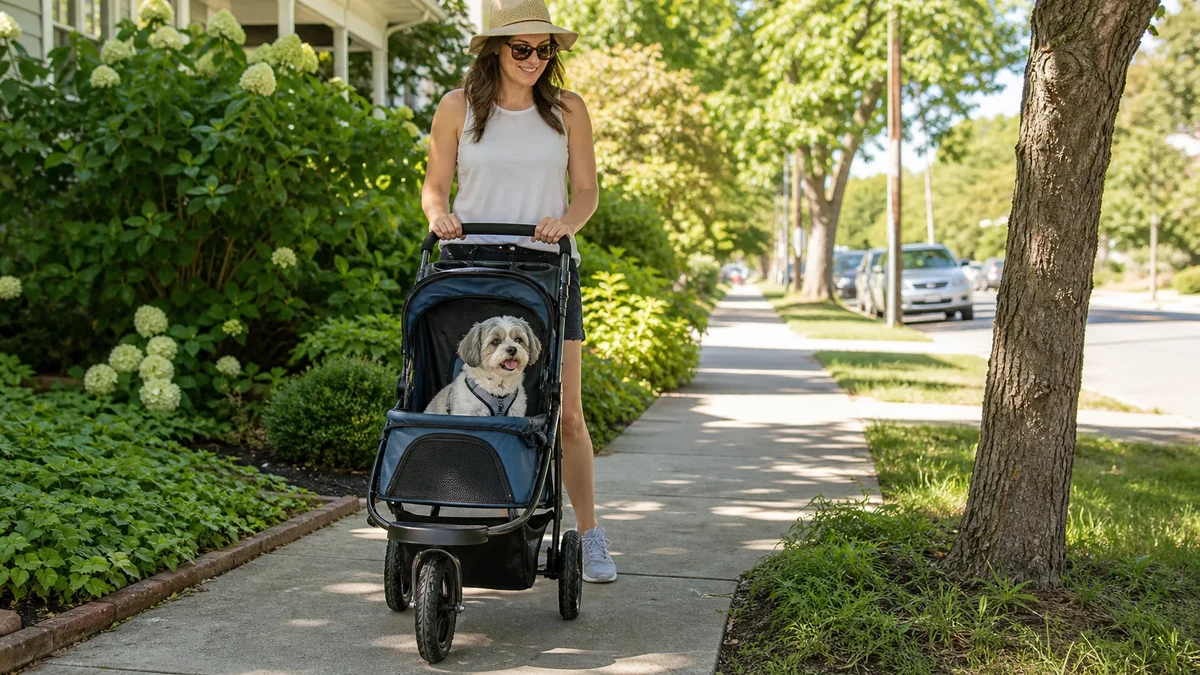
Dog stroller shopping is moving from novelty to practical mobility gear for small-dog owners. The strongest buyer intent is coming from people who want a safe rest option for senior, arthritic, heat-sensitive, or recently treated dogs during summer walks.
Search interest around dog stroller for small dogs is rising as owners plan longer warm-weather outings and look for a way to keep tiny dogs comfortable without ending the walk early.
The trend is not only about pampering pets. It connects to mobility, heat exposure, apartment living, travel, and the practical reality that a 10-pound dog may tire long before its owner is done with errands. Sources I reviewed for this report include Consumer Reports American Kennel Club PetMD AVMA.
Why small-dog stroller searches are climbing
Small breeds can be enthusiastic walkers, but their stride length, heat tolerance, and joint history vary widely. Owners of dachshunds, yorkies, chihuahuas, cavaliers, and toy poodles often want the option to walk part of the route, then ride through a farmers market, parking lot, or long neighborhood loop.
Another driver is senior-dog care. The AKC notes that older dogs need routines adjusted to their health and stamina, while PetMD explains that arthritis can change how dogs move, rise, and tolerate exercise. A stroller gives those owners a middle path between staying home and overdoing a walk.
By the numbers
minimum rating shoppers expect
review-count floor for confidence
common capacity for compact strollers
pavement risk shapes summer use
main shopping tiers now visible
The numbers show why shoppers compare more than price. Weight capacity, entry style, wheel size, fold shape, and cabin ventilation all affect whether the stroller becomes useful gear or a garage item.
What changed in the category
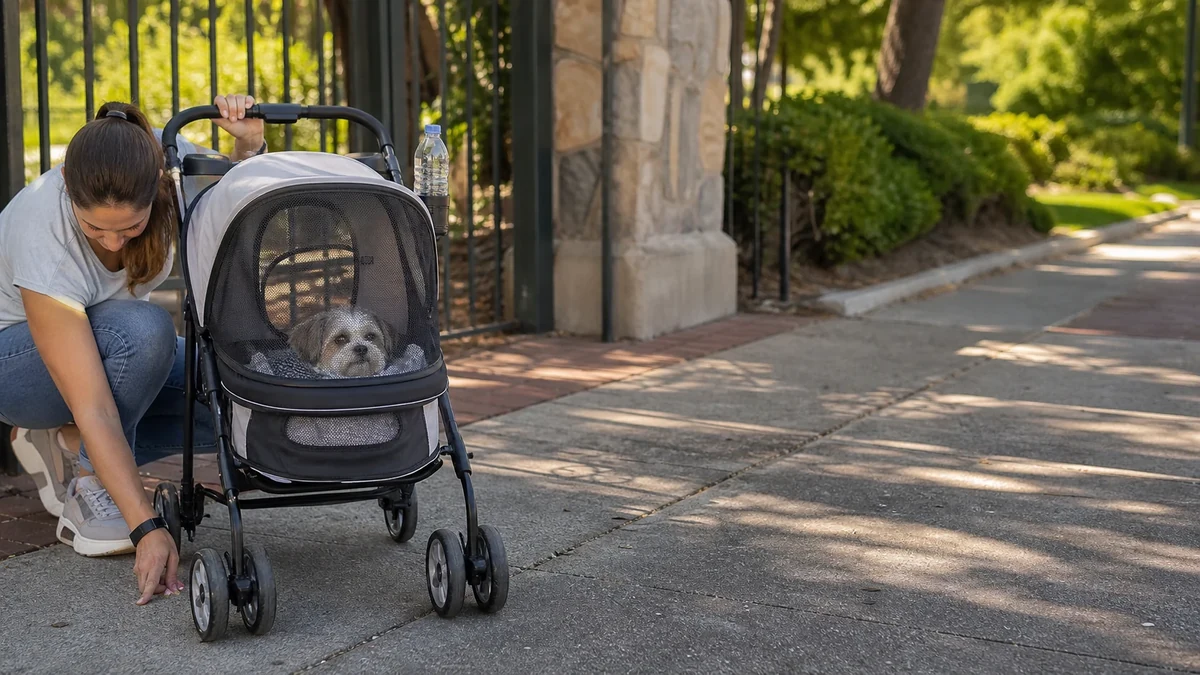
The newest shopping behavior is more specific than “pet stroller.” Owners are searching for small-dog fit, senior-dog comfort, zipperless entry, compact folding, and light frames that can be lifted into a car trunk. That extra specificity matters because the cheapest stroller is not always the easiest one to use with a nervous or stiff dog.
Retail pages now show a clear split between basic three-wheel frames, midrange no-zip comfort strollers, and travel-friendly compact designs. That gives shoppers more choice, but it also creates confusion when two strollers look similar in thumbnails and behave very differently at the curb.
| Category | Typical buyer | What to check | Representative brands |
|---|---|---|---|
| Budget three-wheel | Occasional errands | Zippers, brake, wheel feel | BestPet, VIVO, Magshion |
| No-zip comfort | Daily senior-dog walks | Canopy latch, liner, cabin height | Pet Gear, Gen7Pets, HPZ |
| Compact travel | Car trunks and apartments | Fold size, frame weight, handle height | ROODO, Petique, Ibiyaya |
How shoppers should evaluate one
Start with the dog, not the product photo. Measure your dog while sitting and standing, then compare that with cabin dimensions and capacity. Add margin for a blanket or harness, because a dog that feels squeezed is more likely to resist the stroller after the first outing.
Next, think about surfaces. Smooth neighborhood sidewalks favor lighter frames, while older pavement, park paths, and curb cuts reward larger wheels and firmer steering. Owners who mainly visit patios and shops may care more about fast folding and a cup holder than about tire size.
Entry style is another under-rated detail. A zipper can be secure and inexpensive, but it asks the owner to hold the dog, align the fabric, and close the cabin without catching fur or pinching skin. A latch-style canopy costs more, yet it can be easier when the dog is stiff, nervous, or wearing a harness.
Brake design deserves the same attention. Shoppers often compare colors and basket size first, but a stroller used at a curb or storefront needs a brake that is visible, reachable, and firm enough to set quickly. If the brake feels vague during setup, that concern will not improve during a crowded outing.
The owner behavior behind the trend
The small-dog stroller category also reflects a change in how owners plan social outings. More people want their dogs present at patios, vacation rentals, outdoor markets, and family visits, but they do not want every trip to become a leash-management exercise. The stroller becomes a containment tool as much as a mobility tool.
That matters for dogs that tire unpredictably. A healthy young terrier may walk the whole route one day and need a break the next if the pavement is hot or the crowd is loud. A senior cavalier or dachshund may start strong, then slow down after a few blocks. The shopper is buying flexibility.
Retailers have noticed that flexibility. Product pages increasingly mention cup holders, storage baskets, detachable carriers, weather covers, and one-hand folds. Those features are not all equally important, but they show that manufacturers are competing on owner convenience, not just pet containment.
The risk is that convenience language can hide fit problems. A stroller that folds fast still fails if the cabin is too shallow, the mesh limits airflow, or the handle height forces the owner into an awkward push. That is why the best buying guides compare real use cases instead of ranking only by star rating.
Safety context buyers should not skip
Veterinary and consumer sources agree on the larger principle: equipment should support the dog rather than replace judgment. The AVMA warm-weather guidance is especially relevant in summer because pavement, parked cars, and long exposed walks can turn a casual errand into a heat-stress problem for small pets.
Owners should also introduce the stroller slowly. Let the dog sniff it indoors, reward calm behavior near the cabin, and start with a short ride before a long route. A rushed first trip can make the stroller feel like confinement instead of rest, especially for dogs that already dislike carriers.
Harness tethering is another practical checkpoint. Many strollers include an interior tether, but that tether should attach to a harness, not a collar, and it should prevent jumping without forcing the dog into a rigid posture. If the tether length cannot be adjusted comfortably, that is a reason to keep shopping.
The final safety issue is load discipline. Storage baskets are useful for keys, water, and bags, but overloading them can change the way the stroller handles. A small-dog stroller is not a grocery cart, and owners should keep heavy items low, balanced, and within the stated limits.
For most families, the best result is simple: the dog walks when comfortable, rides when tired, and returns home without the outing becoming stressful.
Expert view
JK“Senior dogs still need appropriate exercise and enrichment, but owners should adjust walks, surfaces, and outing length to the dog’s comfort level.”
Jerry Klein, DVM, Chief Veterinary Officer at the American Kennel Club
★ READ NEXT
Ready to compare your options?
I compared three current Amazon picks for small dogs, including a no-zip daily stroller, a sub-$50 budget pick, and a compact travel option.
Why small-dog strollers are catching on
Dog strollers used to read as a novelty, but for small and senior dogs they have become a practical mobility tool. Tiny breeds tire quickly on long walks, older dogs develop joint and heart issues that limit how far they can go, and recovering pets often need to be out of the house without being on their paws. A stroller lets owners keep dogs included on errands, trips, and long outings without overtaxing little legs, which is why interest has climbed alongside the broader trend of treating pets as full members of the household.
Travel and city life add to the pull. In crowds, on hot pavement, or near busy roads, a stroller keeps a nervous small dog secure and off ground that can burn paws or hide hazards. It also makes vet trips and public-transit rides far less stressful for anxious dogs. For multi-pet owners, a stroller can carry one dog while another walks, turning an impossible outing into an easy one.
What buyers are weighing before they choose
The first question is size and weight capacity. A stroller has to fit the dog comfortably with room to turn around, and its rated capacity must cover the dog’s full weight with margin, so buyers increasingly check the cabin dimensions rather than trusting a vague breed label. The second is the wheels and terrain: smooth sidewalks forgive almost anything, while grass, gravel, and curbs reward larger wheels and a three-wheel front for easier steering.
After that it comes down to living with the thing. How small does it fold for the car or a closet, how secure is the internal tether that stops a dog from leaping out, and how easy is the zipper or entry for loading a wiggly pet? Buyers who picture a real outing, loading, strolling, folding, and storing, tend to pick the model they will actually keep using rather than the one with the longest feature list.
FAQ
+ Are dog strollers only for senior dogs?
No. They also help with puppies, recovery periods, crowded events, and hot pavement breaks.
+ Can a stroller replace daily walks?
For most healthy dogs, no. It works better as a rest option during longer outings.
+ What is the first spec to check?
Check capacity and cabin size before color, cup holders, or basket style.
+ Should I buy the cheapest one?
Buy cheap only if the frame, brake, mesh, and fold still match your route and dog.
Reporting by Maya Bennett. Prices and availability can change. This trend report uses public source material from Consumer Reports, AKC, PetMD, and AVMA.