

Disclosure: As an Amazon Associate, I earn from qualifying purchases. – Maya Bennett. I am a journalist who covers consumer home-improvement tech. ReviewGuid.com participates in the Amazon Services LLC Associates Program. If you click an affiliate link in a related buying guide and make a purchase, I earn a small commission at no extra cost to you. The reporting below contains no paid product placements.
Published June 8, 2026 – 8 min read
–
Home-improvement and consumer-tech journalist tracking the cordless tool category
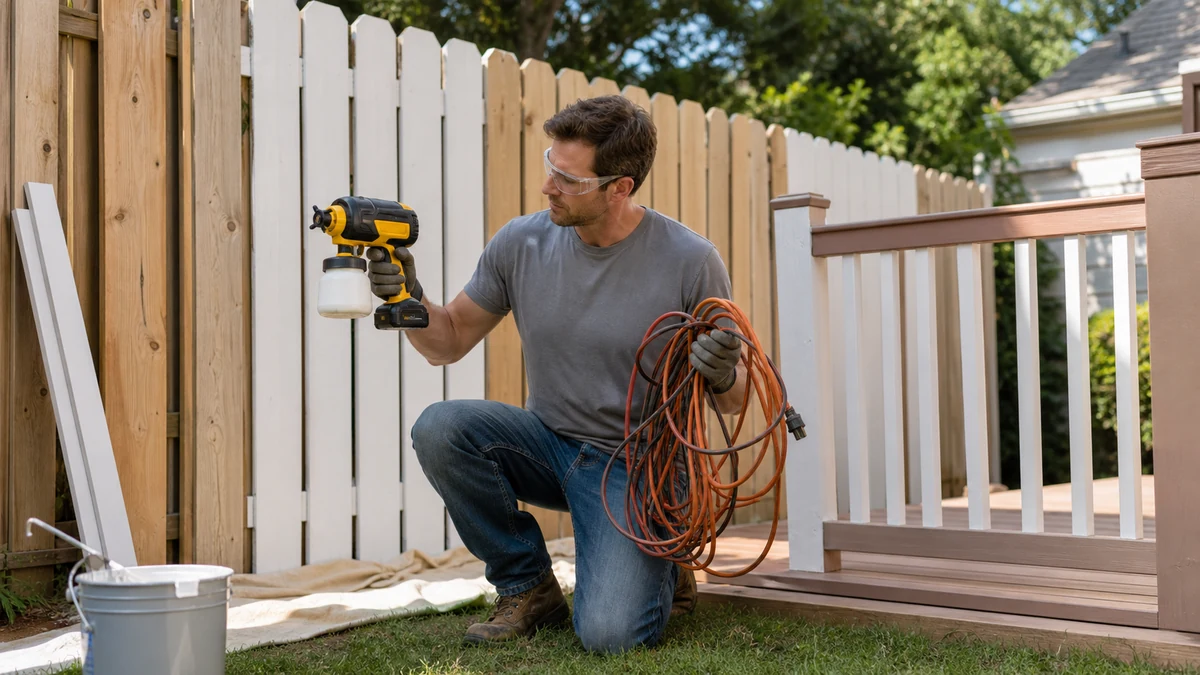
Cordless paint spraying has crossed from gimmick to genuinely useful in 2026. True cordless airless (the Graco handheld) now sprays unthinned latex without a cord, while a wave of cordless HVLP guns that clip onto DEWALT 20V and Milwaukee M18 batteries has dropped the entry price under 70 dollars. The catch is terminology: those battery-platform units are HVLP, not airless, and buying the wrong type for your project is the most common mistake.
Search interest in cordless paint sprayers has climbed sharply ahead of the 2026 exterior-painting season, and the reason is structural rather than seasonal hype: the two halves of the category that used to disappoint buyers have both matured at once.
I have been tracking cordless power tools for several years, and the paint-sprayer corner of the market spent a long time stuck. Early battery models were underpowered, atomized poorly, and left painters wishing they had simply dragged out an extension cord. That has changed. A true cordless airless handheld can now push unthinned latex and stain across a fence line on battery power alone, and a separate, much cheaper class of cordless HVLP guns has arrived that runs on the DEWALT and Milwaukee packs millions of DIYers already keep in the garage.
Why cordless spraying is surging in 2026
The pain point driving this trend is familiar to anyone who has painted a deck or a run of fence. Corded airless sprayers tie you to an outlet and a long extension cord that snakes across the yard, snags on shrubs, and limits how far from the house you can work. For exterior projects – fences, sheds, trim, lattice, garden furniture – that tether is exactly where the job gets frustrating.
Two things converged to fix it. First, brushless motors and higher-capacity lithium-ion packs got cheap enough to deliver real spraying power without a wall socket. Second, accessory makers realized that the fastest way into the market was to skip the battery entirely and build a gun around the platforms people already own. Pro Tool Reviews has documented how quickly the cordless segment has expanded as those battery-platform tools multiplied. The result is a category that finally answers the original complaint: spray where the work is, not where the outlet is.
HVLP vs airless: the distinction that trips up buyers
This is the part of the trend that creates the most confusion, and getting it wrong is the single most expensive mistake a shopper can make. Airless and HVLP are two different technologies, and a lot of product listings blur the line.
An airless sprayer uses a pump to force paint through a small tip at very high pressure, in the range of 500 to 2000 PSI. That pressure atomizes thick, unthinned coatings and lays them down fast, which is why airless is the tool of choice for big surfaces like siding, fences and exterior walls. The trade-off is overspray and paint consumption. As contractor and product tester Glenda Taylor notes for Bob Vila, airless units use noticeably more paint than a brush or roller.
An HVLP sprayer works the opposite way. It uses a turbine or fan to move a high volume of air at low pressure, gently atomizing thinner coatings with much less bounce-back and a finer finish. That makes HVLP the better pick for cabinets, doors, trim, furniture and detail work, but it is slower on broad surfaces and usually needs thinner material. The crucial point for 2026 shoppers: the inexpensive cordless guns that clip onto a DEWALT 20V or Milwaukee M18 battery are HVLP units, not airless. They are excellent for what HVLP does well, but they will not behave like the high-pressure Graco airless handheld, and no amount of marketing language changes that.
The battery-platform play that made it affordable
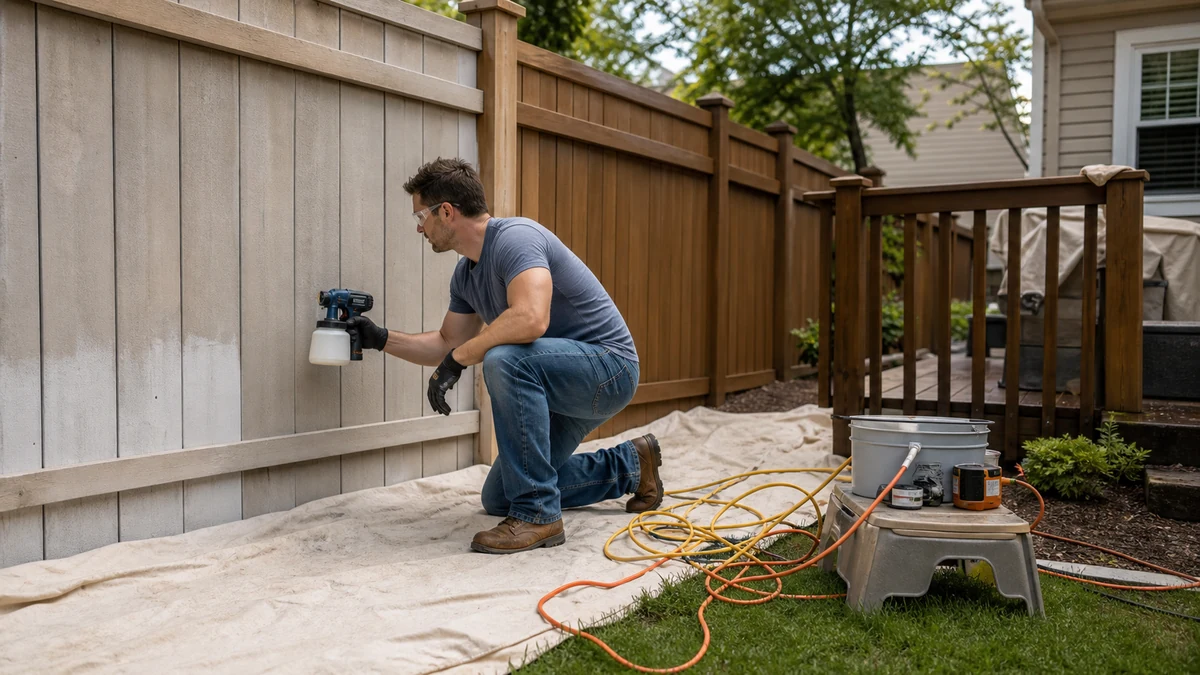
The economic engine behind this trend is the tool-only model. Instead of selling you a sprayer with its own proprietary battery and charger, brands like DTEZTECH and Mellif sell a brushless HVLP gun on its own, built to accept the DEWALT 20V MAX or Milwaukee M18 packs you bought with your drill. That single decision collapses the price. A capable cordless HVLP gun now lands around 65 to 70 dollars because you are paying only for the tool.
The appeal is obvious for anyone already invested in one of those ecosystems. The same battery that runs your impact driver in the morning runs your sprayer in the afternoon, and you are not babysitting yet another charger. At the premium end of the category, even the true airless option leans on this idea: the Graco Ultra cordless handheld runs on a pair of DEWALT 20V batteries rather than a one-off pack. Brands you will see most often in this space include Graco at the airless top end, with DTEZTECH, Mellif, Wagner and Ryobi populating the cordless HVLP tier. None of those are recommendations here – this is a category map, and the head-to-head testing lives in the buying guide.
| Category | Core Technology | Price Range | Representative Brands |
|---|---|---|---|
| Cordless airless (handheld) | High-pressure pump 500-2000 PSI, sprays unthinned latex/stain | $550 – $750 | Graco |
| Cordless HVLP (battery-platform) | Low-pressure turbine, fine finish, runs on DEWALT 20V / Milwaukee M18 | $60 – $130 (tool only) | DTEZTECH, Mellif, Ryobi |
| Corded airless / HVLP (legacy) | Wall power, highest sustained output, needs outlet plus extension cord | $90 – $400+ | Graco, Wagner, Titan |
⇆ swipe horizontally on mobile
Which category fits which project
The honest answer is that the right tool depends entirely on what you are painting. For a long exterior run – fence panels, a shed, lap siding, a deck – the speed and unthinned-paint capability of a cordless airless handheld is hard to beat, and the lack of a cord is the whole point. You will spend more, both on the tool and on paint, because high-pressure atomization consumes material faster, but you finish big jobs in a fraction of the time.
For finish work – kitchen cabinets, interior doors, trim, a dresser, garden chairs – a cordless HVLP gun is the smarter buy. The finer atomization and reduced overspray give you a smoother coat with less masking and less cleanup, and the sub-100-dollar entry point is forgiving if you are new to spraying. If you already own DEWALT or Milwaukee batteries, that tier becomes almost an impulse purchase. The mistake to avoid is expecting an HVLP gun to blast a fence the way an airless rig does, or expecting a high-pressure airless to lay a glass-smooth cabinet finish without practice.
Overspray and lithium-battery safety
The flip side of easy, untethered spraying is that more people are now atomizing paint outdoors without thinking about exposure. Spraying turns paint into a fine inhalable mist, and the higher the pressure, the more overspray and bounce-back you create. According to OSHA guidance on spray-finishing safety, spray painting calls for a NIOSH-approved respirator under the 42 CFR Part 84 standard, and certain coatings such as isocyanate-based products demand supplied-air respirators. NIOSH and the CDC likewise recommend pairing ventilation with an approved respirator. For a homeowner that translates to a simple rule: ventilate, wear a properly fitted mask, and treat airless overspray with extra respect because it travels.
Battery safety matters too, because these tools live on lithium-ion packs. Store DEWALT 20V and Milwaukee M18 batteries off the charger at roughly 30 to 50 percent charge, in a cool, dry, ventilated spot below about 30C/86F. Never store or transport a pack that is swollen, cracked or otherwise damaged. Those habits are not unique to sprayers, but a sprayer often sits unused between projects, which is exactly when neglected batteries get into trouble.
“Airless paint sprayers use more paint than a roller or brush by about 30 percent.“
What to weigh before you buy
Before you add anything to a cart, sort the decision by three questions: what surface, which battery ecosystem, and how often. Surface tells you airless versus HVLP. Ecosystem tells you whether a tool-only gun is a bargain or a dead end – a DTEZTECH gun is only cheap if you already own DEWALT packs, and a Mellif only makes sense if you live in the Milwaukee M18 world. Frequency tells you how much to spend: a once-a-year fence repaint does not justify a 700-dollar airless if a finish job is really what you do most.
Use the checklist below as a pre-purchase filter, then dig into the specifics in the full comparison, where the individual models are tested head to head rather than described in the abstract.
Match the tech to the surface. Pick cordless airless for fences, siding and decks; pick cordless HVLP for cabinets, doors, trim and furniture.
Confirm battery compatibility. Tool-only HVLP guns are bargains only if you already own the matching DEWALT 20V or Milwaukee M18 packs.
Check runtime per charge. Coverage like one gallon of latex per charge tells you whether a battery swap mid-project is realistic for your job size.
Budget for overspray protection. A NIOSH-approved respirator and ventilation are not optional, especially with high-pressure airless.
Plan for cleanup and tips. Airless tips and HVLP nozzles wear out and need thorough cleaning; factor consumables into the real cost.
The outlook for the rest of 2026
Expect the cordless HVLP tier to keep crowding in. As long as DEWALT and Milwaukee batteries remain the default in home garages, accessory makers have every incentive to ship tool-only guns that ride those platforms, and competition there should hold prices low while pushing nozzle quality up. The true cordless airless category will stay smaller and pricier, anchored by Graco, because the engineering to deliver real airless pressure on batteries is harder and more expensive to do well. For buyers, the takeaway is to ignore the marketing noise, identify whether your project is a big-surface job or a fine-finish job, and choose the technology to match. The cord is finally optional – the homework is not.
Ready to compare your options?
Our buying guide puts a true cordless airless handheld up against two battery-platform HVLP guns – one for DEWALT 20V owners and one for Milwaukee M18 owners – with side-by-side specs, real-world spray notes, pros and cons, and current pricing so you can match the right tool to your next project.
Frequently Asked Questions
What is the difference between a cordless airless and a cordless HVLP paint sprayer? +
A cordless airless sprayer pumps paint at very high pressure (roughly 500 to 2000 PSI) so it can shoot unthinned latex and stain fast over large surfaces like fences and siding. A cordless HVLP (high-volume low-pressure) sprayer uses a turbine fan and low pressure to atomize thinner coatings with far less overspray, which suits trim, cabinets and furniture. The two are different tools, not interchangeable labels.
Can a cordless paint sprayer run on my existing DEWALT or Milwaukee batteries? +
Yes. A growing class of cordless HVLP sprayers is sold tool-only and designed to clip onto DEWALT 20V MAX or Milwaukee M18 packs you already own. That removes the cost of a proprietary battery and is a major reason the category is growing in 2026. The true airless Graco handheld uses two DEWALT 20V batteries.
Do I need a respirator when using a cordless paint sprayer? +
Yes. OSHA and NIOSH guidance calls for a NIOSH-approved respirator plus ventilation when spray painting because atomized paint creates inhalable mist. High-pressure airless spraying produces more overspray and bounce-back than low-pressure HVLP, so a properly fitted mask and good airflow matter even more outdoors.
How should I store lithium-ion power-tool batteries between projects? +
Store DEWALT 20V and Milwaukee M18 packs off the charger at about 30 to 50 percent charge, in a cool dry ventilated spot below roughly 30C/86F. Never store or transport a pack that is swollen, cracked or damaged. These same habits protect any battery-platform sprayer.