

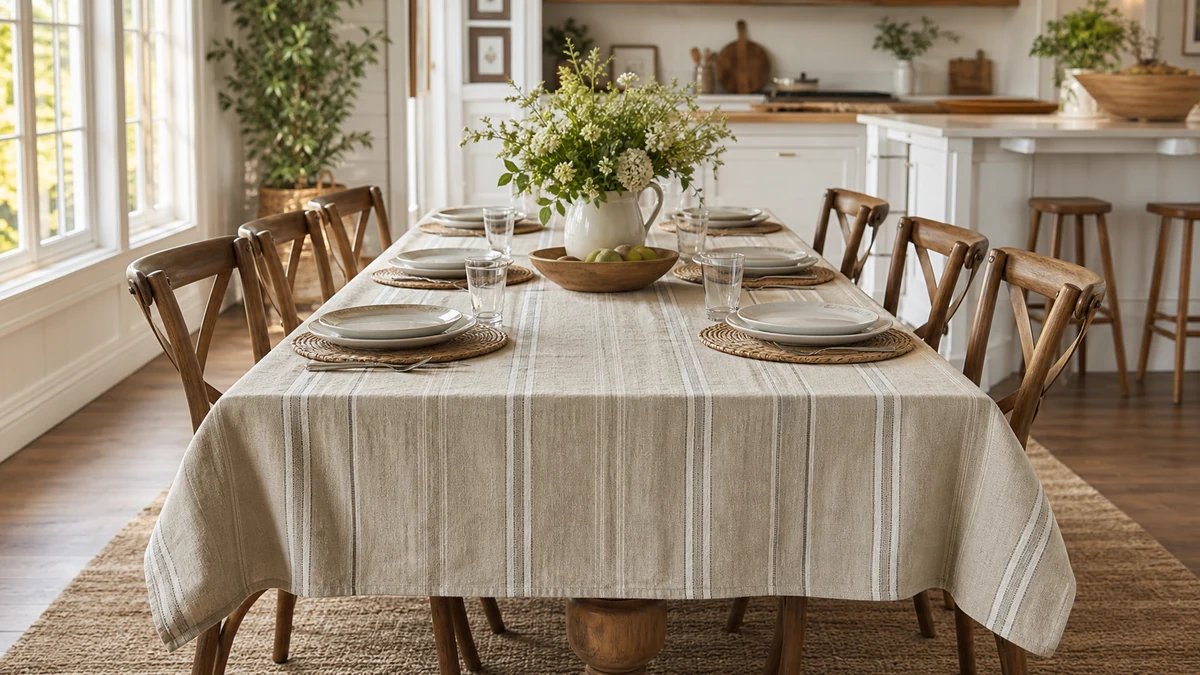
Disclosure: As an Amazon Associate, I earn from qualifying purchases. – Maya Bennett
Farmhouse tablecloth searches are moving from broad decor browsing to practical rectangle-table shopping. Buyers want cotton, gingham, ruffles, tassels, and washable materials, but the winning purchase still starts with measurements, drop length, and how often the table is actually used.
Farmhouse tablecloths are getting a 2026 lift because they solve a small but visible home problem: a rectangle table can look unfinished even when the rest of the kitchen is styled. Search data points toward shoppers looking for cotton tablecloth, rectangle tablecloth, and gingham tablecloth options at the same time, which suggests a buyer who wants style and fit rather than a generic disposable cover.
Google Trends data for the United States showed cotton tablecloth interest up 110 percent when comparing the most recent four weeks with the first four weeks of the 12-month window ending June 28, 2026. Rectangle tablecloth interest rose 52 percent in the same comparison, and gingham tablecloth interest rose 33 percent. That lines up with the sizing emphasis in the Crate and Barrel tablecloth sizing guide, the shape-specific guidance from SFERRA tablecloth size guide, and the linen-care reminders in The Spruce table linen care advice.
Why the soft-table look is gaining again
The buyer shift is not only about nostalgia. Open kitchens and casual dining spaces put the table in view all day, so a bare surface can feel harsh next to wood cabinets, painted chairs, woven placemats, or cottage-style lighting. A cloth softens that surface faster than replacing furniture.
The second pressure point is hosting. Many shoppers want one purchase that can handle dinner, brunch, birthdays, porch meals, and holiday layering. Farmhouse patterns work because they can look relaxed with everyday dishes and still feel intentional when candles, flowers, and serving boards are added.
By the numbers: what the trend says
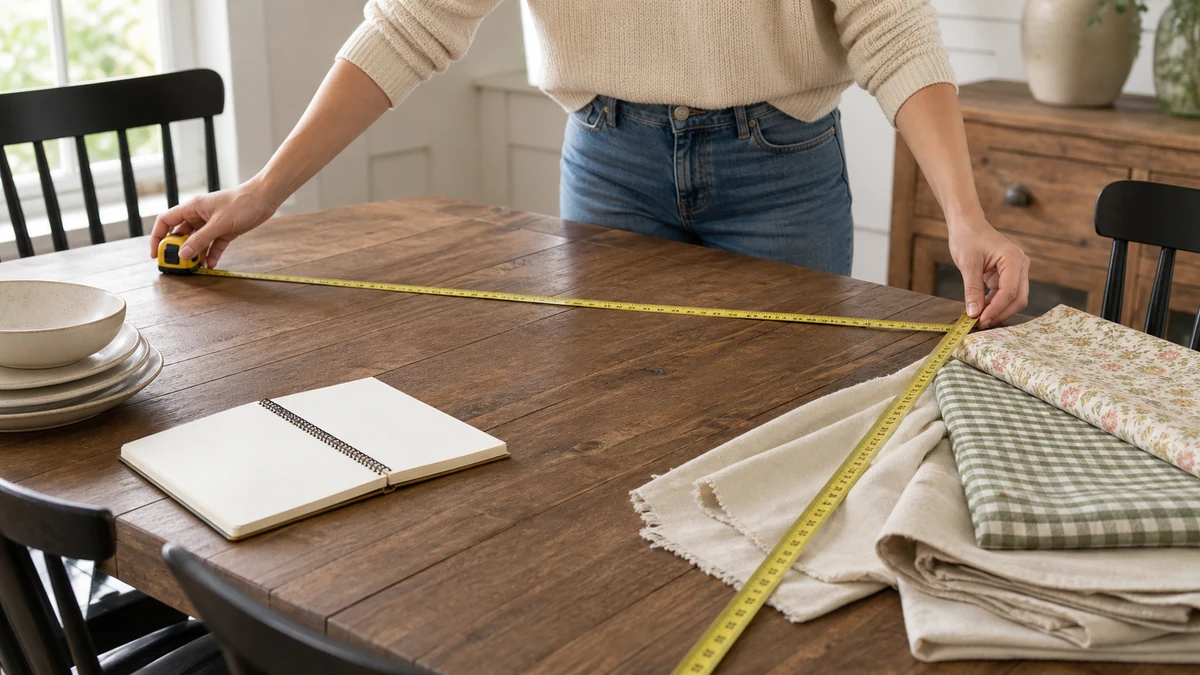
The sizing mistake that makes a good cloth look wrong
| Use case | Drop target | Why it matters |
|---|---|---|
| Everyday kitchen table | 6 to 10 inch drop | Keeps chairs easy to move and avoids fabric pooling on laps |
| Casual dining room | 8 to 12 inch drop | Looks finished without feeling formal or fussy |
| Decorative cottage setup | 10 to 15 inch drop | Shows ruffles, tassels, or gingham more clearly |
| Large holiday table | 12 inch or longer drop | Works when the table is extended and serving pieces are layered |
The expert sizing signal buyers should remember
Homes and Gardens tablecloth advice quotes Artem Kropovinsky, interior designer and founder of Arsight, on the visual problem created by a badly sized tablecloth. His advice is useful because the wrong drop can make even a good fabric look careless.
A tablecloth that is too big will look sloppy and drag on the floor, while a tablecloth that is too small will expose the table legs and make the whole setting look cheap.
A farmhouse tablecloth buying checklist
trend note 1 – Measurement First: For farmhouse tablecloth for rectangle table, this point matters because a tablecloth is judged in daily use, not just in a product photo. The shopper has to balance table length, fabric behavior, chair clearance, laundering, and the way the edge looks when plates, placemats, and serving bowls are already on the table.
Compare the 3 farmhouse tablecloth picks
I ranked a wipeable cotton-linen tassel cloth, a budget ruffle cloth, and the K MASANIJI blue gingham cotton cloth so the choice matches the table instead of just the photo.
Frequently asked questions
Why are farmhouse tablecloths trending in 2026? +
Search interest is rising because shoppers want a quick dining-room refresh that also handles weeknight meals, hosting, and seasonal decorating.
What size tablecloth should I buy for a rectangle table? +
Measure the table length and width, then add twice the desired drop on each dimension before choosing the nearest product size.
Is cotton better than polyester for farmhouse style? +
Cotton usually looks softer and more natural, while coated blends can be easier to wipe after everyday meals.
Should a tablecloth touch the floor? +
For daily dining, no. A moderate drop is easier around chairs and less likely to drag, while floor-length cloths are mostly formal or decorative.