

Disclosure: As an Amazon Associate, I earn from qualifying purchases. – Maya Bennett
Dog stairs for high bed setups are becoming a practical mobility purchase because more owners are trying to reduce repeated jumping from tall mattresses and sofas. The useful 2026 question is not whether the stairs look soft, but whether the height, traction, and step depth match the dog using them.
Search demand around dog stairs for high bed products is being pulled by a simple household problem: many beds are higher than a small or senior dog can comfortably climb without a launch and a hard landing. Amazon category reports now show multiple pet-stair listings with thousands of reviews, current prices under $50, and active movement around the bed-stairs-for-dog query.
I have been watching this category because it sits between pet furniture and basic mobility care. The AKC guidance on dog stairs and ramps and PetMD mobility guidance both frame stairs and ramps as tools that may help dogs avoid unnecessary jumping, especially when age, injury, surgery, or joint sensitivity changes how they move around the home.
Why the high-bed problem is getting attention
Modern mattresses, platform frames, and layered toppers have made a normal bed surprisingly tall. A small dog that could hop onto an older low frame may now face an 18 to 28 inch climb, and the trip down can be harder on shoulders, wrists, spine, and knees than the trip up.
The trend is also emotional. Owners want the dog on the bed or couch, but they do not want every bedtime routine to become a repeated jump test. That makes a set of stairs feel less like decor and more like a small infrastructure upgrade for a dog that shares human furniture every day.
The market response is broader than one product shape. Foam steps, folding storage stairs, wooden stairs, plastic steps, and ramp-step hybrids all compete for the same buyer. The best choice depends on confidence, leg length, furniture height, and whether the dog is agile or cautious.
By the numbers
Sources checked include AKC guidance on dog stairs and ramps, PetMD mobility guidance, The Spruce Pets dog stairs testing, and The Spruce Pets ramp advice.
The real decision is fit, not softness
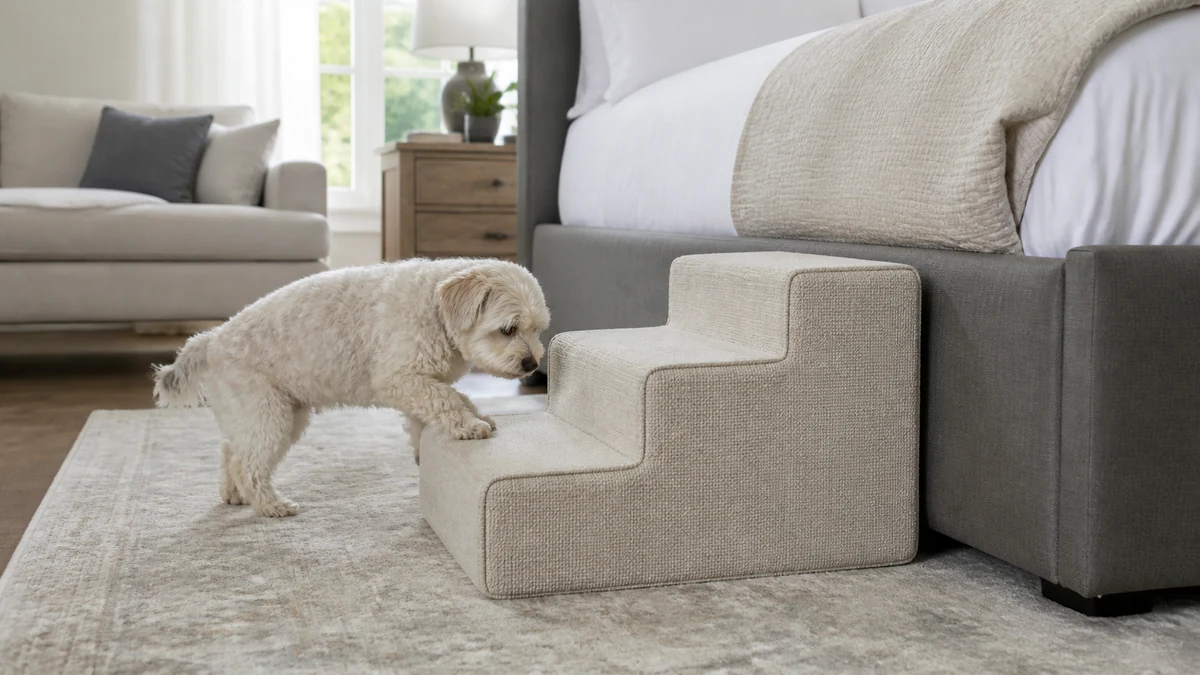
The product pages tend to emphasize plush fabric, washable covers, and cute colors. Those details matter, but they are secondary to height and geometry. A dog stair that stops six inches below the mattress still requires a final jump, and that is exactly the movement many owners are trying to reduce.
Step depth is the second fit issue. A narrow tread may look compact in the room, but a dog with a long body or weak rear legs may not have enough room to plant all four paws calmly. A wider, deeper stair can take more floor space and still be the safer purchase.
What shoppers are actually comparing
| Category | Core design | Typical price | Representative brands |
|---|---|---|---|
| Foam stairs | Lightweight foam core with removable fabric cover | $25-$45 | Aodisman, EHEYCIGA, Romrol |
| Ramp-step hybrids | Angled stepping surface that can feel easier for cautious dogs | $35-$65 | Gardner Pet, Best Pet Supplies, Zinus |
| Storage stairs | Foldable frame with interior storage under the steps | $30-$70 | Love’s cabin, Zerbuger, Pawque |
| Rigid plastic stairs | Molded body with carpet treads or snap-on pads | $40-$90 | Pet Gear, Frisco, PetSafe |
⇆ swipe horizontally on mobile
Why traction and training matter
A stair that slides is worse than no stair because it teaches the dog that the object is unpredictable. Look for a grippy bottom, a fabric surface that does not feel slick under paws, and enough weight or footprint that the stair does not skate away when the dog pushes off.
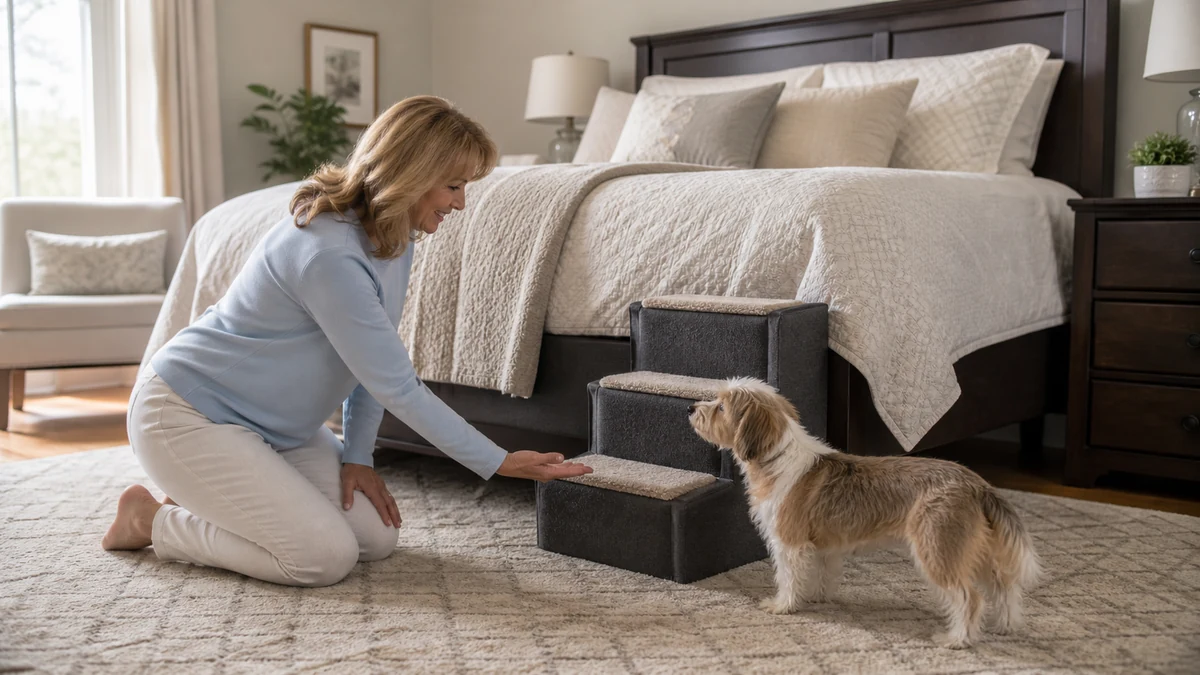
Training matters because many dogs do not automatically understand a new climb path. Start with treats on the first step, praise calm movement, and avoid pulling a nervous dog up the stairs. If the dog freezes, the issue may be angle, step depth, surface feel, or discomfort.
“Dogs with arthritis or other mobility issues can benefit from ramps because jumping can cause extra wear and tear on their joints.“
Buying checklist before you order
What to read before choosing a model
The smartest next step is a product comparison that separates use cases instead of crowning every soft stair as the same thing. I ranked the options by height match, traction, storage usefulness, cover care, review depth, and whether the design makes sense for a high bed rather than only a sofa.
Ready to compare your options?
I compared three Amazon dog-stair options for high beds: a 2-in-1 stair/ramp hybrid, a budget foam stair, and a foldable storage stair.
The measurement plan that prevents returns
The most reliable shopping step is a three-number note on your phone: floor to mattress top, available floor depth beside the bed, and the height of the dog’s chest when standing naturally. Those numbers explain more than the product photo. A 16 inch stair can feel perfect beside a couch and still fail beside a pillow-top mattress if the dog has to spring from the last step.
Owners should also measure the landing zone. A stair placed at the foot of the bed may be safer than one squeezed into a narrow side aisle, because dogs tend to turn as they descend. If the stair forces a sharp turn onto a slick floor, add a rug or choose a wider product before blaming the dog for avoiding it.
Another overlooked factor is nightly visibility. Some dogs use stairs confidently in daylight and hesitate in a dark room. A low night light, a rug that contrasts with the stair fabric, and a fixed placement can make the route more predictable. Moving the stair around the bedroom every day is convenient for humans but confusing for dogs that learn by repetition.
The mistakes I see in buyer reviews
The first mistake is buying for a claimed weight capacity instead of the dog’s movement style. A ten pound senior dog may need deeper, calmer steps than a thirty pound athletic dog, even though both are far below the capacity claim. Capacity is not the same as confidence.
The second mistake is ignoring the descent. Many owners watch whether the dog can climb up, then forget that going down asks for more braking and paw placement. If the stair feels steep, narrow, or slippery on the way down, the dog may jump from the middle step, which defeats the point of adding stairs.
The third mistake is expecting instant adoption. A new stair has a smell, texture, and sound. Give it a fixed spot, reward one step at a time, and keep sessions short. If the dog repeatedly refuses, revisit fit, traction, and medical comfort instead of pushing harder.
One more practical note: when the bed itself can be lowered safely, that may be the cheapest mobility upgrade of all.
Frequently Asked Questions
Why are dog stairs for high beds trending in 2026? +
Pet parents are treating bed access as a mobility and injury-prevention decision instead of a cute accessory purchase.
Are dog stairs better than ramps? +
Stairs save floor space and suit confident small dogs, while ramps can be easier for dogs with arthritis, back sensitivity, or post-surgery restrictions.
What height should dog stairs be for a high bed? +
Measure from floor to mattress top, then choose stairs that bring the final step close to the bed surface without a big last jump.
Should senior dogs use pet stairs? +
Many senior dogs can benefit, but owners should ask their veterinarian if the dog has pain, weakness, spine disease, or recent surgery.