

Disclosure: As an Amazon Associate, I earn from qualifying purchases. – Maya Bennett
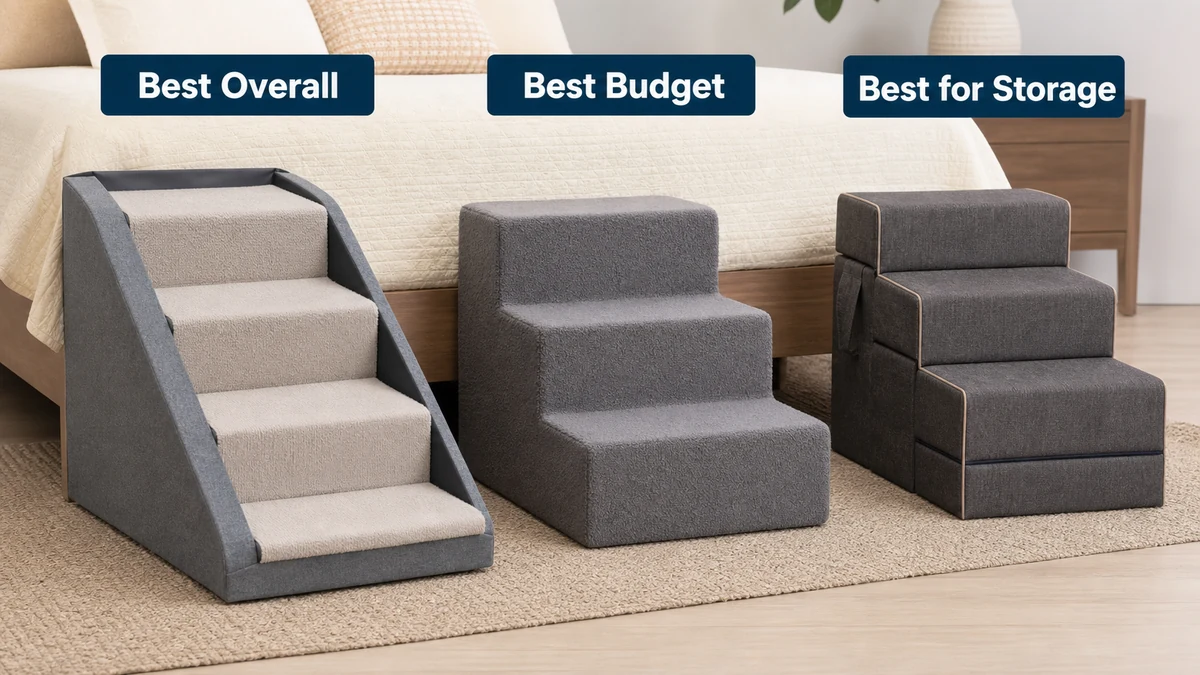
Gardner Pet is the best dog stairs for high bed pick for most shoppers because its 2-in-1 stair/ramp shape is easier to approach than a compact foam block. Choose Aodisman if the furniture is lower and price matters most, or Love’s cabin if storage is a real bedroom priority.
How I picked these 3 dog stairs
I screened the category for Amazon products that were in stock, rated at least 4.0 stars, had 100+ reviews, and solved a specific high-bed or couch access problem. The scoring weighted height match, traction, tread confidence, cover care, storage usefulness, review depth, and whether the product made sense for small or senior dogs. Health context came from AKC guidance on dog stairs and ramps, PetMD mobility guidance, The Spruce Pets dog stairs testing, and The Spruce Pets ramp advice. I also linked the companion trend report at dog stairs for high bed trend 2026 because the category is changing quickly.
Full spec sheet at a glance
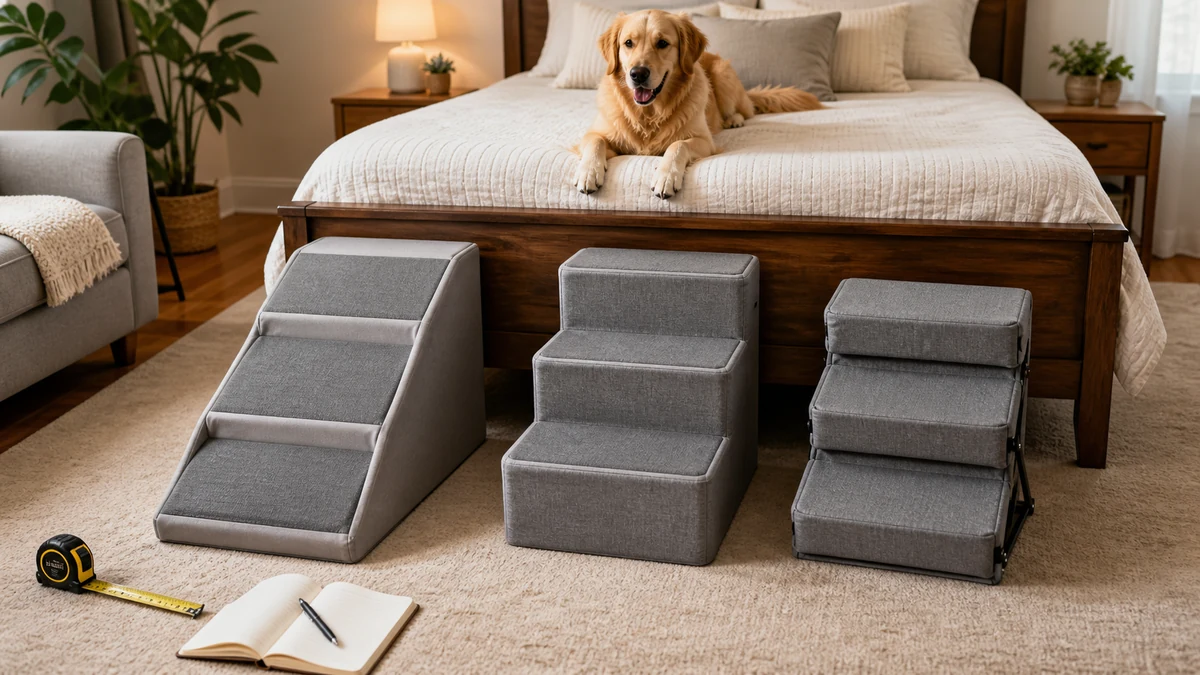
| Feature | Gardner Pet | Aodisman | Love’s cabin |
|---|---|---|---|
| Best For | Overall bed and couch access | Budget couch or low-bed access | Foldable storage use |
| Type | 2-in-1 stair/ramp hybrid | Compact 3-step foam stair | Foldable 3-step storage stair |
| Price | $39.97 | $29.99 | $29.99 |
| Rating | 4.6/5 | 4.5/5 | 4.7/5 |
| Reviews | 1,800+ | 4,800+ | 3,100+ |
| Height | 16.5 inches | 15.7 inches | 18 inches |
| Key material | CertiPUR-US foam with waterproof cover | Foam body with textured cover | Foldable fabric body with storage |
| Best caution | Not for very tall beds | Too short for high mattresses | Bulkier than foam stairs |
⇆ swipe horizontally on mobile – prices last verified July 2, 2026
The 3 picks, in detail
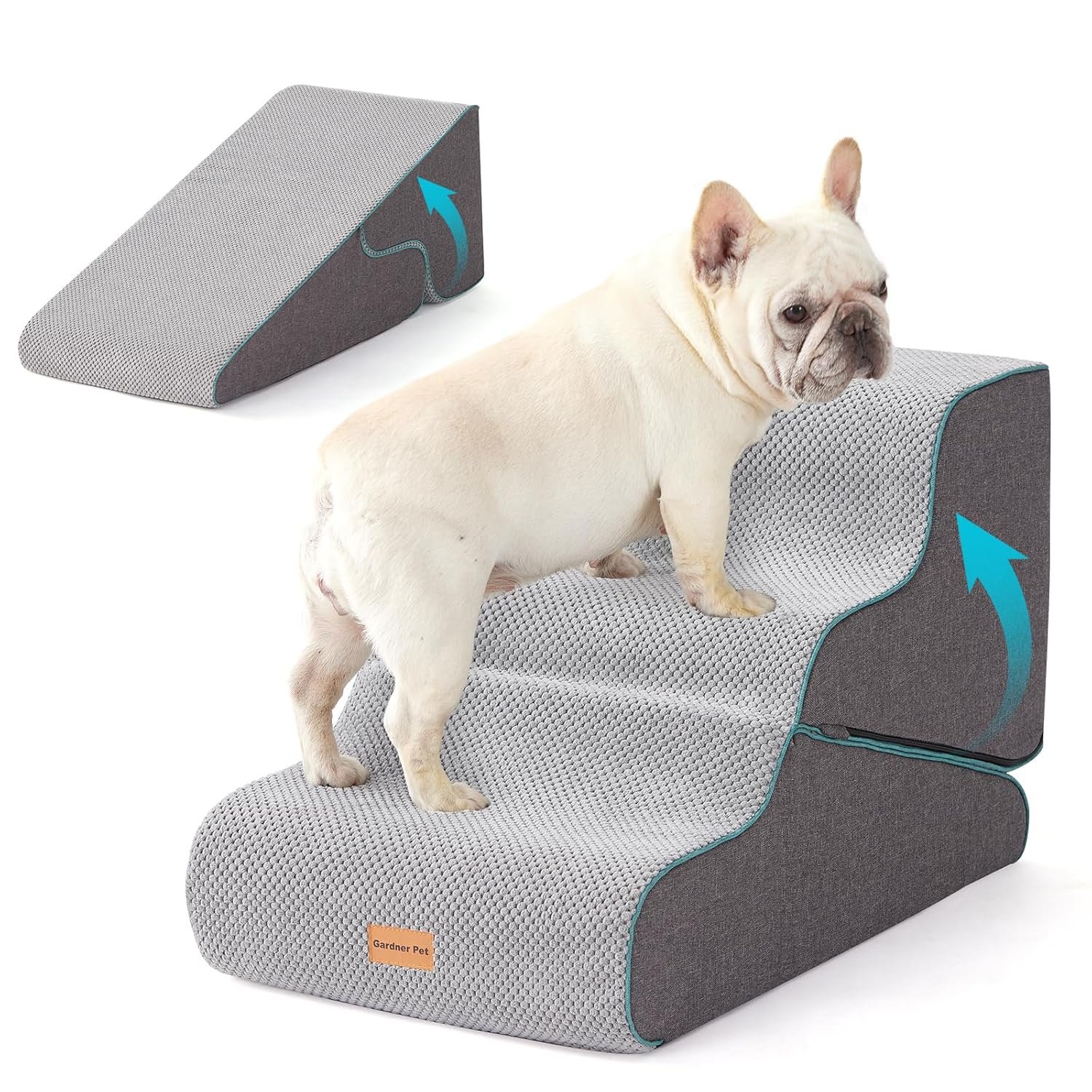
#1 – Gardner Pet
Gardner Pet earns the top slot because it is the most forgiving shape in the group. The ramp-step profile shortens the feeling of a steep climb, which matters for dogs that hesitate at squared-off foam stairs. The 16.5 inch height is not a perfect match for every high bed, but it is practical beside many platform beds and couches.
The waterproof cover is the detail I like for bedroom use. Pet stairs collect fur, paw moisture, and occasional accidents, so a cover that is easier to wipe or remove is more useful than a purely decorative fabric. The CertiPUR-US foam claim also gives buyers a clearer material signal than generic foam listings.
The tradeoff is that the hybrid shape takes commitment from the dog. Some confident dogs will run up immediately, while a cautious senior dog may need short treat sessions before using it without help. I would not buy it for a very large dog or for a mattress that is far above the top step.
Real-world fit note: I would start this pick with two short practice sessions before bedtime. Put a treat on the first tread, then on the second, and stop before the dog rushes. The goal is calm repetition, not speed. That training detail matters more than it looks because a dog that jumps over the last step is still creating the landing impact the stairs were meant to reduce.
#2 – Aodisman
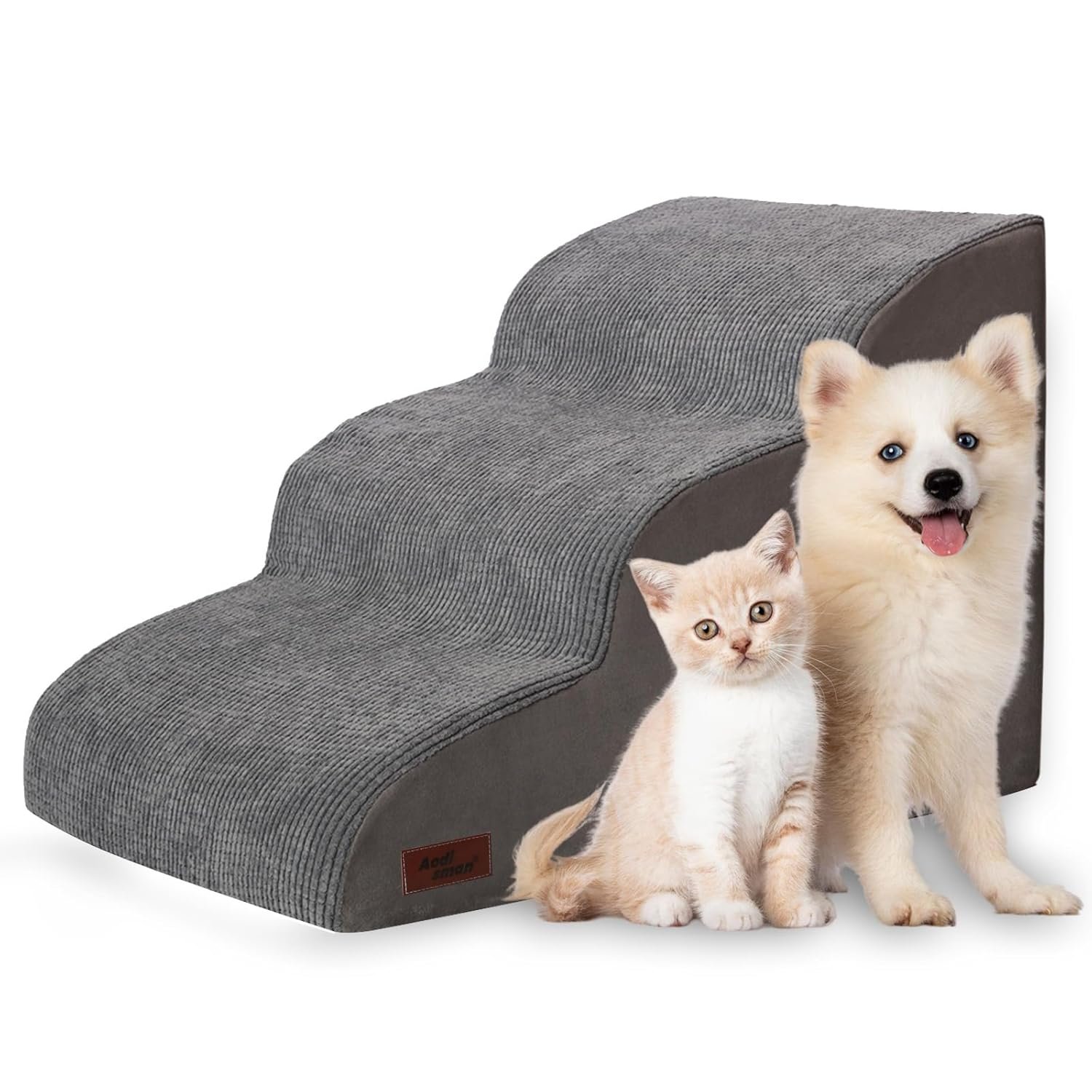
Aodisman is the sensible budget pick when the target furniture is a sofa, chair, or lower mattress. Its 15.7 inch height makes it less universal than taller bed stairs, but that same compact shape is easier to place in a tight apartment bedroom without blocking a walkway.
The reason it stays in the comparison is review depth. A low price is not enough by itself; many cheap pet stairs sag, slip, or arrive with covers that do not fit cleanly. Aodisman has enough buyer feedback to make the common use case visible: small dogs and cats that need a short climb to familiar furniture.
The main limitation is the final gap on high beds. If the mattress top is much higher than the stair, the dog may still jump at the end, which weakens the point of buying stairs. Measure before buying and avoid treating the low price as a substitute for fit.
Aodisman-specific fit note: I would test this pick beside the lowest target furniture first, because its value comes from compact access rather than tall-bed reach. If the dog still has to hop from the top tread, move it to the sofa or choose a taller stair. Slow practice matters, but correct placement matters even more with a budget-height product.
#3 – Love’s cabin
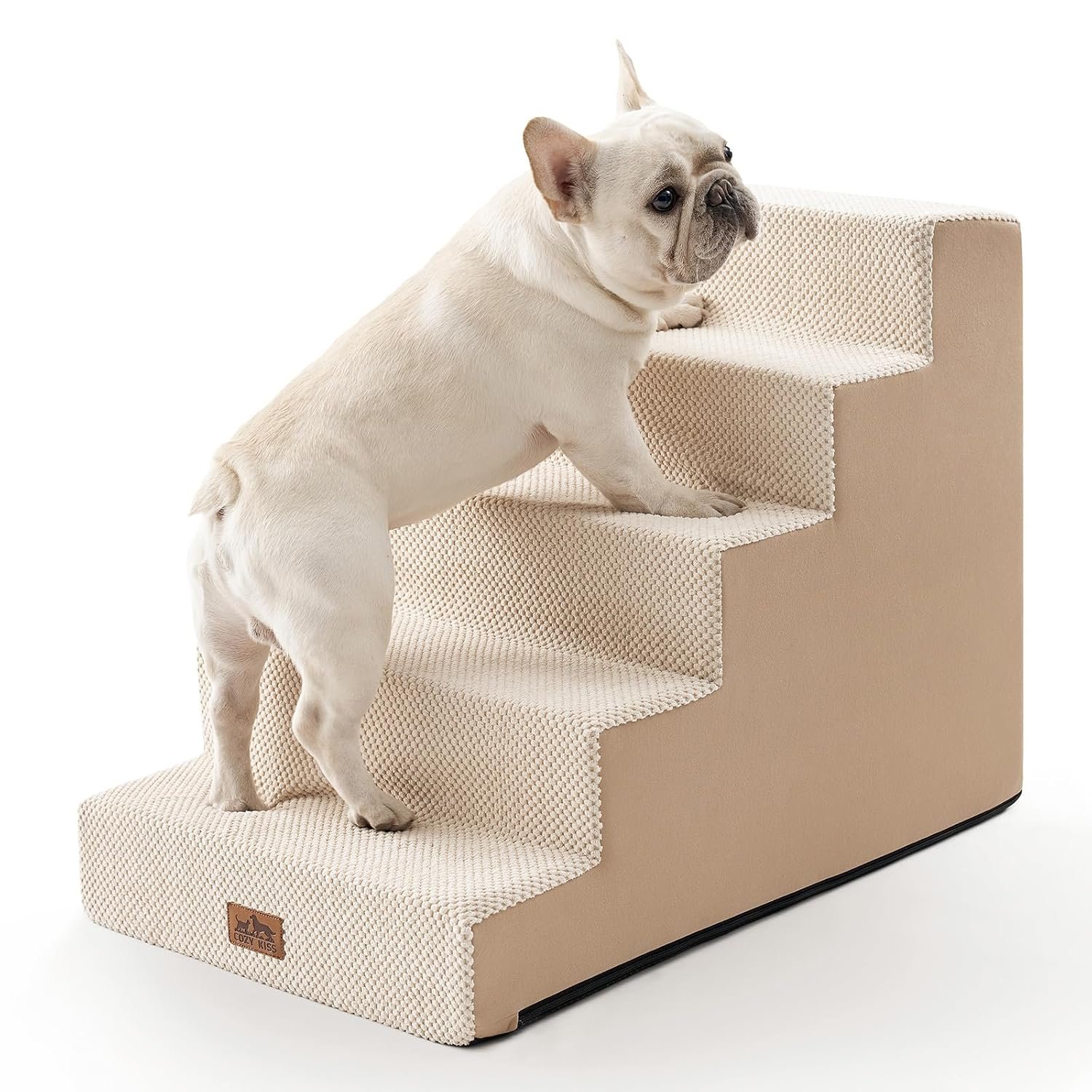
Love’s cabin solves a different problem: it turns an always-visible bedroom stair into storage. That matters in small rooms where pet supplies, blankets, toys, or harnesses already need a place to live. The 18 inch height is also the tallest of the three picks here.
The storage design is useful only if the stair remains stable when loaded and folded correctly. This is a better choice for a calm dog that climbs deliberately than for a dog that launches at furniture from across the room. The 200 pound capacity claim sounds generous, but the real daily test is whether the frame feels planted under quick paw pressure.
The downside is bulk. Storage stairs can be harder to move for cleaning than simple foam blocks, and the interior compartment is not a reason to ignore tread depth. Buy it for combined access and organization, not because storage alone makes it safer.
Love’s cabin-specific fit note: I would keep this stair fully opened in one fixed bedroom location for the first week, then decide whether the storage feature is helping or tempting you to move it too often. A storage stair only works as a mobility aid when the dog can trust that the path will be in the same place every night.
Which one should you buy?
Think of this decision as a fit problem first and a feature problem second. Start with the exact height of the furniture, then decide whether your dog needs a gentle approach, the cheapest workable climb, or a piece that doubles as storage. That order prevents the most common mistake: buying attractive stairs that still leave a final jump.
How to match stair height to your bed
Before choosing among these three picks, measure from the floor to the actual mattress top, then subtract the listed stair height. If the remaining gap is two inches or less, most confident small dogs can usually step across without a jump. If the gap is four to six inches, the dog may still launch from the last tread, especially when excited at night.
The Gardner Pet 16.5 inch height is a strong middle ground for couches, daybeds, and moderate platform beds. It is not a miracle for very tall pillow-top beds, but the hybrid profile gives a cautious dog a more gradual path than a squared block. That is why it wins overall instead of merely winning on height.
Aodisman makes more sense when the furniture target is lower. I would use it beside a sofa, chair, or low bed before using it beside a tall mattress. Its value is not that it solves every height problem; its value is that it gives budget shoppers a cheap, review-backed climb when the measured gap is realistic.
Love’s cabin is the tallest pick here and the only one that turns the stair into storage. That makes it attractive in a small bedroom, but height is still only one variable. Storage stairs can feel bulkier, and the dog has to trust the structure when climbing down. I would choose it for organized bedrooms where the stair can stay in one fixed spot.
A simple training plan before bedtime
Day one should not start at midnight when the room is dark and the dog is tired. Put the stairs near the target furniture during the afternoon, place a treat on the first tread, and reward any calm investigation. Stop before the dog gets frustrated. That keeps the stair from becoming a pressure object.
On the next session, reward the second step and then guide the dog back down slowly. Descent is the part many owners skip, and it is the movement that often reveals whether the tread depth and surface are adequate. If the dog jumps off from the middle, slow the training down and add a rug at the base.
Once the dog climbs and descends calmly, keep the product in the same location for at least a week. Dogs build a motor pattern around repeated placement. Moving the stair away during the day and bringing it back at night can reset the learning process, especially for older dogs with vision or confidence issues.
If the dog still avoids the stair after several short sessions, do not assume stubbornness. The height may be wrong, the cover may feel slick, the stair may shift, or the dog may be protecting a sore joint. That is the point where veterinary guidance is more valuable than another product swap.
Flooring changes the winner
Hardwood, laminate, and tile make anti-slip backing more important than the listing photos suggest. A stair that feels planted on carpet can slide when a dog pushes off on a smooth floor. If your bedroom has slick flooring, I would add a rug or mat at the base no matter which product you choose.
Carpeted bedrooms are more forgiving, but they can hide another issue: soft foam stairs may compress unevenly when the dog turns. Watch the first week of use. If the stair twists or sinks during descent, the dog may begin jumping around it, and that is a sign the shape is wrong for that dog.
Small rooms also change the decision. A storage stair sounds appealing until it blocks a closet door or creates a toe-stub hazard in a narrow walkway. A compact budget stair may be safer simply because it can stay in a better location. Placement is part of the safety profile.
For multi-pet homes, observe the fastest animal, not just the intended user. A young dog or cat sprinting over a foam stair can shift it out of place for the senior dog who needs it later. In that case, a wider base, a rug, or a more rigid design becomes more important than the price difference.
My final decision framework
The first branch is furniture height. If the measured target is a couch, chair, or low bed, Aodisman becomes more attractive because the compact size is enough and the price is low. If the target is a medium bed and the dog hesitates on squared steps, Gardner Pet becomes the safer starting point because the hybrid surface feels less abrupt.
The second branch is the dog, not the product. A confident young small dog usually needs a stable route and a grippy surface. A senior dog may need lower effort, a slower approach, better landing control, and veterinary input. A dog recovering from surgery may need a completely different plan, including a full ramp or temporary furniture restriction.
The third branch is room layout. A pet stair that blocks a dresser, closet, or walking path will be moved out of place, and a moved stair is less useful because dogs learn from repetition. The best product is often the one that can stay in the same safe spot every day without becoming bedroom clutter.
The fourth branch is cleaning. Pet stairs live in a dirty zone: bedroom floors, dog hair, paw moisture, and fabric bedding. A removable cover or wipeable surface does not make the stair safer on day one, but it makes the stair more likely to stay in service after a month. That long-term use is part of value.
The fifth branch is descent behavior. Watch whether the dog uses every step on the way down. If the dog jumps from the second step, the stair may be too narrow, too steep, too slick, or too far from the bed. A successful product changes both directions of travel, not just the climb up.
For renters and small apartments, I would give extra weight to footprint. Love’s cabin has the strongest storage story, but storage only helps if the stair can stay open and stable. Aodisman has the strongest compact-value story, but it should not be stretched into a tall-bed role. Gardner Pet has the most balanced shape, but it still needs the measured height to make sense.
For senior-dog households, I would start with medical context. If the dog is stiff, limping, or reluctant to move, ask a veterinarian before buying. If the dog is medically cleared and simply needs a calmer way to reach furniture, then choose the stair that creates the smallest final gap and the most stable descent.
For multi-pet homes, assume the product will be used by animals other than the intended dog. A cat may sleep on it, a puppy may sprint across it, or a second dog may move it. That makes base grip and placement more important than they are in a single-dog listing photo.
For shoppers who only want the fastest answer, my recommendation is simple: buy Gardner Pet if you are unsure and the height works, buy Aodisman if price and compact placement matter most, and buy Love’s cabin if the bedroom needs storage and the dog is calm enough for a folding stair. That is a clearer decision than sorting the category by star rating alone.
The reason I do not crown the cheapest option overall is that a bad height match wastes the purchase. A $29 stair that still leaves a jump is more expensive than a $40 stair the dog uses every night. Fit is the value calculation.
The reason I do not crown the tallest option overall is that tall is not always safer. A bulkier stair can create a tight turn or a narrow landing zone. The correct height has to work with the room and the dog, not just with the mattress number.
The reason Gardner Pet remains first is balance. It gives a gentler shape, practical cover story, usable height for many furniture setups, and enough review depth to clear the screening floor. It is not perfect, but it solves the most common high-bed access problem with the fewest special assumptions.
When I would skip pet stairs entirely
I would skip this category if the dog is currently in pain, recently injured, recovering from surgery, or showing a sudden change in mobility. A stair can make furniture access easier, but it can also encourage movement a veterinarian would rather limit for a few weeks. In those cases, the first purchase may be a gate, a floor bed, or a temporary routine change instead of stairs.
I would also skip indoor foam stairs for very large dogs that hit furniture with speed. The products in this guide are aimed at small and medium indoor use cases. A heavier dog may need a longer rigid ramp with a wider surface and more planted base, especially on smooth floors where light stairs can shift.
Another reason to pause is an unsafe room layout. If the only available stair position forces the dog to turn sharply, step onto tile, or squeeze between furniture, the route may create a new risk. The safest pet stair is the one that creates a simple line from floor to furniture and back down again.
Finally, skip stairs if lowering the furniture solves the problem better. A lower bed frame, a dog bed beside the human bed, or a no-jump bedtime routine can be cheaper and safer for some households. Buying the right product includes knowing when the product category is not the right intervention.
A quick paper test helps before ordering. Tape a rectangle on the floor where the stair would sit, then walk around the bed at night with normal lighting. If the outline blocks a drawer, closet, or walking path, choose a smaller stair or a different placement before comparing prices.
That simple layout check prevents buying a stair that technically fits the dog but fails the room.
That extra check matters because the wrong stair usually fails during ordinary nighttime use, not in a product photo.
Frequently Asked Questions
Which dog stairs are best for a high bed? +
Gardner Pet is the best overall pick here because the 2-in-1 shape gives a calmer climb path than a compact stair while still fitting beside a bed.
What is the best budget dog stair under $50? +
Aodisman is the value pick because it keeps the price low, has strong review depth, and works best for sofas, chairs, and lower beds.
Are storage dog stairs worth it? +
Storage stairs make sense when the stair stays visible in a bedroom and you want a place for leashes, blankets, or toys, but the folded body must still feel steady.
Should senior dogs use stairs or ramps? +
Ask your veterinarian when pain, arthritis, surgery, or spine risk is involved. Many dogs benefit from a ramp-style climb, while confident small dogs may handle deeper stairs.
Gardner Pet
Gardner Pet is the best starting point for most high-bed shoppers because the hybrid shape addresses confidence, traction, and everyday bedroom use better than a basic compact block.
As an Amazon Associate, I earn from qualifying purchases. Prices, ratings, and availability accurate as of July 2, 2026 and subject to change.