
As an Amazon Associate, I earn from qualifying purchases. This article contains affiliate links at no additional cost to you. – Maya Bennett
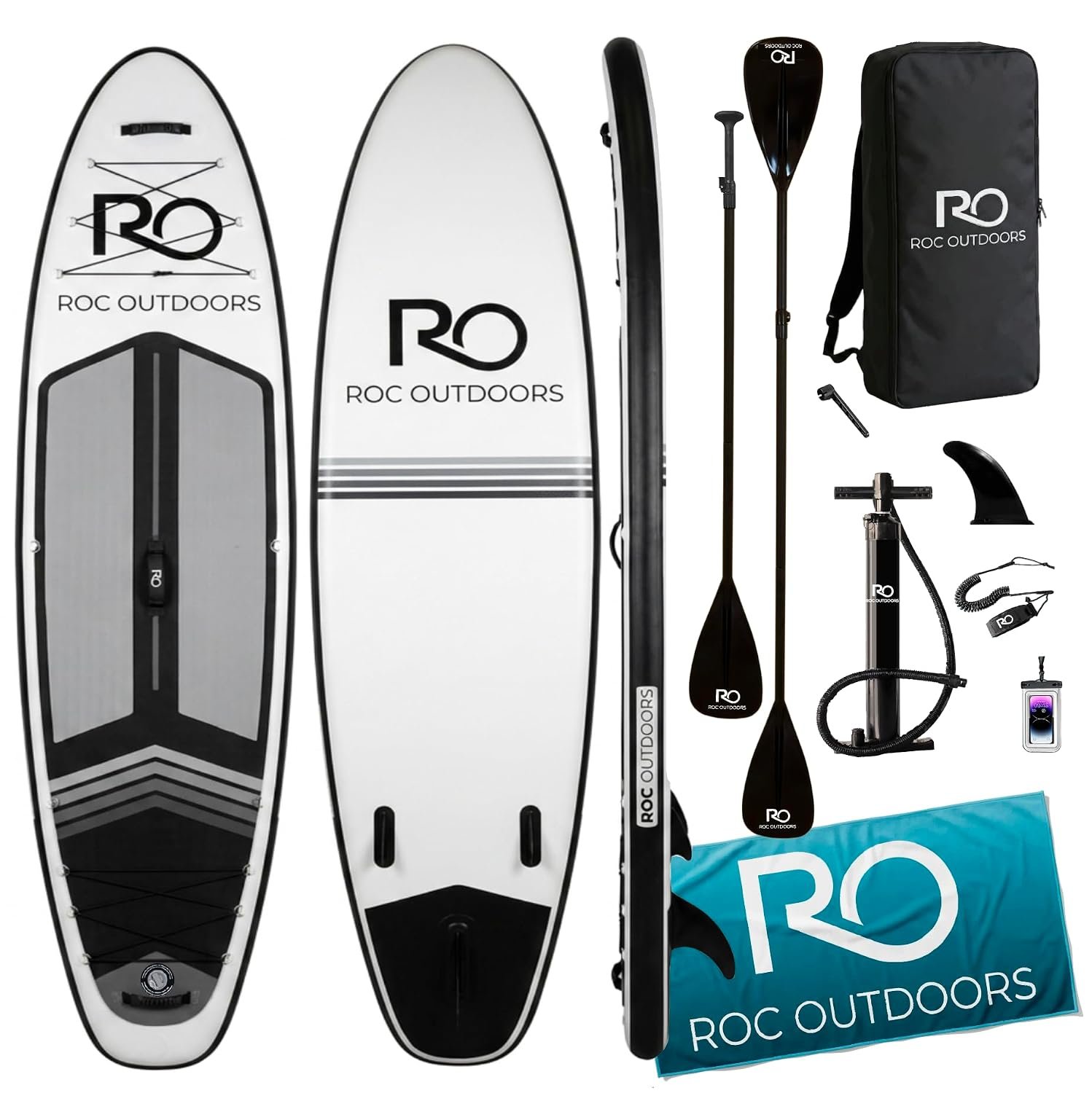
Editorial verdict: The ROC is the strongest all-around value in this trio. Its 33-inch platform, 350-pound listed capacity, complete accessory bundle, and three-year warranty make it easier to recommend than a cheaper board with thinner support. ReviewGuid score: 4.6/5.
Scores
| Stability | 4.7/5 |
| Kit completeness | 4.8/5 |
| Portability | 4.5/5 |
| Construction confidence | 4.6/5 |
| Value | 4.6/5 |
What I Like
- Stable 33-inch all-around shape
- 350-pound listed capacity
- Complete kit includes a dry bag
- Three-year warranty
- Large long-term rating base
What I Would Change
- Manual pump still takes real effort
- All-around shape is not built for racing
- Current Amazon buybox uses a newer variant ASIN
Who the ROC 10’6 Is For
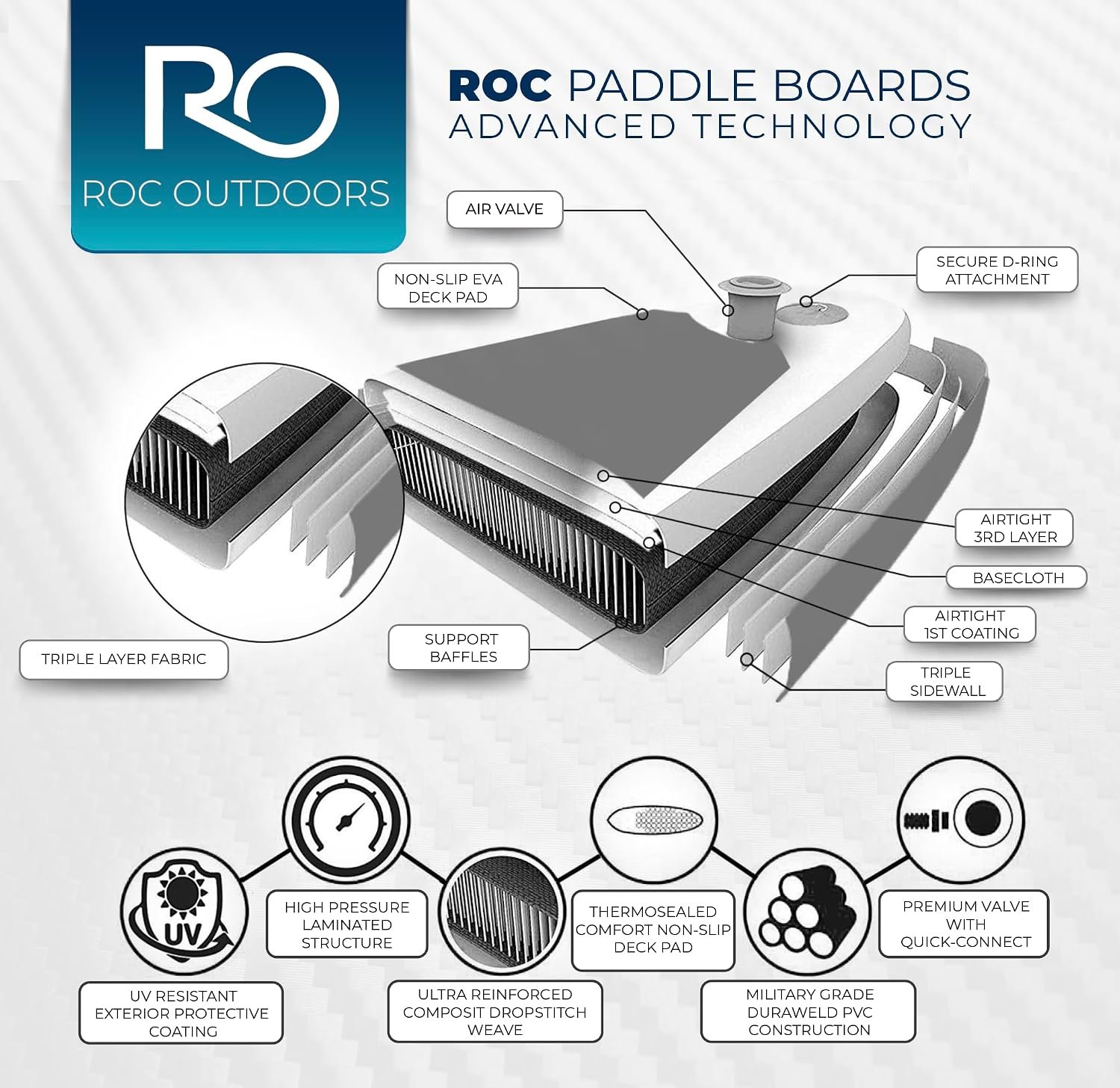
The ROC earns Best Overall because it gives a new buyer the fewest reasons to upgrade immediately. The board is wide enough for calm-water confidence, the package covers the basics, and the warranty is unusually clear for an Amazon-first paddle board.
Its 350-pound listed capacity gives solo adults room for a cooler, dry bag, or small passenger without shopping right at the load limit. Capacity is not the same as comfort, but extra margin helps the board sit higher and feel less nervous under normal recreational loads.
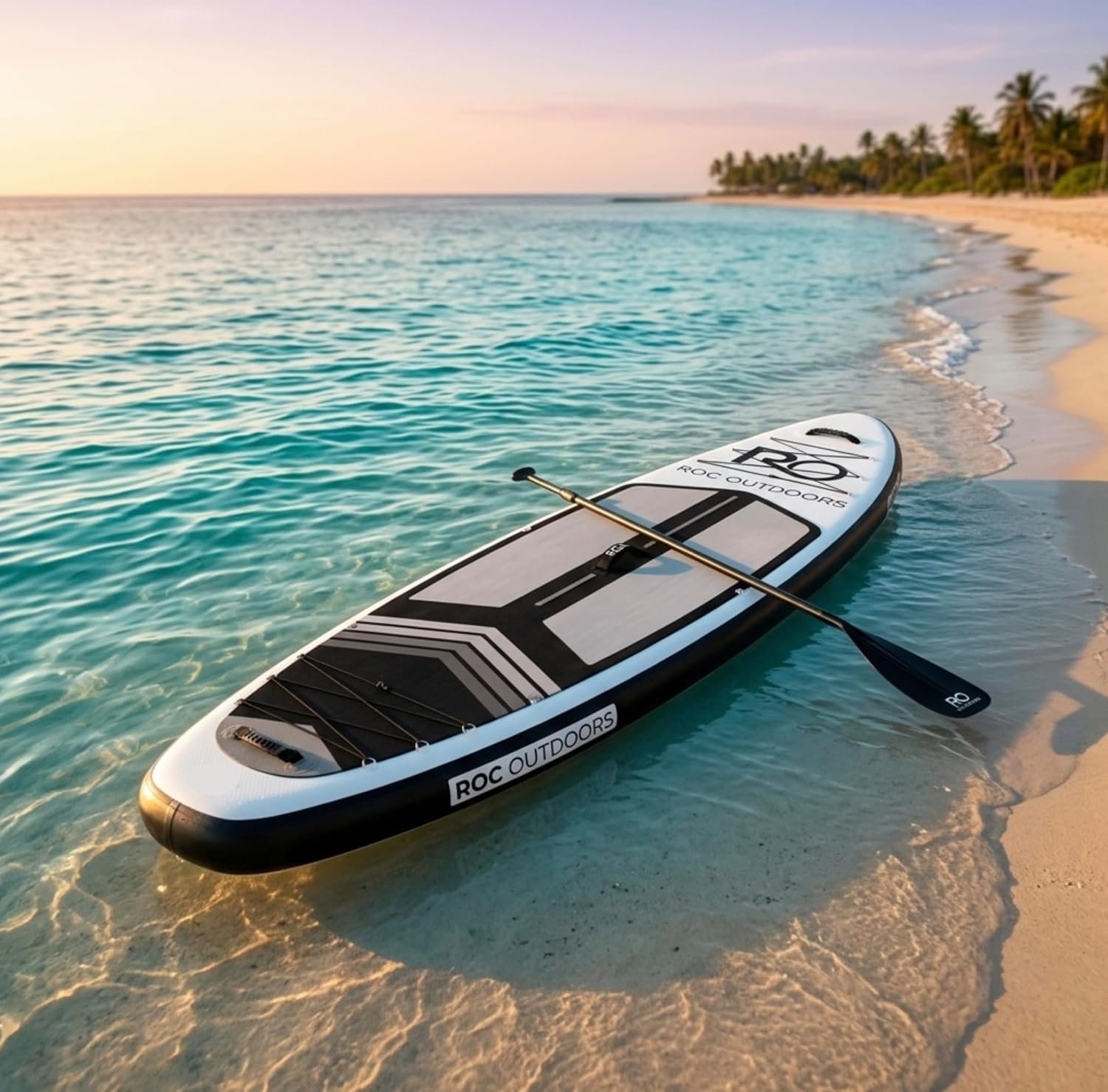
The shape favors stability and easy turning over speed. That is exactly right for a summer lake board, casual coastal flat water, yoga, or family use. Buyers who want long-distance touring pace should look for a narrower touring outline instead.
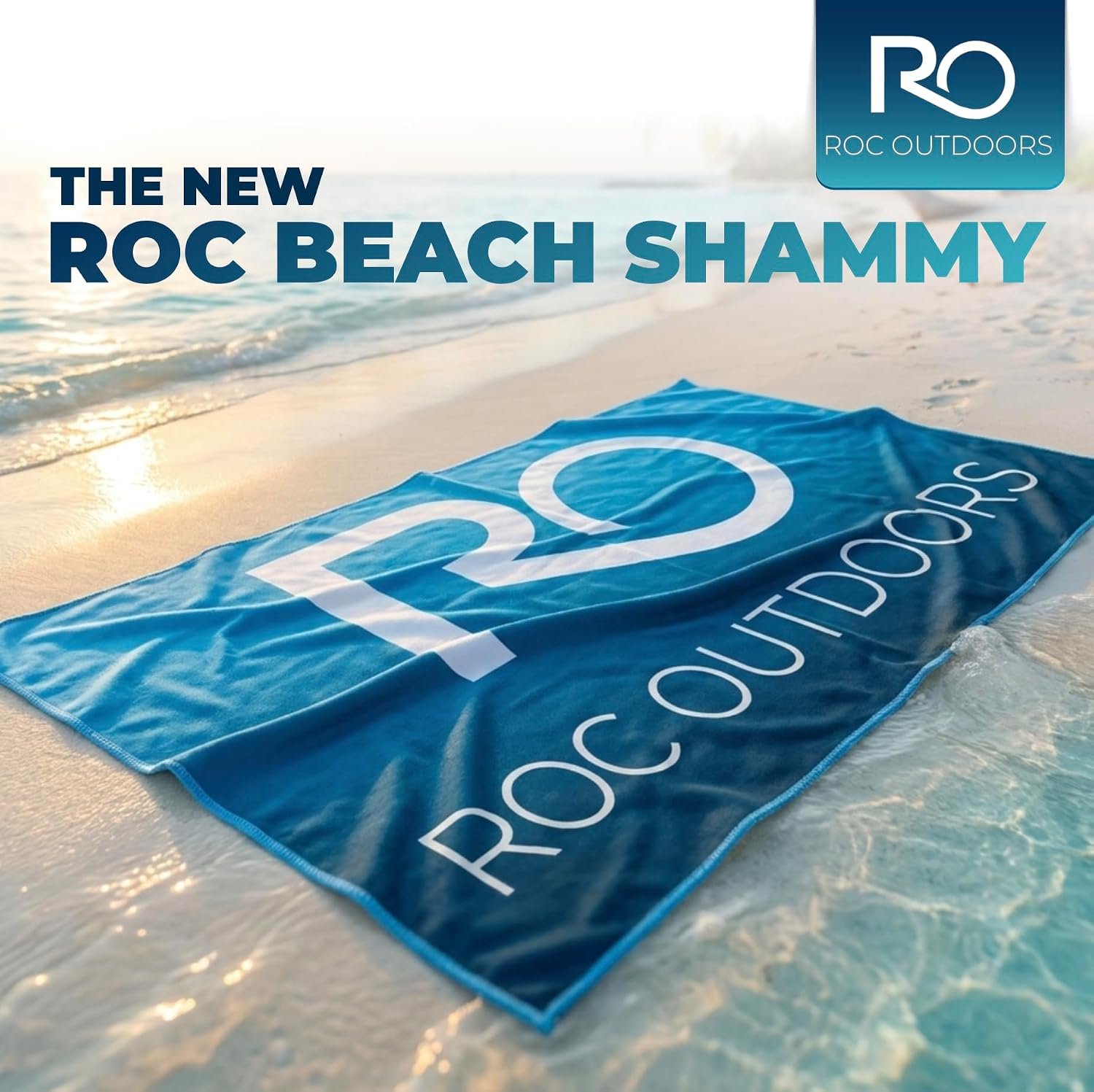
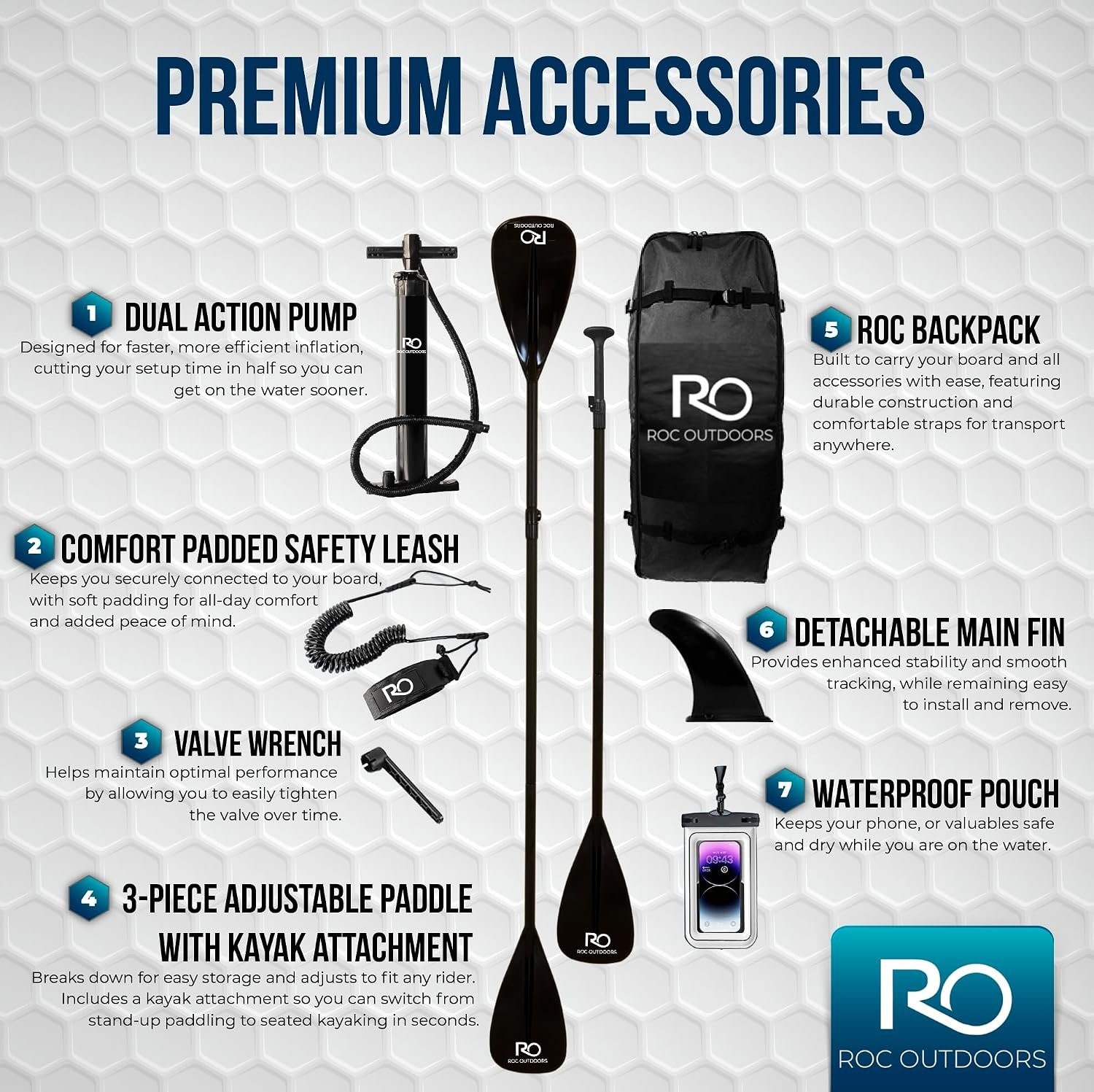
ROC includes the accessory kit that makes an online purchase usable on day one. The paddle and pump are starter-grade rather than premium, but the leash, removable fin, backpack, and dry bag reduce surprise spending after checkout.
Amazon now serves the active B0GZHWFTZ6 variant in the buybox, while older press coverage and rating history often reference B091J4JN9C. I use the active ASIN for the affiliate link and keep the historic ASIN only as research context.
This product sits in the best inflatable paddle board comparison as best overall. Its current lane is most first-time and recreational paddlers who want a stable all-around board with a complete kit and strong warranty.
This review is an editorial evaluation of the current US listing, published specifications, rating history, kit, price, warranty information, and role in the three-product comparison. ReviewGuid did not accept a manufacturer sample and does not claim a controlled on-water laboratory test.
The first setup should happen at home, not at a crowded launch. Unroll the board on a clean surface, inspect the valve position, install the pump hose correctly, and verify every accessory. A missing fin pin or damaged valve is much easier to solve before the car is packed.
Inflate within the listed pressure range. The last few PSI require more effort and make the biggest difference to stiffness. If the gauge does not move at first, the chamber may simply be below its readable range. Stop if the hose, valve, or seam behaves abnormally.
Carry the inflated board by its center handle with the fin facing away from obstacles. Do not drag it over pavement, shells, or gravel. Small abrasion is avoidable, and a six-inch inflatable is light enough for most adults to move from a nearby staging area.
At the water, attach the right leash for the conditions and wear a properly fitted PFD. The American Canoe Association SUP safety resource explains life-jacket functionality for stand-up paddlers. A coiled ankle leash is common on flat water, but moving rivers can require different quick-release training.
Begin on the knees, paddle away from hazards, and stand with feet around the center handle. Keep eyes forward and knees relaxed. Stability improves when the board is moving slightly; staring at the feet tends to make every wobble feel larger.
The printed capacity is a ceiling, not a comfort guarantee. Leave margin for gear, water, a dog, or a passenger. More load sinks the rails, reduces glide, and can make the deck wetter even when the board has not technically exceeded its maximum.
Wind should control the route. Paddle into the breeze early so the return is assisted, remain close to shore, and turn around before arms are tired. Inflatable boards have a high profile and can drift quickly when a paddler stops making progress.
Check the weather and water temperature immediately before launch. The National Weather Service cold-water guide warns that warm air can hide dangerous immersion conditions. Thunderstorms can also build faster than a relaxed lake session suggests, so use a float plan and visible return time.
Starter paddles and pumps are useful because they make the kit complete, but they are also the first likely upgrades. An automatic electric pump saves energy, and a lighter paddle reduces shoulder fatigue on longer sessions. Neither upgrade fixes a board that is wrong for the user’s capacity.
After paddling, rinse salt, mud, algae, and sand. Let the deck dry before rolling, especially under the bungee and around the valve. Trapped grit scratches surfaces and trapped moisture creates odor inside the backpack.
Use the repair kit only according to its instructions and never improvise a structural seam repair before a serious outing. Small surface punctures may be repairable, while valve or rail failures deserve manufacturer support and a full cure time before reinflation.
Amazon ratings can combine colors, packages, and older variants. Read recent critical reviews for repeating valve, seam, pump, or missing-part patterns, then compare those complaints with warranty response. One angry review is an anecdote; a recurring pattern is a buying signal.
The current price should be verified at checkout. Seasonal coupons, Prime events, sellers, and shipping dates change. Use the article price as a comparison snapshot, not a promise, and confirm that the selected size and kit match this review.
A PFD is not normally included in these kits. The National Park Service life-jacket checklist recommends a US Coast Guard-approved model that fits the paddler and intended activity. Children and local waterways may have stricter rules, so check the launch authority.
This is an all-around recreational category. Buyers prioritizing touring speed, whitewater, surf performance, or heavy fishing rigs should choose a specialized shape and training path instead of forcing a starter board into a job it was not designed to do.
Long-term value depends on use frequency. A board used six weekends each summer can justify a better warranty and pump. A board used once at a vacation house may favor entry price, provided the owner still completes the same safety and inspection steps.
Before the first season, practice deflation and packing at home. Open the valve only after the board is clean, keep your face away from the initial air release, and roll according to the manual so the fin box and valve are not sharply folded. A neat pack protects parts and leaves room for the rest of the kit.
During transport, keep the fin separate unless the manufacturer specifically permits packing it installed. A loose hard fin can press into the rolled board, while sand in the fin box can prevent full engagement at the next launch. A small labeled pouch for the fin hardware avoids an easy vacation-day failure.
If performance feels poor, check setup before judging the model. Low pressure, a missing center fin, a paddle adjusted too long, cargo at the nose, or a stance behind the center can all create slow, unstable handling. Correcting one setup error often matters more than changing brands.
Noise is mostly a pump issue, especially with electric models at a campground or early-morning launch. Inflate away from sleeping areas when possible and respect local quiet hours. A manual pump is silent but uses energy that the paddler may want to save for the water.
A warranty claim is easier with evidence. Keep the order number, photograph the serial or valve area if present, and record a suspected slow leak with soapy water only if the manufacturer recommends that method. Do not cut, glue, or disassemble a board before asking support, because an improvised repair can complicate coverage.
At the end of summer, perform a full inspection under good light. Look along both rails, around the valve, at fin-box edges, and beneath cargo cords. Clean and dry everything before cool storage. Finding a small issue in September is better than finding it at the first launch next June.
Route planning should include an exit point before fatigue or weather arrives. Mark a conservative turn-around time, identify more than one safe shore, and avoid committing to a crossing just because the destination looks close. Distance over water is deceptive, and a breeze can make the return much slower than the outward leg.
Hydration and sun exposure affect judgment. Carry drinking water in a secured bottle, use sunscreen and eye protection, and take breaks before cramps or dizziness begin. The reflective surface of a lake can increase sun exposure even when air temperature feels comfortable.
When lending the board, transfer the safety briefing as well as the paddle. Explain the valve, fin, capacity, PFD, leash choice, weather limit, and return time. A guest who sees only an inflated platform may not understand the setup decisions that made the original outing safe.
The final decision should feel boringly specific: user weight, added gear, water type, storage, launch distance, and support. Color matters after those questions, not before them.
How I Evaluated the ROC 10’6
I evaluated the current US listing, active ASIN, published dimensions and capacity, included kit, warranty language, price, rating history, six verified Amazon gallery images, role fit, and the same NPS, NWS, and ACA safety criteria used across this cluster. ReviewGuid did not accept a manufacturer sample and does not claim a controlled on-water laboratory test.
Why Trust ReviewGuid
Maya Bennett applies the same capacity, stability, kit, support, safety, and value framework to all three boards. Prices and listing details were checked on July 13, 2026. Affiliate links do not change the editorial score, and the disclosure appears before the review content.
Product Gallery
FAQ
Is the ROC 10’6 good for beginners?
Yes, when the user and gear fit its 350 lb listed capacity and the board is used on suitable water.
What comes with the ROC 10’6?
Paddle, pump, leash, fin, backpack, dry bag. A properly fitted PFD is normally purchased separately.
What pressure does the ROC 10’6 use?
15 PSI max. Follow the current manual and never exceed the manufacturer’s limit.
How should I store the ROC 10’6?
Rinse and dry it fully, roll it according to the manual, and keep the board in a cool place away from extreme heat, sharp objects, and trapped moisture.
Compare all three paddle board picks, read the summer 2026 trend report, or continue with the sibling reviews: FunWater 10’6 review and SereneLife 10′ review.