

Disclosure: As an Amazon Associate, I earn from qualifying purchases. This article contains affiliate links at no additional cost to you. – Maya Bennett
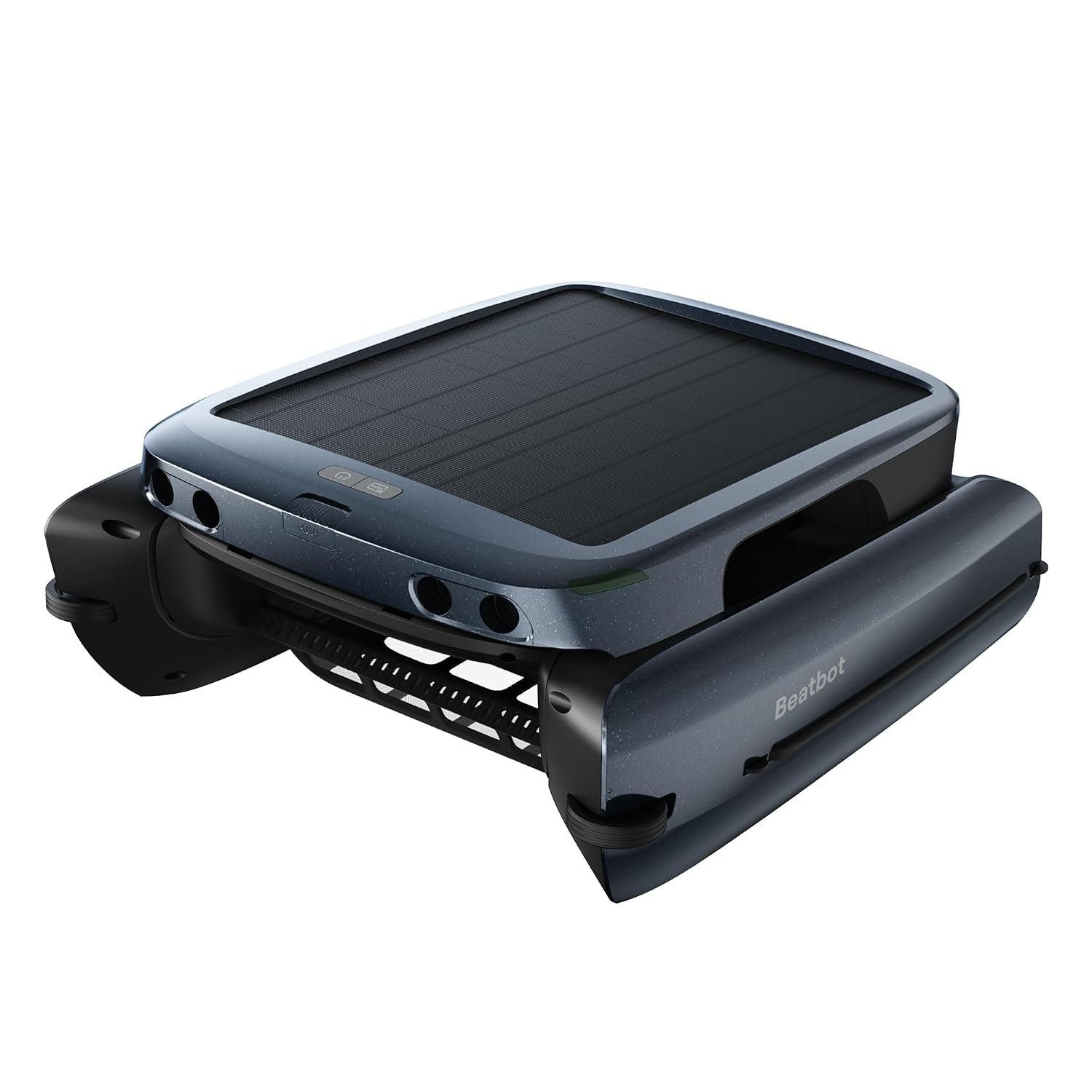 Beatbot iSkimEditorial 4.6/5Check Price on Amazon
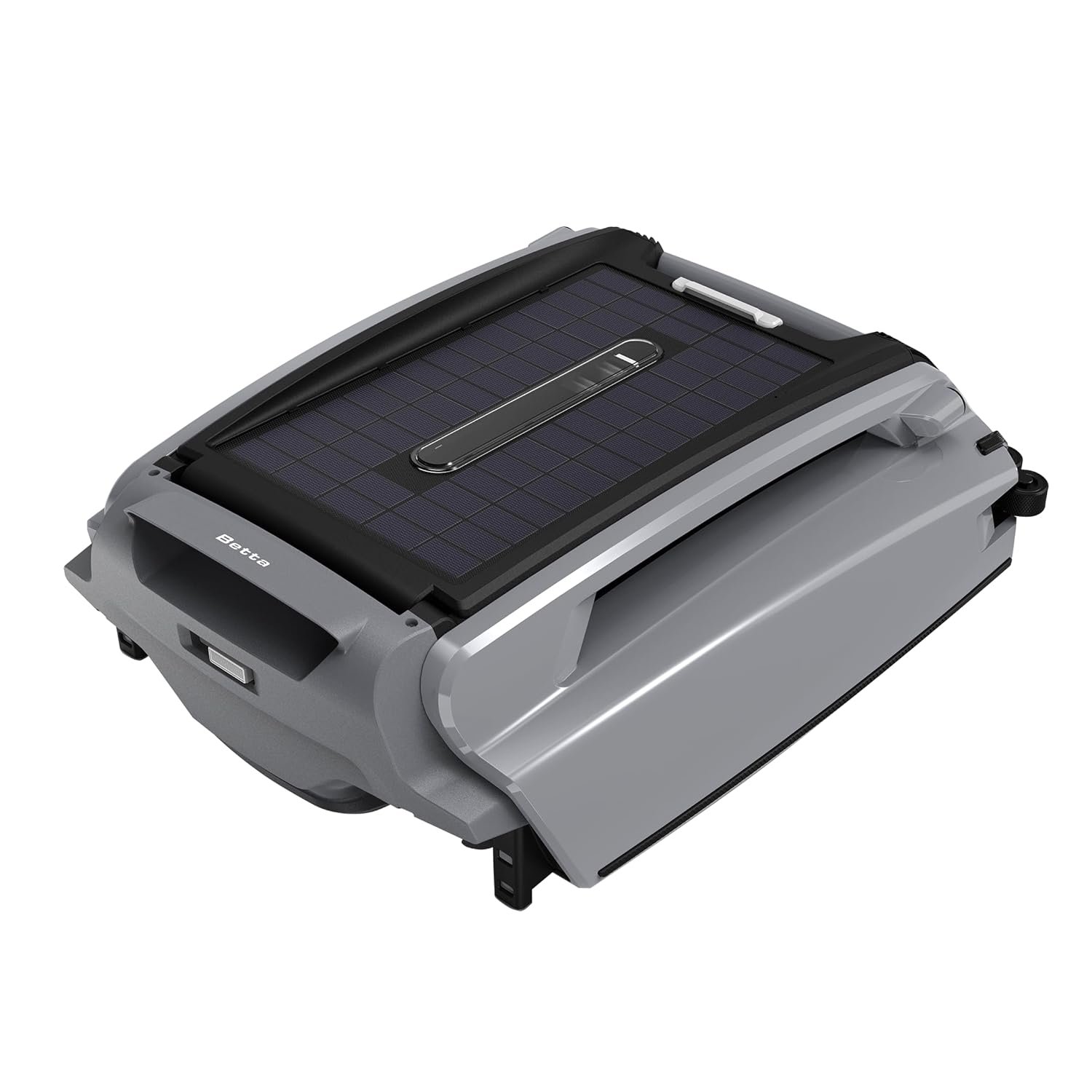 Betta SE PlusEditorial 4.4/5Check Price on Amazon
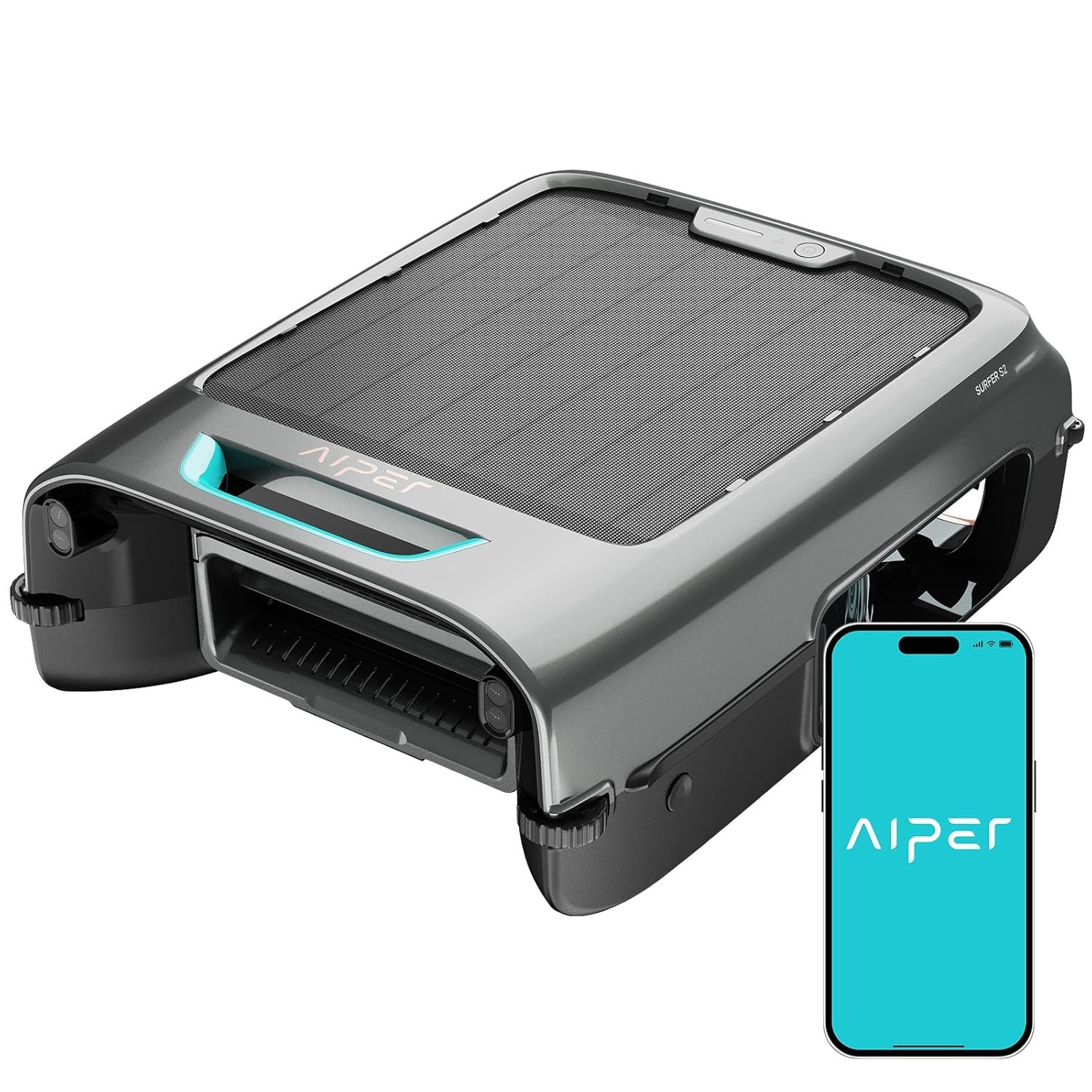 Aiper EcoSurfer S2Editorial 4.5/5Check Price on Amazon
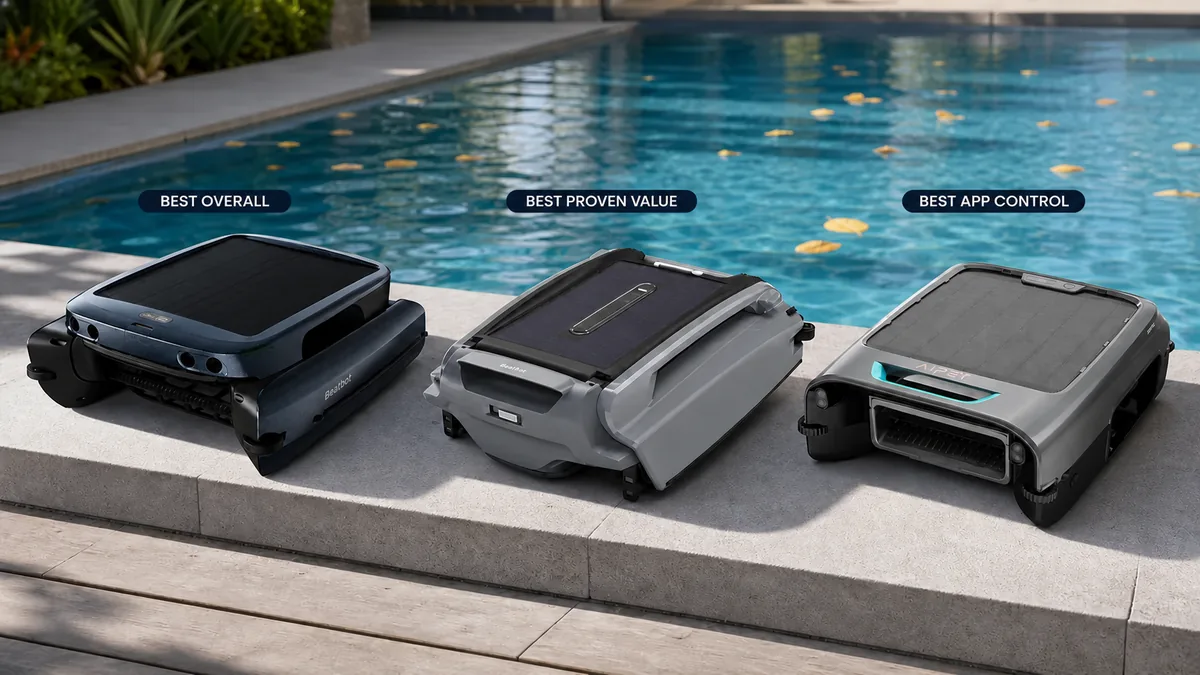
Beatbot iSkim is my Best Overall pick for leaf-heavy pools because its 9L basket, wide inlet, 28-hour reserve and three-year warranty reduce emptying and charging interruptions. Betta SE Plus is the proven-value choice with 2,790 Amazon reviews and an included adapter. Aiper EcoSurfer S2 is best for app control and fine pollen with 150-micron filtration.
How I evaluated these robotic pool skimmers
I compared current US Amazon listings, official manuals and support pages, warranty terms, basket and filter specifications, charging systems, review volume and recurring owner complaints. ReviewGuid did not receive manufacturer samples and does not claim a controlled hands-on test. I gave 30% of the score to leaf capacity, 20% to runtime and charging, 20% to navigation, 15% to emptying and maintenance, and 15% to value and warranty. Field observations are attributed to named sources, including Tom’s Guide, rather than presented as my own measurements.
For safety context, I checked CDC healthy-swimming guidance, the CPSC Pool Safely program and CDC pool-operation guidance. Surface cleaning never replaces sanitation, circulation or drowning-prevention layers. See the companion 2026 robotic pool skimmer trend report.
Why you should trust this comparison
Maya Bennett reviewed the exact ASINs, image galleries, product claims, current ratings and source dates before drafting. Scores use the same rubric across all three products, and weaker warranty terms or smaller baskets remain visible even when a product has a strong star average. Prices are dated snapshots, not promises. The recommendation favors fit for leaves, pollen, shade and pool geometry over brand familiarity.
Full spec sheet at a glance
| Feature | Beatbot | Betta | Aiper |
|---|---|---|---|
| Best for | leaf-heavy pools where basket capacity and long unattended runtime matter most | buyers who want the most established owner history and included backup charging | pollen, fine debris and owners who want scheduling, alerts and app-based control |
| Type | Solar surface skimmer | Solar surface skimmer | Solar surface skimmer |
| Price snapshot | $369.00 | $399.89 | $339.99 |
| Amazon rating | 4.5 / 5 | 4.6 / 5 | 4.5 / 5 |
| Amazon reviews | 166 | 2,790 | 2,100 |
| Basket | 9L | Large top-access | 4L |
| Filtration | Wide debris inlet | 200 microns | 150 microns |
| Runtime | Up to 28 hours | More than 30 hours | Up to 35 hours |
| Backup charging | Optional adapter | Included adapter | Included adapter |
| Warranty | 3 years | 1 year | 2 years |
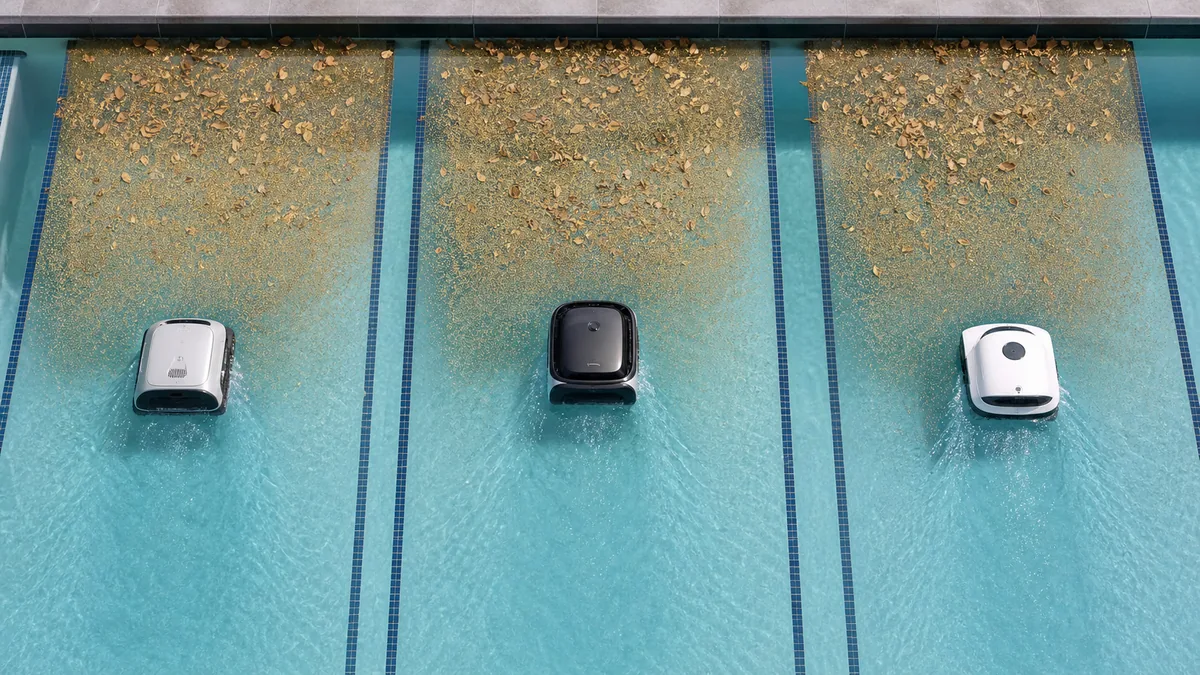
The three picks in detail
Beatbot iSkim
The iSkim is the strongest all-around choice because its 9L basket, wide intake, long battery reserve and three-year warranty reduce the two jobs owners dislike most: repeated netting and repeated emptying.
The 9L basket is the defining advantage. Large maple or oak leaves occupy volume quickly even when they weigh very little, so a larger basket can matter more than a finer headline filtration number during peak leaf fall. Beatbot also uses a wide intake and an anti-spill basket structure intended to keep debris from washing back out during retrieval.
Battery reserve is equally important in shaded yards. The integrated 24W panel can support daytime operation, while the 10,000mAh battery is rated for up to 28 hours without useful light. That does not guarantee nonstop operation in every shaded pool, but it gives this model more room to bridge clouds, night hours and partial tree cover.
Navigation is designed around full-surface coverage rather than a mapped floor route. Guided wheels help the skimmer work along walls, SonicSense handles common obstacles, and the app can call the unit back toward the edge. Owners should still remove floating thermometers, toys and loose cords because a surface robot cannot interpret every object reliably.
The main risk is model age. A 4.5-star Amazon rating across 166 reviews is encouraging, but it does not offer the same long-term failure history as the Betta listing. The three-year warranty partly offsets that uncertainty, provided the buyer keeps the receipt, registers the product and confirms what the policy covers.
Tom’s Guide reported that its test pool surface was cleaned in under an hour and that the basket still had room after four days. Those are useful field observations, not a promise for every pool. Wind, tree density, skimmer suction, pool shape and the number of floating obstacles can materially change results.
- Largest 9L basket in this comparison
- Up to 28 hours of runtime without sunlight
- Wide inlet handles leaves and mixed debris
- App control plus automatic edge parking
- Recent model has a smaller long-term review base
- Optional wall charger costs extra
- Floating toys can confuse the wide intake
- 21.1 x 20.1 x 8.9 in
- 9L
- Up to 28 hours
- 3 years warranty
Betta SE Plus
The SE Plus is the proven-value pick. Its 2,790-review base, dual charging, 200-micron basket and simple remote make it easier to evaluate than a brand-new model, though its one-year warranty is the weakest in the trio.
The strongest argument for the Betta is evidence depth. A 4.6-star rating across roughly 2,790 Amazon reviews gives buyers more failure reports, seasonal updates and pool-shape experiences to inspect than either rival. Ratings can combine listing variations, so recent critical reviews still matter more than the headline average alone.
Its 200-micron basket is fine enough to catch pollen, insects and small organic debris while still handling ordinary leaves. The tradeoff is maintenance: fine mesh loads quickly when a pool receives a heavy burst of wet leaves. Rinsing the basket before airflow drops is part of ownership, not a defect unique to this model.
Dual charging makes the SE Plus practical in mixed weather. Betta states more than 30 hours of operation and supplies an adapter that can recharge the unit in roughly 3.5 hours. Solar performance always depends on direct exposure, panel cleanliness and season, so the adapter is meaningful rather than a token accessory.
Ultrasonic obstacle detection and shallow-water protection address common places where floating robots stall. They cannot solve every ledge, waterfall, return jet or built-in skimmer opening. A pool with unusual geometry may still need foam barriers or occasional repositioning based on the manual and support guidance.
The one-year warranty is the clearest disadvantage. A product that lives outdoors in chlorinated or salt water benefits from longer coverage. The SE Plus remains attractive when the current price is competitive, but buyers should compare retailer return periods and credit-card warranty extensions before checkout.
- Largest established Amazon review base here
- Solar and adapter charging are both included
- 200-micron basket captures leaves and pollen
- Shallow-water safeguard helps around steps
- One-year standard warranty is relatively short
- No full scheduling app like the Aiper
- Large leaves can cover fine mesh and slow flow
- 22 x 19 x 8 in class
- Large top-access basket
- More than 30 hours stated
- 1 year warranty
Aiper EcoSurfer S2
The EcoSurfer S2 is the smart-control pick. Its 150-micron filter, 35-hour rated runtime, edge mode, app alerts and two-year warranty make it the most balanced option for fine debris and connected operation.
The EcoSurfer S2 prioritizes fine debris and control. Its 150-micron filter is the finest stated rating in this comparison, useful for pollen, tiny insects and fragments that pass through coarser baskets. A finer filter is not automatically better during heavy leaf fall because the 4L basket fills sooner than Beatbot’s 9L design.
Aiper rates adapter-powered runtime at up to 35 hours and also supplies solar charging. That combination suits owners who want overnight coverage but cannot guarantee full sun. Actual runtime changes with propulsion demand, app use, water movement, temperature and how often the unit fights obstacles or return jets.
The app is the category advantage. It supports status checks, remote direction, scheduling and obstruction alerts. Aiper’s support guidance specifies 2.4 GHz Wi-Fi for setup, so owners with a 5 GHz-only network must enable a compatible band. That requirement should be checked before the robot is floating in the pool.
Dual optical sensors and four anti-stranding posts improve behavior around edges and shallow areas. Owner reports still mention specific trouble spots around waterfalls, submerged ledges and built-in openings. The app alert helps users discover a stall; it does not physically free the unit from every pool feature.
At a current official price near $339.99, the S2 offers the lowest snapshot price in the trio and a two-year warranty. Its buying case is strongest for pollen-heavy pools and connected owners. Leaf-heavy yards should decide whether finer filtration is worth emptying a smaller basket more often.
- 150-micron filtration is finest in this trio
- App supports status, control and scheduling
- Up to 35 hours on an adapter charge
- Four anti-stranding posts address shallow steps
- 4L basket needs more frequent emptying under leaves
- App setup requires a 2.4 GHz Wi-Fi network
- Water features and ledges can still cause stalls
- 21.3 x 18.6 x 9.4 in
- 4L top-loading
- Up to 35 hours
- 2 years warranty
How to choose a robotic pool skimmer for leaves
Start with debris volume, not pool square footage. Surface robots do not need to vacuum every square foot in a fixed cycle the way floor cleaners do. Their limiting factors are how quickly the basket fills, whether wind concentrates leaves in one corner, and how often the robot becomes trapped around a custom feature.
Map the sun across the water for a full day. A panel that sees six hours of direct summer sun has a different job from one under oak shade after noon. If direct light is inconsistent, choose a model with an included adapter or budget for the optional charger before comparing final price.
Measure the narrowest passages between ladders, walls, floats and built-in features. A robot that physically fits can still wedge itself if a return jet pushes it sideways. Removable toys and thermometers should come out of the water during scheduled cleaning rather than becoming part of the navigation test.
Separate leaf performance from pollen performance. Large dry leaves demand intake width and basket volume. Pollen demands fine filtration and easy rinsing. A yard with both may be best served by a large basket plus a secondary fine insert, if the manufacturer explicitly supports one.
Check saltwater limits instead of assuming every pool robot is salt-safe. Motors, fasteners and charging contacts face sustained exposure. The product page should state a concentration limit or salt-tolerant design, and owners should still rinse and inspect the unit according to the manual.
Treat advertised runtime as a controlled maximum. Propulsion demand rises when the machine fights wind, current or obstacles. Solar contribution changes hourly. Runtime is useful for comparing battery reserve, but it does not promise an identical number of cleaning hours in every backyard.
Plan the emptying routine before buying. A heavy basket should be lifted from a stable position with the power stopped, then opened away from the water so captured debris does not spill back. Fine filters need a gentle rinse that preserves mesh and seals. The manual should control the process.
Read recent one-star and three-star reviews by failure pattern. Repeated motor errors, cracked baskets, water intrusion or poor support matter more than an isolated complaint about shipping. Also verify whether ratings combine older models, colors or bundles that use different hardware.
Use retailer returns as an evaluation window. During the first week, observe whether the robot reaches the windy corner, escapes the built-in skimmer, clears the tanning ledge and returns to the edge. Record the same route on calm and windy days before deciding the fit is acceptable.
Keep expectations narrow. A surface skimmer reduces manual netting and catches debris before it sinks. It does not scrub walls, vacuum sand, balance water, disinfect contamination or replace circulation. A buyer who expects all-in-one pool care will judge a good surface robot by the wrong job.
The best model should also be easy to store. Batteries and plastic housings last longer when the robot is rinsed, dried and protected during off-season periods. Confirm the safe storage temperature and charging schedule, especially in climates with freezing garages or very hot sheds.
Finally, compare support paths. A longer warranty is useful only if the manufacturer can identify the exact model, provide troubleshooting steps and process a claim. Save the ASIN, serial number, receipt, packaging label and initial condition photos before the first launch.
What the specifications mean in a real pool
A useful capacity comparison starts with the worst week of the season, not an average summer afternoon. A 9L basket has a clear advantage when broad leaves arrive in bursts, but capacity does not guarantee uninterrupted collection. Wet leaves can overlap across an inlet, fine debris can coat mesh, and twigs can bridge the opening. Owners should therefore judge the entire path from intake to basket, then plan a shorter inspection interval during storms. Beatbot has the strongest paper specification for this workload, while Betta and Aiper remain easier to justify when debris is lighter or more predictable.
Filtration ratings describe the approximate particle size a basket is designed to retain, but they are not a complete performance score. Aiper’s 150-micron figure is attractive for pollen and tiny insects, while Betta states 200 microns. Beatbot emphasizes its wide inlet and large basket instead of a directly comparable micron claim. Finer mesh normally captures smaller material, yet it can also require more rinsing as organic film accumulates. Buyers should match filtration to the material they actually see floating, rather than assuming the smallest number is universally superior.
Charging accessories change both convenience and effective price. Betta and Aiper include adapter charging for cloudy periods, whereas Beatbot sells its adapter separately. That distinction matters most in shaded yards, where the same trees producing the leaf problem can reduce solar input. In a sunny open pool, the optional charger may remain an emergency accessory. In a pool shaded after noon, reliable wall charging can be central to the ownership routine. Compare the delivered box contents before treating two sale prices as equivalent.
Navigation claims deserve a pool-specific test because surface water is never still. Return jets can push a robot away from one side, wind can hold it in a corner, and built-in skimmer openings can create recurring traps. Sensors, guide wheels and anti-stranding posts improve the odds of recovery, but specifications cannot model every ledge, waterfall or ladder. During the return window, run each route with normal circulation active, remove loose floats, and note any location that requires repeated rescue. A robot that covers less theoretical area but avoids intervention may provide more useful cleaning.
Software has practical value when it reduces trips to the pool. Aiper offers the strongest connected proposition here, with scheduling, status information, remote control and obstruction alerts, but setup requires 2.4 GHz Wi-Fi. Beatbot also provides app control and edge-return functions. Betta keeps the experience simpler and relies less on connected features. The right choice depends on whether the owner wants visibility and schedules or prefers a device that can be launched with minimal network configuration. An app should support the cleaning job, not become another maintenance dependency.
Warranty length is one of the few ownership differences that remains after seasonal discounts disappear. Beatbot lists three years, Aiper lists two and Betta lists one. The headline period should still be checked against exclusions for batteries, wear parts, accidental damage and commercial use. Buyers should register the product if required, save the receipt and photograph the serial label before the first launch. A strong warranty cannot prevent downtime, but it reduces the financial risk attached to motors, batteries and electronics that remain outdoors around chemically treated water.
Current star ratings need two layers of interpretation. Betta’s 2,790 Amazon reviews provide the deepest history and make recurring patterns easier to identify. Aiper also has a substantial 2,100-review base, while the newer Beatbot iSkim has 166 reviews at the research date. A smaller sample does not prove lower quality, but it increases uncertainty about long-term battery and motor behavior. Read recent critical reviews for repeated failure modes, then check whether the listing combines variants. Editorial scoring should balance this evidence with specifications instead of copying the displayed average.
The final value calculation is workload saved over a full season. A lower purchase price can become less attractive if the basket needs frequent emptying, the robot stalls around a permanent feature or a missing charger must be added later. A premium model can still be wasteful for a covered pool that collects little debris. Estimate manual netting minutes per week, expected emptying frequency and the length of the local leaf season. The best robotic skimmer is the one that removes a recurring task without creating a new routine of rescues, rinsing and charging.
Which one should you buy?
Choose Beatbot for the largest basket, longest warranty and the fewest interruptions under heavy leaves.
Choose Betta for the deepest owner history, included adapter and simple proven operation.
Choose Aiper for fine pollen, app scheduling, obstruction alerts and the lowest current price snapshot.
Frequently asked questions
Which robotic pool skimmer is best for heavy leaves?
Beatbot iSkim is my first choice for heavy leaves because its 9L basket is the largest here and its wide inlet reduces repeated emptying.
Which robotic skimmer is best for pollen?
Aiper EcoSurfer S2 has the finest stated filtration at 150 microns. Fine mesh needs regular rinsing when pollen coats the basket.
Can these robots replace a pool vacuum?
No. They collect floating debris at the surface. A floor vacuum or robotic pool cleaner still handles sand, settled leaves, walls and the waterline.
Can a robotic pool skimmer run in shade?
Yes, but shade reduces solar contribution. Betta and Aiper include adapter charging; the standard Beatbot adapter is an optional purchase.
Beatbot iSkim
The 9L basket, wide intake, long reserve and three-year warranty make Beatbot the most convincing answer to the specific leaf problem. Choose Aiper instead for pollen and app control, or Betta when established owner history matters most.
As an Amazon Associate, I earn from qualifying purchases. Prices, ratings and availability were checked July 14, 2026 and can change.