

Disclosure (FTC 16 CFR Part 255): I am a journalist who covers consumer outdoor tech. ReviewGuid.com participates in the Amazon Services LLC Associates Program. If you click an affiliate link in a related buying guide and make a purchase, I earn a small commission at no extra cost to you. The reporting below contains no paid product placements; editorial decisions are made independently of any retailer. – Maya Bennett
Published July 23, 2026 – 8 min read
–
Outdoor living and consumer-tech journalist tracking the category
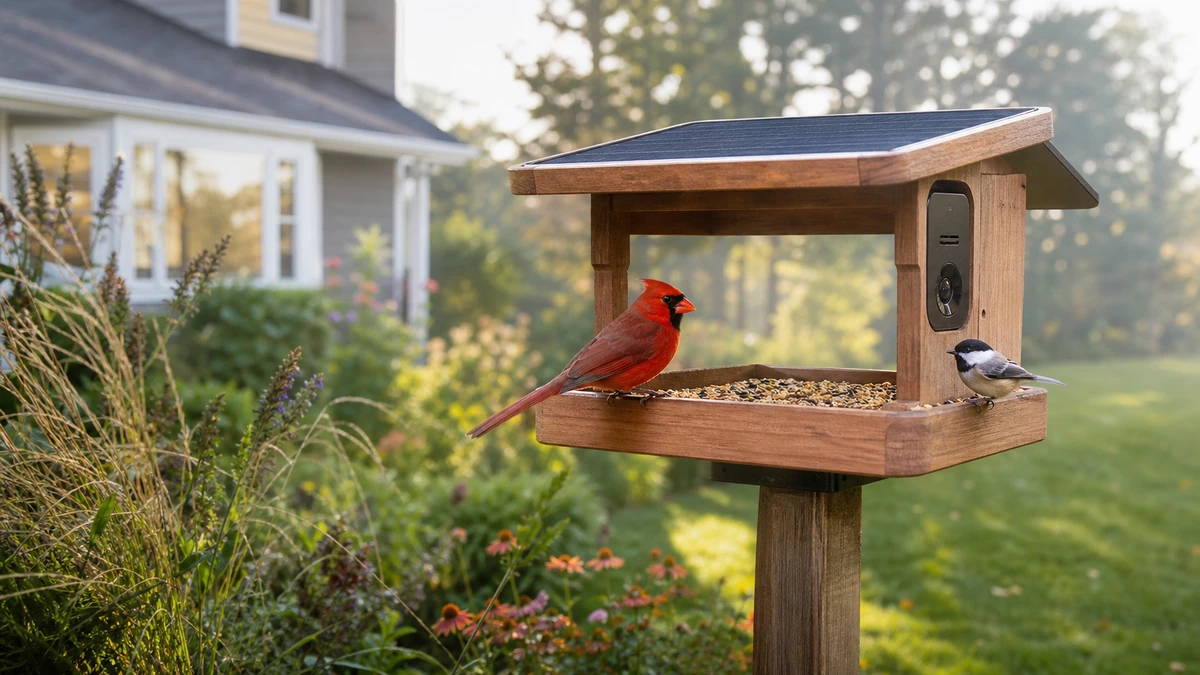
Smart bird feeder cameras have moved beyond novelty status because they deliver close-up wildlife moments with very little effort. In 2026, however, the meaningful buying questions are less about the camera badge and more about free storage, recurring fees, Wi-Fi reach, identification limits, and whether the feeder can be cleaned often enough to protect visiting birds.
A single smart-feeder brand told the Associated Press that it had sold 350,000 camera feeders since 2022, a figure that helps explain why these devices now appear in mainstream backyard conversations rather than only at gadget shows.
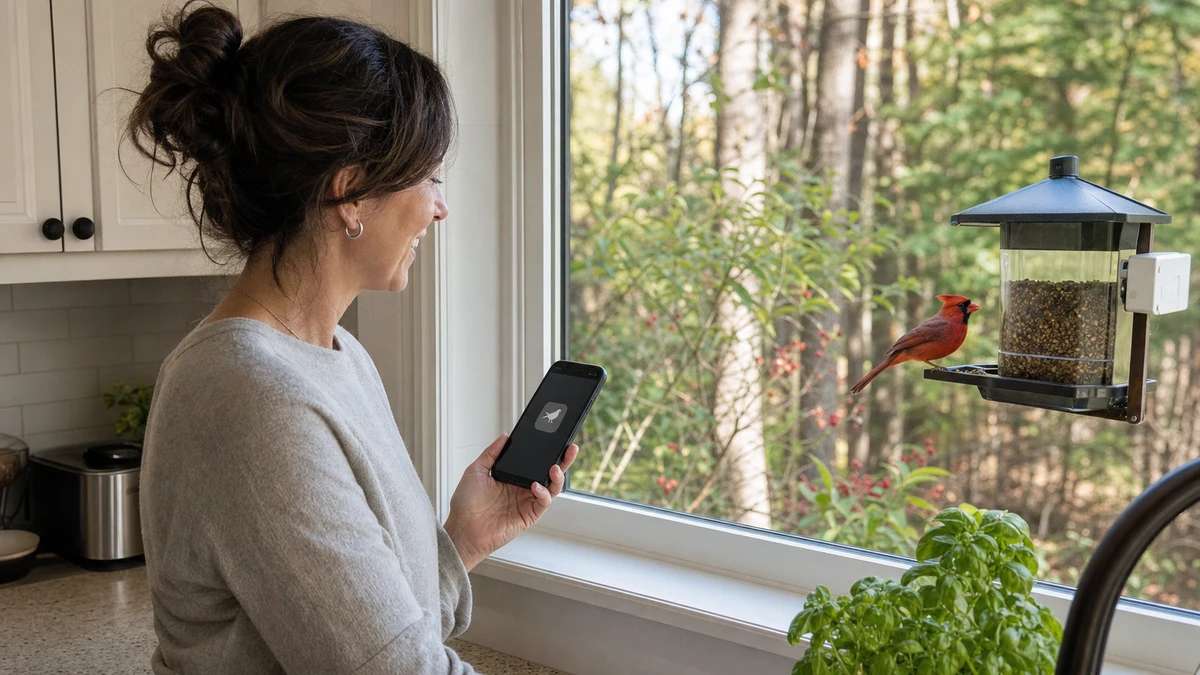
I have been tracking the category as it shifts from an easy gift idea to a more demanding connected-home purchase. The appeal is obvious: motion detection can bring a cardinal, chickadee, or blue jay onto a phone screen while the homeowner is at work or inside. The tradeoffs arrive later, when a free AI trial ends, the camera misses an approach from the side, the backyard signal drops, or seed debris collects around a housing that is awkward to wash.
Why camera feeders are breaking out now
The most important development is not a single leap in camera resolution. It is the combination of cheaper image sensors, solar charging, phone notifications, and software that can sort a day of motion clips into a manageable stream. The Associated Press reported on the category’s widening appeal in January 2025, including users who said the close detail turned casual interest into a genuine birdwatching habit.
That convenience matters because backyard birding usually rewards time and patience. A camera feeder changes the rhythm. It watches while the owner is elsewhere, then offers a short clip at the exact moment a bird lands. AP’s reporting also cited the estimate that most US backyards may host 20 to 30 species that residents barely notice. The device does not create that wildlife; it makes the existing activity harder to miss.
The subscription question is reshaping the market
The phrase “no subscription” needs careful reading. On one feeder, it may mean local microSD recording and live view remain available while advanced species labels cost extra. On another, a few days of cloud history may be free but longer clips, downloads, or family sharing require a plan. A third may work locally but still depend on the manufacturer’s servers for setup, alerts, or account access.
That is why I treat storage as a service policy, not only a hardware specification. Buyers should ask what happens after every trial ends, how many days of history remain, whether clips can be exported, whether a card is included, and whether the device records if the internet goes down. A low shelf price can become misleading when the feature that made the feeder attractive is gated after the first month.
Current market coverage reinforces the point. WIRED’s June 2026 category update separates hardware performance from ongoing app and subscription tradeoffs, while Tom’s Guide examined solar power, storage, and app costs in an April 2026 hands-on report. Those are signals that recurring software terms now deserve the same attention as weatherproofing.
The category now has three distinct lanes
Smart feeder listings can look interchangeable because nearly all emphasize alerts, identification, and solar power. The more useful distinction is how they handle recorded video. Cloud-first models favor a polished app and simple sharing. Hybrid models combine cloud convenience with a card slot. Local-first models put more control on the device but can require more setup and manual file management.
| Category | Core Technology | Typical Price Band | Representative Brands |
|---|---|---|---|
| Cloud-first camera feeder | App-managed clips, sharing, optional AI plan | About $100-$300+ | Bird Buddy, Birdfy, Wasserstein |
| Hybrid cloud and local | App alerts plus microSD or limited free cloud | About $60-$160 | HEAPETS, Kiwibit, Birdfy |
| Local-video focused | Higher-resolution card recording, remote live view | About $120-$180 | Camojojo, Kiwibit, Wasserstein |
⇆ swipe horizontally on mobile. Price bands are a July 2026 category snapshot, not a product ranking.
AI identification is helpful, but it is not an authority
Species recognition is the feature most likely to turn a clip into a learning moment, and also the feature most likely to be overstated. A bird that is backlit, partly hidden by the feeder roof, wet, juvenile, or facing away may not present enough distinctive information. Similar sparrows, finches, and female birds can challenge people as well as software. A confident label on a phone should still be treated as a suggestion.
The best use of AI is triage: it narrows a clip to a likely species or family, then the owner checks plumage, range, season, size, and behavior against a trusted guide. Cornell’s Project FeederWatch identification guidance makes the wider point that correct identification matters when observations contribute to science. A smart feeder can start that process, but it does not remove the need for judgment.
Notification quality deserves equal attention. Sensitivity that is too high can fill an app with squirrels, leaves, and empty motion. Sensitivity that is too low can miss fast visits. Before buying, readers should look for adjustable detection zones, alert schedules, clip previews, and a way to silence repeated non-bird events without disabling the camera.
A connected feeder is still a wildlife feeding station
The camera can make a feeder feel like consumer electronics, but seed residue, droppings, and moisture remain biological risks. Project FeederWatch advises cleaning seed or suet feeders every week or two, more often during heavy use or wet weather, and allowing parts to dry completely before refilling. That guidance should influence the purchase before video resolution does.
Look at the feeder as something that must be taken apart with dirty hands. Can the seed tray separate from the electronics? Are corners reachable with a brush? Can the camera module stay dry while food-contact surfaces are washed? If those answers are unclear, the design may impose more maintenance friction than its app removes.
“We’re eager to see how smart feeders and kind of just the whole bird-feeding industry can continue fostering this appreciation for birds and nature.“
Placement matters too. Project FeederWatch says nearby natural cover can give birds refuge, with about 10 feet described as a practical compromise, while also warning against easy jump-off points for cats and squirrels. Its collision guidance says exterior window markers should form a repeating pattern spaced no more than 2 inches apart. The US Fish and Wildlife Service also frames feeding as a conditional responsibility: local disease reports, bears, predators, and habitat conditions can all change what safe feeding looks like.
What to verify before a smart feeder reaches the yard
My reporting suggests that a useful pre-purchase check can fit on one screen. The objective is not to find the most feature-heavy feeder; it is to prevent a predictable mismatch between the owner’s yard, network, maintenance routine, and tolerance for recurring fees.
What stays free? Record live view, alert, playback, download, AI, and sharing terms after every trial expires.
Will Wi-Fi reach the mount? Test the exact location, note whether the camera uses 2.4 GHz or dual-band Wi-Fi, and avoid assuming indoor signal strength will carry outside.
Can food-contact parts be washed? Favor removable trays, accessible corners, drainage, and a camera module that can stay away from soap and rinse water.
Is the power plan realistic? Check sun exposure, battery access, cable placement, and expected charging during short winter days rather than relying on the word “solar.”
Is the mounting area bird-safe? Account for windows, cats, squirrels, bears, neighborhood disease reports, and a cleaning schedule the household will actually keep.
The category is likely to keep growing because it makes an existing backyard world visible on demand. The products that age well will be the ones whose software terms remain clear, whose parts tolerate frequent care, and whose alerts help people notice birds without turning every movement into another phone interruption.
Ready to compare your options?
Our companion guide organizes three current camera-feeder approaches around subscription burden, local storage, video quality, solar power, Wi-Fi support, and cleaning access. It is the next step for readers who have defined their yard and app requirements.
Frequently Asked Questions
Why are smart bird feeder cameras popular in 2026? +
They turn a passive backyard feeder into an automatic wildlife camera, sending close-up clips and alerts to a phone. The format makes birdwatching accessible to people who cannot spend long periods outside with binoculars.
Do smart bird feeder cameras identify birds accurately? +
AI labels are useful leads, not final identifications. Accuracy varies with lighting, angle, image quality, regional species, and the vendor’s model, so unusual results should be checked against a trusted field guide.
Can a smart bird feeder camera work without a subscription? +
Some categories retain live view, alerts, short cloud clips, or microSD recording without a paid plan, while others place longer history or advanced AI behind a subscription. Confirm the free feature set in writing before ordering.
What should buyers check before ordering a camera feeder? +
Check the free storage policy, local storage support, Wi-Fi band and signal at the mounting point, cleaning access, solar exposure, weather resistance, and the full cost of any optional cloud or AI plan.