

Disclosure (FTC 16 CFR Part 255): I am a journalist who covers pet tech. ReviewGuid.com participates in the Amazon Services LLC Associates Program. If you buy through a related guide, I may earn a commission at no extra cost to you. – Maya Bennett. This report contains no paid product placements; editorial decisions are independent of retailers.
Published July 26, 2026 – 9 min read
–
Pet and consumer-products journalist tracking at-home care technology
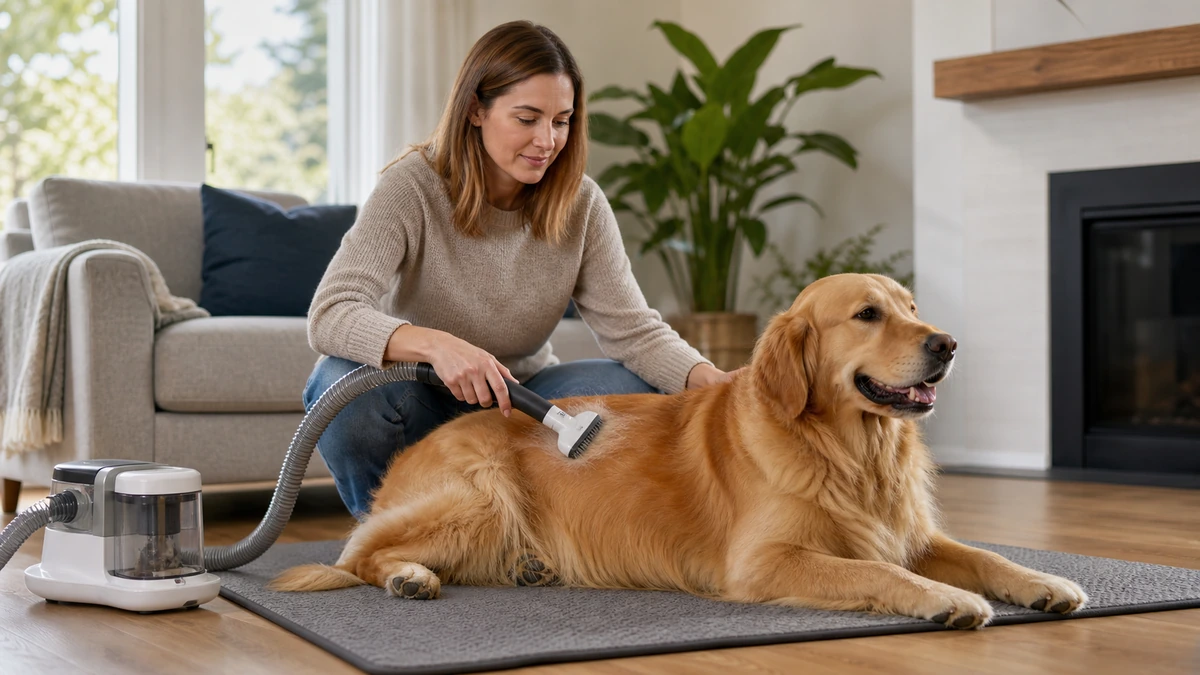
The pet grooming vacuum trend 2026 reflects a simple appeal: these machines collect loose coat at the brush instead of after it spreads across a room. That convenience is real, but a published noise figure, bin size or attachment count cannot tell you whether a particular dog will accept the machine; coat fit and gradual, voluntary acclimation matter just as much.
In July 2026, the pet grooming vacuum category sits at an unusually revealing intersection: three widely listed home kits in ReviewGuid’s reporting ranged from $69.99 to $159.99, while veterinary guidance published this year emphasizes that grooming should remain voluntary, gradual and below a dog’s stress threshold. The trend is growing around mess control, but its hardest question is behavioral, not mechanical.
I have been tracking how these machines are being framed to owners of heavy-shedding and double-coated dogs. The pitch is easy to understand: brush, clip or deshed while suction directs removed hair into a bin. Yet the category also bundles together several claims that deserve separation. Capturing visible fur is not the same as stopping shedding, removing allergens or making every dog comfortable around motor noise. This report explains what has changed, what the available evidence supports and what buyers should verify before bringing another powered tool into a grooming routine.
Why Pet Grooming Vacuums Are Getting Attention Now
The underlying problem is not new. Dogs naturally shed, and the amount varies with breed, coat, season, health and indoor conditions. What has changed is the packaging of the cleanup step. Instead of brushing first and vacuuming floors and upholstery later, capture-first kits connect a grooming head to a compact canister. That turns loose coat into a contained waste stream and makes the category especially legible to households managing frequent undercoat release.
Current animal-care guidance also makes the limitations clearer. A February 2026 Cornell University veterinary guide to cooperative grooming advises gradual exposure, choice and stopping before a dog crosses its stress threshold. Separately, Texas A&M Veterinary Medicine’s shedding guidance says shedding is normal, recommends choosing tools for the coat type and favors short, frequent sessions. In other words, the new appliance does not replace the old fundamentals.
What Capture-First Grooming Actually Changes
A grooming vacuum can change where removed hair goes. When the selected brush reaches loose coat effectively, airflow pulls that hair through a hose and into a cup. This can reduce the visible cloud of fur around the grooming spot and shorten the cleanup that follows. It does not alter the dog’s hair cycle, and it cannot compensate for a tool that skims over the wrong coat layer or tugs at healthy coat.
That distinction matters for double coats. A deshedding head intended to lift loose undercoat has a different job from a slicker-style brush used for surface coat, and a clipper is not a universal answer. Shaving some double-coated dogs can disrupt coat function and should not be treated as routine shed control. Owners who are unsure about coat type, matting or skin condition should ask a qualified groomer or veterinarian before using a blade attachment.
Filtration language needs similar discipline. The U.S. Environmental Protection Agency’s indoor particulate overview identifies pet dander as one contributor to indoor particles. The National Institute of Environmental Health Sciences explains that allergens come from proteins in dander, saliva and urine, while fur can carry those materials. A grooming vacuum may collect some hair and attached debris, but that is not evidence that it removes allergens from a home or produces a medical benefit.
The Category Is Splitting Into Distinct Kit Types
Search results often place every compact grooming canister in one bucket, even though owners are shopping for different workflows. Some systems lead with brushing and deshedding; others emphasize clipping and detail tools; still others package lighter cleanup attachments around a small bin. The useful comparison is therefore between categories of work, not a winner-take-all brand contest.
| Category | Core Technology | Typical Observed Price | Representative Brands |
|---|---|---|---|
| Brush-led capture kit | Canister suction plus grooming and deshedding heads | About $70-$160 | oneisall, Afloia, FurMe |
| Clipper-led all-in-one | Vacuum-assisted clipping with guards and detail tools | About $80-$180 | Neakasa, AIRROBO, oneisall |
| Compact cleanup system | Smaller bin with grooming and surface-cleaning nozzles | About $60-$130 | neabot, Afloia, AIRROBO |
⇆ swipe horizontally on mobile. Ranges reflect observed July 2026 listings and can change.
An attachment count is only a rough inventory. Seven tools may sound more capable than five, but duplication, blade quality, guard sizes, hose flexibility and replacement-part availability can matter more than the number on the box. The same is true of cup capacity. A larger bin can mean fewer interruptions during a heavy undercoat session, while a smaller unit may be easier to carry and store. Neither trait settles which design fits a household.
For Noise-Sensitive Dogs, Introduction Is the Real Test
Published decibel figures are tempting because they look comparable. In practice, a dog’s response may depend on pitch, vibration, distance, room acoustics, previous experiences and whether the hose or brush touches the body. A 2021 peer-reviewed study indexed by PubMed on fear responses to common household noises found that owners can underestimate canine fear responses. A low number in a listing should never override the animal in front of the machine.
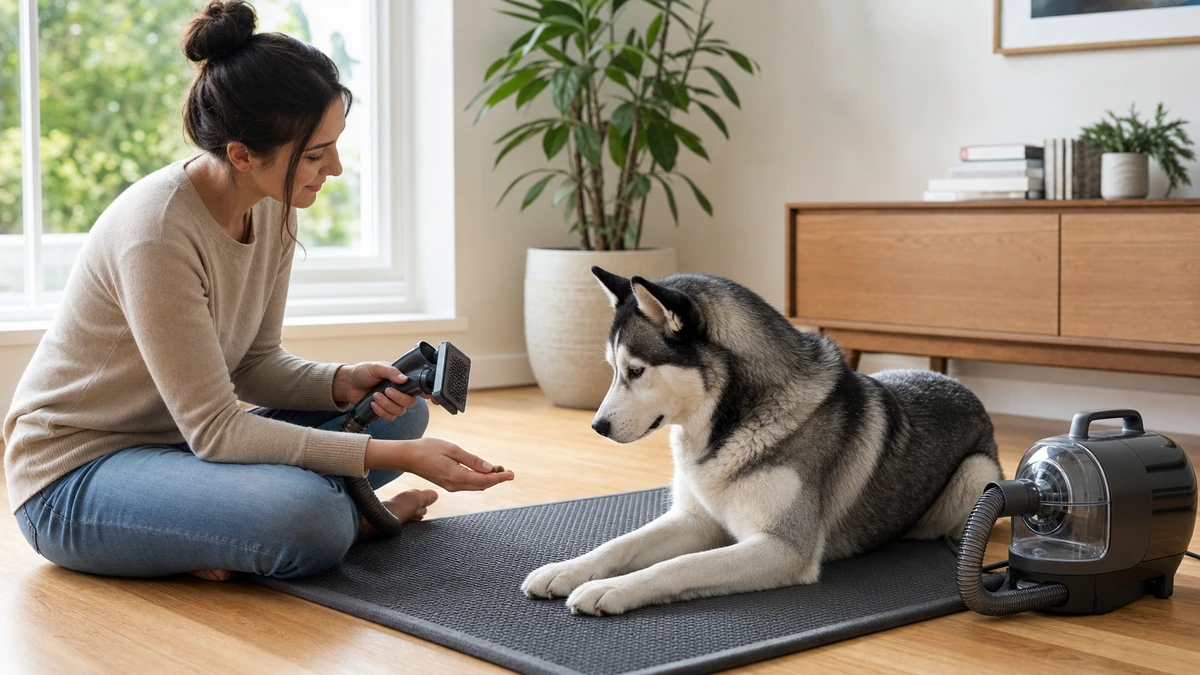
A cautious sequence begins with the tool switched off. Let the dog choose whether to investigate, pair proximity with something the dog values and keep the first exposures brief. Sound can be introduced at a distance before the grooming head comes near the coat. If the dog freezes, pants without heat or exercise, tries to leave, refuses food, tucks the tail or escalates, stop and reduce the difficulty next time. Restraint may finish a session, but it does not create comfort.
Jessica Gore, a certified professional dog trainer quoted by the American Kennel Club, summarizes the goal in unusually plain language:
“Teach your dog that vacuums are safe and fun“
What Suction, Noise and Filtration Claims Do Not Prove
Manufacturer specifications can narrow a search, but only if their status is clear. oneisall publishes a 12,000Pa suction figure and a below-59 dB noise claim for the LM2. Afloia describes three suction levels and noise below 60 dB for the LM1. FurMe publishes a 9,000Pa figure and a 42-70 dB operating range for its Original kit. These are manufacturer claims, not measurements produced or independently verified by ReviewGuid, and the brands may use different test conditions.
Even a standardized sound reading would answer only one question: measured sound pressure at a stated distance under stated conditions. It would not establish that a nervous dog will remain relaxed. Likewise, suction power does not show how gently a brush moves through a coat, and filtration labels do not establish whole-room allergen removal. Buyers should look for a complete test method, replacement-filter availability and maintenance instructions instead of treating a single large number as proof of performance.
I am also watching the line between useful home maintenance and tasks that need professional judgment. A grooming vacuum may make regular brushing easier to contain. It should not be used to pull through mats, work over inflamed skin or force a fearful dog through clipping. Sudden coat loss, persistent itching, sores or a marked change in shedding belongs in a veterinary conversation, not a shopping cart.
A Practical Checklist Before You Choose a Kit
The most useful shopping questions describe the dog and routine before they describe the appliance. Start with coat type, the job you actually plan to do and the dog’s current response to powered household sounds. Then evaluate whether the machine gives you enough control to proceed gradually.
Match the head to the coat. Confirm whether the included brush is intended for surface coat, loose undercoat or clipping, and ask a professional if the coat type is unclear.
Demand control, not just power. Multiple suction levels, an accessible power switch and enough hose reach can support slower introductions and shorter sessions.
Read noise claims narrowly. Check how and where the figure was measured, then judge comfort from the dog’s behavior rather than the listing alone.
Plan for the dirty work. Compare bin release, washable parts, filter costs, hair wrapped around brushes and whether replacement accessories are sold separately.
Protect the dog’s exit option. Use short sessions, reward voluntary participation and stop at early stress signs. No specification makes forced grooming low stress.
Finally, compare the full ownership cost. The retail price is only the first line. Filters, blades, guards and other wear parts can decide whether a kit remains useful a year later. Return terms also matter when sound tolerance cannot be predicted from a specification sheet. A careful buyer is looking for a workable grooming process, not the longest attachment list.
Ready to compare your options?
Our companion guide organizes oneisall, Afloia and FurMe by bin capacity, included tools, manufacturer noise claims, current price and fit for a cautious acclimation plan. It separates verified listing data from brand claims so you can compare the three kits without treating any specification as a guarantee.
Frequently Asked Questions
Why are pet grooming vacuums popular in 2026? +
They combine coat tools with direct fur capture, addressing the mess created when loose undercoat is brushed indoors. Their usefulness still depends on coat fit, maintenance and a dog’s comfort with sound and handling.
Do pet grooming vacuums reduce loose fur? +
They can collect hair removed by a compatible brush or deshedding tool before much of it reaches the room. They do not stop normal shedding, treat skin disease or guarantee allergen removal.
How should a nervous dog be introduced to a grooming vacuum? +
Start with the machine switched off, reward voluntary investigation, introduce sound at a distance and keep sessions short. Stop when the dog shows stress rather than forcing contact.
Can a grooming vacuum replace a professional groomer? +
Not in every case. Complicated coat maintenance, matting, skin problems, unsafe nail work and dogs that cannot remain comfortable may require a qualified groomer or veterinarian.
Disclosure: As an Amazon Associate, I earn from qualifying purchases. This does not affect the price you pay or the editorial ranking.