

Disclosure: As an Amazon Associate, I earn from qualifying purchases, and this page also contains a paid link to a digital product. I have not been given access to that product, so nothing here is a hands-on assessment of it. – Maya Bennett
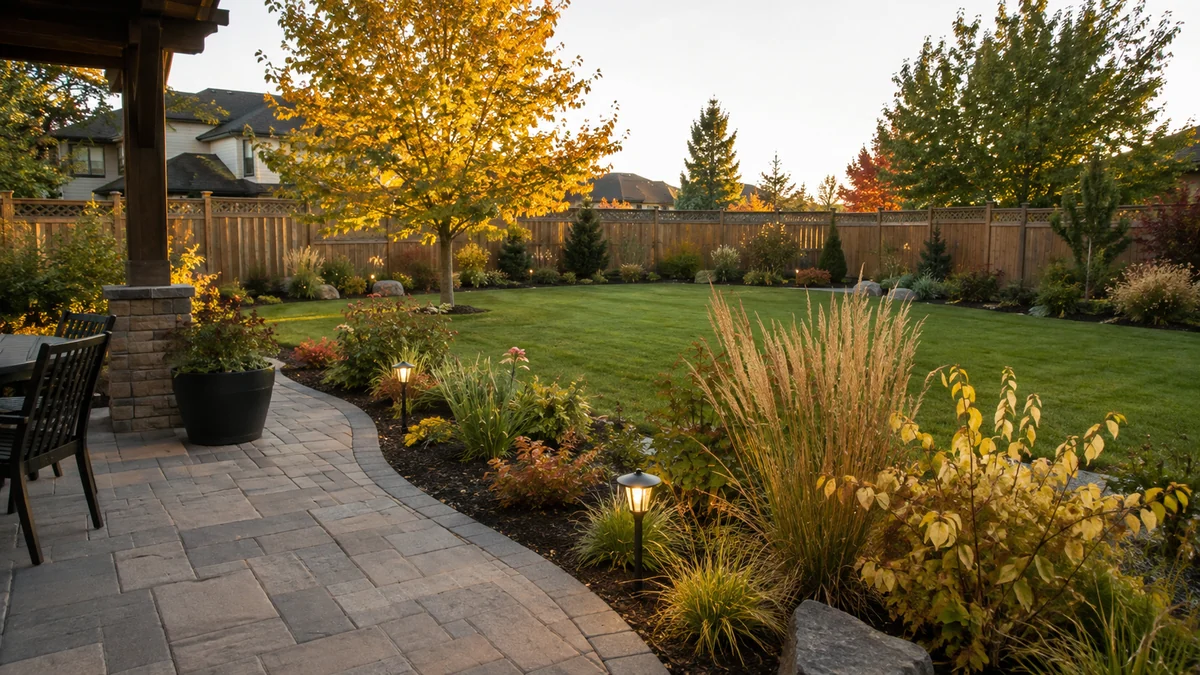
Ideas4Landscaping is a 37 dollar catalogue of about 7,000 landscape designs across 64 galleries, sold by Helen Whitfield with a published Chicago business address and a 60 day refund. It is an idea library, not a design service: it cannot know your soil, your sun hours or your drainage, and those decide what survives. Buy it in autumn, when planning a spring build is cheapest, and settle your grading before you fall in love with a picture.
What is inside
The package is 7,000 landscaping designs across 64 galleries, 120 premium videos, lifetime access with monthly updates and four bonus guides, at 37 dollars against a stated 279.95 list price. The seller is named as Helen Whitfield, describing 18 years of landscaping work and membership of a trade association, with a physical address published in Chicago. That combination of a name, a stated credential and an address is unusually transparent for this category, even though the credential itself is not independently verifiable from the page.
| Detail | What is published |
|---|---|
| Price | 37 dollars, one payment |
| Library | about 7,000 designs across 64 galleries |
| Video | 120 premium videos included |
| Guarantee | 60 days, full refund, bonuses retained |
| Seller | Helen Whitfield, address published in Chicago IL |
| Delivery | instant download, with monthly updates to the galleries |
Why the timing matters more than the catalogue
Autumn is the correct month to be looking at landscape designs in the US, and not for a seasonal sales reason. Soil retains summer warmth well past the first cold nights, so roots on autumn plantings establish before dormancy. Landscape contractors have thinner books between the summer rush and the spring one. And a design decided in October gives you the winter to price materials instead of accepting the first spring quote.
The same window is when your yard tells you the truth about itself. You can see exactly where water stands after rain, where the low sun reaches once the leaves drop, and which beds stayed dry through August. Those observations are worth more than any gallery, and they are only available now. While you are out there, Michigan State University Extension guidance on leaves makes the case for shredding the leaf fall back into the beds rather than bagging it.
The four things no design library knows
This is the honest limit of the format, and the reason a catalogue costs 37 dollars while a design costs hundreds. A gallery cannot know:
| What decides success | Why the library cannot supply it |
|---|---|
| Your hardiness zone | Decides which plants survive winter at all. Every design is drawn for somewhere, and that somewhere is probably not your county. |
| Your soil | pH and texture decide what thrives. A bed drawn for loam behaves differently in clay. |
| Your sun hours | Full sun in a drawing may be four hours of afternoon shade in your yard. |
| Your drainage | The single most expensive thing to get wrong, and invisible in every photograph. |
Drainage deserves the extra sentence. Grading determines whether a new patio sheds water or holds it against your foundation, and correcting it after a build means lifting the build. EPA stormwater guidance for homeowners covers directing runoff into planted areas rather than at the house, and it is the reading to do before choosing between two pretty pictures.
What the page does not establish
One thing is worth saying plainly. The seller is named and publishes a Chicago address, which is more accountability than most of this category offers, but no horticultural or landscape design credential is stated anywhere on the page and none can be checked from it. For a catalogue of pictures that matters less than it would for planting advice, and the distinction is worth holding on to: you are buying inspiration and layouts, not horticultural guidance.
What that means in practice: judge the 37 dollars on whether 64 galleries save you a weekend of sketching, and treat the 60 day refund as your real protection if they do not.
Check the current Ideas4Landscaping price
Who it suits
It suits somebody who knows their yard needs work and cannot picture what. Reacting to seven thousand references is a genuinely easier task than starting from a blank sheet, and 37 dollars for that is defensible.
It does not suit anybody with a real constraint to solve: a slope that needs retaining, a wet corner that never dries, a boundary dispute over a hedge. Those need a person on site. And it does not suit anybody expecting a planting schedule for their own conditions, because that is precisely what a catalogue cannot contain. If your autumn priority is clearing the yard rather than redesigning it, the practical guide is our cordless leaf blower comparison. Composting what you clear is covered by the Rutgers leaf composting fact sheet.
The order of work, which no gallery shows
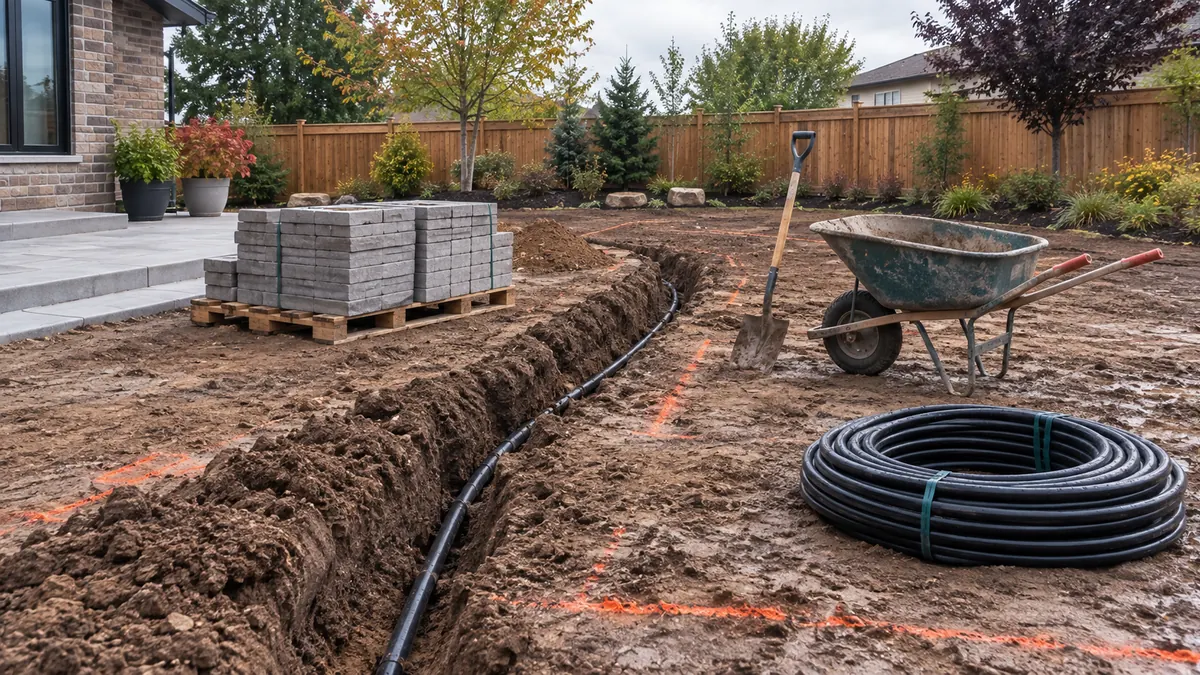
Catalogues show finished yards. They never show the sequence, and taking these steps out of order is how somebody ends up lifting a new patio to run a cable beneath it.
Locate buried services before any digging. In the US that call is free and legally required in most states. Striking a gas line is not a budgeting setback, it is an emergency.
Settle grading and drainage next. Everything afterwards sits on top of where the water goes, so it is decided before a single plant is chosen. Hardscape follows: patios, paths, walls, footings. Then irrigation, because pipe is cheap to lay in open ground and expensive to thread under stone later. Lighting cable goes in at the same stage, for the same reason.
Amend the soil, and only then plant. Improving beds after planting means working around root balls, which is slow and damages what was just paid for. Turf is laid last of all, because every earlier stage sends wheelbarrows across the ground it would have occupied.
That order costs nothing to follow and separates a project that takes two seasons from one that drags across four. It is also the part a 37 dollar catalogue genuinely cannot supply, which is worth knowing before buying one in the expectation that it will.
Get Ideas4Landscaping with the 60 day refund
Frequently asked questions
When is the best time to plan a landscape project? +
Autumn, for two reasons that have nothing to do with marketing. Soil is still warm enough for root establishment on autumn plantings, and contractors have thinner books between the summer rush and the spring one, so quotes come back faster and often lower. Planning in October for an April build is the sequence that avoids paying peak-season prices.
Can a design library tell me what will grow in my yard? +
No, and this is the honest limit of the format. A design library shows arrangements. It does not know your hardiness zone, your soil pH, your drainage or how many hours of direct sun each bed gets. Those four facts decide whether a planting survives, and all four have to come from your own yard or your county extension service.
Is 37 dollars reasonable for 7,000 designs? +
As an idea catalogue, yes. As a substitute for a landscape designer, no. A professional design for a typical suburban yard runs several hundred to a few thousand dollars and includes a site visit, a soil assessment and a planting schedule matched to your conditions. The library gives you references to react to, which is genuinely useful when you cannot articulate what you want.
What should I sort out before choosing any design? +
Where the water goes. Grading and drainage decide whether a patio holds puddles and whether a bed drowns, and they are far more expensive to fix after a build than to plan before one. EPA stormwater guidance for homeowners covers the basics of directing runoff away from foundations and into planted areas.
Do I need a permit for landscaping? +
Usually not for planting, but often yes for retaining walls above a certain height, for anything that changes drainage across a property line, and for structures such as pergolas on footings. The threshold is local. A quick call to your building department costs nothing and settles it.
Design counts and pricing are the figures the vendor published as of August 2026 and may change. ReviewGuid has not purchased this library, and the button above is a paid link.