

Boneless couch is more than just a furniture trend—it’s a practical urban solution redefining how people buy, ship, and use sofas. Whether you’re renting your first apartment or seeking easy-move seating, here’s what you should know.
Key Takeaways
- Boneless couches prioritize compressed shipping, making them a top pick for city living and easy transport with no assembly needed.
- Most models are affordable ($300–$650), use high-density foam, and allow rearrangement—but users report some comfort and durability issues.
- Before buying, consider common pitfalls: frequent fluffing, sliding modules, and the lack of long-term performance data compared to classic sofas.
- Boneless Couch: Core Concept Explained
- How to Get the Most Value from a Boneless Couch
- Advanced Analysis & Common Pitfalls
- Conclusion
- Frequently Asked Questions
Boneless Couch: Core Concept Explained
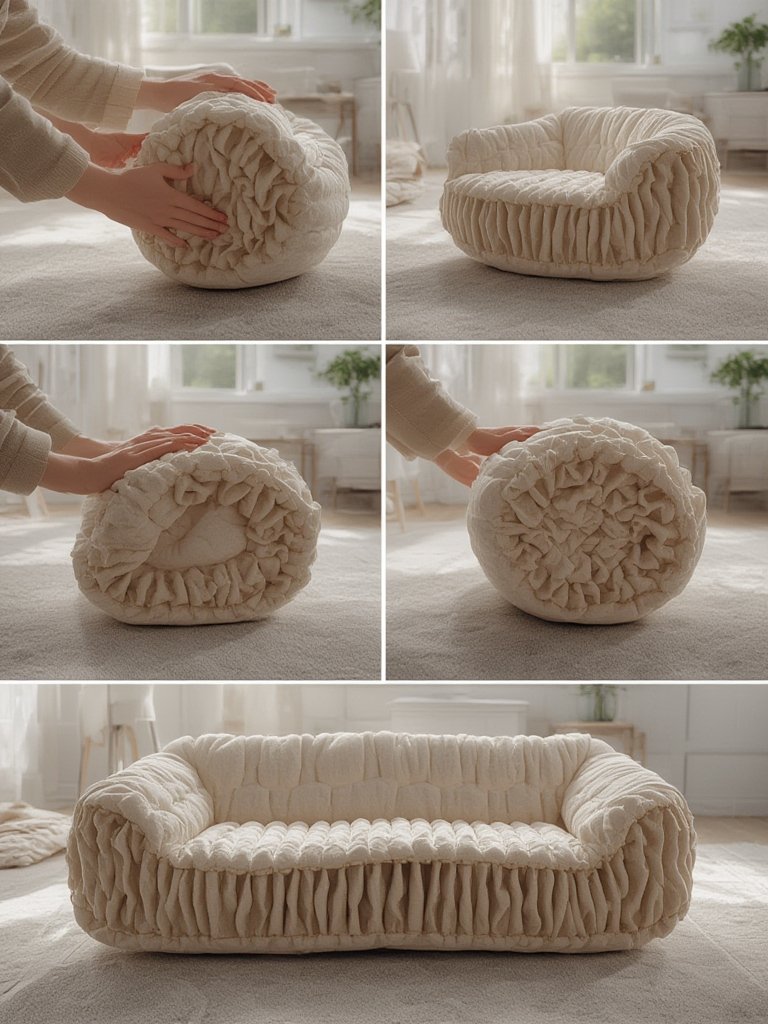
At its core, a boneless couch is a sofa without a rigid wooden or metal frame. Instead, it features modular blocks of dense foam, often wrapped in soft covers like Sherpa fleece, that can be compressed into vacuum-sealed boxes. This approach exploded in popularity in late 2024 after the #bonelesscouch trend took off on TikTok and brands like Rove Lab posted $5 million in initial sales. Boneless couches are designed for easy delivery via parcel carriers and stress-free assembly—just unpack, let the foam expand for a day or two, and start lounging.

The main appeal is affordability, movability, and the fun of watching a couch spring to life from a tiny package. Urban dwellers and renters love that boneless couches fit through tight doors and stairwells, with no need for furniture movers or complicated instructions. However, the trend also surfaces new questions around comfort, durability, and fit for long-term living.
How to Get the Most Value from a Boneless Couch
- Research your options: Compare leading brands like Rove Lab and Atunus Home. Look for high-density foam and robust covers. Check for verified dimensions—e.g., Atunus Home Bubble Curve Sofa measures 90.55 x 41.3 x 29.5 inches with a 600 lb per-seat weight rating (source).
- Review the price and logistics: Most boneless couches range from $300–$650. Shipping is almost always included and handled by UPS or FedEx, fitting more per shipping container—cutting carbon and costs (source). No assembly, no tools, and no extra fees.
- Order and prepare the space: Make sure you have space for the couch to fully expand after unpacking. The vacuum-sealed foam needs 48-72 hours to reach full size (source).
- Unbox and setup: Remove from the shipping box and plastic wrap. The pieces will expand on their own. Modular sections can be arranged to fit your space—great for apartments and unpredictable layouts. If you have hard floors, consider a non slip rug underneath to reduce sliding.
- Daily maintenance: Fluff pillows and seats regularly to maintain shape and comfort. Closing gaps between modules helps with support. Clean covers per the manufacturer’s instructions—many are machine-washable, similar to a kid and pet friendly rug.
- Rearrange as needed: Take advantage of the modular, lightweight pieces for easy reconfiguration—move to another room, split into a chaise, or add ottomans. When moving, every module fits in most car trunks or compact elevators.
For more home improvement upgrades that are easy and renter-friendly, check out our guide on energy efficiency upgrades.
Advanced Analysis & Common Pitfalls
The boneless couch revolution isn’t perfect. Here’s a realistic breakdown of what to expect, including common complaints from early users and data from recent market leaders:
- Shape retention: Cushions require daily fluffing to avoid sagging or lumps. If you dislike routine maintenance, this may be a dealbreaker (source).
- Sliding modules: Unlike traditional sectionals, boneless couches’ modular pieces can drift apart, leaving gaps unless you use extra grippers.
- Seat/backrest height: The seat is often lower and the backrest shorter than classic sofas, which may not suit tall users or those needing strong support.
- Durability & off-gassing: No long-term test data is available on foam degradation, airing out, or warranty terms (source). Unlike many memory foams, no CertiPUR-US or fire certification is routinely mentioned.
- Returns & satisfaction: There’s little quantitative data on return rates, star ratings, or user satisfaction—even TikTok virality doesn’t guarantee after-purchase comfort.
| Feature | Boneless Couch | Traditional Modular Sofa |
|---|---|---|
| Average Price (USD) | $300–$650 (~$1,000 max) | $2,000–$5,000 |
| Shipping | Parcel (UPS/FedEx), no appointment, vacuum-packed | Freight, delivery appointment needed, pre-assembled |
| Assembly | No tools/assembly | Moderate to high assembly or moving needs |
| Durability Testing | Not published | Widely available |
| Foam/Fabric Certifications | Not specified | Common (e.g., CertiPUR-US) |
| Modularity/Customization | High—lightweight, rearrangeable | Usually limited, heavy |
If you value easy cleaning and modularity, boneless couches share many perks with other home upgrades like laundry boosters for freshening fabrics, or the convenience of smart kitchen gadgets.

Conclusion
A boneless couch delivers on affordability, movability, and out-of-the-box simplicity. It’s best for renters, small spaces, or anyone who hates traditional furniture hassles. But be ready for daily fluffing and occasional sliding modules, and realize there’s still little proof about long-term comfort or wear. As with any home upgrade, weigh these trade-offs for your lifestyle—and if you’re curious about more space-saving or washable furniture, check out guides on improving sleep with microfiber sheets or smart shopping on Wayfair. Ready to try a boneless couch? Shop smart and always read the latest independent reviews for peace of mind.
Frequently Asked Questions
What is a boneless couch?
A boneless couch is a frameless sofa made from high-density foam blocks inside removable covers. It arrives compressed in a vacuum-sealed box and requires no assembly—just unbox, let the foam expand, and start using it.
Are boneless couches comfortable for long-term sitting?
Comfort varies. Most models are soft and inviting but may require frequent fluffing to maintain shape. Because the seat is lower and the backrest shorter, taller users or those with back needs may find classic couches more supportive.
How long does it take for a boneless couch to expand after delivery?
The foam usually takes 48 to 72 hours to reach its full size after unboxing. It’s important to allow time for airing out and expansion before using heavily.
Do boneless sofas have any safety or foam certifications?
No major brand has published foam density ratings or certifications such as CertiPUR-US. If fire retardancy or low VOC compliance matters, check brand specifics or contact them directly.
Is it easy to move a boneless couch to another apartment?
Yes, that’s their biggest strength. Each module is lightweight and designed to fit through tight doors, up stairs, and in most car trunks—ideal for renters or anyone who relocates often.