

full spectrum grow lights have quickly become the go-to solution for anyone looking to maximize indoor plant yields and shorten growth cycles, but not all results are automatic—or hassle-free. In this guide, learn exactly why these lights outperform older tech, how to use them for real benefits, and the pitfalls to avoid if you want healthy, thriving plants at home or in a grow tent.
Key Takeaways
- Full spectrum grow lights offer up to 70% energy savings and better yields by supporting every stage of plant growth across the full PAR spectrum.
- Users must pay close attention to setup details—like hanging height and spectrum—for healthy plant outcomes, as wrong choices can stunt growth or waste power.
- Common mistakes such as over-lighting, poor tent arrangement, and failing to choose proper wattage can significantly reduce the gains these LED setups promise.
The Core Concept
Full spectrum grow lights—especially modern LEDs—are engineered to imitate the entire range of sunlight (400 to 700 nm PAR), supporting strong plant growth from seedlings to fruiting. This matters because traditional bulbs, like HPS or MH, have patchy spectra and generate far more heat, often forcing growers to juggle bulbs and worry about plant stress or energy bills. With LEDs, the right model delivers blue light for root and vegetative phases and red light for bloom or fruit, all in one lamp, and with less power draw.
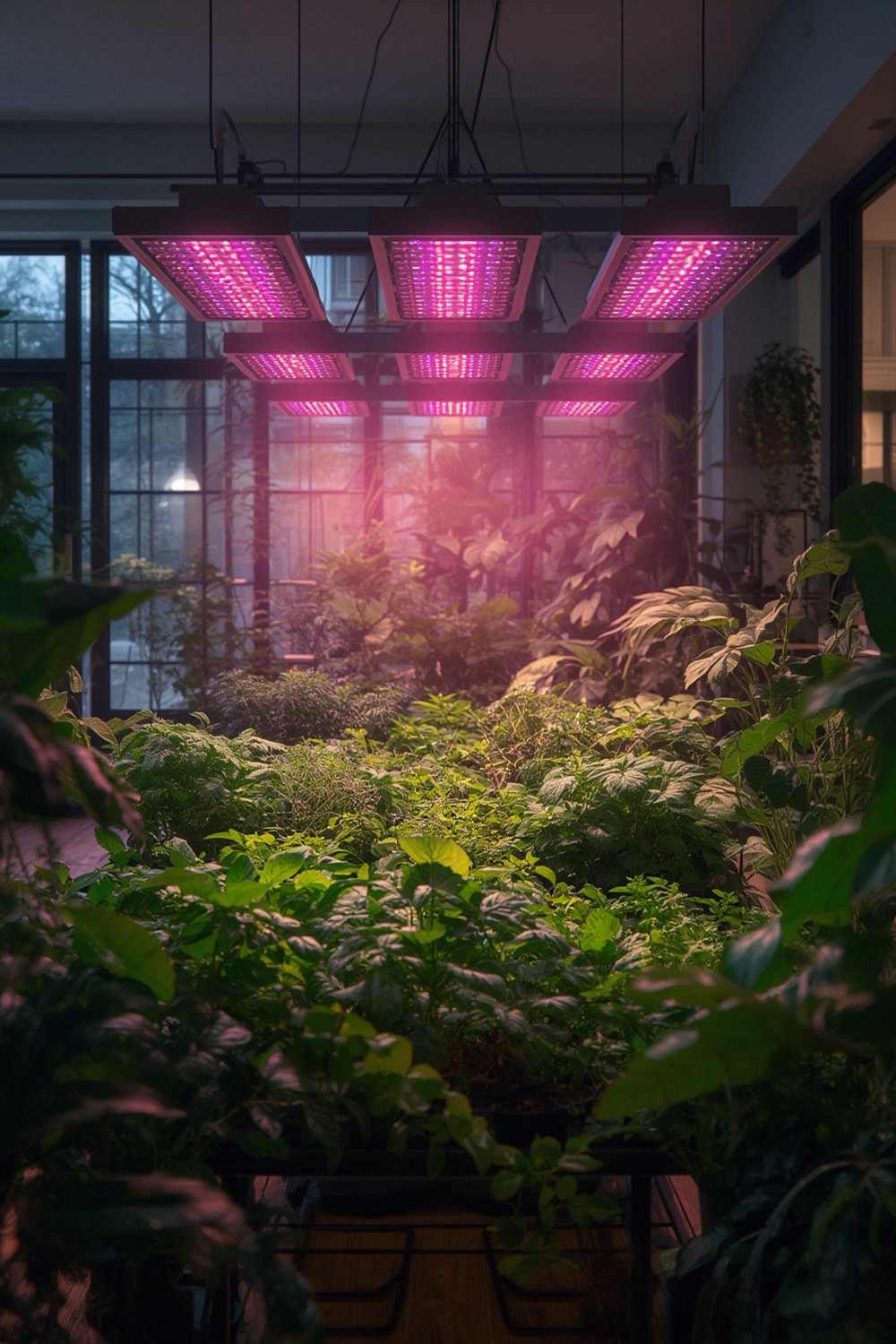
Market data from 2024 studies and industry analysis show that full spectrum LEDs now cover over 62% of the market, with hospitals, commercial greenhouses, and hobbyists citing up to 30% yield gains and 55% electricity reductions compared to switching from old HPS setups. These gains are real—but they depend on buying the correct fixture and avoiding common mistakes that even experienced growers sometimes make.
For a true low-waste indoor growing setup, pairing your grow lights with energy efficiency upgrades accelerates payback by further reducing utility bills.
Step-by-Step Guide
Setting up full spectrum grow lights the right way takes more than hanging a fixture above your plants. Follow these realistic steps for optimal results:
- Choose Your Light Output: Match the true wattage and coverage to your growing space. For seedlings or leafy greens, look for lights with robust blue LEDs (400-500 nm); for fruiting and flowering, strong red spectrum (620-750 nm) is key. Standard: 30-40 watts per square foot for dense plantings.
- Check the PPFD Ratings: Photosynthetic Photon Flux Density (PPFD) tells you how much usable light actually reaches your plant canopy. Aim for 100-200 μmol/m²/s for seedlings, 200-400 for leafy greens and herbs, and 400-600 for flowering plants. If PPFD is not specified, check for independent reviews with actual PAR readings.
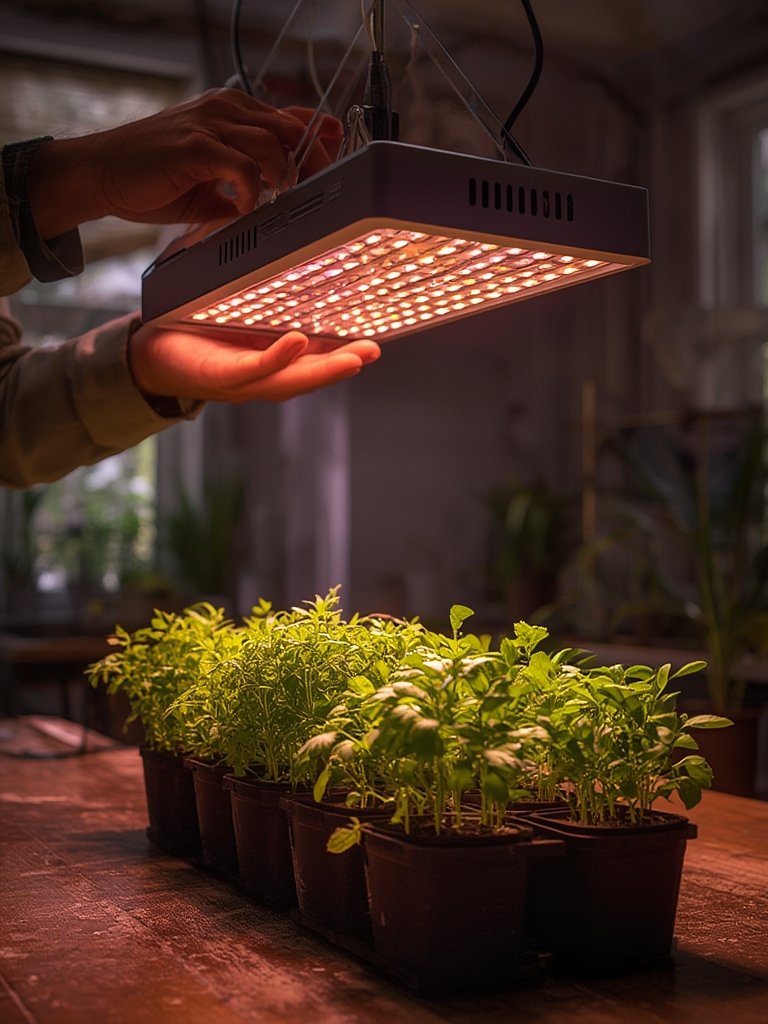
- Set the Right Hanging Height: Use lower heat output to your advantage by positioning LEDs closer than traditional bulbs. Common starting points: 18-24 inches from seedlings, 12-18 inches for mature leafy greens, but always watch for bleaching or stretching.
- Create a Reflective Environment: Use mylar walls, white paint, or specialized reflectors for maximum light coverage. This reduces wasted photons and boosts uniform growth, especially in grow tents or multi-shelf vertical gardens.
- Adjust Light Schedules: Mimic outdoor seasons. Seedlings: 16-18 hours on, mature greens: 14-16 hours, fruiting or flowering: 12-14 hours. Use timers for consistency.
- Monitor Temperature and Humidity: LEDs reduce heat, but over-packed tents or poorly vented shelves can still overheat. Use a thermometer and hygrometer to maintain optimal ranges for your plant species.
- Clean and Inspect Regularly: Dust or splatter on LED lenses drops light output fast. Wipe down every few weeks and check for failed diodes or loose power connections.
If you’re thinking about a larger renovation, pairing your lighting overhaul with Home Depot fence installation or structured upgrades like modern siding can boost utility rebates and make every improvement work harder for your home.
Advanced Analysis & Common Pitfalls
The promise of full spectrum LEDs is real, with widespread upgrades driving yield growth and power savings. However, users still fall into predictable traps—especially when moving from HPS or cheaper LEDs “marketed” as grow lights but lacking true spectrum coverage.
Common Pitfalls and How to Avoid Them
- Using Inadequate Spectrum: Many “white” LED bulbs miss critical red or blue wavelengths. Using a non-full-spectrum light can stunt seedlings or severely limit flowering, leading to weak or leggy plants. Always verify the light’s spectral output covers 400-700 nm PAR.
- Poor Tent or Shelf Arrangement: Overcrowded setups or placing LEDs too high wastes much of their output. Unlike older bulbs, efficient LEDs allow closer canopy placement—but crowding and blocked airflow can cause microclimates and mold risk.
- Ignoring True Wattage or PPFD: Marketing may tout “1000W equivalents,” but true power consumption and light output are what matters. Use manufacturer PPFD charts, not just rated wattage, for serious vegetable or herb yields.
- Neglecting Maintenance and Monitoring: Failing to clean lenses or track output can reduce yields by 10% or more over time.
- Underestimating Upfront Costs: While LEDs last 50,000+ hours and cut power use up to 70%, high-output fixtures are pricier than HPS initially. Luckily, government incentives and LED price drops in 2024 have eased this, but some buyers still misjudge actual lifetime costs.
| Feature | Full Spectrum LED | Traditional HPS/MH |
|---|---|---|
| Energy Use | Up to 70% less | High (heat waste) |
| Spectrum | 400-700nm PAR (customizable) | Narrow/patchy |
| Lifespan | 50,000+ hours | 10,000-20,000 hours |
| Heat Output | Low | High (needs cooling) |
| Upfront Cost (2024) | Higher | Lower |
| Yield Increase (Case Study) | +30% (lettuce, cannabis, etc.) | Baseline |
Detailed price tags and brand breakdowns remain thin in 2024 reports, but expect top-rated full spectrum LEDs to start around $80-150 for seedling/leafy green models, rising to $250+ for large, high-PPFD fruiting units. Lifetime cost beats traditional options easily if used year-round and maintained. See this overview and this technical comparison for more case studies and results.
Still struggling with plant care or interior upgrades? Explore alternatives such as kid and pet friendly rugs for spill zones around your tent, or no till gardening for simplified outdoor expansion.
Conclusion
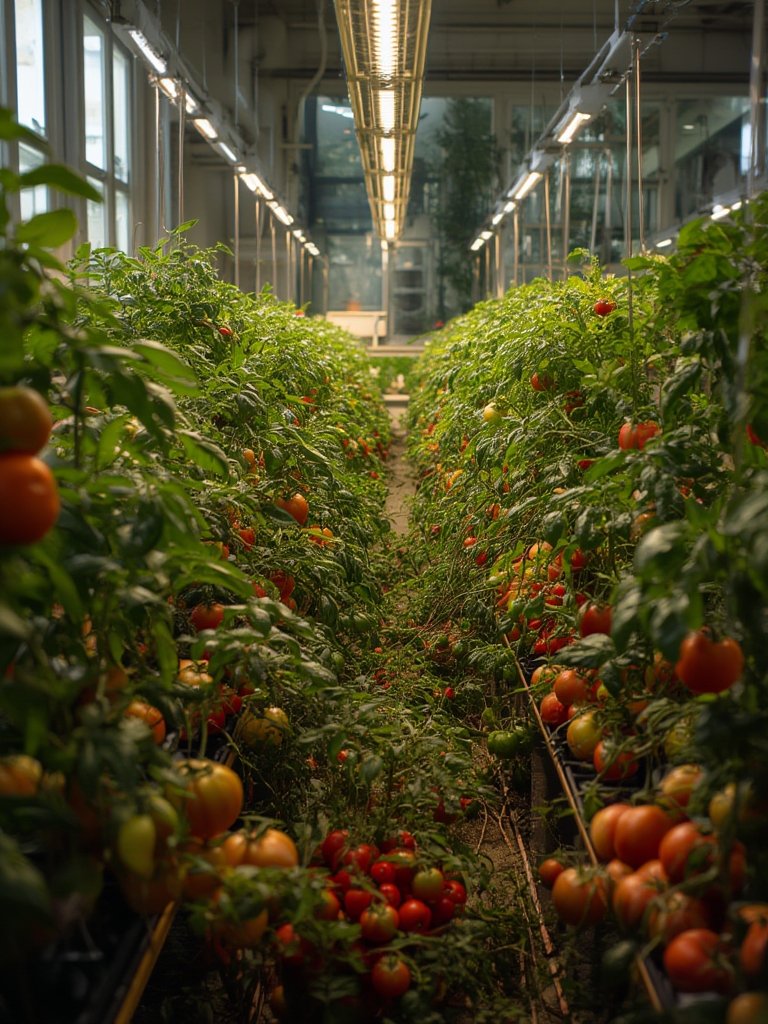
Modern full spectrum grow lights can deliver fast, healthy plant growth indoors with real savings over time—but only if you match the light’s spectrum, wattage, and positioning to your specific crops. Don’t let misleading marketing or easy mistakes sabotage your results. Carefully research technical specs, set up your environment with intention, and maintain your lights for consistent output. Whether you’re dialed in on automation or just want better yields for a kitchen garden, full spectrum grow lights are a proven upgrade for the serious home grower.
Ready to start? Compare specs and space, avoid common pitfalls, and see the difference this season. For more tips—explore our guides on energy efficiency upgrades and lawn alternatives next.
FAQ
What’s the main difference between full spectrum and regular LED lights?
Full spectrum LEDs emit light across the entire PAR range (400-700 nm), closely matching sunlight and supporting all growth stages. Standard LEDs often lack balance, leaving out crucial blue or red wavelengths, which stunts plant development.
How close should I hang full spectrum grow lights to my seedlings?
Typically, 18-24 inches is a safe starting height. Watch for bleaching (too close) or leggy, stretching plants (too far) and adjust as needed based on your model’s heat output and PPFD data.
Are full spectrum LEDs worth the extra upfront cost?
Yes. While initial costs are higher, LEDs use up to 70% less energy and last 2-5 times longer than HPS or fluorescent bulbs, often delivering yield gains that offset any price premium within a season or two.
What’s the lifespan of a typical full spectrum grow light?
Quality models rate for 50,000+ hours—about 5 to 7 years of near-constant use. Traditional HPS or MH bulbs usually last 10,000-20,000 hours at best.
Can I use grow lights for non-edible houseplants?
Absolutely. Full spectrum LEDs benefit ornamentals too, encouraging fuller foliage and even flowering in species that otherwise struggle with indoor window light.