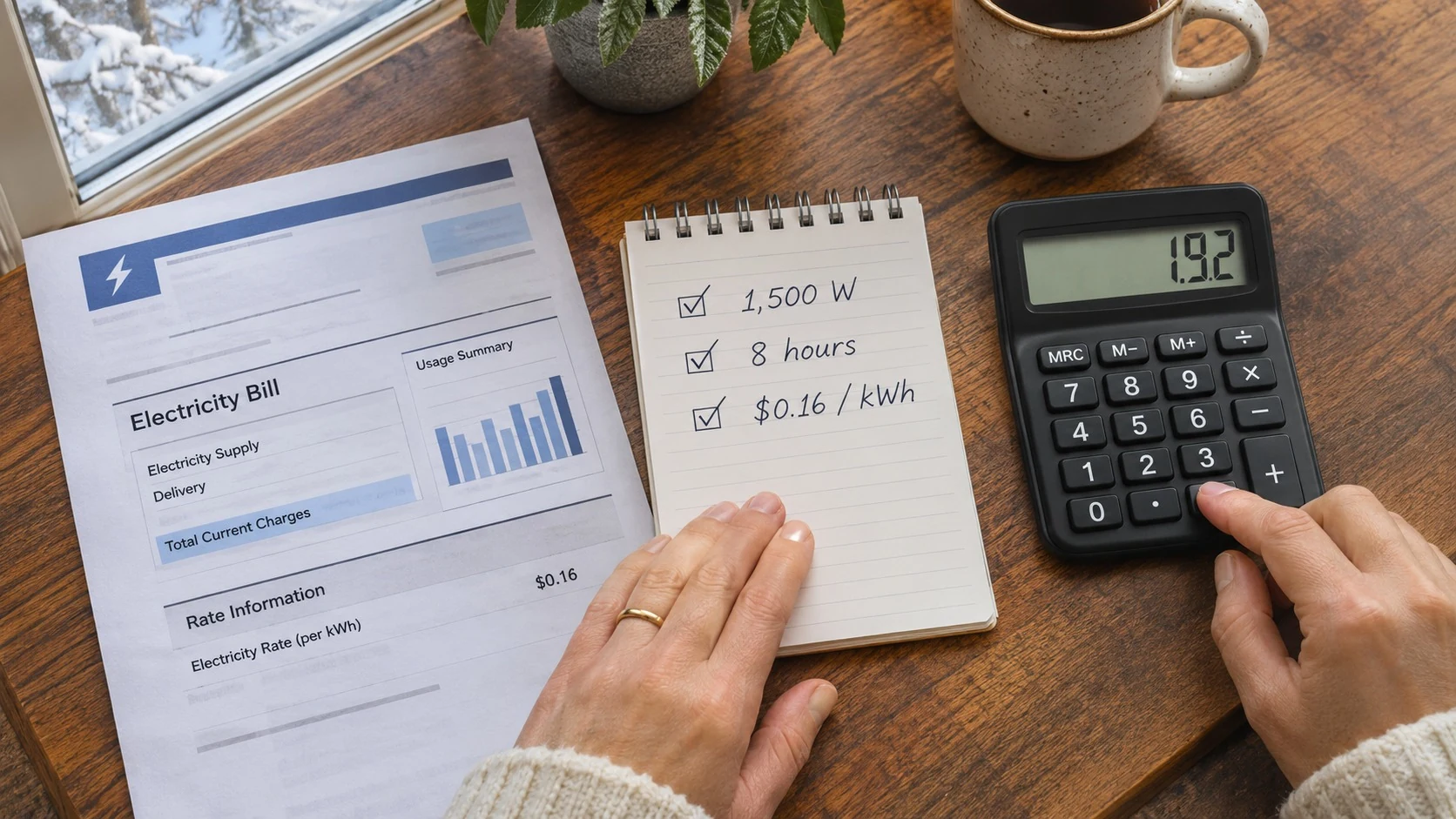
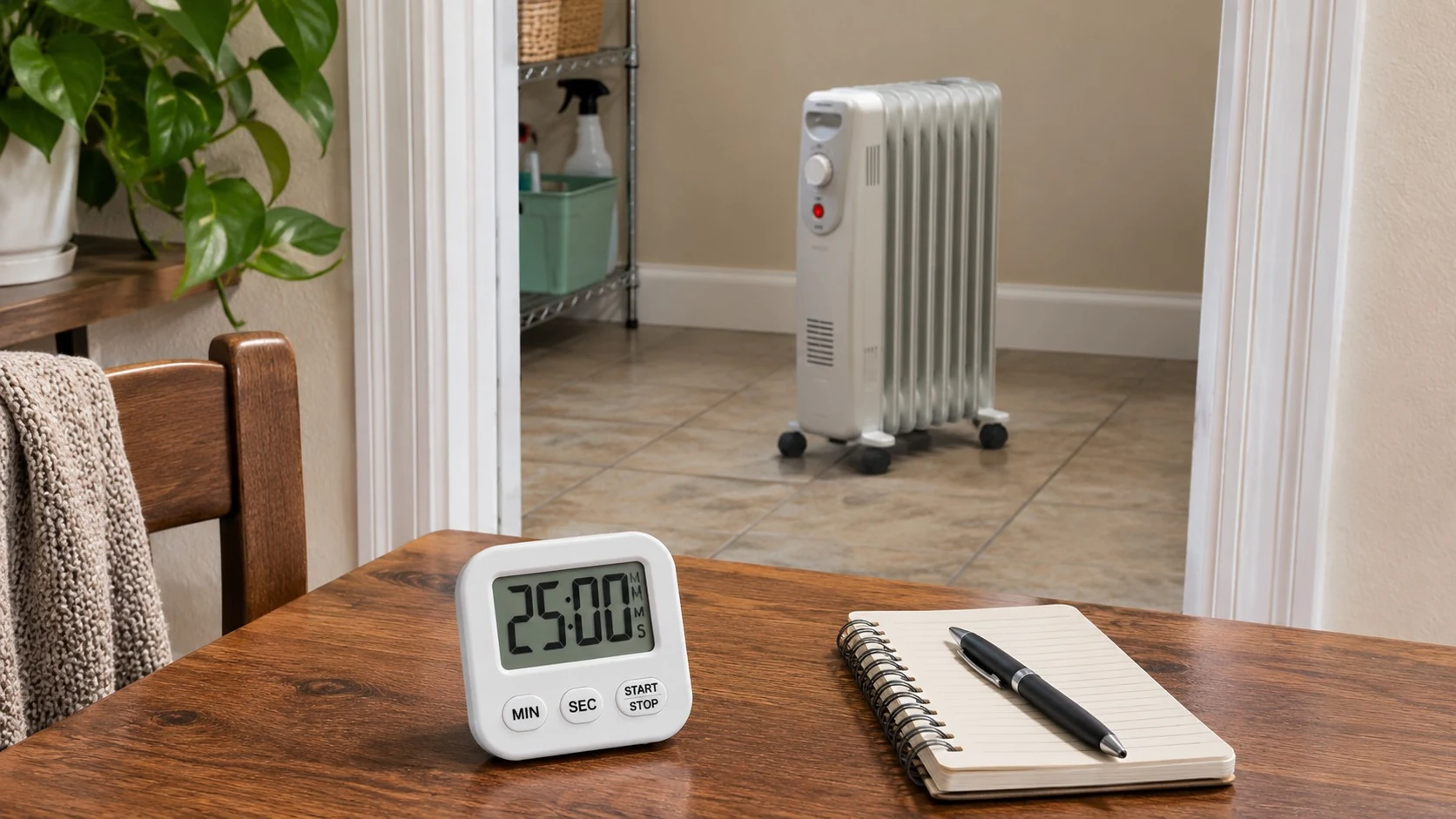
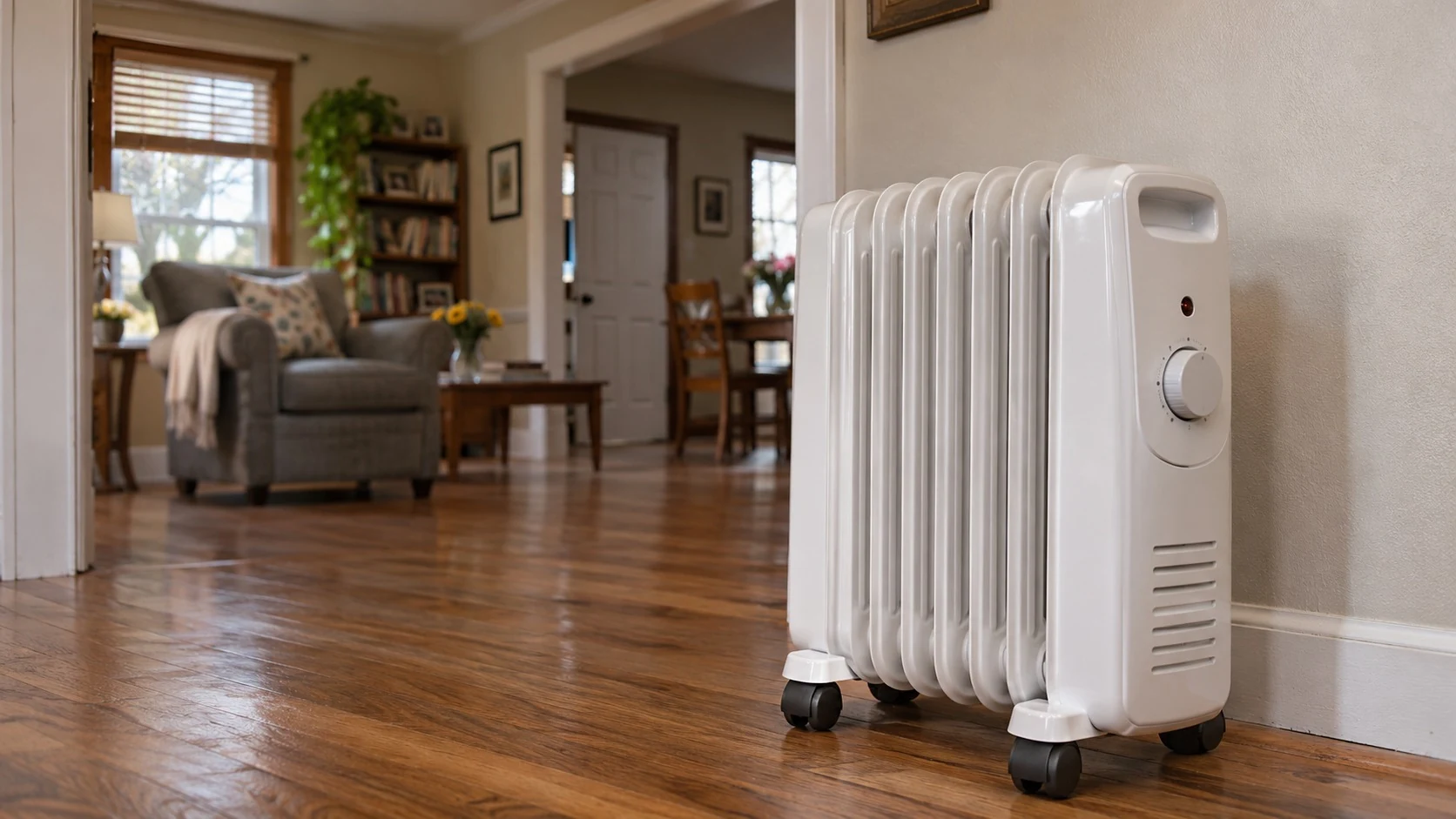
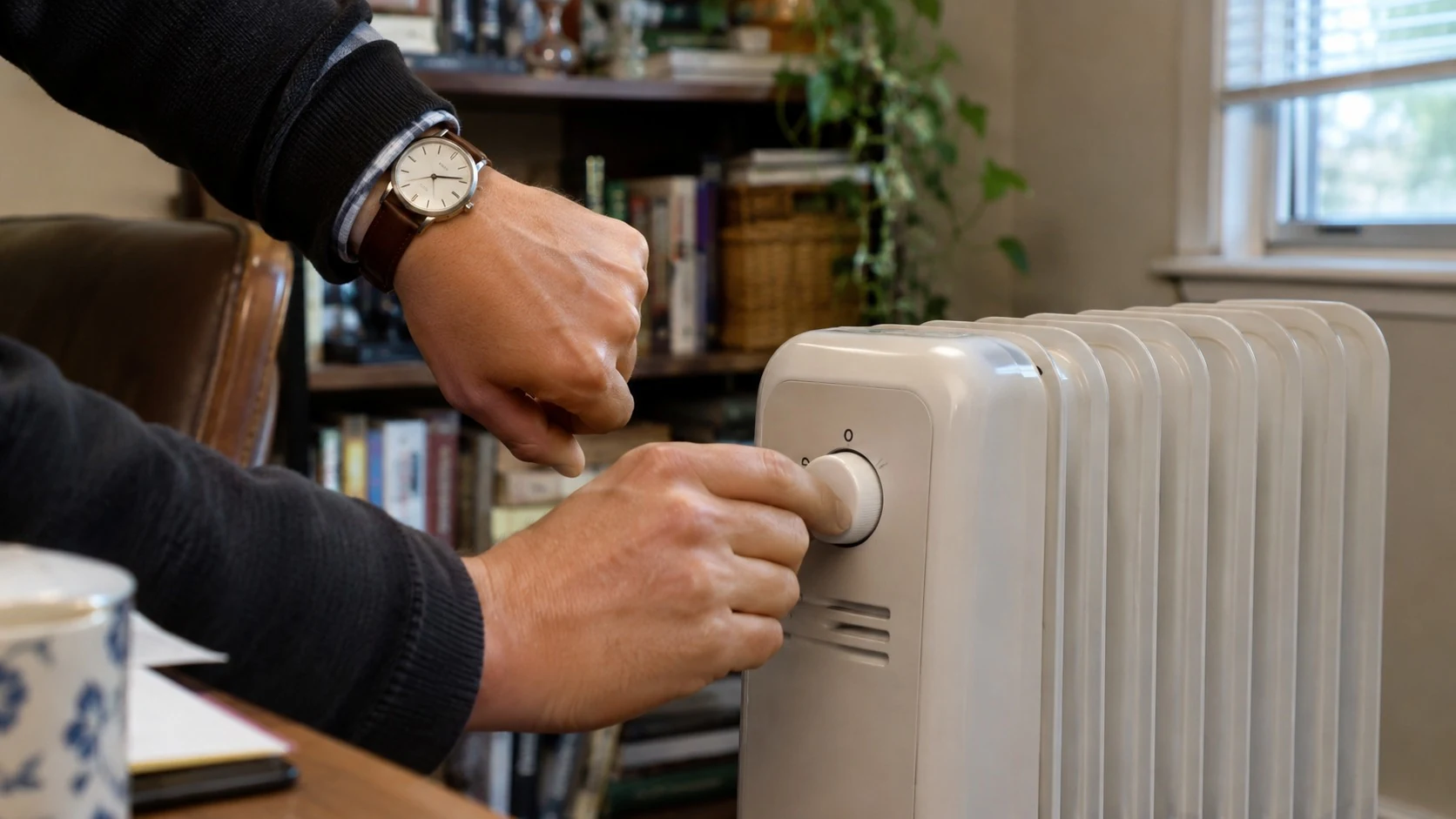
A homeowner checks an electricity bill with a portable radiator in the next room.
Disclosure: As an Amazon Associate, I earn from qualifying purchases. - ReviewGuid Editorial Team
BUYING GUIDEUpdated November 26, 2026 - ReviewGuid Editorial Team - 3 min read
⚡ KEY TAKEAWAY
A 1,500-watt electric space heater costs about 27 cents per hour at 18.17 cents per kilowatt-hour, the U.S. residential average for September 2026. At full power for two hours a day, that comes to about $16.35 over 30 days. Use your own electricity rate and the heater's time at full power to get a closer estimate. These are estimates from published electricity rates and rated input power.
Use your heater input, run time and per-kWh rate to budget a session.
Calculate your cost per hour
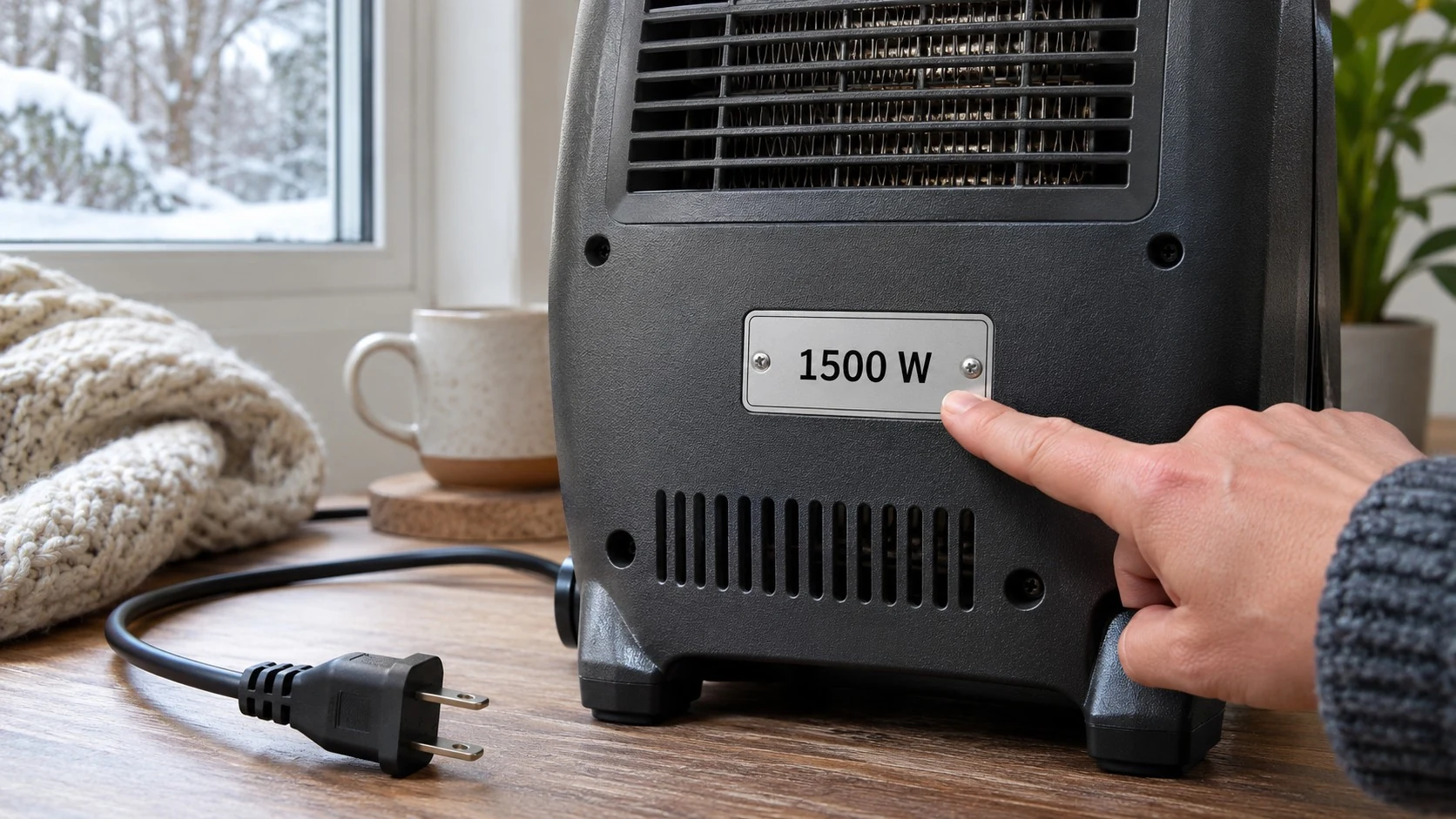
Look up the input wattage on the heater's rating plate or spec sheet. Divide watts by 1,000, multiply by the hours the heater draws that power, then multiply by your price per kWh. A 1,500 W heater running at full power for one hour uses 1.5 kWh. U.S. Department of Energy calculation ReviewGuid did not measure electricity use on a heater for this guide.
A finger points to the 1,500 W input rating on an unplugged heater.
What to Check Before You Buy
1,500 W
Check the high setting
The U.S. De'Longhi Dragon TRD40615EBK-6A lists this input. Check the exact model you are comparing before estimating a full-power session. Track how long you use that setting.
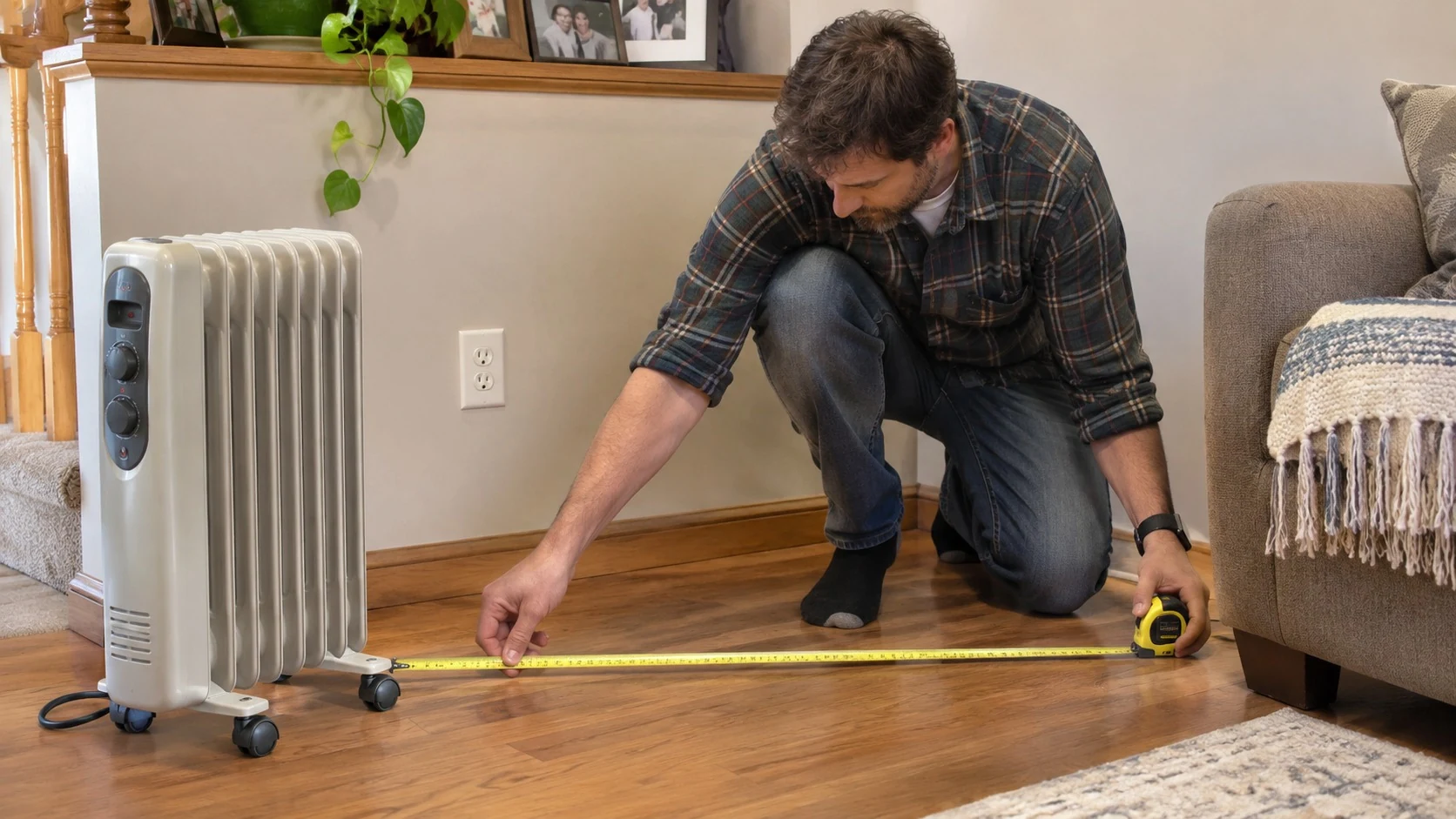
CPSC recommends keeping portable heaters this far from anything that can burn. Check the intended spot before deciding whether a portable heater is practical.
Allow clearance from anything that can burn when measuring your available space.CPSC clearance guidance
Use the rate on your own bill
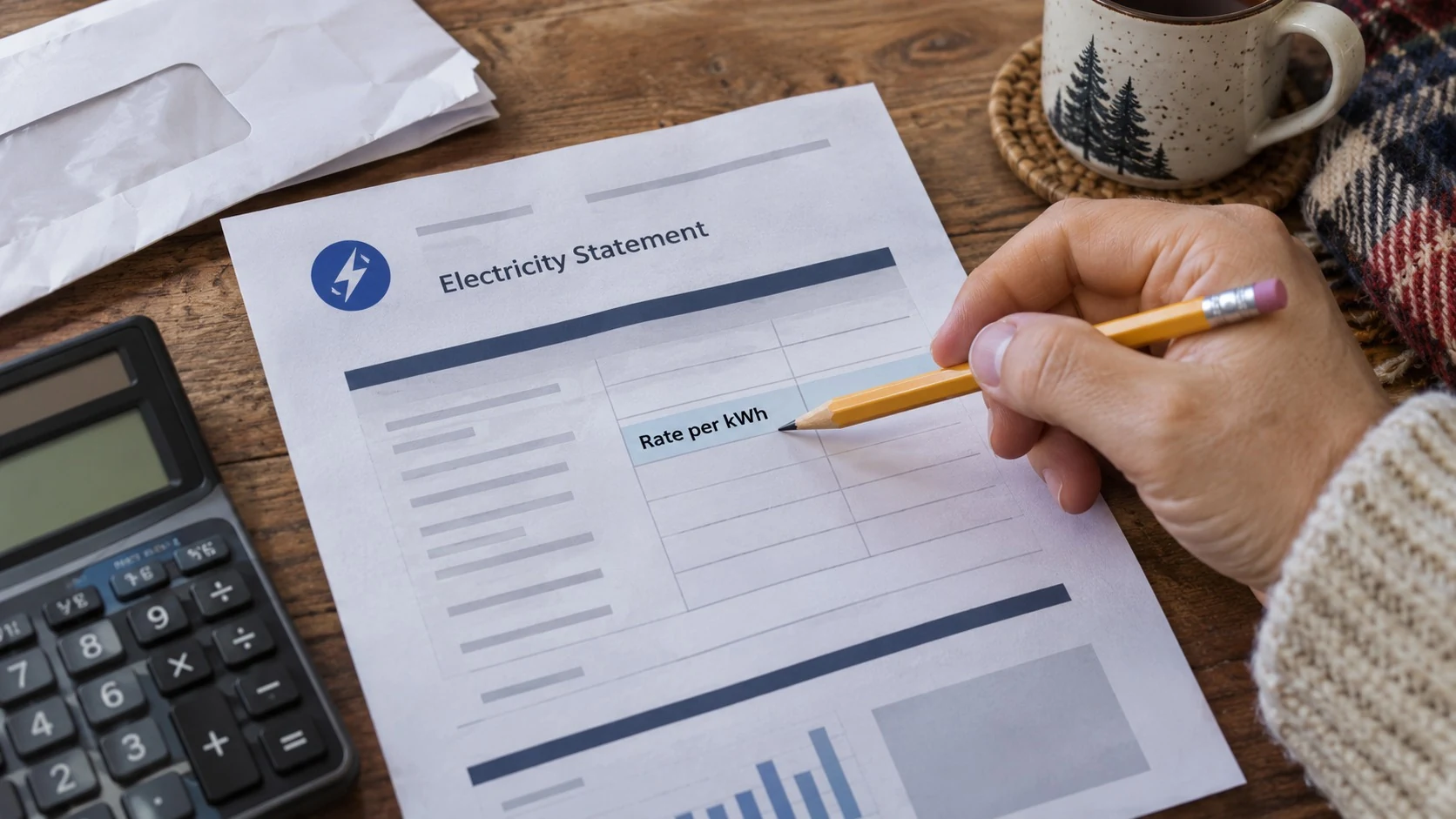
Use the per-kWh charges that apply to extra usage during your heating hours. Include delivery charges billed per kWh and leave flat monthly fees out of the estimate. If your utility changes rates by hour or tier, use the rate for the usage you expect to add. EIA U.S. price benchmark
Check the per-kWh rate on your bill rather than the total amount due.
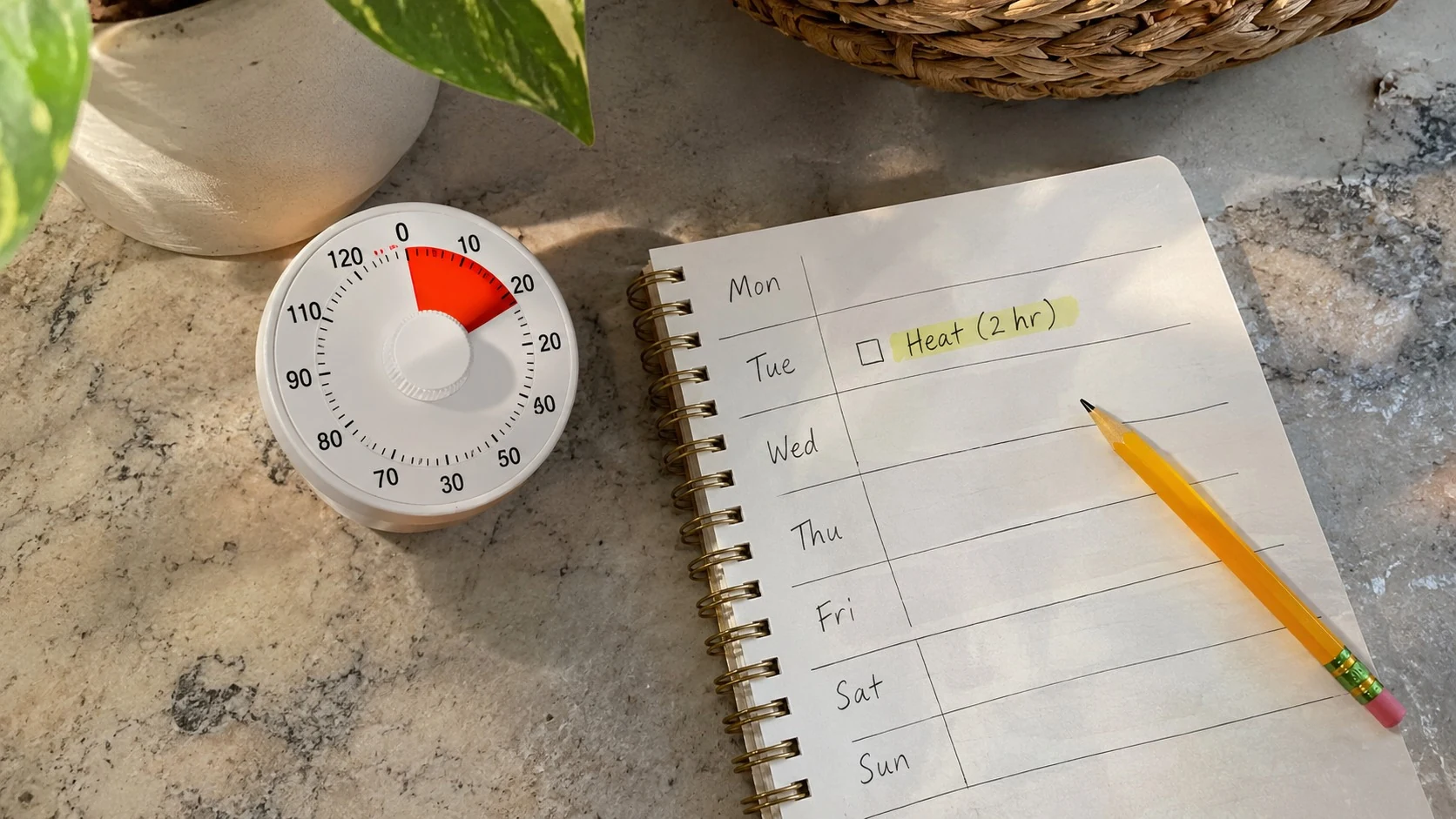
At 18.17 cents per kWh, a small change in running time matters. The examples below assume continuous operation at the listed wattage. A thermostat may cut the power after the room warms up. Treat the figures as estimates for the stated sessions. Rate used for estimates
A short heating session uses less energy than a longer session at the same power.
"Space heaters are intended only to give your home a little more heat when needed"
Connie Dolan, Mississippi Chief Deputy Fire Marshal, quoted by Mississippi State University Extension - Source
Check the room and controls before buying
If you need heat for one occupied room, compare the wattage for each setting and how easy it is to change it. Check the required clearance and the location of a suitable wall outlet. CPSC advises keeping portable heaters at least three feet from anything that can burn and plugging electric models straight into the wall. CPSC space heater guidance
Measure the space around the heater and check your model instructions.
A quick buying checklist
+ Find the input wattage for the setting you expect to use.
+ Get the per-kWh rate for your usual heating hours.
+ Estimate real heating time rather than using the full day.
+ Check the clearance and wall outlet before buying.
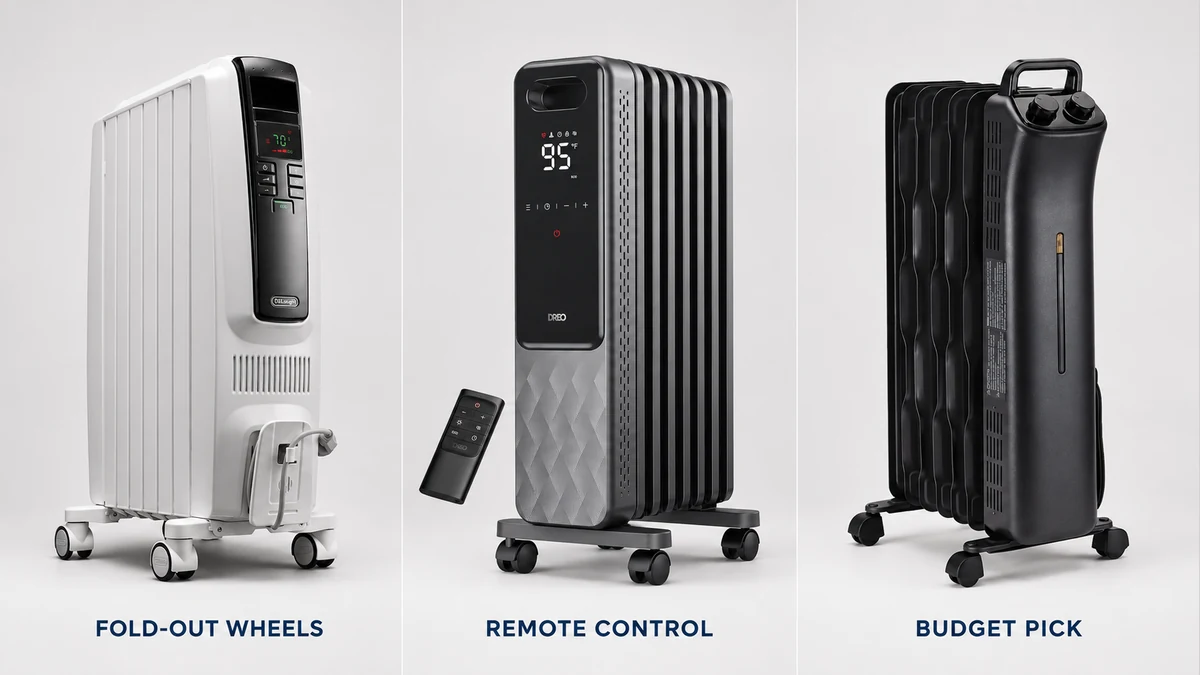
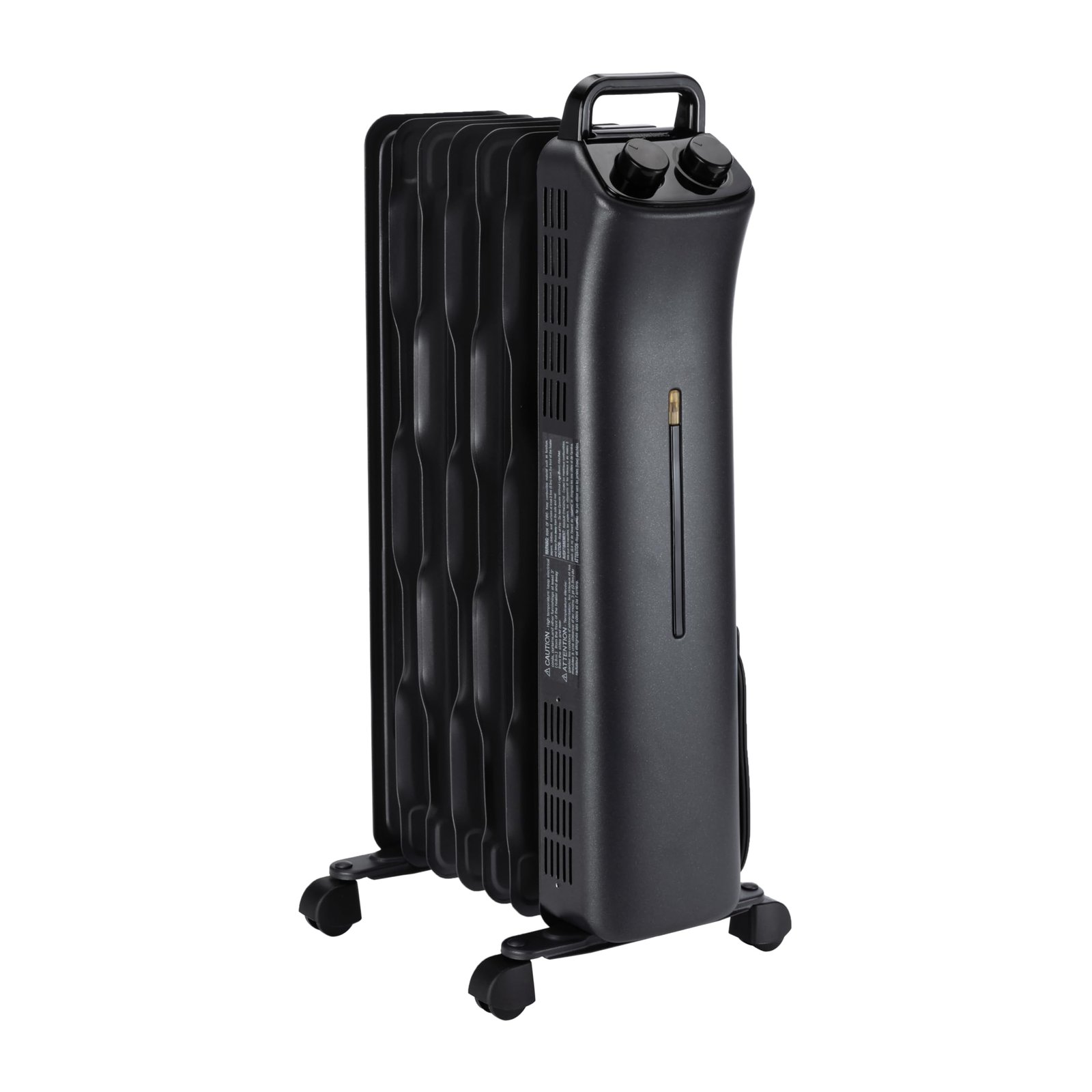
Shopping for an oil-filled heater? Compare the controls and placement requirements of the three models in our guide.
De’Longhi, Dreo and Amazon Basics oil-filled radiators side by side.
Frequently Asked Questions
What does a 1,500-watt space heater cost for eight hours?
At full power it uses 12 kWh, which costs about $2.18 at 18.17 cents per kWh. This calculation illustrates consumption. Turn portable heaters off before sleeping or leaving the room.
Heating time is one part of the running-cost calculation.Does the heater draw full wattage the entire time it is on?
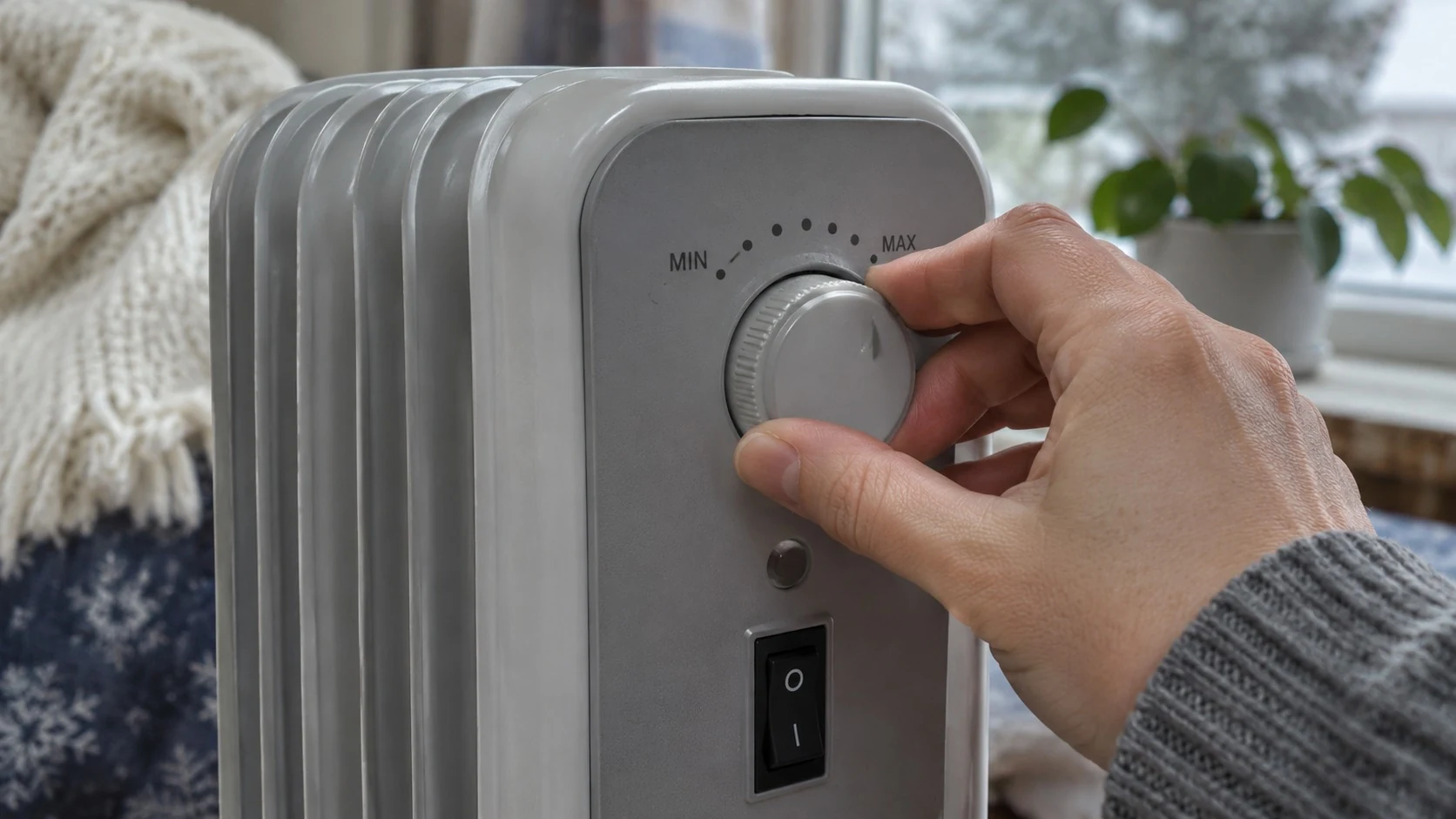
Some models cycle the heat on and off after they reach the set temperature. Use the model's documentation for its controls and treat continuous operation as the comparison case.
A thermostat can change how often the heating element draws power.Is an oil-filled heater cheaper to run than a ceramic heater?
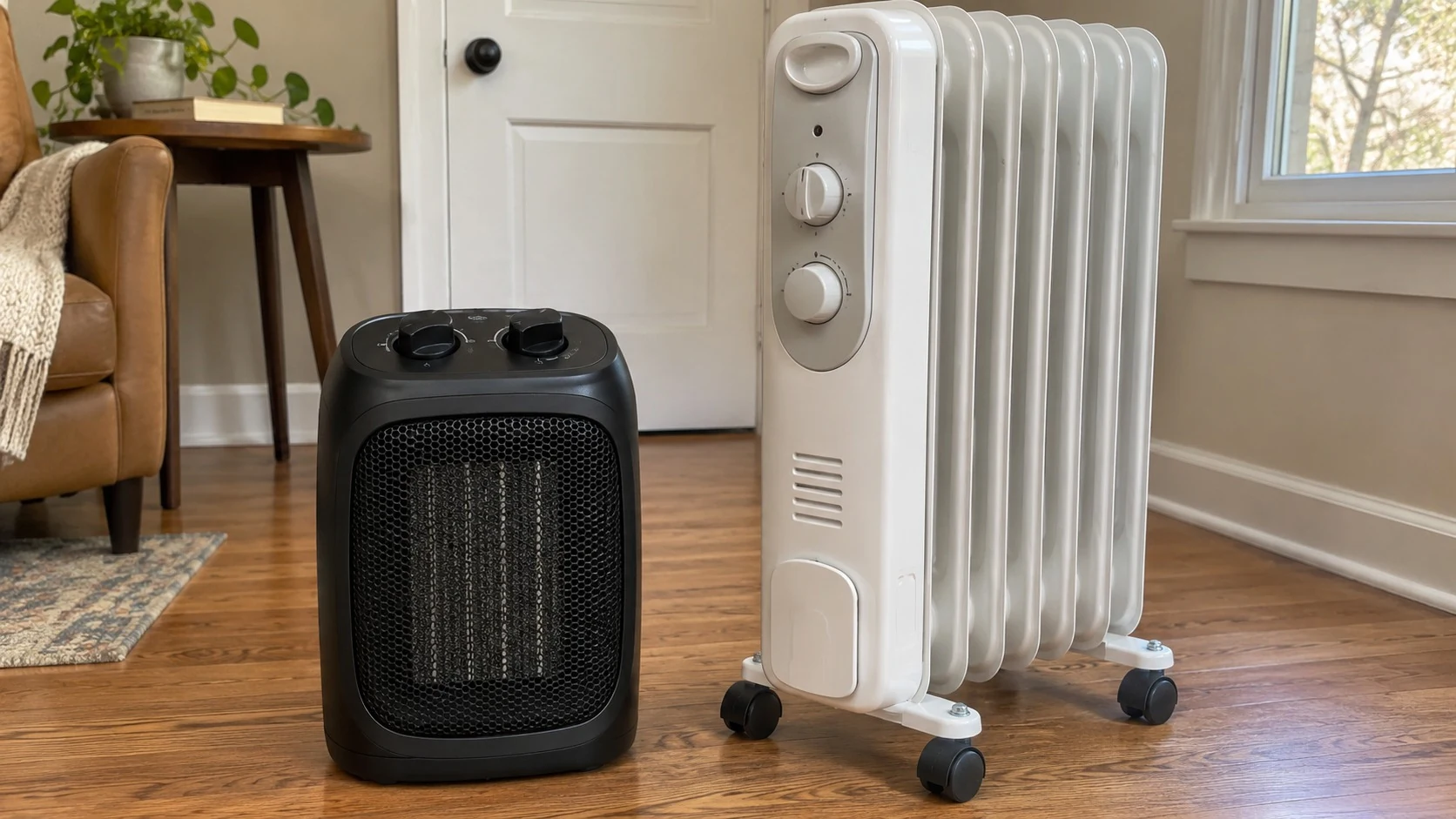
At equal average power, duration, and electricity price, their energy costs are equal. The controls and how long each heater runs in your room can affect what you pay.
Compare power and controls for the models you are considering.
As an Amazon Associate, I earn from qualifying purchases.