

Stair climbing robot vacuum technology is transforming how multi-level homes stay clean—no manual lifting, no skipped steps, and (finally) real automation where you need it most.
Key Takeaways
- Traditional robot vacuums cannot climb stairs due to wheel limitations, low profile, and “cliff” sensors.
- By 2026, AI-powered prototypes like the Roborock Saros Rover and Dreame Cyber X can ascend and clean stairs independently.
- True stair climbing robot vacuums are in prototype, with no official price or release date, but promise major convenience for split-level homes.
- The Core Concept: What Is a Stair Climbing Robot Vacuum and Why Does It Matter?
- Step-by-Step Guide: How to Choose and Use a Stair Climbing Robot Vacuum
- Advanced Analysis & Common Pitfalls
- Conclusion
- FAQ
The Core Concept: What Is a Stair Climbing Robot Vacuum and Why Does It Matter?
A stair climbing robot vacuum is an advanced robotic cleaner engineered to autonomously navigate, ascend, and clean residential stairs as well as typical flat floors. Unlike standard robot vacuums, which stall at thresholds over 2 centimeters and require users to manually move them between levels, these next-gen models operate across multiple stories—removing a major pain point for homeowners with split-levels or complex floorplans.
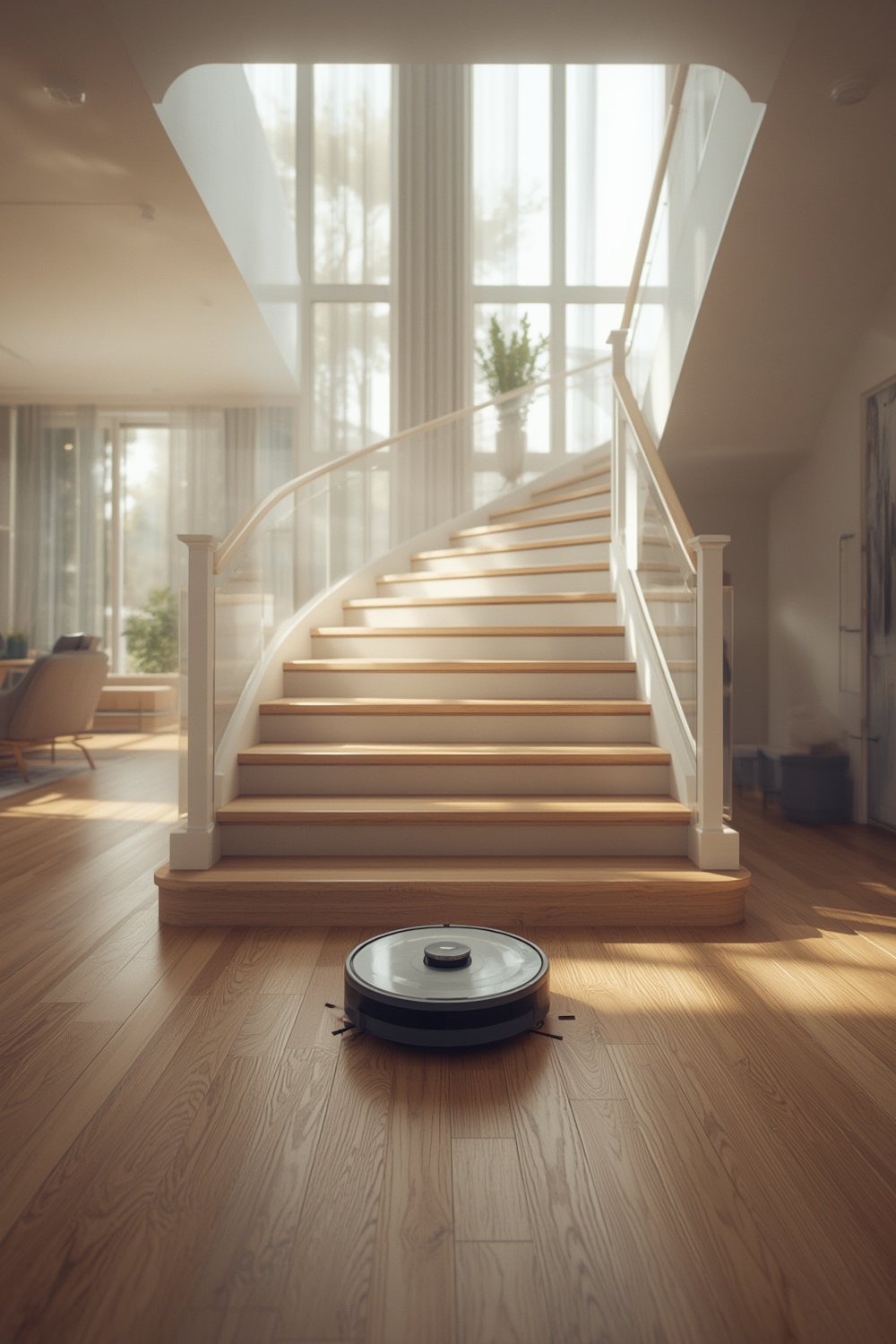
Why does this matter? Most robot vacuums stop dead at most stairs or raised room dividers, because their tiny wheels, low chassis, and safety cliff sensors interpret stairs as dangerous drops. As a result, cleaning the upstairs or finished basement means picking the unit up and restarting it in each zone—not truly “hands-free.”
Breakthroughs in robotic legged mobility and AI navigation (notably from innovators like Roborock’s Saros Rover and Dreame’s Cyber X) have set the stage: these machines use a hybrid wheel-leg or tracked system to detect, climb, and traverse stairs while continuing to vacuum or mop with precise edge and landing cleaning. For busy families or anyone who needs a genuinely autonomous floor solution, the stair climbing robot vacuum could eliminate the last major gap in robotic home cleaning.
Step-by-Step Guide: How to Choose and Use a Stair Climbing Robot Vacuum
Ready to upgrade your cleaning routine for a multi-level home? Here’s a concise guide to assessing, selecting, and setting up the right stair climbing robot vacuum.
-
Assess Your Home’s Floor Plan and Stairs.
Identify how many levels need routine cleaning and the types of staircases (straight, curved, landings, narrow width). Snap a few photos and write down step dimensions. -
Compare Step Height Limits.
Standard models (like many listed in robot vacuum mop combo buying guides) only cross 2 cm. By contrast, stair climbing robot vacuum prototypes feature wheel-legs or tracks that adjust step-by-step, capable of much higher transitions. Seek published “max step height” in the product’s specs. -
Check Cleaning Efficacy on Stairs and Landings.
Unlike early dual-system solutions (where one device just hauls the cleaner upstairs), the tech leaders now use articulated cleaning heads and edge detection to scrub steps fully—important for dusty corners, pet fur accumulations, and spill-prone areas. -
Review Battery Life and Docking Logic.
Multi-level, multi-step cleaning cycles may drain batteries faster. Check if the robot can auto-dock (and recharge) on different floors or at landings, and read up on how it manages partial charge interruptions. -
Noise and Smart Home Integration.
Early wheel-leg or track robots can be louder due to their movement mechanics. Seek claims of shock-absorbing designs (as with Dreame Pro Leap™) if you have sensitive sleepers, or need quiet operation. Confirm if the system integrates with your voice assistant, app, or schedule routines—see examples in the smart night light buying guide for ideas. -
Set Up and Test on Empty Stairs.
Always start with clear, clutter-free stairs. Watch two full cycles to ensure the robot detects drop-offs, reverses safely, and maneuvers landings or curves. Temporarily block open basement stairways to avoid accidental falls.
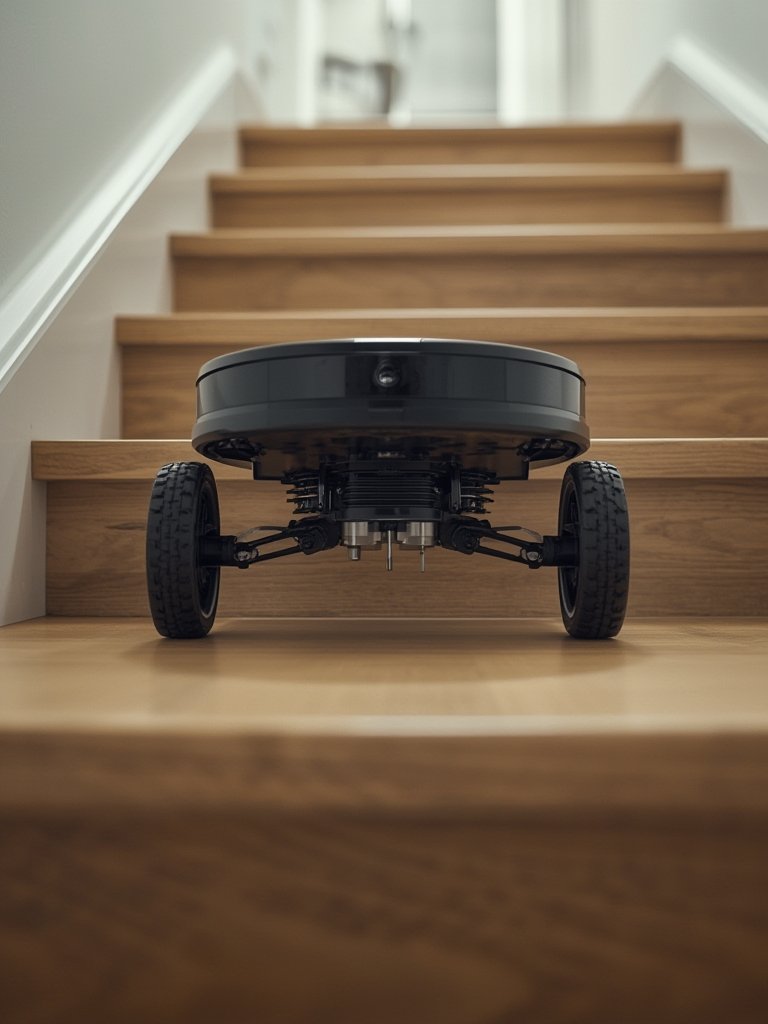
If you’re in the market sooner, leading brands like Roborock and Dreame are actively iterating on their prototypes. While costs aren’t published, expect prices to start above traditional robot vacuums—possibly on par with a new roller mop robot vacuum or premium multi-function models.
Worried about daily messes beyond the stairs? Check out a non-slip rug for safer stairs or upgrade with energy efficiency upgrades while you’re in a home improvement mindset.
Advanced Analysis & Common Pitfalls
While the promise of hands-free, true multi-level cleaning is huge, there are still real limitations. Here’s what research and early testing reveal:
- Technical Issues Remain: Even the best stair climbing robot vacuum can struggle with very steep steps, spiral flights, loose wiring, or heavily padded carpet edges. Cliff sensors may still misread glossy or dark-colored stairs as a “cliff,” stalling progress.
- Slower Cleaning Cycles: Unlike fast flat-floor mode, stair cleaning is stepwise and methodical—don’t expect record cleaning times. Early models may need firmware upgrades for tricky landings or irregular geometry.
- Maintenance Complexity: More moving parts means more things to check and clean (wheels, tracks, legs, vacuum head pivots). Watch out for hair wraps or debris jamming the climbing mechanisms.
- Unknown Market Pricing & Timing: As of early 2026, no stair climbing robot vacuum is sold directly to US consumers—only prototypes or event demos exist. Pricing will likely match premium home tech, especially for brands with unique AI and patent-backed hardware.
| Feature | Traditional Robot Vacuum | Stair Climbing Robot Vacuum (Prototype) |
|---|---|---|
| Obstacle Height Limit | 2 cm (0.8 inches) | Multiple step heights (varies by model) |
| Stair Cleaning Capability | No—manual carry required | Yes—autonomous step-by-step |
| Cliff Sensors | Stops at thresholds, may misclassify drops | AI mapping, advanced descent/ascent protocols |
| Noise Level | Lower (smooth floor) | Potentially higher (wheel-leg or track actuation) |
| Release Date / Cost | Available ($200+ for midrange) | TBA, likely premium pricing |
For anyone shopping now, most multi-level models still require manual help at stairs. If you’re focused on heavy-duty floor cleaning (rather than multi-floor logistics), see our robot vacuum mop reviews for 2026.
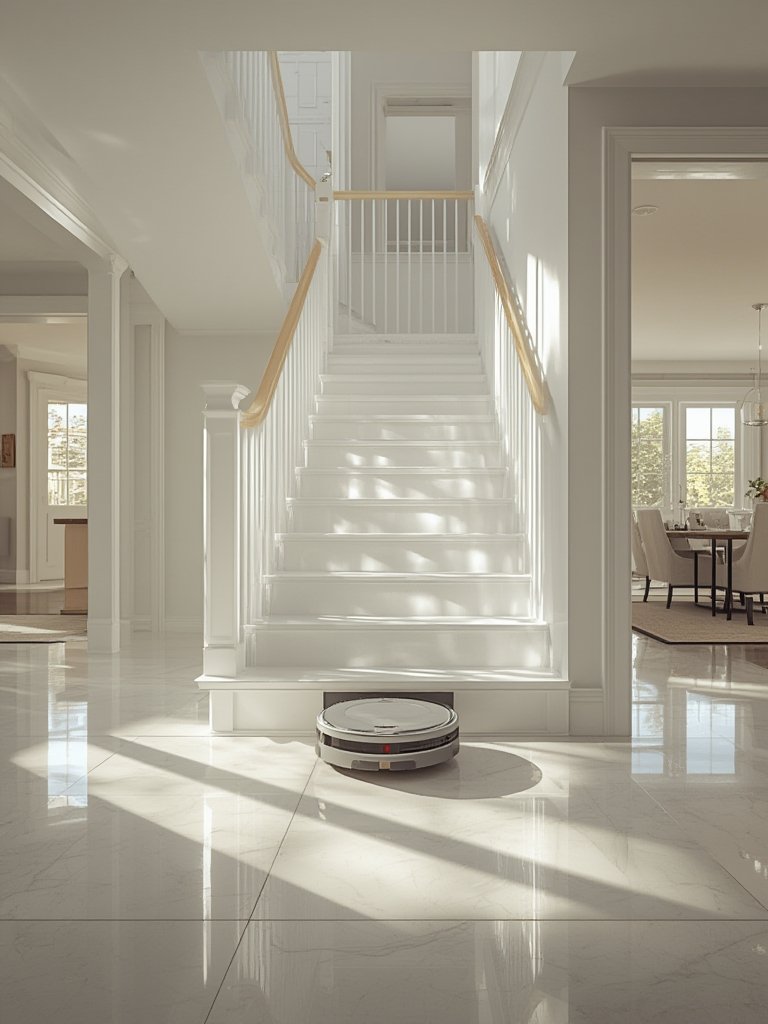
Conclusion
The future of the stair climbing robot vacuum is here—at least in prototype—a major leap for anyone wanting real, whole-home automation. While there’s excitement for AI-driven wheel-leg systems, current limitations (price, release dates, step geometry, complexity) make it critical to measure your home, weigh your needs, and watch closely for commercial launches. If you’re tired of incomplete cleaning or constant carrying, now’s the time to follow leading brands, sign up for product updates, and be first in line as hands-free multi-story cleaning finally arrives.
Ready to experience smarter cleaning for your split-level or multi-story home? Bookmark this guide, sign up for our newsletter, and let us know below: what problem would a stair climbing robot vacuum solve for YOU?
FAQ
Can current robot vacuums go up or down stairs?
No. As of 2026, all standard robot vacuums treat stairs as hazards and will not climb or descend them. Only new prototypes like Roborock’s Saros Rover and Dreame Cyber X can handle stairs, and none are yet commercially distributed (source).
What features should I compare when shopping for a stair climbing robot vacuum?
Look for step height range (actual measured), cleaning on stairs (not just “transit”), battery life for large jobs, cliff sensor adaptability, noise levels, and if it integrates with other smart home systems or voice assistants.
How do these units handle curved, spiral, or narrow stairs?
Prototypes primarily excel on straight stairs and wide landings. AI mapping and adaptive legs/tracks help, but complex layouts may remain a challenge—verify with manufacturer claims and independent tests first.
When will I be able to buy a stair climbing robot vacuum?
No exact retail launch dates as of early 2026. Monitor Roborock and Dreame’s official sites or major tech expos for pre-order opportunities and pricing releases (source).
Where can I improve daily cleaning while I wait for these models?
Try a non-slip rug for safer stairs or machine-washable rugs for mess-prone zones. For flat floors, check current robot-mop combos here.