

Disclosure: As an Amazon Associate, I earn from qualifying purchases. – Maya Bennett
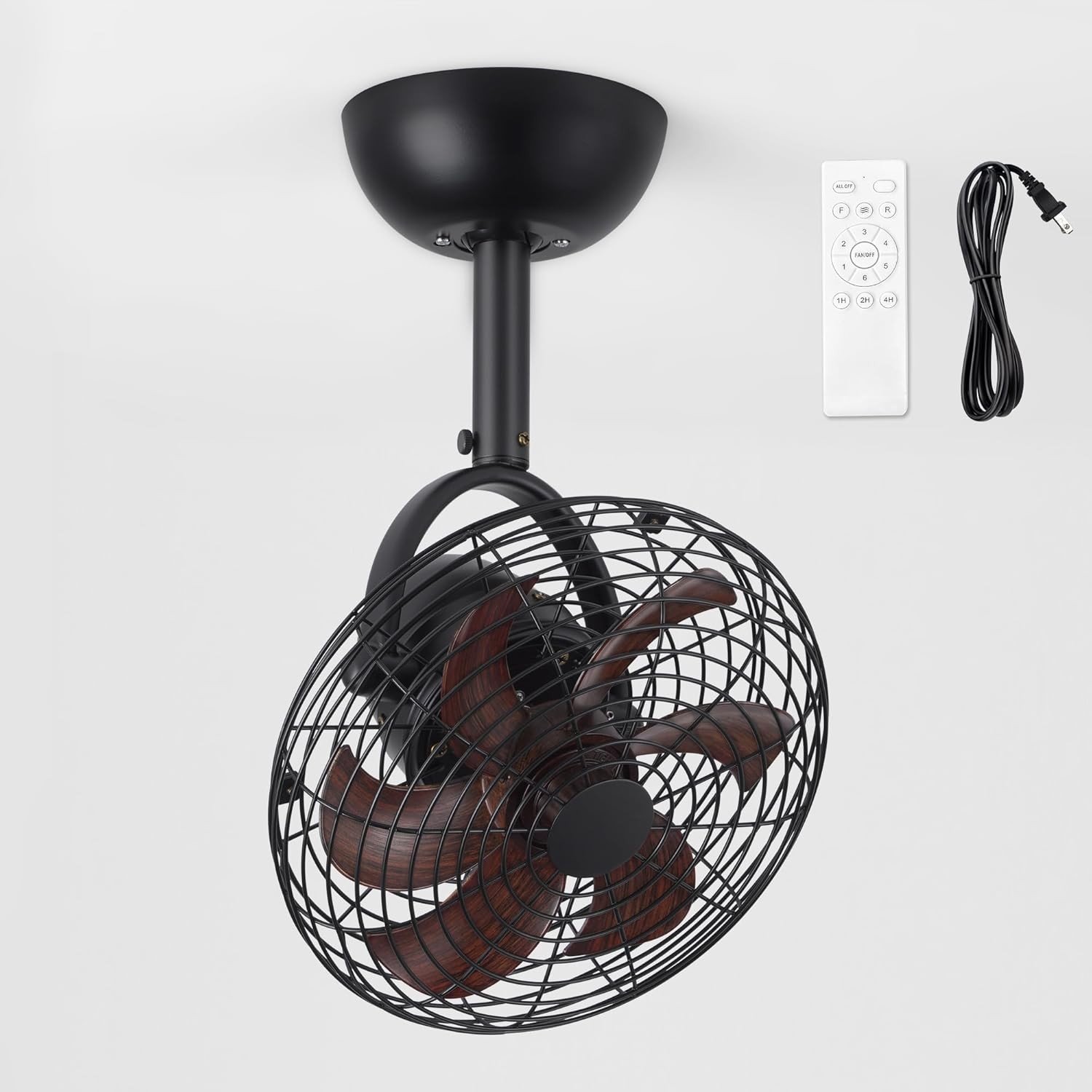
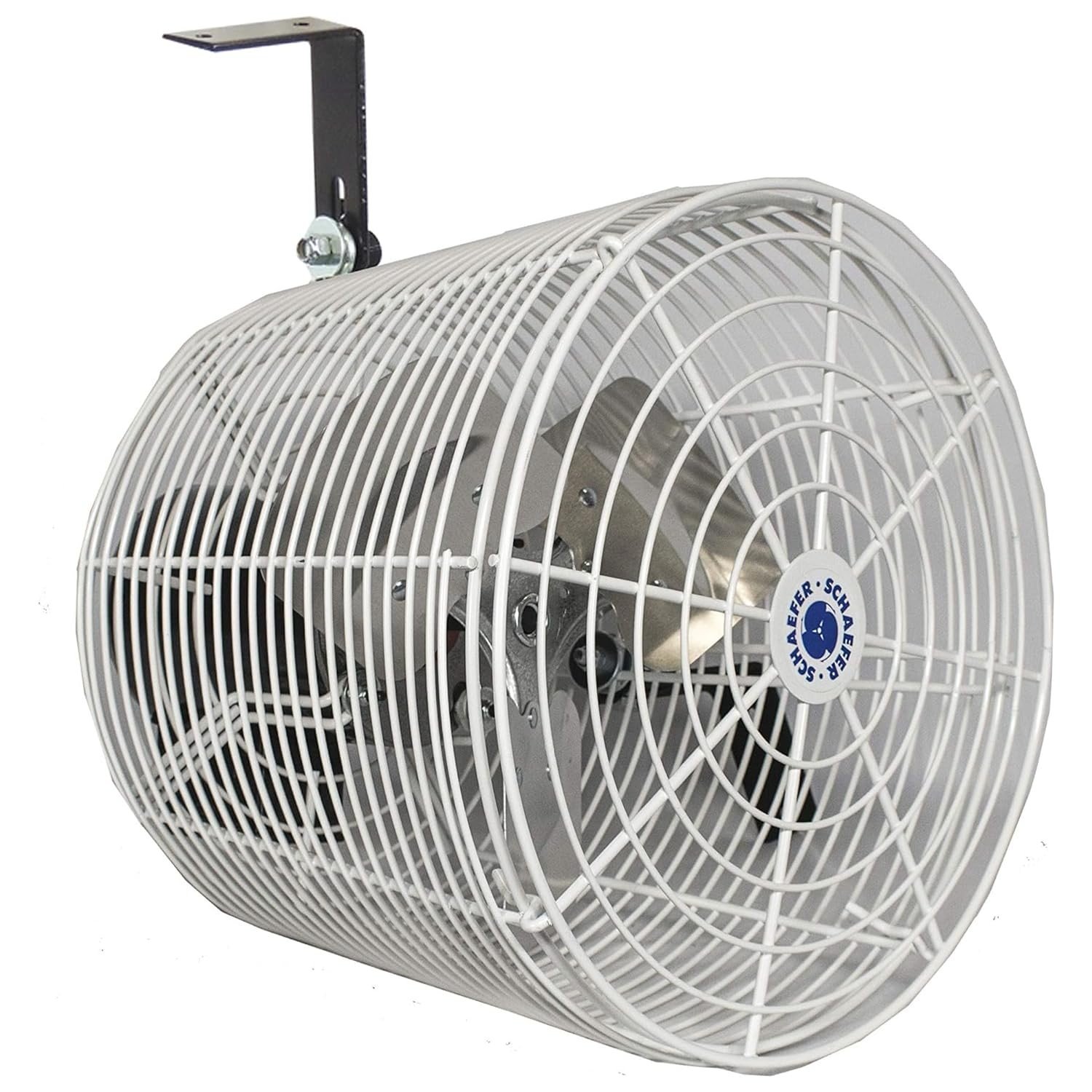
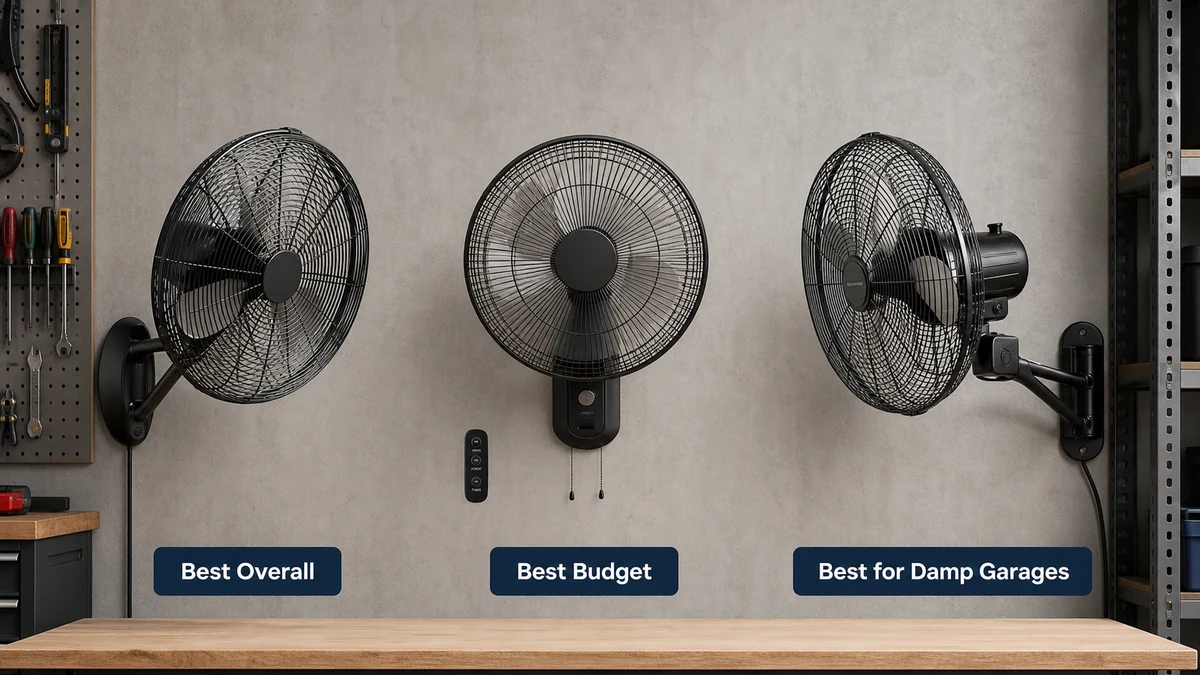
The NewAir 18 inch wall-mounted fan is my overall pick because it has the strongest mix of airflow, rating, and garage-ready build. Choose Comfort Zone for a small budget task zone, or VEVOR if the fan will sit near a damp garage opening or covered patio.
How I picked these 3 wall mount garage fans
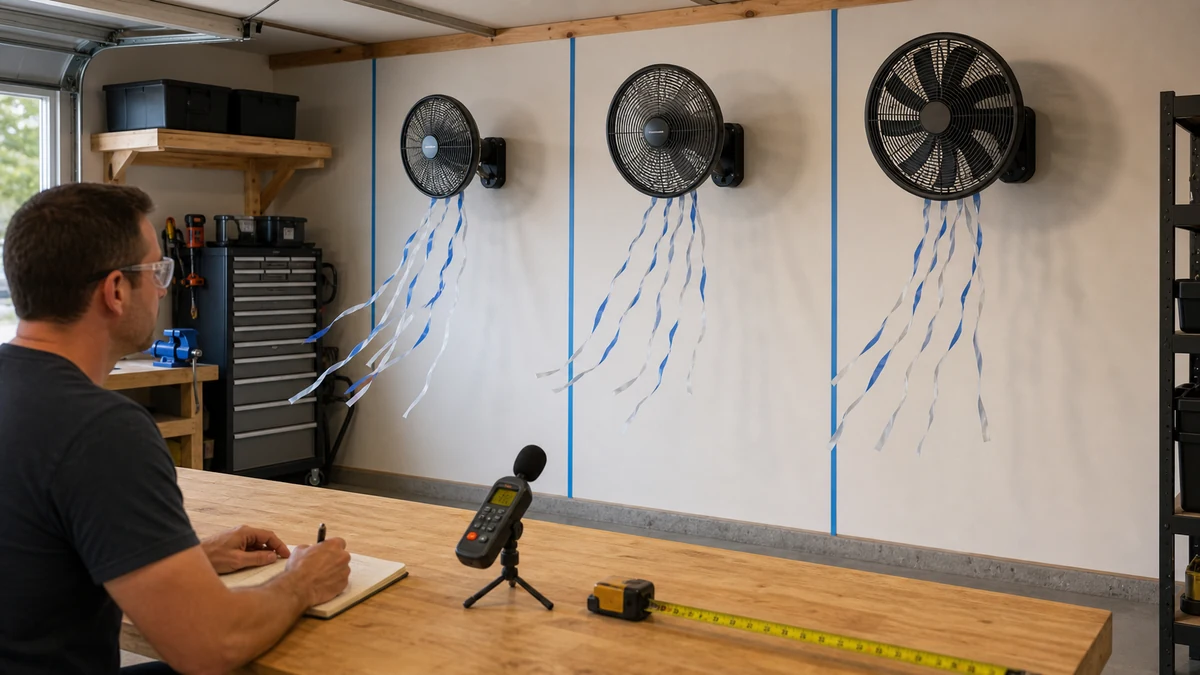
I selected these three wall mount garage fans by filtering for Amazon availability, ratings of 4.0 stars or better, at least 100 reviews, clear garage or workshop use, and a distinct buyer role. I checked public guidance from U.S. Department of Energy fan guidance, fan evaluation factors from Consumer Reports fan testing, and garage-specific testing notes from Bob Vila garage fan testing. This comparison links back to the companion trend report at why wall mount garage fans are rising this summer. I weighted airflow, mounting practicality, durability, noise expectations, control layout, and price. I did not rank by CFM alone because a fan that is too loud, hard to mount, or wrong for a damp location can be a worse purchase than a quieter model that fits the actual garage zone.
Sources: DOE fan cooling, Consumer Reports fan testing, Bob Vila garage fan testing
Full spec sheet at a glance
| Feature | NewAir | Comfort Zone | VEVOR |
|---|---|---|---|
| Best for | Overall garage/workshop airflow | Budget task zone | Damp garage or patio edge |
| Type | 18 in high velocity wall fan | 16 in oscillating wall fan | 18 in oscillating outdoor-style wall fan |
| Price | $77.59 | $41.98 | $56.90 |
| Rating | 4.7 | 4.3 | 4.2 |
| Reviews | 1506 | 4957 | 845 |
| Airflow note | 3,000 CFM listed | Small-room oscillating airflow | 4,000 CFM listed |
| Control note | Manual speed control | Remote and timer | Oscillation and speed control |
| Watch-out | More fan than tiny spaces need | Not a damp-area fan | Bulkier than compact indoor fans |
⇆ swipe horizontally on mobile – prices last verified June 1, 2026
The 3 picks, in detail
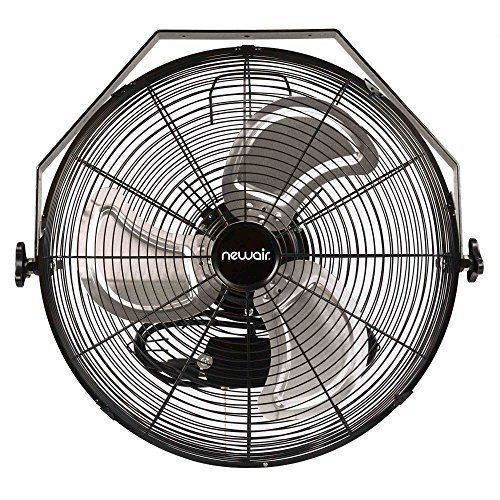
#1 – NewAir 18 in. Wall-Mounted High Velocity Fan
★★★★★ 4.7
The NewAir is the pick I would mount near a primary bench, treadmill, or tool wall. The 18-inch format is large enough to move air across a standing work zone, but it does not require giving up floor space.
The main reason it wins is balance. It is more garage-focused than the Comfort Zone budget fan, but it costs less than many premium outdoor-rated wall fans.
I would skip it for a tiny desk corner or a rental where drilling into studs is not realistic.
In daily use the NewAir earns its overall spot by being the least fussy choice for a typical dry garage bench. It is powerful enough to feel across a standing work zone, its review volume gives real confidence that the build holds up, and it sits below premium outdoor-rated pricing. If you only want to make one decision and move on, this is the pick that fits the widest range of garages.
#2 – Comfort Zone 16-Inch Wall Mount Fan with Remote Control
★★★★☆ 4.3
The Comfort Zone is the budget answer for buyers who want a wall fan over a laundry corner, storage bench, small gym mat, or hobby table.
Its strongest advantage is convenience per dollar: remote control, oscillation, and a sub-$50 checked price are useful when you do not need industrial airflow.
The indoor-style build keeps the decision simple. Keep it in a dry zone and choose something else near open weather exposure.
The Comfort Zone makes the most sense when budget and convenience matter more than raw airflow. Over a laundry corner, a storage bench, a small gym mat, or a hobby table, its remote and oscillation deliver comfort per dollar that is hard to beat under fifty dollars. Keep it in a dry indoor-style zone and it is a smart, low-commitment buy.
#3 – VEVOR 18 inch Wall Mount Fan Oscillating 4000 CFM
★★★★☆ 4.2
The VEVOR pick is for the garage that behaves more like a covered outdoor space. If the door stays open or humidity rolls in, moisture resistance and oscillation matter more.
Its listed 4,000 CFM gives it the strongest airflow claim here, but the rating and review count are lower than NewAir.
Buy it when damp exposure and coverage matter. If the fan will live in a dry, narrow bench zone, NewAir or Comfort Zone may be cleaner value.
The VEVOR is the answer when your garage behaves like a covered outdoor space. If the door stays open, if humidity rolls in, or if you need to push air across a wider damp area, its moisture resistance and strong airflow claim are the features that count. It asks you to accept a lower review count in exchange for that exposure tolerance, which is a fair trade for the right space.
How to choose a wall mount garage fan
Airflow is the first number that matters, and it is measured in cubic feet per minute, or CFM. A higher CFM rating means the fan moves more air per minute, which is what you want when you are trying to cool a hot two-car garage or push stale air toward an open door. As a rough guide, a compact single-bay workspace is comfortable with a moderate-airflow fan, while a deep or two-car garage benefits from the strongest CFM you can mount safely. Do not chase the biggest number alone, though, because blade size, motor quality, and where you place the fan all change how that airflow actually feels at the workbench.
Mounting strength is the part most buyers underestimate. A wall fan hangs off a bracket for years, so it needs a solid anchor. The safest install lands the bracket screws into a wood stud or into masonry with the correct anchors, never into bare drywall alone. Before you buy, measure the bracket hole spacing and confirm it lines up with a stud, or plan to add a mounting board. A fan that is slightly heavier but bolted into framing will always outlast a lighter unit hung from weak anchors.
Oscillation decides whether you are cooling one spot or a whole zone. A fixed-head fan is fine when you stand in one place, such as over a single bench or a treadmill. Oscillation spreads the same airflow across a wider arc, which is the better choice for a shared garage gym, a hobby area where you move around, or any room where two people work at once. The tradeoff is that oscillating heads add moving parts, so look for a model with smooth, quiet sweep rather than a notchy motor.
Damp and outdoor exposure should drive the build you choose. A standard indoor-style fan is built for dry air and will not hold up well near an open garage door, a covered patio, or a humid coastal climate. If moisture rolls in when the door is up, choose a model that lists moisture resistance or an outdoor or damp rating. Sealed motors and corrosion-resistant housings cost a little more, but they are far cheaper than replacing a rusted fan after one wet season.
Controls and noise round out the decision. A remote control is genuinely useful on a wall fan because the unit is mounted out of easy reach, so being able to change speed or toggle oscillation from your bench saves real friction. Variable speed settings let you run a quiet low breeze for long sessions and a strong blast when you first open up a hot garage. If you spend hours in the space, weigh noise as much as power, since a fan that is too loud at its useful speed tends to get switched off.
Placement and install notes that change the result
Where you mount the fan matters as much as which fan you buy. Aim for high on the wall and angled slightly downward so the airflow sweeps across the standing zone rather than over your head. Keep it clear of shelving, open garage-door tracks, and anything that could swing into the blade cage. If you are cooling a workbench, mount it so the air crosses the bench from the side, which keeps dust and fumes moving away from your face instead of straight at it.
Plan the power route before you drill. Most wall fans use a standard plug, so confirm the cord reaches an outlet without a tripping hazard or a daisy chain of light-duty extension cords. If the nearest outlet is awkward, it is worth adding a proper receptacle rather than running a thin cord across a doorway. Tidy cable routing also keeps the install looking finished instead of temporary.
Finally, think about long-term maintenance. Garage air is dusty, and a fan that pulls dust will cake its blades and cage over a season. Pick a model you can wipe down or partially open for cleaning, and give yourself enough clearance around the unit to reach it. A fan that is easy to clean keeps its rated airflow far longer than one you can never get into.
Common mistakes buyers make
The most common mistake is buying on airflow numbers alone and ignoring the mounting surface. A powerful fan bolted into drywall will sag, vibrate, and eventually pull loose. The second mistake is using an indoor-rated fan in a damp or open garage, where the motor corrodes faster than buyers expect. The third is skipping oscillation in a multi-use space, then realizing a fixed head only cools one narrow lane. Matching the fan to how the room is actually used prevents all three.
A quieter mistake is forgetting about reach. Because the fan lives on the wall, a unit with no remote and stiff manual controls becomes a chore to adjust, so it ends up stuck on one speed. Spending a little more for a remote or smooth dial usually pays for itself in daily convenience. Think through a full season of use, not just the first hot afternoon, and the right pick becomes obvious.
How much airflow you actually need
A simple way to size a fan is to think in terms of the space you want moving air, not the whole building. A single workbench or a treadmill zone only needs enough airflow to keep a steady breeze on one person, so a moderate-output fan placed close and angled correctly will feel stronger than a distant high-CFM unit. The closer the fan sits to where you stand, the more of its rated airflow you actually feel, which is why placement often beats raw specs.
When you scale up to a full two-car garage, the math changes. You are now trying to break up large pockets of hot, still air and nudge it toward a door or vent, which rewards both higher CFM and oscillation. In a deep garage it is often smarter to combine a strong wall fan near the work zone with an open door or a second low fan for cross-flow, rather than expecting one unit to cool the entire slab. Air that has somewhere to exit always feels cooler than air that just recirculates.
Ceiling height and clutter matter too. A garage packed with shelving, cabinets, and a parked car has far more surfaces to block and absorb airflow than an open bay, so the same fan will feel weaker in a crowded space. If your garage is full, mount the fan high and aim it down a clear lane rather than into stacked storage, and you will get noticeably better reach from the exact same unit.
Wall fan vs pedestal, ceiling, and exhaust fans
A wall-mounted fan wins on floor space and safety, which is the main reason it suits garages. It keeps the blade cage up and out of the way of cars, carts, and foot traffic, and it frees the floor for tools and projects. The tradeoff is that it is fixed in place once installed, so you lose the easy repositioning that a pedestal fan gives you.
A pedestal fan is the flexible option when you move around a lot or want to roll cooling to different bays, but it eats floor space and can tip or get knocked over in a busy garage. A ceiling fan moves a gentle column of air over a wide area and is great for steady background circulation, yet it lacks the focused, directional blast a wall fan delivers at a bench. An exhaust fan solves a different problem entirely, pulling hot air and fumes out of the space rather than moving air across you, and it pairs well with a wall fan rather than replacing it.
For most home garages the practical answer is a wall fan for directed cooling at the work zone, optionally backed by an exhaust fan or an open door for ventilation. Choosing the wall fan is less about beating the other types and more about matching the directional, space-saving job they do best.
Running cost, noise, and safety
Fans are among the cheapest cooling tools to run because they cool people rather than chilling the whole room the way an air conditioner does. Running a wall fan for hours costs a small fraction of running a compressor-based unit, which is part of why garage owners reach for them first. The real cost question is usually noise tolerance, not electricity: a fan you find too loud at its useful speed gets switched off, so its true cost is the comfort you give up.
Noise is worth testing against how you use the space. If you listen to podcasts, take calls, or run a home gym in the garage, prioritize a model that stays tolerable at the speed you actually need. Many fans are quiet on low and loud on high, so the honest test is how they sound at the setting that keeps you comfortable, not at their quietest.
On safety, look for a sturdy blade cage with tight spacing, secure mounting hardware rated for the fan weight, and a cord in good condition routed away from walkways. If the fan will see any moisture, confirm it is rated for damp use before plugging it in. A fan mounted into solid framing, kept clear of obstructions, and matched to its environment will run safely for years with little more than an occasional dust-down.
A quick pre-purchase checklist
Before you order, walk the space with three questions in mind. First, where exactly will the fan live, and is there a stud or masonry anchor at that height? Hold up your phone or a box where you picture the unit, check for framing behind the wall, and make sure nothing swings or slides into that zone. Getting the anchor point right before you buy saves you from returning a fan that will not mount safely.
Second, how wet does that spot get through the year? Be honest about whether the door stays open, whether humidity rolls in during summer, and whether rain ever reaches the wall. If the answer is yes to any of those, shortlist only damp-rated or outdoor-capable models, because an indoor-only fan in that spot is a short-term purchase. If the spot is reliably dry, you can prioritize airflow and value instead.
Third, how will you control it day to day? Decide whether you need a remote, how many speeds you realistically use, and whether oscillation earns its place for the way you move around the space. Picturing a normal session, not just the first hot afternoon, tells you which features you will actually touch. Run those three checks and the shortlist usually narrows itself to one obvious pick for your garage. If two models still feel close after that, let review volume and rating break the tie, since a fan with a long track record of satisfied buyers is the safer bet for something you mount once and rely on for years.
Which one should you buy?
The decision is mostly about placement. If the fan is going above a bench in a dry garage, prioritize airflow and mounting strength. If it is cooling a small task area, prioritize control and noise. If it is near weather, humidity, or an open door, prioritize outdoor-oriented construction.
One practical note before buying: wall fans are permanent enough that planning matters. Mark the standing zone, check the stud location, confirm the cord route, and test the likely tilt angle before drilling. A quieter fan that reaches the right zone is usually more useful than a louder fan that looks stronger on paper but gets switched off after ten minutes.
Frequently Asked Questions
What is the best wall mount garage fan overall?
The NewAir 18 inch wall-mounted high velocity fan is the best overall pick because it balances airflow, rating, review volume, and garage-ready build.
What is the best budget wall mount garage fan?
The Comfort Zone 16-inch wall mount fan is the budget pick because it was under $50 at price check and has a large review count.
Do I need an outdoor-rated garage fan?
Choose an outdoor or damp-rated model if the fan is near an open garage door, covered patio, or humid area.
How much CFM is enough for a garage?
Small task zones can use lower airflow, while larger two-car garages benefit from stronger CFM and careful mounting.
NewAir 18 in. Wall-Mounted High Velocity Fan
It wins because it gives most garage buyers the best mix of airflow confidence, review volume, wall mounting, and price.
As an Amazon Associate, I earn from qualifying purchases. Prices, ratings, and availability accurate as of June 1, 2026 and subject to change.