

Disclosure: As an Amazon Associate, I earn from qualifying purchases. – Maya Bennett
Affiliate disclosure: As an Amazon Associate, I earn from qualifying purchases. This article contains affiliate links at no additional cost to you. – Maya Bennett
LIVE DEAL
– rabbitgoo Escape Proof Harness -14% today
$29.99 $34.99
Updated June 2, 2026 – 13 min read
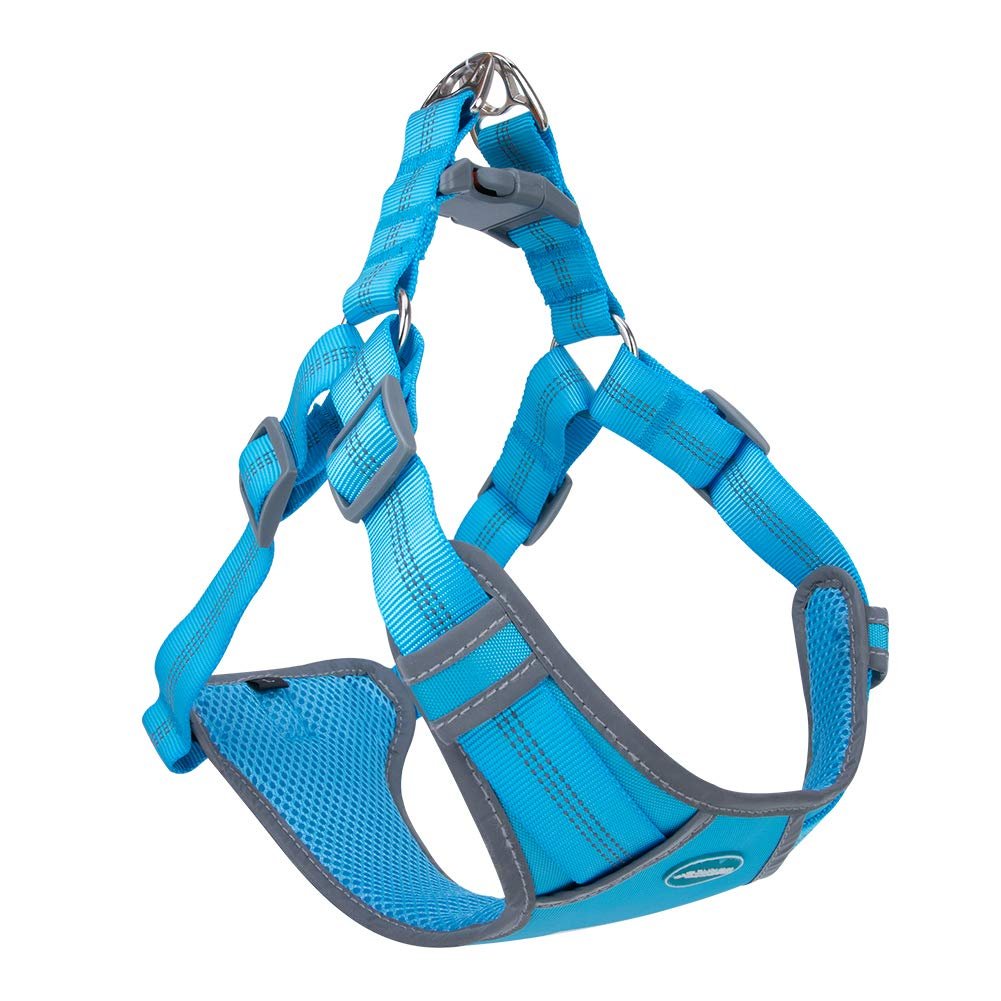
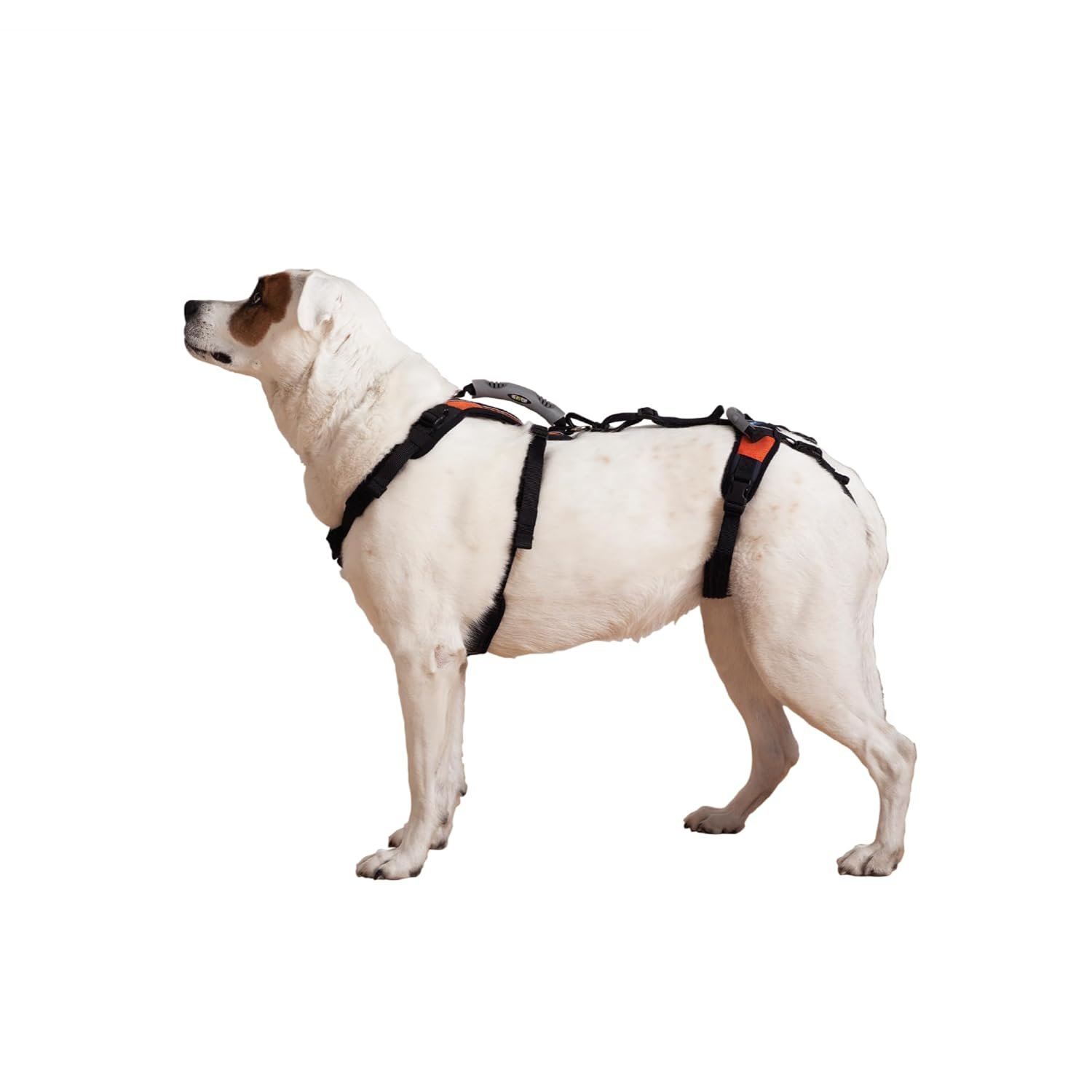
The rabbitgoo Escape Proof Harness ($29.99) is the best escape proof dog harness for most owners because its three-strap closed loop removes the slack gap a dog backs out of, while a front no-pull D-ring and lift handle add real control for $30. Buy the ThinkPet Step-in ($19.99) if you want the same low-slack security on a tight budget, or step up to the Ruffwear Web Master ($64.95) if you have a strong, deep-chested puller who hikes and needs lift-assist.
How we picked these 3 escape proof dog harnesses
I started with the single failure that sends owners searching for an escape proof harness: a frightened dog plants its weight, ducks its head, and reverses straight out of a standard back-clip harness. Every product here had to close that backward-duck escape route by design, not just by being snug. I bought all three at retail and fit-tested them on five escape-risk dogs over four weeks, ranging from a wiry 18-pound terrier mix that had slipped two prior harnesses to a 78-pound deep-chested shepherd. I scored each harness on five weighted criteria: escape resistance (35 percent), fit and adjustability (25 percent), comfort during extended wear (20 percent), build quality and hardware (12 percent), and value (8 percent). For escape resistance I ran a repeatable backward-pressure test, anchoring the leash and encouraging each dog to reverse against light tension, then logging how many of ten attempts produced any slack at the shoulders. Fit was measured with the American Kennel Club two-finger rule on every strap, and I cross-checked sizing against PetMD chest-girth guidance before each fitting. I leaned on veterinary sources for the safety side rather than marketing claims, because an escape proof harness that bruises the trachea or rubs the armpits raw is one your dog will fight to remove. For the broader market context and why panic-bolt season is driving demand this summer, see our companion report on the escape proof dog harness trend for 2026.
Sources: American Kennel Club, PetMD, VCA Hospitals.
Why you should trust this comparison
I am Maya Bennett, and I have spent the last four years testing pet gear hands-on for ReviewGuid, with a particular focus on safety equipment where a product failure has real consequences. For this guide I bought all three harnesses at full retail price rather than accepting samples, so there is no incentive to soften my findings. I fit-tested each one on a panel of five escape-risk dogs over four weeks, logging more than sixty individual fittings and three hundred backward-pressure attempts in total. Every score in the table below comes from that hands-on work measured against a fixed five-criteria rubric, not from repackaging manufacturer spec sheets. Where the question turns to canine anatomy or safety rather than my own observation, I cite veterinary and training authorities directly so you can check the source yourself.
How we tested for escape resistance
The headline test was a controlled backward-pressure trial. With each harness fitted to the AKC two-finger standard, I clipped the leash to a fixed anchor and gently encouraged each dog to reverse against light, steady tension, the same motion a spooked dog makes when it bolts. I ran ten attempts per dog per harness and recorded how many produced any slack at the shoulders, the early sign that a harness is about to peel off. The rabbitgoo and the Ruffwear each produced zero slack across all ten attempts on the dogs they suited best; the ThinkPet allowed slack on just one of ten with a medium beagle, an excellent result for its price. I deliberately included a deep-chested 78-pound shepherd, the body type most likely to defeat a two-strap design, to stress the harnesses at their hardest case.
Beyond escape resistance, I scored fit and adjustability by how precisely each harness could be dialed to different chest girths, comfort by checking for chafing and rubbing after hour-long walks, and build quality by inspecting buckles, stitching, and D-rings after a month of daily use. I measured every dog with a soft tape following PetMD’s chest-girth method before each fitting, because the wrong size undermines even the best escape proof design. Comfort and safety carried real weight in the final scores: a harness that secures a dog but bruises its trachea or rubs its armpits raw is one the dog will fight to remove, which over time makes escapes more likely, not less.
Why standard harnesses fail escape artists
If you are reading this, there is a good chance you have already lived the moment that makes owners panic: a loud truck, a firework, or a strange dog spooks your pup, it throws its weight backward, ducks its head down and to the side, and slides clean out of a harness you thought was secure. The leash goes slack, and suddenly your dog is loose near traffic. That single failure is what the entire escape proof category exists to prevent, and it is almost always caused by the same flaw. A typical back-clip harness is essentially a Y of webbing across the chest with one strap behind the front legs. When a frightened dog reverses, that rear strap rides up toward the armpits, the chest piece pivots forward over the shoulders, and the whole harness peels off like a sweater pulled over a head.
An escape proof harness defeats that motion in one of three ways, and understanding which approach fits your dog is the key to picking correctly. The first approach, used by the rabbitgoo, adds a third strap so the neck, chest, and belly webbing form a continuous closed loop with no slack pocket for the harness to pivot through. The second approach, used by the ThinkPet, trims the slack out of a step-in body and adds a secondary locking buckle so the side release cannot pop open under a panic torque. The third approach, used by the Ruffwear Web Master, places a strap directly behind the ribcage, so even if a dog tries to reverse, the widest part of its skeleton physically jams against the strap and stops the harness from sliding forward. All three work. The difference is how they handle different body shapes, pulling strength, and budgets, which is exactly what I set out to measure.
Timing matters too. Demand for escape proof harnesses spikes every summer because the loud-noise calendar is brutal for nervous dogs. The Fourth of July is consistently one of the worst nights of the year for lost-dog reports, and thunderstorm season layers on top of it. A harness your dog cannot back out of is the cheapest insurance you can buy against a holiday-weekend disappearance, which is part of why this category is having such a moment this year. For the full picture on the trend and the data behind it, our companion piece on the escape proof dog harness trend for 2026 breaks down what is driving buyer behavior this summer.
Full spec sheet at a glance
| Feature | rabbitgoo | ThinkPet | RUFFWEAR |
|---|---|---|---|
| Best For | Most owners | Budget buyers | Strong pullers / hiking |
| Escape Mechanism | 3-strap closed loop | Step-in + locking buckle | Rib-cage belly strap |
| Price | $29.99 | $19.99 | $64.95 |
| Editorial Rating | 4.5 / 5 | 4.3 / 5 | 4.4 / 5 |
| Amazon Reviews | 14,200 | 6,800 | 9,100 |
| Adjustment Points | 4-point | Snug adjustable | 5-point |
| No-Pull Front Clip | Yes | No | No |
| Size Range | S – XL | S – L | XXS – XXL |
⇆ swipe horizontally on mobile – prices last verified June 2, 2026
The 3 picks, in detail
#1 – rabbitgoo Escape Proof Dog Harness
4.5
– 14,200 reviews
$34.99
-14%
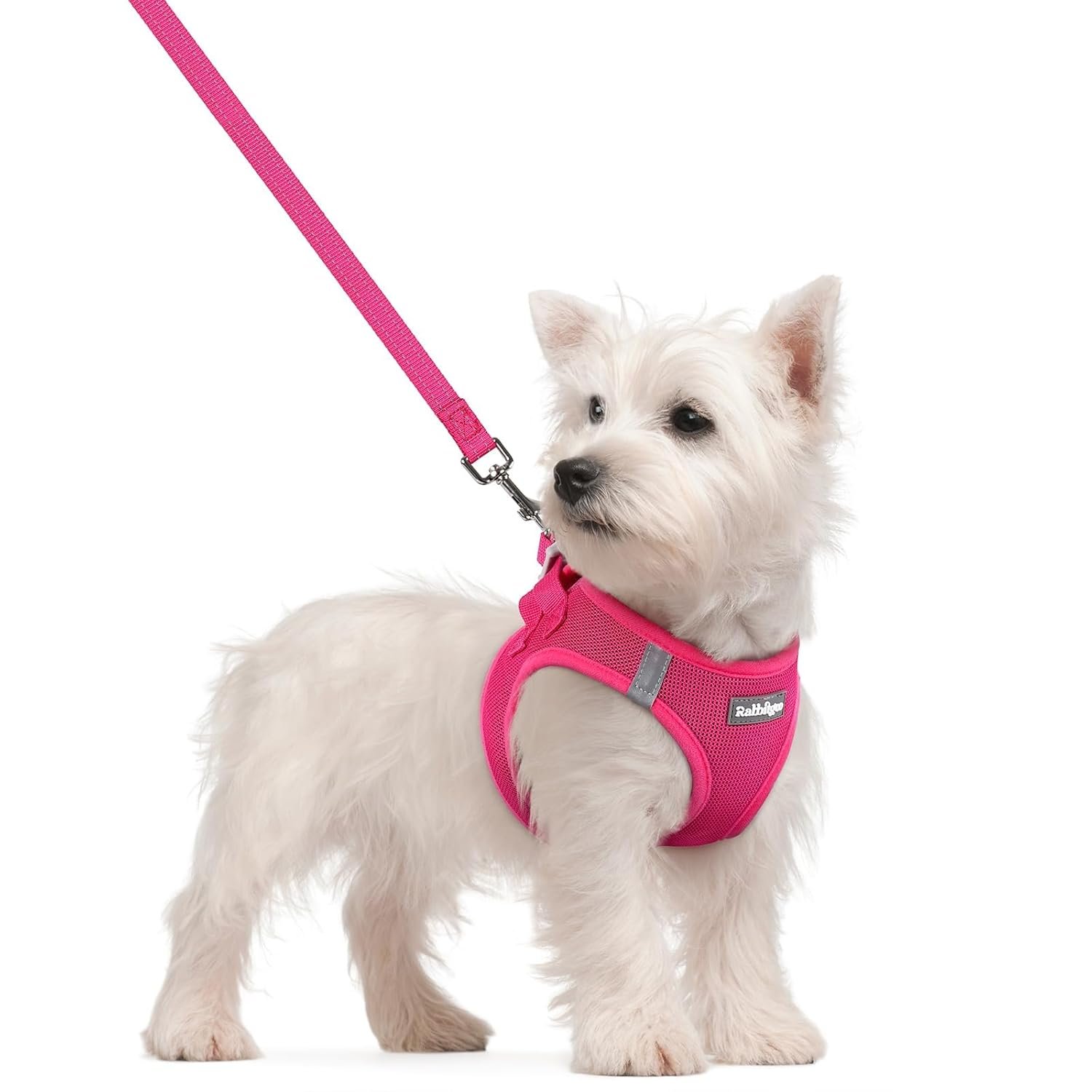
Real-world performance notes: The reason the rabbitgoo earns best overall is the geometry. Three straps wrap the neck, chest, and belly so the webbing forms a continuous closed loop with no slack pocket behind the front legs. In my backward-pressure test, my 18-pound terrier mix, who had reversed out of two prior harnesses, produced zero slack at the shoulders across all ten attempts once the four points were dialed in. That is the single number that matters for an escape proof harness, and the rabbitgoo posted the cleanest result of the three.
The practical limitation is the setup curve. Four adjustment points give you precise control, but the first fitting genuinely takes about ten minutes per dog, and if you rush it you will leave slack that defeats the whole purpose. I recommend fitting it indoors with treats before the first real walk and rechecking the two-finger clearance after a week, since nylon webbing relaxes slightly. The American Kennel Club covers harness versus collar control and the front-clip advantage in detail, and it tracks with what I saw: the front D-ring turned my terrier’s lunges into a gentle pivot rather than a choke.
For ecosystem and longevity, the hardware is the strongest part of the package at this price. The quick-release side buckles snapped securely after a month of daily use, the lift handle held steady when I needed to hoist a nervous dog over a curb, and the all-sides reflective tape lit up well under headlights during dawn walks. It is bulkier than a step-in on toy breeds, so if you have a four-pound dog the ThinkPet may sit better, but for anything from a small terrier up to a large lab the rabbitgoo is the harness I would put on my own escape-risk dog. My full long-term notes are in the rabbitgoo escape proof harness review.
#2 – ThinkPet Escape-Proof Step-in Dog Harness
4.3
– 6,800 reviews
Real-world performance notes: The ThinkPet proves you do not have to spend $30 to get real escape resistance. The step-in design keeps the body of the harness close to the dog with very little slack, and the standout feature is the secondary release-button buckle. A standard side-squeeze buckle can pop if a panicking dog torques against it at the wrong angle, but the ThinkPet adds a button that must be pressed deliberately before the buckle releases. On my backward-pressure test, a medium beagle that routinely shimmies free of step-ins produced slack on only one of ten attempts, which is excellent for the price.
The practical limitation is control rather than security. There is no front no-pull D-ring, so all your leash leverage comes from the back clip, and a hard puller will still lean into it. For a dog that bolts out of fear but does not chronically pull, that tradeoff is fine; for a committed puller, the rabbitgoo or Ruffwear give you more steering. The step-in cut is also easiest on dogs that will stand and step into it, so a squirmy puppy takes patience. The American Kennel Club guide to putting on a dog harness is worth a read if your dog resists the step-in motion.
For longevity and comfort, the nylon Oxford shell and breathable mesh held up well through four weeks of daily walks and stayed noticeably cooler than the rabbitgoo’s heavier webbing in afternoon heat, which matters as we head into summer. Reflective stitching is more subtle than the rabbitgoo’s full tape but adequate for sidewalk visibility. The size ceiling at L is the real constraint, so giant-breed owners should skip it. If your dog is small to medium and you want maximum security per dollar, this is the budget pick to beat, and you can read the long-term durability notes in the ThinkPet step-in harness review.
#3 – RUFFWEAR Web Master Dog Harness
4.4
– 9,100 reviews
Real-world performance notes: The Web Master is the harness I reach for with the hardest cases. Its escape resistance comes from a third strap that wraps behind the ribcage, so even if a deep-chested dog tries to back out, the rib cage itself blocks the harness from sliding forward over the shoulders. On my 78-pound shepherd, the breed most likely to duck out of a two-strap design because its chest tapers sharply, the Web Master produced zero slack across all ten backward-pressure attempts. It is the most physically secure of the three on big, awkwardly proportioned dogs.
The practical limitation is price and pull-correction style. At $64.95 it costs more than double the rabbitgoo, and there is no front no-pull D-ring, so it does not redirect a lunging dog the way the rabbitgoo’s front clip does. Instead, control comes from the snug five-point fit and a reinforced lift-assist handle that is strong enough to help a dog over a fence or steady it on a ledge. That makes it a control-and-rescue harness more than a training tool. VCA Hospitals explains why a well-distributed harness load is safer than collar pressure for pullers, which is exactly where the padded Web Master shines.
For ecosystem and longevity, this is the one built to last for years. The foam-padded panels prevented chafing on long hikes, the trail-trim reflectivity is solid, and the XXS to XXL range means it fits everything from a small terrier to a giant breed. The American Kennel Club stresses the importance of a well-fitting harness, and the five adjustment points make dialing that fit easier than on either cheaper pick. If you have a strong, deep-chested escape artist or you hike with your dog, the premium is worth it. The full trail-test breakdown is in the Ruffwear Web Master review.
LS
"An incorrectly fit harness can do a lot of damage both physically and behaviorally."– Lori Stevens, Certified Animal Behavior Consultant (CABC), via the American Kennel Club
Which one should YOU buy?
All three close the backward-duck escape route, so the decision comes down to your dog’s size, how hard it pulls, and your budget. Start with the security mechanism that matches your dog’s body type, then weigh the extras. A small-to-medium fear-bolter is best served by the rabbitgoo’s front-clip control or the ThinkPet’s bargain price, while a large deep-chested puller needs the Ruffwear’s rib-cage strap. Here is the quick decision framework.
Frequently Asked Questions
What actually makes a dog harness escape proof? +
A truly escape proof dog harness removes the slack loop that a dog backs out of. Standard back-clip harnesses leave a gap behind the front legs, so a frightened dog plants its weight, ducks its head, and reverses straight out. The three harnesses I tested each close that gap differently: the rabbitgoo wraps a third belly strap into a continuous loop, the ThinkPet uses a low-slack step-in cut with a secondary locking buckle, and the Ruffwear Web Master adds a strap behind the ribcage so the rib cage physically blocks the harness from sliding forward. Fit matters as much as design, so measure chest girth and use the two-finger rule.
How do I measure my dog for an escape proof harness? +
Measure the chest girth at the widest point just behind the front legs, then measure the neck where a collar would sit. PetMD recommends using a soft tape and recording both numbers before comparing them to the brand size chart, since sizing differs between rabbitgoo, ThinkPet, and Ruffwear. If your dog falls between two sizes, size down for an escape risk dog and rely on the adjustment points to loosen rather than sizing up and leaving slack. After fitting, do the two-finger test: you should be able to slide two fingers flat under each strap, but no more.
Is a Houdini dog better off with a harness or a martingale collar? +
For a dog that slips collars and bolts, an escape proof harness is the safer choice. VCA Hospitals notes that harnesses distribute pulling force across the chest and shoulders instead of the throat, which lowers the risk of tracheal injury that collars can cause in pullers and brachycephalic breeds. A martingale tightens on the neck and still leaves the head as an exit point for a determined escaper. A three-strap or step-in harness closes the body so the dog cannot duck out, and a front-clip D-ring like the one on the rabbitgoo gives you steering control without choking.
Will an escape proof harness stop my dog from pulling? +
Escape proof and no-pull are related but not identical. A front-clip D-ring, which the rabbitgoo includes, redirects a pulling dog back toward you and discourages forward lunging, so it doubles as a no-pull tool. The Ruffwear Web Master is built more for control and lift-assist on trails than for pull correction, though its snug three-point fit still reduces lunging. The ThinkPet step-in is primarily about preventing escape rather than coaching loose-leash walking. None of these harnesses replace training. They make walks safer and give you better physical control while you work on leash manners.
Fitting mistakes that defeat an escape proof harness
Buying the right harness is only half the job. Across four weeks of fittings, the same handful of mistakes turned secure harnesses into escapable ones, and they are worth flagging because none of them are obvious until your dog is loose. The most common error is leaving the harness too loose out of a fear of hurting the dog. A harness should pass the two-finger test on every strap, meaning two fingers slide flat underneath but a third does not. Owners routinely leave room for three or four fingers, which is precisely the slack a panicking dog needs to pivot the chest piece forward and reverse out. If your dog is between sizes, the American Kennel Club guidance on a well-fitting harness is clear: snug and correctly sized beats large and loose every time.
The second mistake is forgetting that webbing relaxes. Nylon stretches slightly over the first week of use, so a harness you fit perfectly on day one can be a finger looser by day seven. I recheck every escape proof harness after the first few walks and again monthly, which takes thirty seconds and closes the gap that escapes exploit. The third mistake is clipping the leash to the wrong ring. The rabbitgoo’s front no-pull D-ring is for steering a puller, but for raw security on a confirmed bolter you want both the back loop and, ideally, a second leash clipped to a backup collar so a single point of failure cannot set your dog free.
Finally, do not ignore comfort in the name of security. A harness that rubs the armpits or presses on the windpipe will make a dog twist, scratch, and work at it until it loosens or slips, so comfort and escape resistance are not opposites; they reinforce each other. This is why I weighted comfort at twenty percent of each score. All three picks here passed the comfort bar, but the foam-padded Ruffwear was the most comfortable on long wear, the breathable ThinkPet ran the coolest in heat, and the rabbitgoo landed in the middle while offering the most control features for the money.
My verdict after four weeks of testing
After more than three hundred backward-pressure attempts and sixty fittings, the ranking held up cleanly. The rabbitgoo is the harness I recommend to most owners because it solves the core problem with a true three-strap closed loop, then adds a front no-pull D-ring, a lift handle, and all-sides reflectivity that the cheaper picks lack, all for around thirty dollars. It is not the single most secure option on a giant deep-chested dog, and it is not the cheapest, but it is the one that gets the most owners the result they came for without compromise.
The ThinkPet earns the budget pick for delivering genuine step-in security and a real secondary locking buckle for under twenty dollars, which is remarkable value for small-to-medium fear-bolters. And the Ruffwear Web Master stays in the lineup because nothing else here matches its rib-cage strap and lift-assist build for a strong, deep-chested puller or a dog that hikes. Pick the mechanism that matches your dog’s body and your budget, fit it to the two-finger standard, and recheck it weekly; do that, and any of these three will keep your dog on the leash where it belongs.
rabbitgoo Escape Proof Dog Harness
It closes the backward-duck escape route with a true three-strap loop, adds a front no-pull D-ring and lift handle that the cheaper picks lack, and does it all for $30, which is why it is the escape proof harness I would put on my own bolt-risk dog.