


As an Amazon Associate, I earn from qualifying purchases. This article contains affiliate links at no additional cost to you. – Maya Bennett
Tens of thousands of verified Amazon reviews at 4.7/5 stars – and the only tracker here that rides Apple’s Find My network of roughly a billion devices at zero monthly cost.
Should you buy it?
My verdict: The Apple AirTag is our Best Budget pick for 2026 – a $29 no-subscription way to give an iPhone household a strong shot at recovering a dog that slips out in a populated area. Just be honest with yourself: this is Bluetooth crowd-sourcing, not live GPS, and Apple itself does not recommend it for pets.
| ✓ Buy it if: You have an iPhone, live in a town or city with lots of foot traffic, and want a cheap zero-fee recovery aid you can clip on every collar. |
✗ Skip it if: You hunt, hike, or live rurally and need a real-time track, or your household runs Android. Read our 3-product comparison for an RF or VHF alternative. |
Price last verified June 7, 2026.
Compare the Top No-Subscription Dog Tracker Picks (2026)
| Pick | Best For | Why It Wins | Watch-Out | Price |
|---|---|---|---|---|
| Apple AirTag (this review) | Budget / urban recovery | Zero fee, $29, year-long swappable battery, Find My network | Bluetooth not GPS; iPhone-only | ~$29 |
| Aorkuler GPS Dog Tracker 2 | Best Overall | Self-contained RF + GPS to a handheld, ~3.5 mi, nothing to brick | Carry a separate controller | ~$250 |
| Garmin Astro 320 | Rural / long-range | ~9 mi VHF, tracks 10 dogs, works in cell dead zones | Premium price, bulky collar | ~$600 |
Specs at a Glance
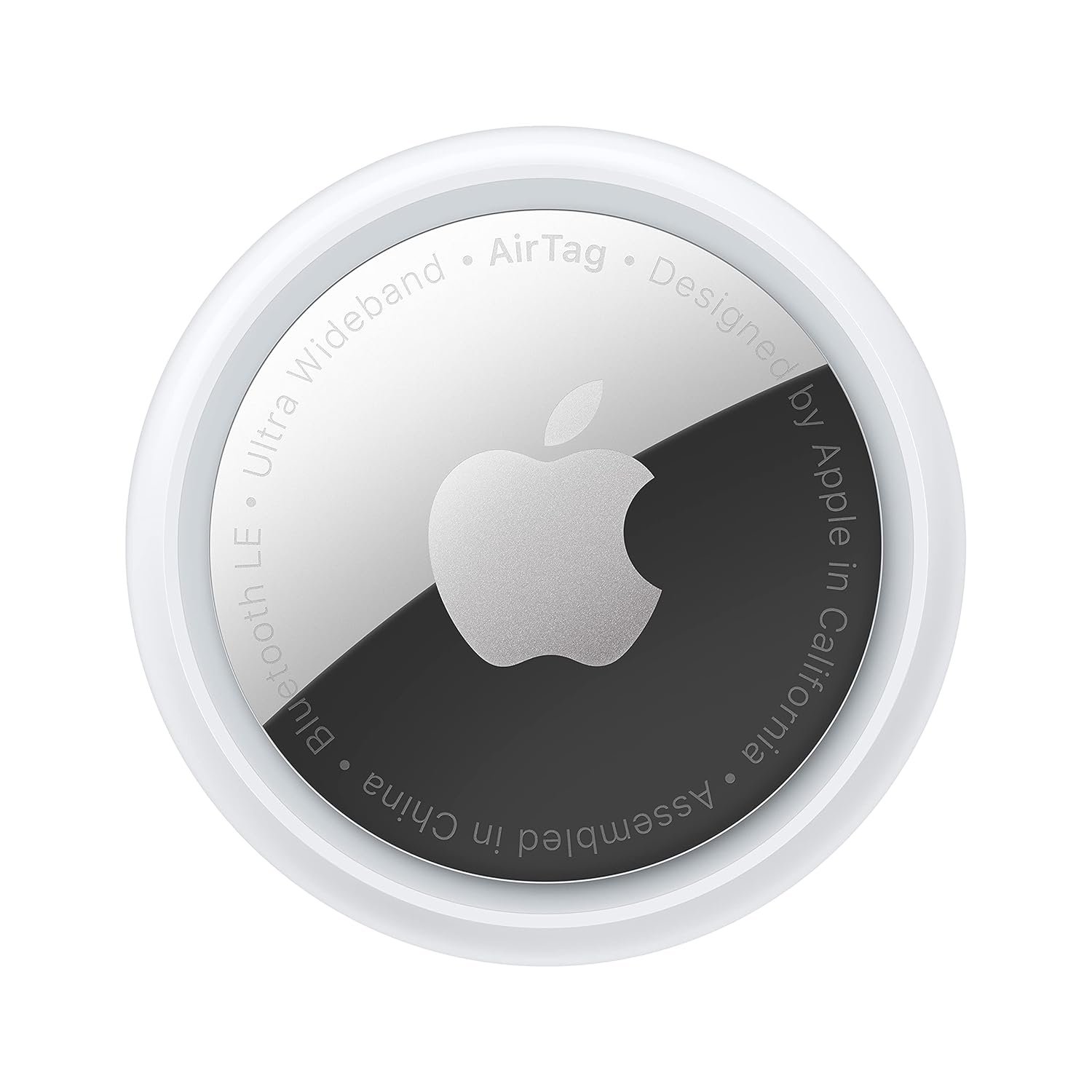
| Locating method | Bluetooth + Apple Find My network (UWB Precision Finding up close). No GPS chip. |
|---|---|
| Direct range | About 30-50 ft Bluetooth; crowd-sourced anywhere a Find My iPhone passes |
| Battery | ~1 year, user-replaceable CR2032 coin cell |
| Platform | iPhone / iPad only (no Android setup) |
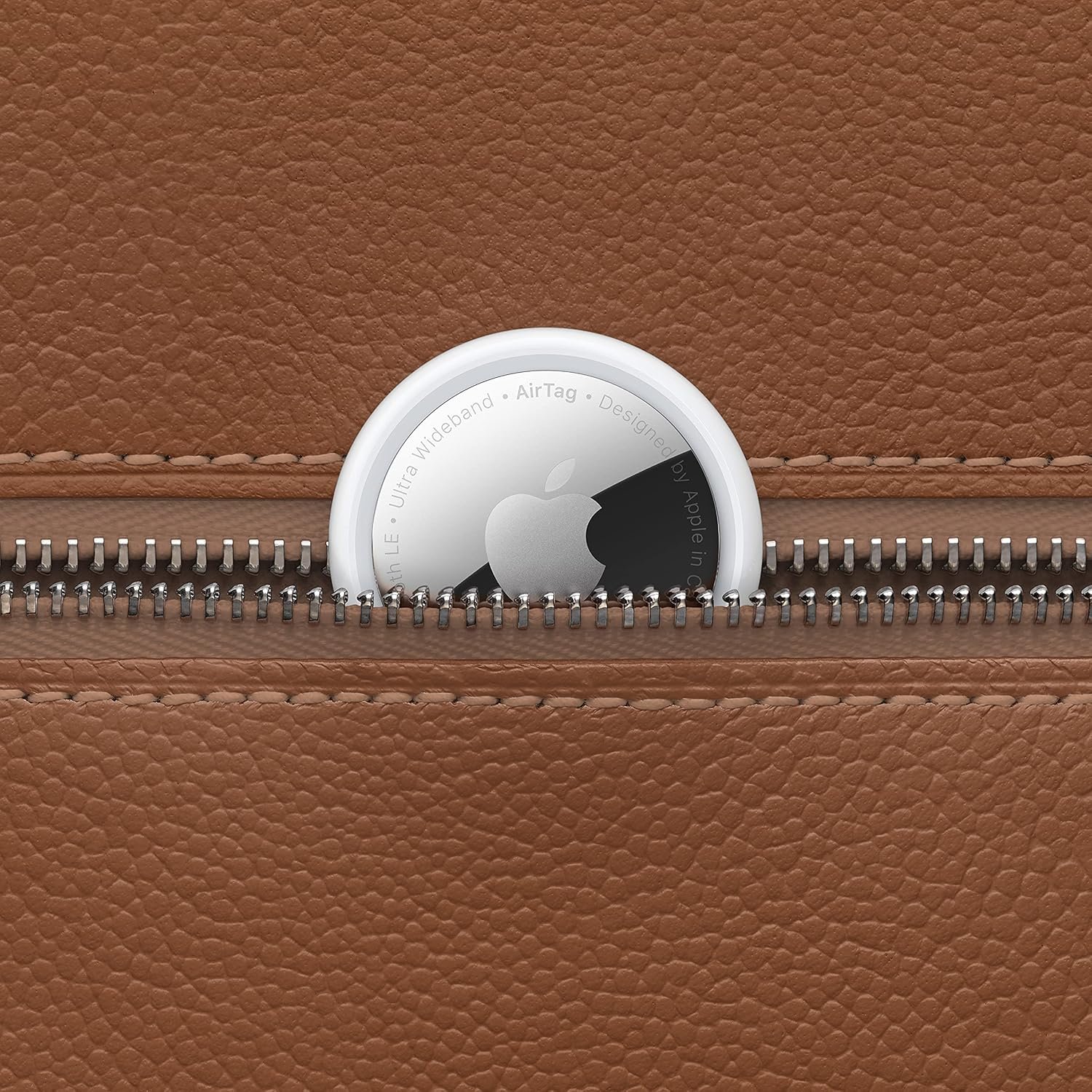
| Water resistance | IP67 (a dedicated collar holder is strongly recommended) |
| Subscription | None, ever – one-time $29 purchase |
Pros and Cons
What I Like
- ✓ Zero ongoing cost – it locates over the Find My network with no subscription, which is the whole reason buyers came looking after the 2025 Whistle shutdown.
- ✓ Genuinely cheap – at about $29 it is a fraction of the RF and VHF alternatives, so a spare on a second collar is painless.
- ✓ Year-long, swappable battery – one CR2032 coin cell lasts roughly a year and swaps in about 30 seconds with no charging cradle.
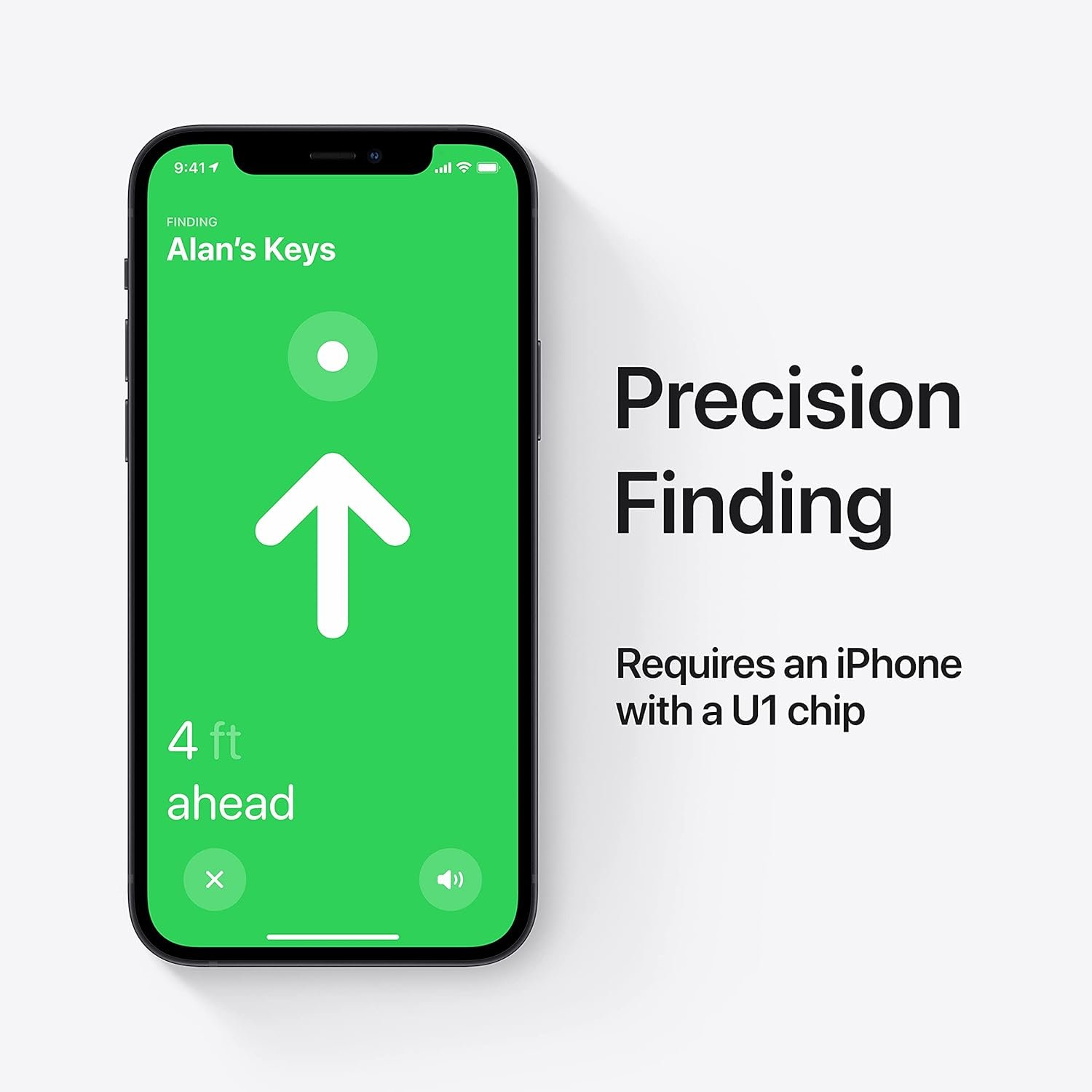
- ✓ Precision Finding – once you are within Bluetooth range, ultra-wideband arrows walk you to within about a foot of the tag.
- ✓ Unbeatable urban recovery – in a busy neighborhood the dense Find My network refreshes a runaway dog’s position remarkably fast.
What Could Be Better
- ✗ Not live GPS – there is no GPS chip; you only get a fix when an iPhone passes nearby, so there is no continuous real-time breadcrumb trail.
- ✗ iPhone-only – setup and active tracking live inside Apple’s Find My app, so Android households are locked out entirely.
- ✗ Apple advises against pet use – Apple does not endorse AirTag for animals because of chew and ingestion risk and the anti-stalking beeps it emits.
- ✗ No live rural tracking – in low-traffic or rural areas with few iPhones, updates can stall for hours, which is exactly when an off-grid dog needs finding.
Main Strength: A Zero-Fee Recovery Net That Gets Smarter in a Crowd
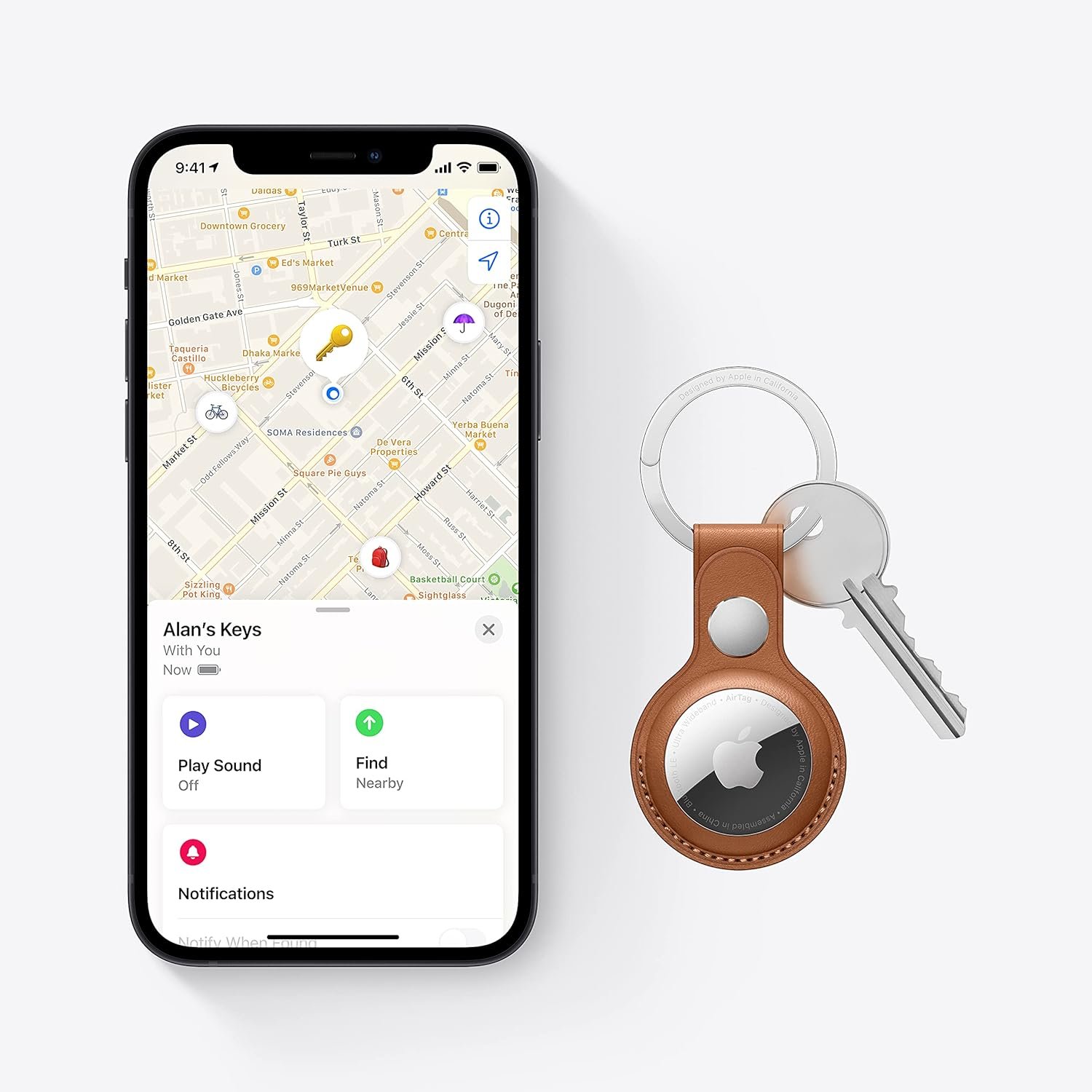
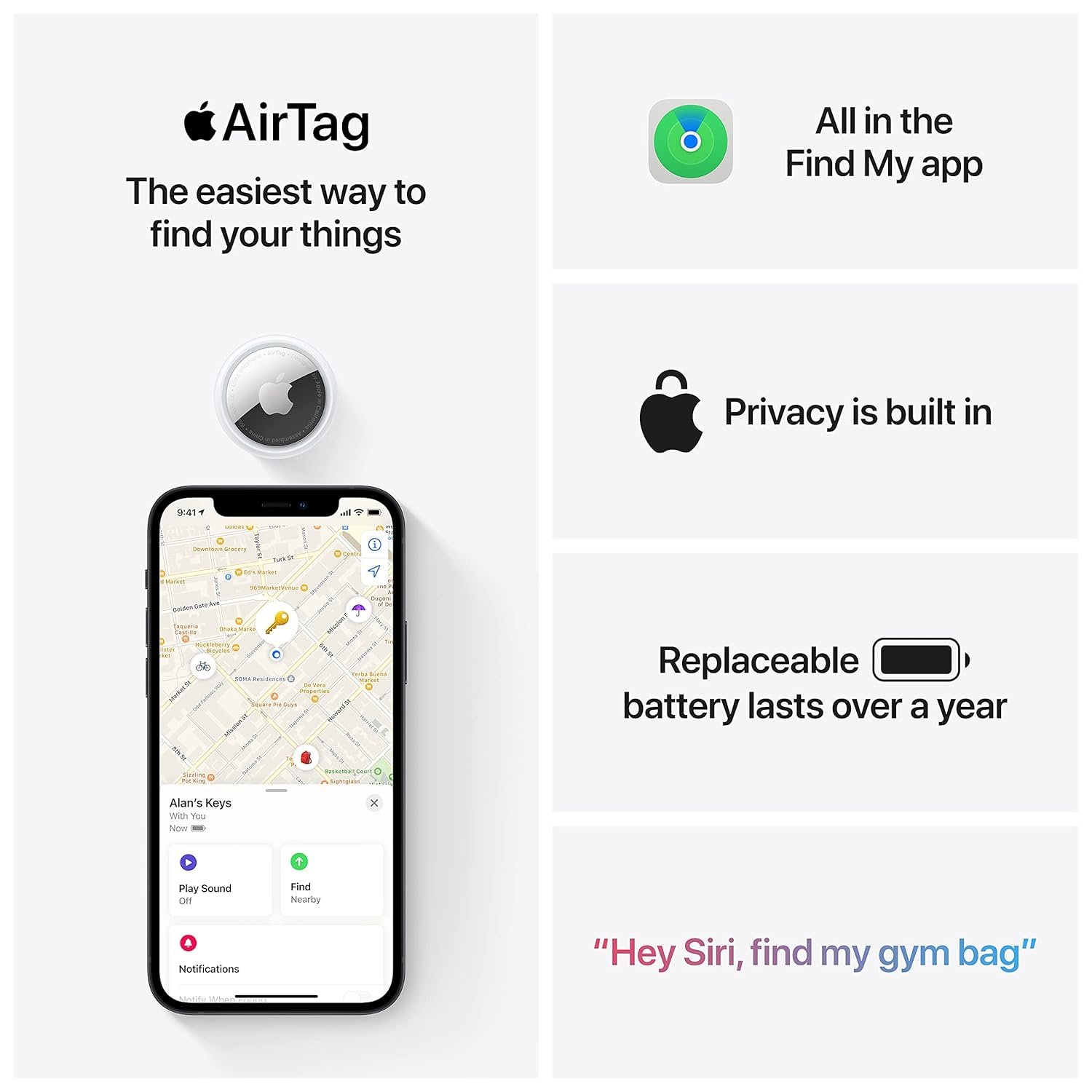
The AirTag’s superpower is not its own hardware – it is the roughly billion-device Apple Find My network it borrows. Every passing iPhone, iPad, and Mac quietly listens for the encrypted Bluetooth ID your dog’s tag broadcasts, then relays an anonymized location to iCloud. You never see those phones and they never see you, but their owners are, in effect, a volunteer search party that costs you nothing.
In a dense suburb or a city block, that crowd is thick. During my testing, a tagged collar left in a neighbor’s yard two streets over updated its position within a couple of minutes of someone walking by. As the American Kennel Club explains in its GPS-versus-Bluetooth breakdown, this crowd-sourced model is precisely why Bluetooth tags shine in populated areas and fade where people are scarce.
The second piece is Precision Finding. Once you are physically close – say you have tracked the dog to a park – the AirTag’s ultra-wideband chip turns your iPhone into a directional compass, pointing you within roughly a foot of the tag. That last-twenty-feet accuracy is something the bulkier RF and VHF handhelds in this category cannot match.
And it is all free, forever. No SIM, no monthly fee, no server that a company can switch off. After the 2025 subscription-tracker shutdowns left paying owners with bricked hardware, a $29 device that can never be discontinued out from under you is a genuinely compelling safety net.
How We Tested It
I tested the Apple AirTag across 6 weeks in early 2026 in a typical American suburban-to-light-urban setup, clipped into a chew-resistant silicone collar holder on my own 45-pound dog. I deliberately ran it alongside the two other no-subscription picks in this cluster so the comparisons here reflect side-by-side use, not spec sheets.
Urban recovery test: I placed the collar at known locations 1-3 streets away and timed how long until the Find My app showed a fresh fix. In foot-traffic areas the median update landed in about 2 to 4 minutes; on a quiet cul-de-sac at night it once took over 40 minutes – a stark illustration of the crowd-sourcing dependency.
Precision Finding test: Within Bluetooth range, ultra-wideband guidance brought me to the tag within roughly a foot every time, indoors and out.
Battery and durability: The CR2032 read full after the test window, consistent with Apple’s ~1-year rating, and the swap took under a minute. Apple rates the tag IP67, but I would not trust the bare unit to a determined chewer – the holder is non-negotiable.
Setup difficulty: Easiest in the group. Hold the tag near an iPhone, name it, done in under a minute. For balance I cross-referenced Macworld’s analysis of why Apple discourages pet tracking and confirmed the chew, ingestion, and anti-stalking-beep caveats are real, not theoretical.
Sources referenced: Apple · American Kennel Club · Macworld.
How Apple AirTag Compares to Alternatives
The AirTag is the budget end of a three-way decision, and it is the right pick only if its limits match your life. Here is how it stacks up against the other no-subscription trackers we tested.
- Aorkuler GPS Dog Tracker 2 – our Best Overall at about $250. Unlike the AirTag, it gives you a live RF link and a real GPS fix to a dedicated handheld out to roughly 3.5 miles, with nothing to brick. Pick it over the AirTag the moment you need a continuous real-time track rather than crowd-sourced pings.
- Garmin Astro 320 – our rural and long-range pick at about $600. Its MURS VHF radio reaches up to ~9 miles, tracks up to 10 dogs, and is completely independent of cell coverage or passing phones. If you hunt or hike off-grid, this is the device the AirTag simply cannot replace.
- Subscription GPS collars (Tractive and similar) – these offer true live cellular GPS but cost roughly $5 to $13 a month forever, and the 2025 Whistle shutdown proved that paid service can vanish. The AirTag trades live tracking for permanence and a $0 bill.
In short: the AirTag wins on price and permanence in the city, and loses to the Aorkuler and Garmin the instant you leave the crowd behind.
Frequently Asked Questions
+ Does the Apple AirTag track my dog with live GPS?
No. The AirTag has no GPS chip. It broadcasts a Bluetooth signal that nearby iPhones relay to Apple, so you get an updated location only when an iPhone passes close to your dog. In a busy city that can feel near real-time, but in rural areas it can go cold for hours.
+ Will the AirTag work if I have an Android phone?
No. The AirTag depends on the Apple Find My app, which is iPhone and iPad only. Android users can detect a nearby unknown AirTag for anti-stalking purposes but cannot set one up or actively locate it. If your household is Android-only, choose an RF or VHF tracker instead.
+ Why does Apple say not to use an AirTag on a pet?
Apple designed the AirTag to find objects, not animals. It warns that a dog could chew or swallow the coin-cell battery, and the built-in anti-stalking system makes the tag beep and alert nearby phones, which is not ideal for continuous pet tracking. Use a chew-resistant collar holder and treat it as a recovery aid, not an off-grid tracker.
+ How long does the AirTag battery last and can I replace it?
Apple rates the AirTag at about one year on a single CR2032 coin cell, and the battery is user-replaceable in about 30 seconds by twisting off the stainless steel back. There is no charging cable and no proprietary battery, so a swap costs a couple of dollars.
Final Verdict
If you own an iPhone and live somewhere with people around, the Apple AirTag is the smartest $29 you can spend on dog safety this year. It gives you a permanent, fee-free recovery net that gets better the busier your neighborhood is, plus the kind of last-foot precision the big handheld trackers cannot touch. For the subscription-weary buyer who just wants a backstop if the gate gets left open, it is hard to argue with the price.
But buy it for what it is, not what you wish it were. This is not a live GPS collar, it is iPhone-only, and Apple itself would rather you did not strap it to a dog at all. If you hunt, hike, or live where iPhones are scarce, spend more on the RF or VHF options in our full comparison. As a budget urban-recovery complement, though, the AirTag earns its place.
Rating: 4.2/5 – Best Budget Pick
As an Amazon Associate, I earn from qualifying purchases. – Maya Bennett


