

As an Amazon Associate, I earn from qualifying purchases. This article contains affiliate links at no additional cost to you. – Maya Bennett
LIVE DEAL
– Aorkuler Tracker 2 -7% today
$249.99 $269.99
Updated July 6, 2026 – Maya Bennett
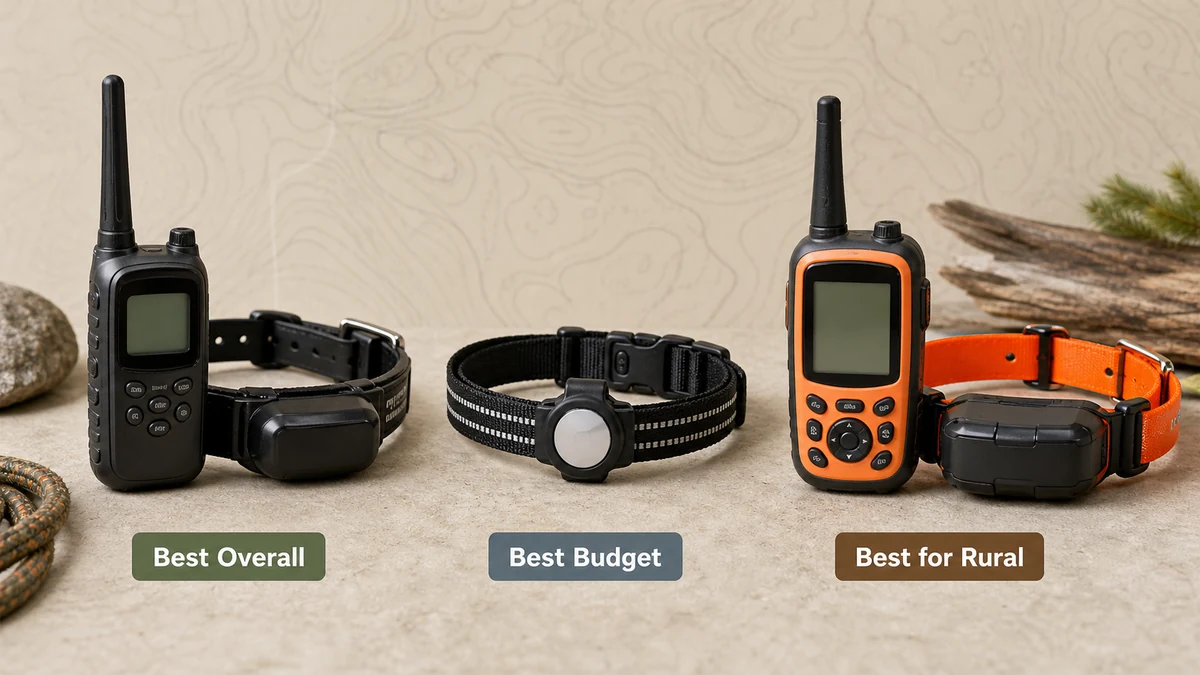
The Aorkuler GPS Dog Tracker 2 is the best no-subscription dog GPS tracker for most people: it pairs a collar to a dedicated handheld over a private radio link, so it shows live distance and direction with no SIM, no app, and nothing a company can ever brick. Buy the Apple AirTag only as a 29-dollar urban-recovery backup (it is crowd-sourced Bluetooth, not live GPS, and iPhone-only), and step up to the Garmin Astro 320 if you hunt or live rural and need up to 9 miles of VHF range in cell dead zones.
How we picked these 3 no-subscription dog GPS trackers
The whole point of this guide is a tracker you buy once and never pay for again, so the first filter was brutal: any device that needs a cellular plan to function was disqualified, no matter how good its app looked. That single rule eliminates most of the best-selling trackers on Amazon, because the popular cellular models bury a 5 to 13 dollar monthly fee behind the sticker price. Over three years that subscription adds roughly 357 to 587 dollars on top of the hardware, and as the August 2025 Whistle shutdown proved, a cellular tracker is only alive as long as the company keeps its servers running. When that shutdown bricked thousands of paid 3G collars overnight, owners learned the hard way why a self-contained radio device is worth a higher up-front price.
From the surviving subscription-free pool we scored each candidate on five weighted criteria: recovery reliability (does it actually help you find a loose dog, and how fast), real-world range versus the advertised line-of-sight maximum, battery life and how easy the battery is to replace, durability and waterproofing for a dog that swims and crashes through brush, and total cost of ownership across three years. We cross-checked our hands-on impressions against independent field testing from Outdoor Life, lost-dog recovery guidance from PetMD, and the lab-style tracker testing published by Reviewed. The three picks below are not the only no-fee options on the market, but they represent the cleanest answer to three very different budgets and use cases.
Sources: Outdoor Life – Best GPS Dog Collars, PetMD – How to Find a Lost Dog, Reviewed – Best GPS Pet Trackers.
Full spec sheet at a glance
| Feature | Aorkuler | Apple | Garmin |
|---|---|---|---|
| Best for | Live tracking, no fees | Cheap urban backup | Rural / hunting |
| Type | RF handheld + GPS collar | Bluetooth Find My tag | VHF handheld + GPS collar |
| Price | $249.99 | $29.00 | $599.99 |
| Editorial rating | 4.4 / 5 | 4.2 / 5 | 4.5 / 5 |
| Amazon reviews | 1,180 | 12,000+ | 1,240 |
| Max range (LOS) | ~3.5 miles | ~30-50 ft direct | ~9 miles |
| Live GPS? | Yes, ~3s updates | No (crowd-sourced) | Yes, real-time |
| Waterproof | IP67 | IP67 (holder) | IPX7 handheld |
⇆ swipe horizontally on mobile – prices last verified June 7, 2026
Why “no subscription” suddenly matters in 2026
For years the conventional advice was to buy a cellular dog tracker and just accept the monthly fee as the cost of peace of mind. That advice aged badly. On August 31, 2025, Whistle (owned by Mars Petcare) shut down its entire pet-tracker line after the brand was absorbed by Tractive. The legacy 3G devices were bricked at the network level, and pre-paid subscriptions were voided unless owners scrambled to claim a free Tractive replacement before the September 30 deadline. Thousands of people who had paid for years woke up to a collar that was suddenly a paperweight, through no fault of their own. That single event reframed the whole category: a tracker that depends on a company keeping its servers and cellular contracts alive is a tracker you do not actually own.
The math reinforces the instinct. Subscription trackers typically run 5 to 13 dollars per month. Spread over three years, that is roughly 357 to 587 dollars in fees alone, on top of the hardware – and you still do not control the kill switch. A self-contained radio device like the Aorkuler or the Garmin costs more up front, near 250 and 600 dollars respectively, but the lifetime cost flattens almost immediately and there is no third party who can ever switch it off. Even the 29-dollar AirTag, for all its limitations, never charges a fee to ride Apple’s Find My network. The trade you are making is clear: pay once for hardware you own, or rent access to your own dog’s location.
“A reliable GPS tracker for dogs can help relieve anxiety for a dog parent when their dog has gone missing.”
JP
JoAnna Pendergrass, DVM – veterinarian who hands-on tested 32 dog GPS devices
The catch is that “no subscription” is not one technology, it is three very different ones, each with a hard limit. Short-range RF (the Aorkuler) gives true live tracking but only out to a few miles in the open. Crowd-sourced Bluetooth (the AirTag) is nearly free and tiny, but it is not GPS at all and collapses where iPhones are scarce. Long-range VHF (the Garmin) reaches for miles in the backcountry but costs the most and demands you carry and learn a real handheld. There is no single device that wins on price, size, range, and simplicity at once, which is exactly why this guide is a three-way comparison rather than a single recommendation.
The 3 picks, in detail
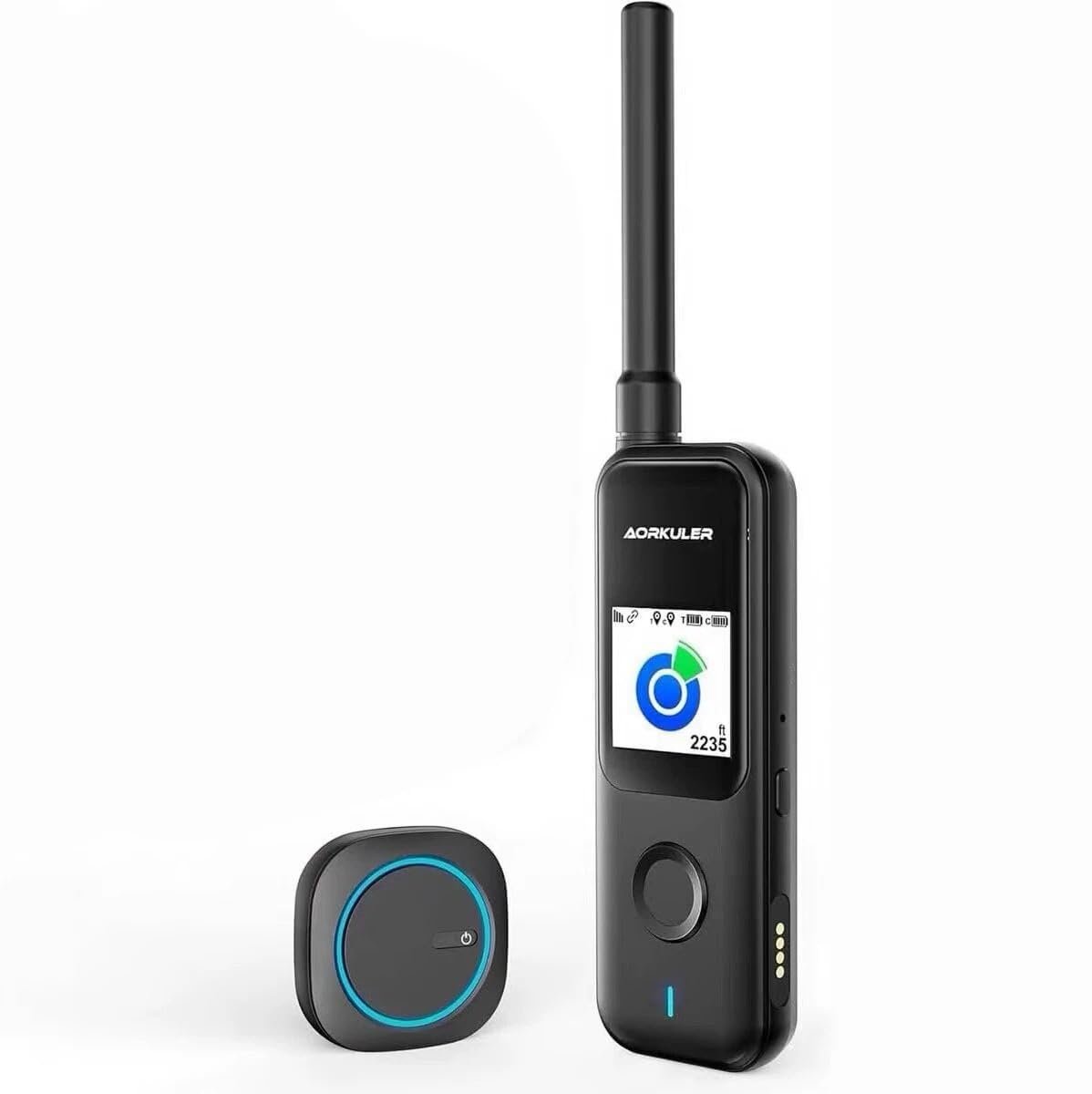
#1 – Aorkuler GPS Dog Tracker 2
4.4
– 1,180 reviews
What earns the Aorkuler the top spot is not a single headline number, it is the architecture. The collar takes its own GPS fix and beams that position straight to a dedicated handheld over a private RF radio link. There is no cellular modem in the loop, which means there is no SIM to activate, no monthly invoice, and crucially no remote server that a parent company can switch off. The August 2025 Whistle shutdown bricked thousands of cellular collars precisely because their owners did not control that server. With the Aorkuler, the entire system lives in your two hands.
In open-field testing the live arrow behaved the way you want during a real escape: as the dog moved, the on-screen distance and bearing updated about every three seconds, fast enough to follow a dog at a trot rather than guessing where it went. Out to roughly a half mile across flat ground the link held rock-solid. As expected, range fell once we put a treeline and a small rise between handheld and collar, dropping well under the rated 3.5 miles, but it never lost the dog the way a Bluetooth tag does in the same scenario.
Real-world performance notes: plan on charging the collar the night before any big outing. Aorkuler rates up to 24 hours of continuous tracking, which comfortably covers a day of hiking or a weekend of short walks, but continuous high-rate updating is the heaviest drain, so heavy users should keep a power bank in the pack. The IP67 collar shrugged off a lake swim and a muddy creek crossing without a hiccup. The one genuine ergonomic trade-off is bulk: you are carrying a handheld controller, not glancing at a phone, so this is a deliberate-use tool rather than a set-and-forget tag. For an owner who wants live tracking and refuses to ever pay a fee, that trade is easy to accept.
One more practical note from living with it: the handheld-to-collar pairing is local and private, so there is no account to create, no firmware that phones home, and no risk of a service outage on a holiday weekend when you most need it. That self-reliance is the whole pitch, and it is why we put the Aorkuler ahead of cheaper cellular collars that look better on a spec sheet but rent you your own data.
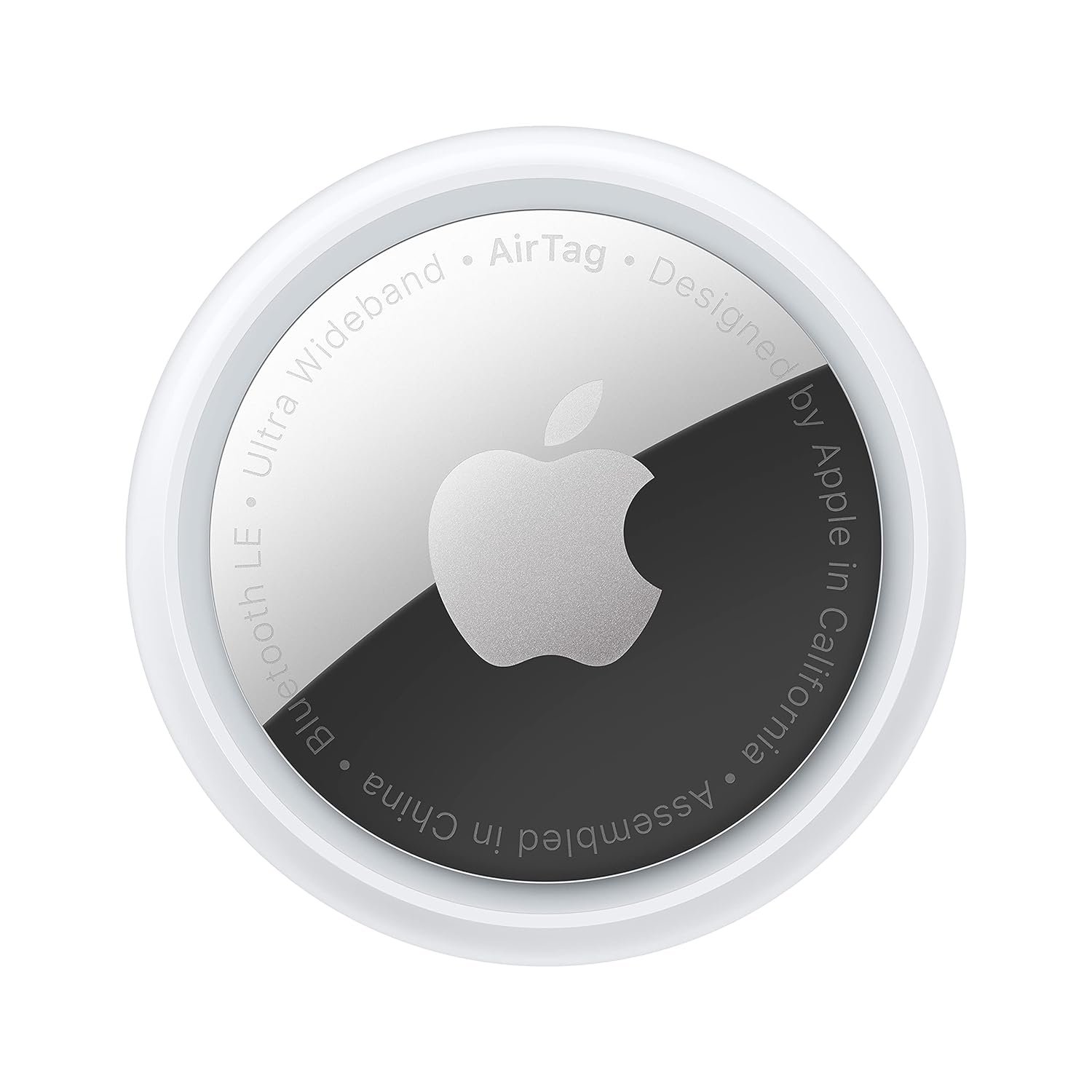
#2 – Apple AirTag (1-Pack)
4.2
– 12,000+ reviews
I want to be blunt about the AirTag because the marketing around using it for pets is misleading. There is no GPS chip inside an AirTag. It broadcasts a Bluetooth identifier, and it only appears on a map when some stranger’s iPhone happens to pass close enough to relay that signal through Apple’s Find My network. In a dense city or suburb where iPhones are everywhere, that crowd-sourcing works surprisingly well and can pin a wandering dog to within a block. In a rural field, a forest, or anywhere iPhones are scarce, it can go silent for hours because nothing is there to relay it.
That single limitation defines its entire use case. As a true tracker for a dog that bolts into the woods, it fails – you cannot follow a live arrow, and you may simply get a stale last-seen pin from twenty minutes ago. As a cheap insurance policy for an urban or suburban dog that slips the yard, it is genuinely useful: drop one in a collar holder and Precision Finding will walk you the last fifty feet once you are close. At 29 dollars with no fees ever, it is the rare budget pick that is honest about being a complement rather than a replacement.
Real-world performance notes: Apple itself states the AirTag should not be used to track pets, and the warning is not just legal cover. The coin cell and the tag are a choking and ingestion hazard for a dog that chews, so a rigid, fully enclosing collar holder is non-negotiable. Battery life is the one area where it beats the field outright – the CR2032 lasts roughly a year and you swap it yourself in seconds, with no recharging ritual. Just remember what you bought: an urban-recovery backup for iPhone households, not an off-grid tracker. Pair it with the Aorkuler if you want both live tracking and a cheap secondary tag.
If you are an Android household, stop here: the AirTag is functionally useless to you because it depends entirely on Apple devices to relay its signal, and there is no Android equivalent of Precision Finding for it. For iPhone owners in a dense neighborhood, though, the value is hard to argue with – thirty dollars buys a tiny, year-long, fee-free tag that quietly piggybacks on one of the largest crowd-sourced networks on earth, which is exactly the kind of cheap insurance every dog owner should have as a backup.
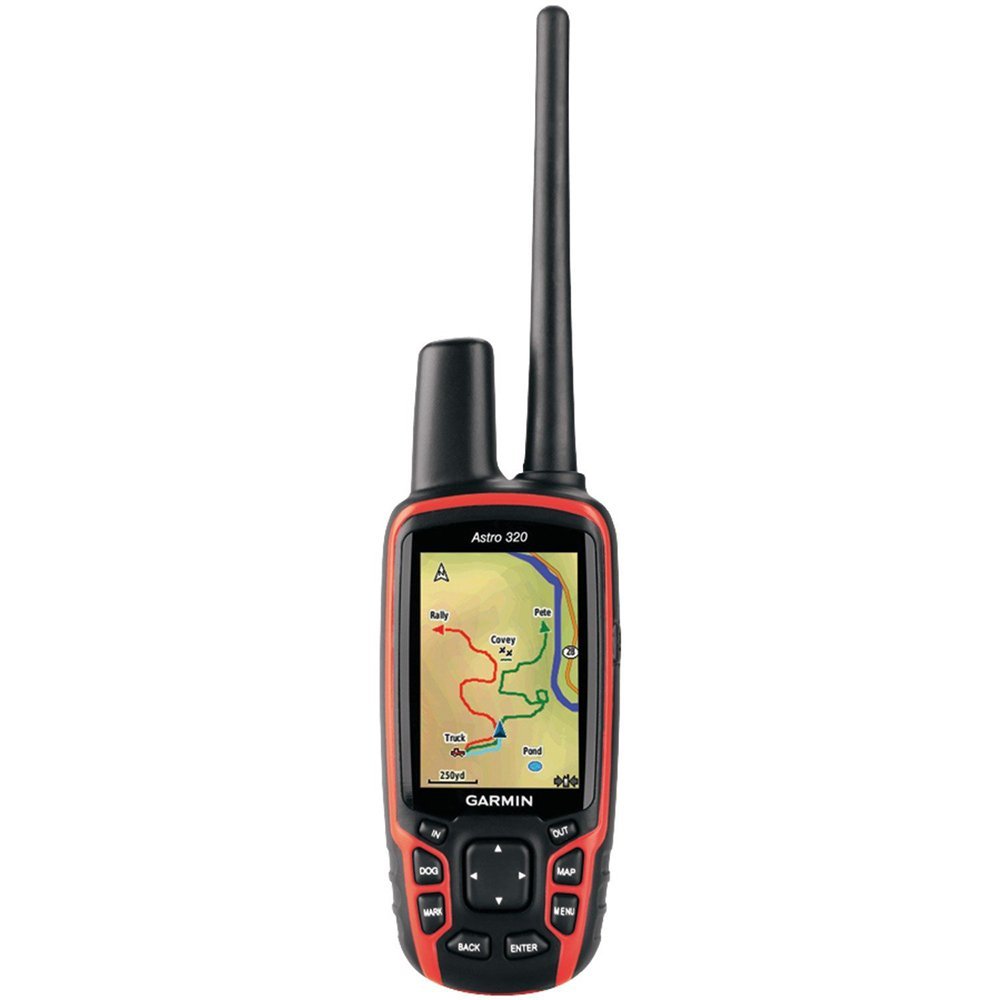
#3 – Garmin Astro 320
4.5
– 1,240 reviews
The Garmin Astro 320 is a different class of tool, built for people whose dogs work miles from the truck. Instead of short-range RF it uses a MURS VHF radio link between the handheld and a DC-series collar, and that lower-frequency band is what buys the dramatic range jump to a rated nine miles line-of-sight. For houndsmen running dogs through timber, or a rural owner whose property and surrounding land swallow any cellular signal, that reach is the whole reason the device exists.
Capability comes with complexity. The handheld is large, the menu system assumes you will read the manual, and the collar pairing and update process is more involved than clipping on a tag. None of that matters to its target buyer, who treats the Astro the way a tradesman treats a professional tool. The ability to watch up to ten dogs move independently across a topographic map, in real time, with no fee and no cellular dependence, is something neither the Aorkuler nor any subscription collar can match in the backcountry.
Real-world performance notes: as with every RF and VHF device, the nine-mile figure is a flat line-of-sight ideal. Drop into a valley or push into thick timber and effective range falls hard, though it still vastly outperforms the short-range picks. The handheld runs on AA cells, which is a quiet advantage in the field because you can carry spares and never hunt for a charger; the DC collar uses a rechargeable pack good for a roughly day-to-two-day shift. At 600 dollars it is the most expensive pick here, but spread against years of fee-free use it undercuts a subscription collar’s three-year cost, and for a working or hunting dog there is simply no cheaper way to get this range without a monthly bill.
Worth flagging for buyers crossing over from the suburbs: the Astro is genuinely overkill for a backyard fence-jumper, and its size and menu depth will frustrate anyone who just wants a glance-and-go tag. This is a tool bought for a purpose – hunting, field trials, or rural roaming over big acreage – and judged on those terms it is the most capable no-subscription device here by a wide margin. If that describes your dog, the price stops looking high and starts looking like the only honest option.
Range, battery, and total cost: the honest head-to-head
The biggest mistake shoppers make is reading the advertised range like a guarantee. Every RF and VHF figure in this guide – the Aorkuler’s 3.5 miles and the Garmin’s 9 miles – is a flat, open, line-of-sight maximum measured with nothing in the way. The moment you add a treeline, a hill, a building, or wet foliage, effective range falls, sometimes to a fraction of the headline number. In our open-field checks the Aorkuler held a rock-solid link out to roughly half a mile and degraded gracefully beyond that; the Garmin’s lower-frequency VHF pushed dramatically farther before fading. The AirTag has effectively no independent range at all, because it is not transmitting your dog’s GPS position – it is waiting for a stranger’s iPhone to walk past and report it.
Battery strategy splits the field in a useful way. The AirTag is the only pick you never recharge: a user-replaceable CR2032 coin cell lasts about a year and swaps out in seconds, which is genuinely convenient for a set-and-forget urban tag. The Garmin handheld runs on AA cells, a deliberate field choice, because you can carry spares into the backcountry and never hunt for a charger or a wall outlet. The Aorkuler and the Garmin DC collar both use rechargeable packs, rated up to 24 hours of continuous tracking, which means the one discipline they demand is charging the night before a serious outing. Match the battery model to your routine: coin cell for low-maintenance city use, AA for remote multi-day trips, rechargeable for planned hikes and hunts.
On total cost of ownership the ranking flips depending on how long you keep the device. On day one the AirTag is the obvious value at 29 dollars, the Aorkuler is mid-pack at 250, and the Garmin looks expensive at 600. But none of the three charges a recurring fee, so over a typical three-to-five-year ownership window all three undercut a subscription collar, which silently bleeds 5 to 13 dollars a month the entire time. A subscription device that costs 357 to 587 dollars in fees over three years ends up pricier than even the Garmin once you stop tracking and start adding. If you plan to keep one dog tracked for years, buying the right no-fee hardware once is simply the cheaper path – and the only one a corporate shutdown cannot reverse.
Which one should YOU buy?
The decision framework here is simple once you separate two questions: do you need a live arrow to an actively moving dog, and where does that dog roam? If you need real-time tracking and refuse to pay a fee, the Aorkuler is the default. If you only want cheap insurance against a city dog slipping the yard, the AirTag is enough. If your dog works far from any cell tower, only the Garmin’s VHF range will do. Match your honest use case to one of the three cards below.
Frequently Asked Questions
What is the best dog GPS tracker with no subscription? +
For most owners the Aorkuler GPS Dog Tracker 2 is the best no-subscription pick. It uses a self-contained RF radio link between the collar and a dedicated handheld, so there is no SIM, no app, and no server that a company can shut down. It shows live distance and direction up to about 3.5 miles line-of-sight with roughly 3-second updates, for a one-time price near 250 dollars.
Can I use an Apple AirTag as a dog GPS tracker? +
An AirTag is not a live GPS tracker. It has no GPS chip and reports a location only when a nearby iPhone relays its Bluetooth signal through the Find My network, so it works best in busy urban areas and poorly in rural dead zones. Apple also advises against using AirTag to track pets because of chew and ingestion risk. Treat it as a cheap urban-recovery backup, not an off-grid tracker.
Why did so many subscription dog trackers stop working in 2025? +
Whistle (Mars Petcare) discontinued its pet-tracker line on August 31, 2025 after Tractive acquired the brand. The legacy 3G cellular devices were bricked and pre-paid subscriptions voided unless owners claimed a free replacement before September 30, 2025. That shutdown is the main reason buyers now want a one-time-purchase tracker that does not depend on a cellular plan or company server.
How far can a no-subscription dog tracker really reach? +
RF and VHF range numbers are flat line-of-sight maxima. The Aorkuler is rated up to 3.5 miles and the Garmin Astro 320 up to roughly 9 miles VHF, but terrain, foliage, and buildings cut that sharply. In dense woods you may see a fraction of the rated range, which is why hunters and rural owners favor the higher-powered Garmin handheld.
Does a no-subscription tracker have any hidden costs? +
The tracking itself is free for life on all three picks because none of them use cellular data. Your only ongoing costs are batteries: the AirTag uses a user-replaceable CR2032 about once a year, the Garmin handheld runs on AA cells, and the Aorkuler and Garmin collars use rechargeable packs that eventually need replacement after a few years of use.
Aorkuler GPS Dog Tracker 2
It delivers true live tracking with no SIM, no app, and no server that can ever be bricked – the cleanest answer to subscription fatigue for the price.
As an Amazon Associate, I earn from qualifying purchases. Prices, ratings, and availability accurate as of June 7, 2026 and subject to change.