

Disclosure (FTC): I cover consumer home and garden products. ReviewGuid participates in the Amazon Services LLC Associates Program. If you buy through a qualifying link, I may earn a commission at no extra cost to you. – Maya Bennett
⚡ KEY TAKEAWAY
best raised garden beds for beginners is trending because buyers are dealing with a live problem: First-time gardeners are overwhelmed by bed material, size, height, soil volume and drainage choices. They need a low-friction raised bed that fits a US yard, patio or rental, gives beginners control over poor soil, and does not create an expensive or difficult first project.
Why Buyers Are Paying Attention
US beginners are comparing raised beds by footprint, material, assembly, soil volume, drainage and working height.
The local community and commercial keyword signals both point to the same pattern: shoppers are no longer browsing casually. They are trying to solve a concrete buying problem and want a shortlist they can trust quickly.
That is why this ReviewGuid cluster pairs a trend article with one comparison and three deep-dive product reviews. It turns noisy early-stage shopping into a direct next step.
What the Signal Tells Us
The strongest intent signal behind best raised garden beds for beginners is not curiosity alone. It is a mix of urgency, cost sensitivity, and fear of buying the wrong format or feature set the first time.
When that pattern appears, the winning editorial approach is to reduce decision friction: define the problem, compress the shortlist, and give each finalist a clear role.
That is also why the supporting comparison is limited to three products instead of turning into a 10-item listicle. Smaller shortlists are easier to act on and easier to audit honestly.
Current 3-Product Shortlist
Vego Garden 17-Inch Tall 9-in-1 Modular Metal Raised Garden Bed
Land Guard 4 x 2 x 1 Foot Galvanized Raised Garden Bed Kit
Best Choice Products 48 x 24 x 30 Inch Elevated Wood Raised Garden Bed
The current shortlist is anchored by a Best Overall pick, a Best Budget pick, and a more specialized third option. This structure maps directly to the most common ways shoppers frame the purchase.
The Beginner Problem Is Bigger Than the Bed Frame
The appeal of a raised bed starts with control. A first-time gardener can choose the footprint, bring in a known soil mix, keep walking traffic out of the root zone and put irrigation exactly where it is needed. That is a cleaner starting point than trying to repair an entire compacted yard. It is also why a kit can feel easier than an in-ground plot even though the kit itself is only the frame.
The tradeoff is that the frame turns hidden decisions into upfront costs. Buyers must estimate soil volume, decide whether the bed will sit on earth or paving, provide a route for excess water and leave enough clearance to reach the center. A low advertised frame price can therefore be misleading. Soil delivery, compost, mulch, irrigation and hardware cloth may cost more than the shell.
University of Minnesota Extension’s raised-bed guidance explains why the format is attractive: access, reduced compaction, earlier soil warming and the ability to garden where native soil is poor. The same guidance warns that raised beds can dry faster, especially as height increases. For beginners, the useful trend is not effortless gardening. It is a more manageable set of variables.
By the Numbers: What a First Bed Really Requires
A practical maximum width when the bed is reachable from both sides.
Typical full-sun target for tomatoes, peppers and eggplants.
Penn State’s current soil-to-compost starting ratio.
A sensible interval for rechecking established raised-bed soil.
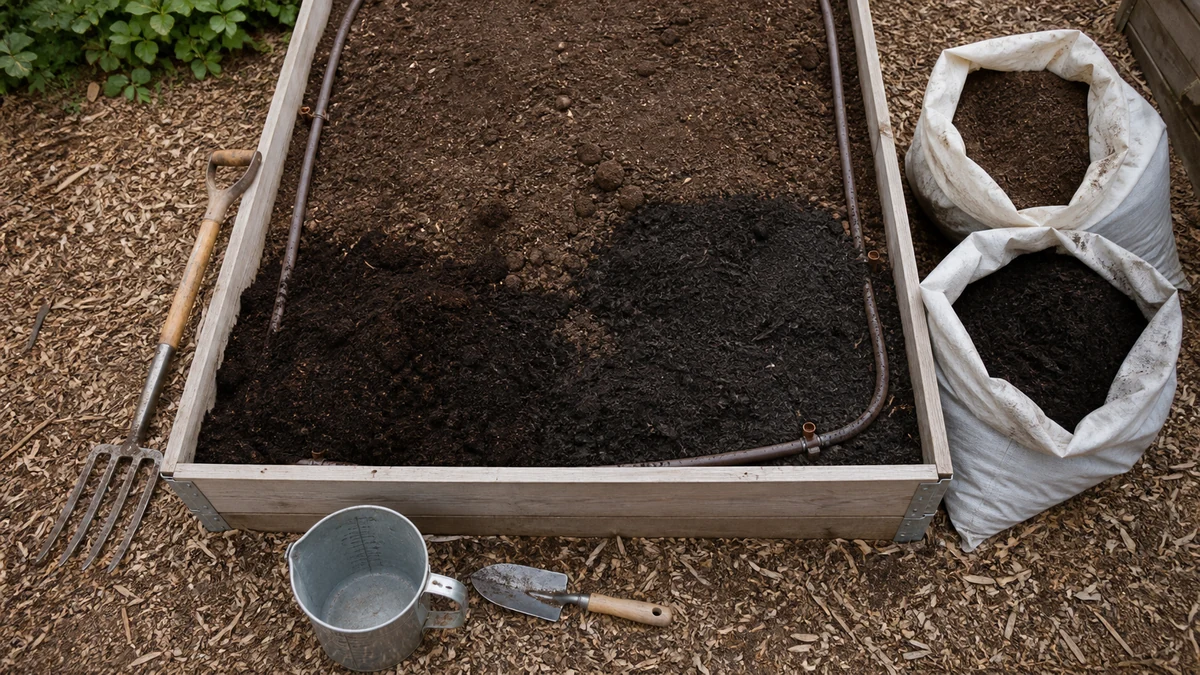
Deep modular, low-budget and elevated patio formats solve different constraints.
Width determines whether a gardener can work without stepping into the bed. That matters because avoiding foot traffic is one of the simplest ways to protect soil structure. A four-foot bed works when both long sides remain accessible. Against a fence, a narrower layout is usually easier. Length is flexible, but long panels and long walking routes can make a supposedly efficient bed awkward.
Sunlight is the next filter. Fruiting crops commonly need a full-sun site, while leafy greens and several herbs tolerate less. Beginners should watch the proposed location through a normal day before assembling the frame. A beautiful corner beside the house can lose hours of direct light, and a bed placed under a tree competes with roots while also collecting shade.
Soil Advice Is Becoming More Evidence-Based
The old social-media recipe of filling a bed with pure compost is losing ground. Penn State Extension’s 2026 soil-health guidance recommends a starting mix of about 70 percent soil and 30 percent compost. The goal is a stable mineral soil with enough organic matter, not a container made entirely of material that will shrink and change as it decomposes.
“By selecting the contents of the raised bed, soil properties like texture, drainage, and organic matter content can be controlled.”
Penn State Extension, Soil Health in Raised Beds, updated March 2026
Oregon State University Extension likewise says framed raised beds should use a soil mix rather than compost alone and notes that newly filled beds settle over time. That settling is not automatically a structural failure. It is a reason to budget for a top-up and to avoid placing seedlings in a loose mound that will drop several inches after repeated watering.
Soil testing remains relevant even when the material was purchased. Nutrient levels can accumulate after repeated compost and fertilizer applications. The practical beginner move is to record what went into the bed, add amendments according to crop needs and test before correcting a problem with more fertilizer. More inputs do not automatically produce healthier plants.
Three Product Formats Now Define the Market
| Format | Best fit | Main advantage | Main cost beginners miss |
|---|---|---|---|
| Deep modular metal | Long-term backyard garden | Flexible footprint and durable walls | Large soil volume |
| Low galvanized kit | Budget trial garden | Low entry price and simple footprint | More bending and faster edge drying |
| Elevated wood planter | Patio, deck or reduced kneeling | Comfortable working height | Limited planting area and wood care |
Deep modular metal beds appeal to buyers who expect the garden to stay in place for years. Their height can improve working comfort and root-zone control, but every added inch increases fill volume. They make the most sense when the site is settled, soil can be delivered economically and the gardener values layout flexibility.
Low galvanized beds are the accessible experiment. They define the growing zone, reduce soil spill and can be assembled with a smaller upfront commitment. They do not eliminate bending, and their shallow sides provide less room for deep fill. They are still a rational first purchase when a buyer wants to learn on a four-by-two-foot footprint before expanding.
Elevated wood planters are closer to large containers. They can work on patios and bring the crop to waist level, but the closed or lined base changes drainage and root volume. They suit herbs, greens and compact vegetables better than sprawling crops that need a broad root zone. Their value is access, not maximum harvest per dollar.
The 2026 Buying Checklist
The safest purchase sequence is site first, soil second and frame third. Measure the location, decide what will be grown and calculate the working depth. Then compare kits that fit those limits. Reversing the sequence is how a sale-priced bed ends up blocking a path, sitting in shade or requiring more soil than the budget allows.
The three-product ReviewGuid shortlist follows that constraint-first approach. Vego Garden represents the durable modular path, Land Guard the lower-cost ground-level path and Best Choice Products the elevated patio path. The related comparison does not pretend that one format is universally superior. It shows which compromise is easiest to live with.
Beginners should also plan for the second season. Soil settles, mulch decomposes, irrigation fittings move and the crop plan changes after the first harvest. A bed that leaves room for a top-up, a trellis and comfortable access is more useful than one optimized only for the delivery-day photograph. Keeping a short record of fill materials, fertilizer, planting dates and disease problems makes the contained soil easier to manage over time.
Ready to compare the finalists side by side?
FAQ
Why is best raised garden beds for beginners trending?
US beginners are comparing raised beds by footprint, material, assembly, soil volume, drainage and working height.
What should US buyers compare first?
Start with fit to the actual use case, then compare review depth, pricing, and whether the product shortlist reflects the main constraint the buyer is trying to solve.
Where is the best ReviewGuid shortlist?
The cluster comparison at /best-raised-garden-beds-for-beginners-3-product-comparison/ is the fastest path to a direct three-product decision.