

As an Amazon Associate, I earn from qualifying purchases. This article contains affiliate links at no additional cost to you. – Maya Bennett
Best Choice Products
48 x 24 x 30 Inch Elevated
$49.99
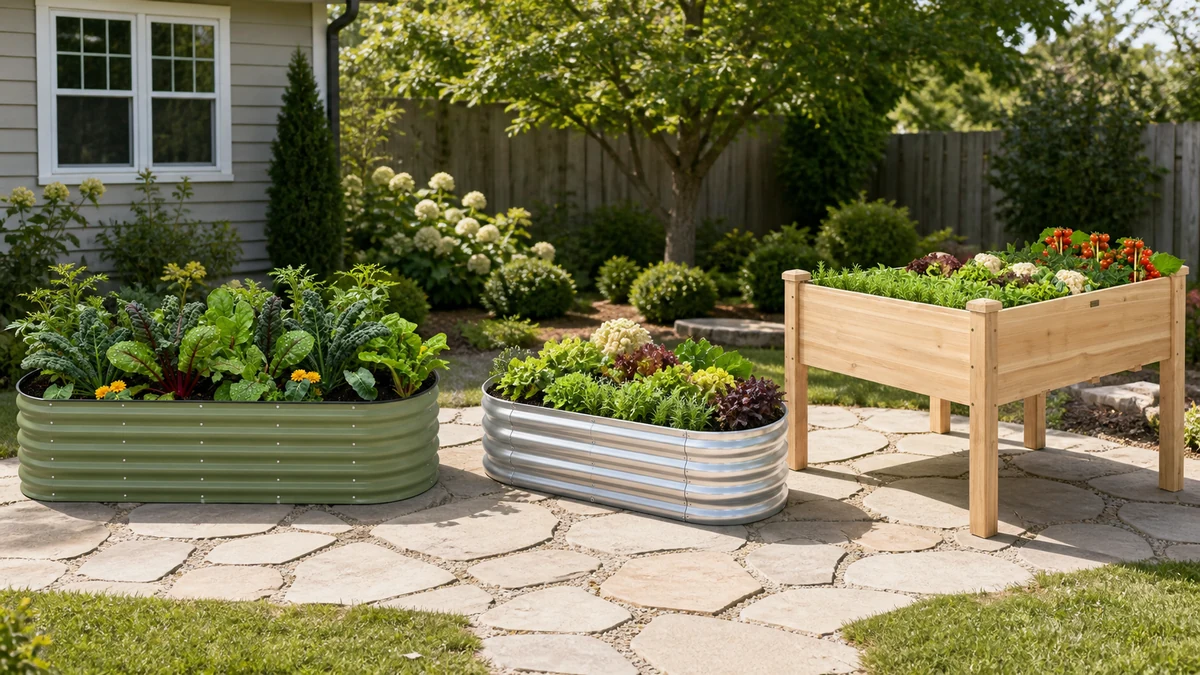
Vego Garden is the best raised garden bed for most beginners in this comparison because its 17-inch height, coated steel and nine layouts create the strongest long-term setup. Choose Land Guard for the lowest-cost 4 x 2 foot start on soil, or Best Choice Products when a contained 30-inch-high planter for a patio and less kneeling matters more than maximum growing volume.
How we picked these 3 raised garden beds
This is a source-based comparison, not a claim that ReviewGuid assembled or grew crops in these beds. We reviewed the current Amazon US snapshots, official specifications and extension guidance available through August 11, 2026. The ranking weighs footprint, wall or working height, material, drainage format, soil demand, assembly, verified price, rating depth and the beginner scenario each bed serves.
Garden-planning guidance came from university extension sources rather than product marketing. Penn State Extension informed the soil-health framework, while University of Minnesota and Oregon State Extension guidance informed site, drainage, compost and raised-bed planning. These sources do not endorse any product.
Research context: official product pages, Amazon US snapshots and university extension guidance. Read our editorial methodology and the companion raised garden bed trend report.
Full spec sheet at a glance
| Feature | Vego Garden | Land Guard | Best Choice |
|---|---|---|---|
| Best for | Flexible long-term garden | Lowest-cost first bed | Patios and less kneeling |
| Format | Modular open-bottom metal | Compact open-bottom metal | Contained elevated wood planter |
| Verified price | $148.85 | $21.79 | $49.99 |
| Amazon rating | 4.7/5 | 4.7/5 | 4.3/5 |
| Amazon ratings | 752 | 1,970 | 536 |
| Dimensions | 17 inches tall; 9 layouts | 4 x 2 x 1 feet | 48 x 24 x 30 inches |
| Material | VZ 2.0 coated steel | Galvanized metal | Fir wood with liner |
| Main tradeoff | Higher price and soil volume | Basic one-foot-deep frame | Less soil volume; wood care |
Swipe horizontally on mobile – prices last verified August 11, 2026
The 3 picks, in detail
These rankings compare documented ownership fit rather than unseen hands-on performance. The meaningful differences are format, soil volume, material, placement, working height and total installed cost.
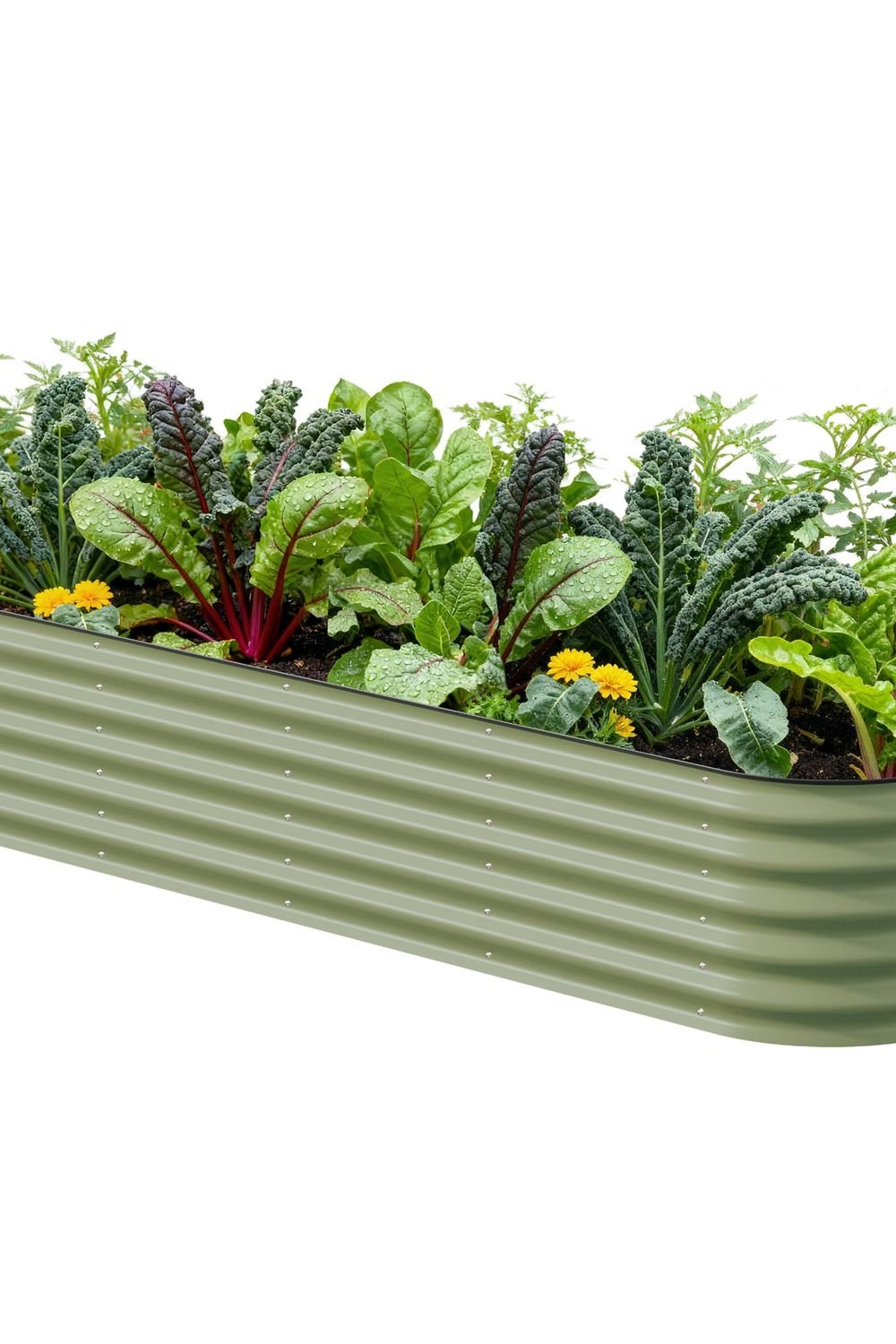
#1 – Vego Garden 17-Inch Tall 9-in-1 Modular Metal Raised Garden Bed
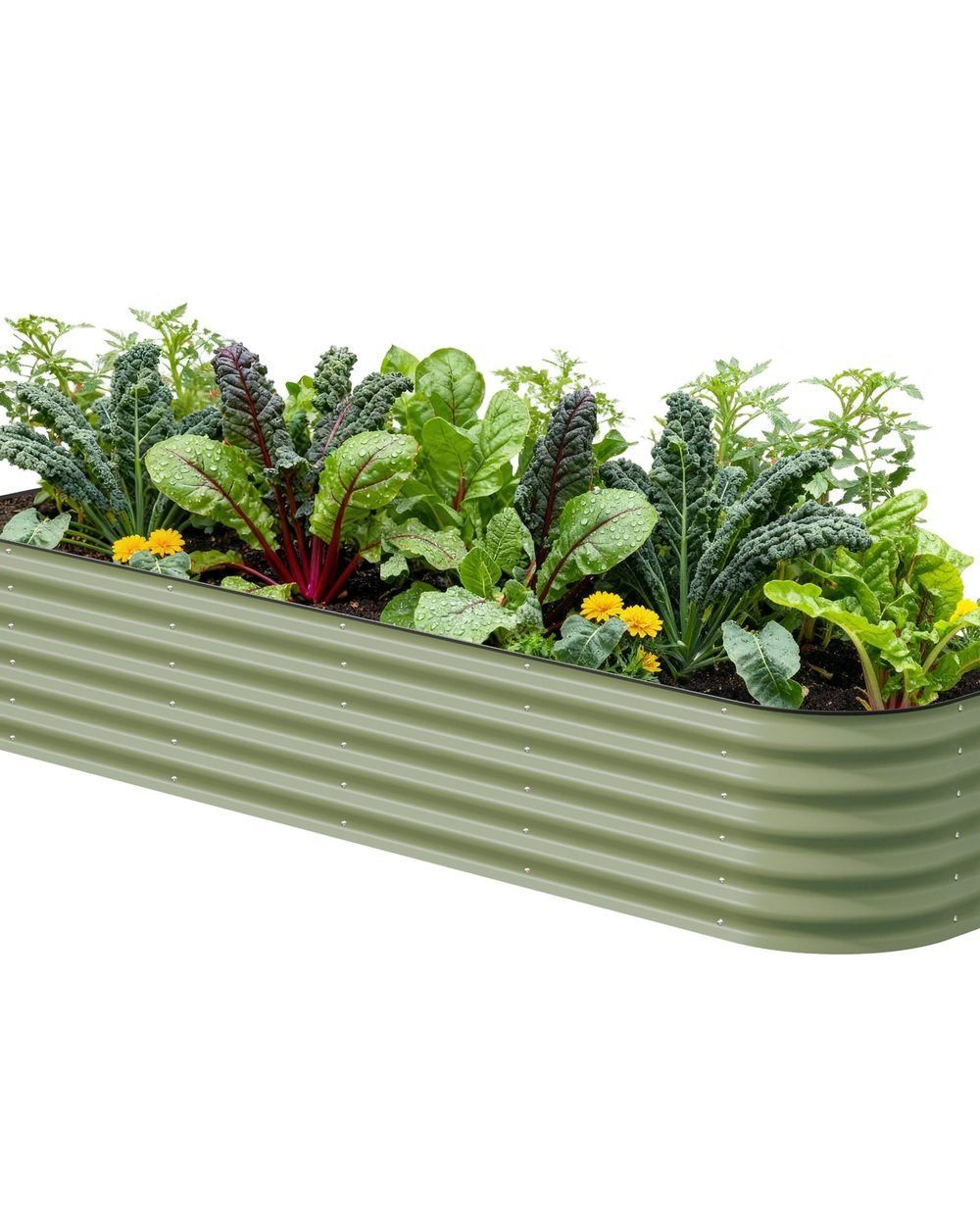
Vego Garden takes the overall position because its 17-inch height, coated metal construction and nine possible layouts give a beginner room to adapt the bed after the first season. The frame costs more than the other finalists, but it is the strongest documented choice for a long-term backyard vegetable garden rather than a one-season experiment.
The modular design is the practical advantage. A narrow site, a corner or a longer garden row can use a different panel arrangement without forcing the buyer to replace the entire kit. That flexibility matters when a beginner is still learning how sunlight, hose reach and walking clearance affect daily care.
- + Nine configurations from one modular kit
- + 17-inch wall height supports deeper soil profiles
- + VZ 2.0 coated steel is positioned for long-term outdoor use
- + Best fit for a permanent backyard vegetable bed
- x Highest verified purchase price in this comparison
- x Deeper bed can require substantially more soil
- x Metal walls in full sun make moisture monitoring important
- Material: VZ 2.0 zinc-aluminum-magnesium coated steel
- Height: 17 inches
- Configurations: 9-in-1 modular layouts
- Growing depth: Suitable for deeper-rooted vegetables
Vego Garden 9-in-1: Why It Is Best Overall
The Vego is the broadest long-term platform in this group. Its 17-inch wall height gives beginners a substantial controlled root zone without requiring the waist-high footprint of an elevated planter. Nine layouts make it easier to work around a path, fence or irrigation point. That versatility is useful when the buyer has a permanent backyard location and wants one bed that can host several crop plans over multiple seasons.
The price is only part of the premium. Current Amazon data observed on August 11, 2026 showed about $148.85, a 4.7 rating and 752 reviews for the exact ASIN used here; the official Vego page listed a different direct price and a much larger cross-site review total. Those numbers are snapshots from different sellers and should not be merged. The useful conclusion is that the Vego carries a meaningful premium over Land Guard and requires a live checkout comparison.
Assembly involves many panel connections. Work on a flat surface, keep protective edging oriented correctly and loosely start the bolts before final tightening so the panels can align. Gloves are sensible around sheet-metal parts even when the finished rim is protected. The bed should be squared and placed before soil arrives. A small alignment problem becomes difficult to correct after hundreds of pounds of fill are inside.
The Vego is not the right first bed for a renter who expects to move or a beginner who is unsure about gardening. Its soil investment and semi-permanent footprint work against portability. It is strongest for homeowners who have already chosen the site, can obtain bulk soil and want a durable modular frame that will not need wood treatment.
Crop flexibility is the reward. The depth can support tomatoes, peppers, brassicas, herbs and root crops when the soil and spacing are appropriate. Tall crops still need trellising that accounts for wind load; do not assume the thin wall itself is a structural anchor for a heavy trellis. Independent posts or the manufacturer’s compatible supports are safer than improvised leverage on one panel.
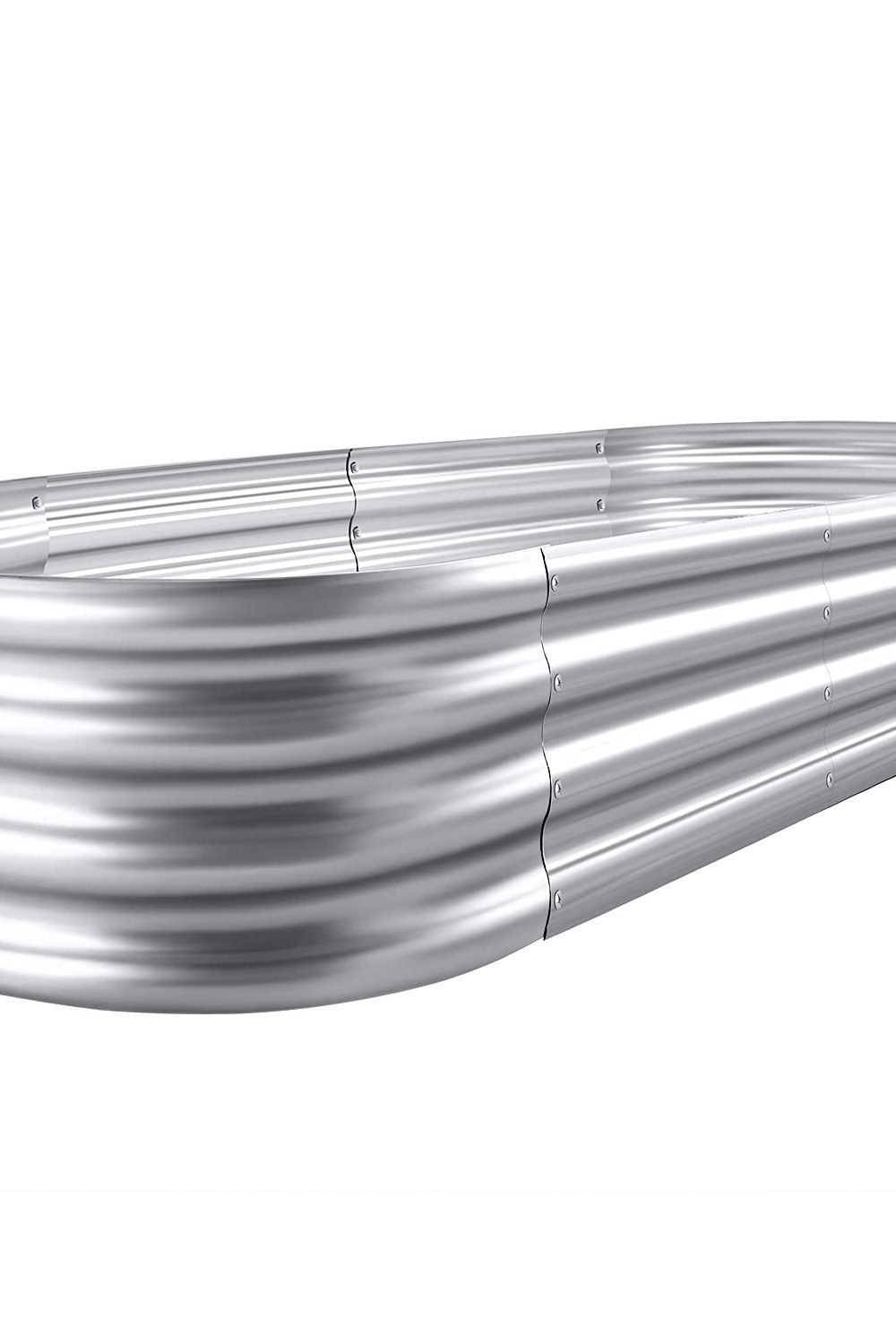
#2 – Land Guard 4 x 2 x 1 Foot Galvanized Raised Garden Bed Kit
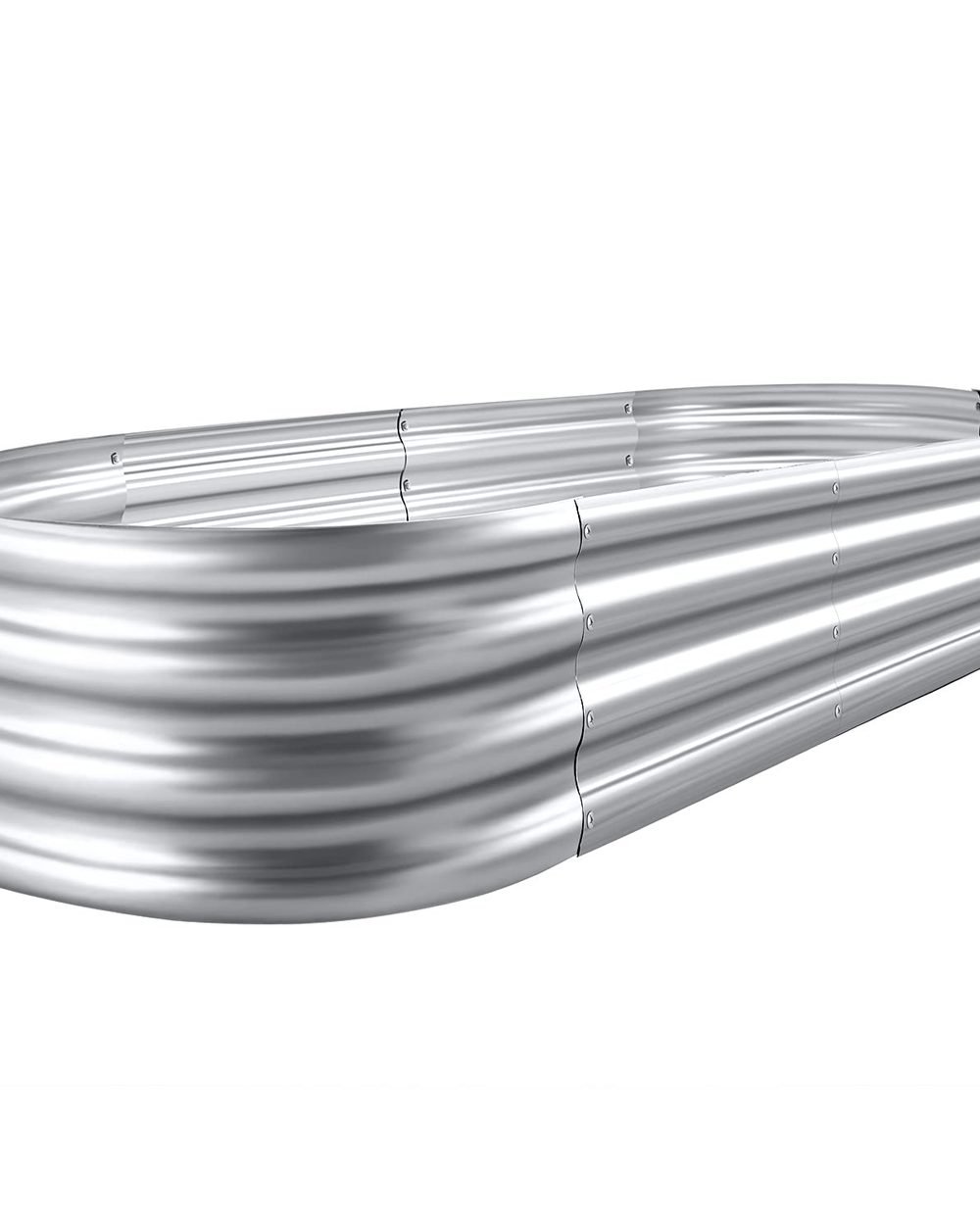
Land Guard is the budget recommendation because its 4 x 2 foot footprint is easy to place and its verified price leaves more of a first-season budget for soil, compost, mulch and plants. The open-bottom galvanized frame is best treated as a simple boundary for an in-ground soil system, not as a portable planter.
Its one-foot wall height works for many herbs, greens and compact vegetables, but the underlying soil still matters. Beginners placing it over lawn should prepare the base, remove persistent weeds and confirm that the site drains after rain before filling the frame.
- + Lowest verified price among the three finalists
- + Compact 4 x 2 foot footprint suits a first garden
- + Open bottom allows drainage into native soil
- + Galvanized metal avoids annual wood sealing
- x One-foot height provides less fill depth than Vego
- x Open bottom is not designed for patio portability
- x Budget hardware and edge finishing deserve inspection
- Material: Double-layer galvanized metal
- Size: 4 x 2 x 1 feet
- Shape: Oval open-bottom bed
- Assembly: Simple kit assembly with included hardware
Land Guard 4 x 2 x 1 Foot: Why It Is Best Budget
Land Guard wins the budget role because it creates a defined eight-square-foot garden without committing the buyer to a large soil delivery. The August 11 Amazon snapshot for ASIN B09C8HR4Z9 showed about $21.79, a 4.7 rating and 1,970 reviews. Price, coupon and seller can change, so the point is not that every buyer will see that exact number. The point is the large gap between this basic shell and the premium modular option.
Its footprint is beginner-friendly. Four feet by two feet can be reached from either side, fits near a sunny fence with the long side accessible and is small enough to water by hand. Eight square feet is also enough to learn succession planting without creating a maintenance burden. A beginner can grow salad greens, herbs and a compact tomato plan while still seeing which crops compete for light.
The low wall keeps soil cost reasonable but does not reduce bending. Anyone choosing a raised bed primarily for back or knee comfort should not confuse a 12-inch frame with a waist-high planter. It can reduce how far the soil surface sits below grade, yet planting and harvesting remain ground-level tasks. Best Choice Products is the more direct answer when standing access is the priority.
Budget metal beds deserve careful assembly. Sort the hardware, align seams on flat ground and install the edge guard exactly as directed. Do not drag the finished frame across paving, because abrasion can damage the coating. After filling, check the perimeter after the first heavy watering. Soil settles and can reveal a low corner where water or mulch collects against the wall.
This is the easiest recommendation for a cautious beginner. If the garden habit does not stick, the sunk cost is limited. If the first season succeeds, the small bed can remain a herb or salad bed beside a larger future installation. That expansion path is more honest than buying a huge premium bed before the site, crops and watering routine are understood.
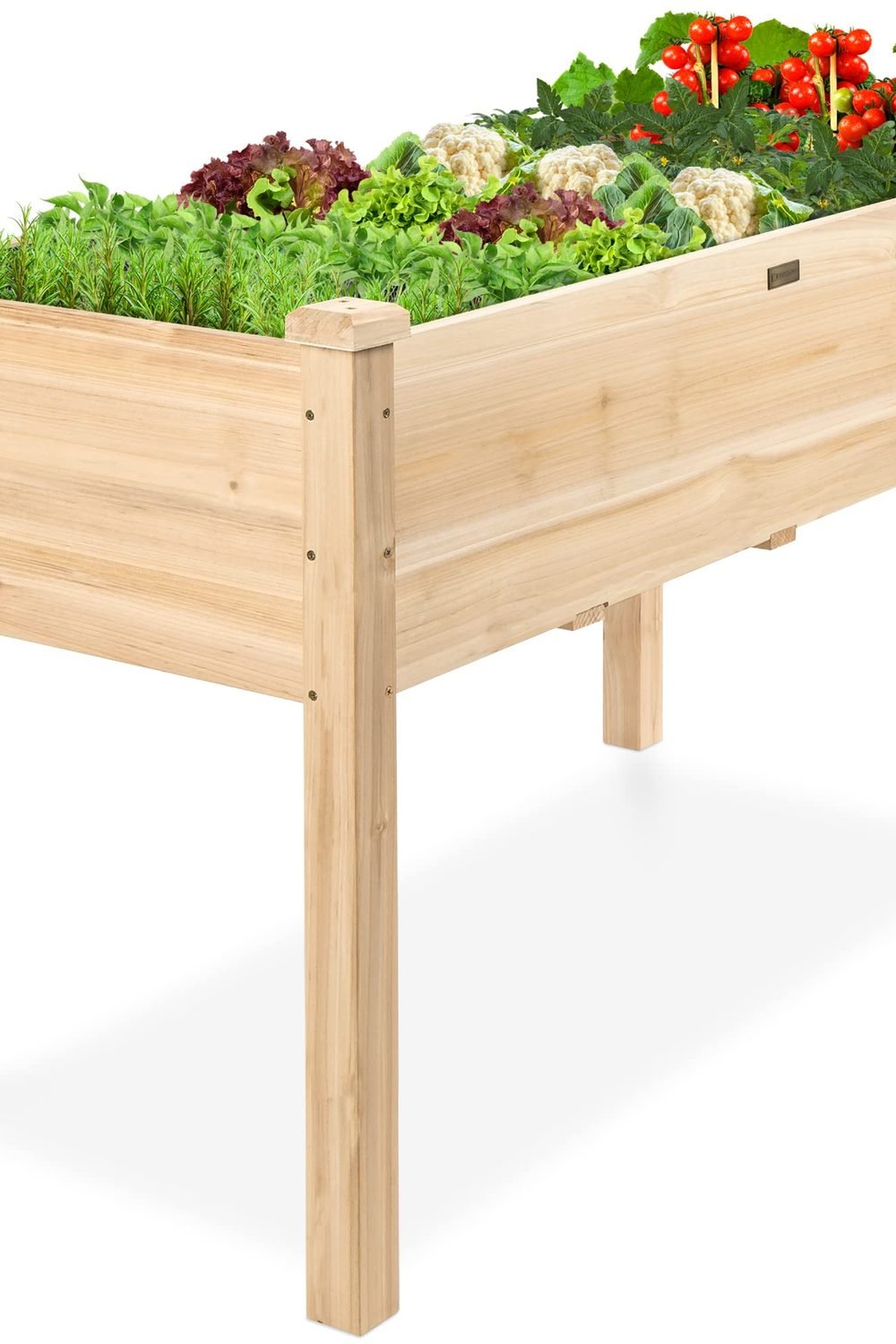
#3 – Best Choice Products 48 x 24 x 30 Inch Elevated Wood Raised Garden Bed
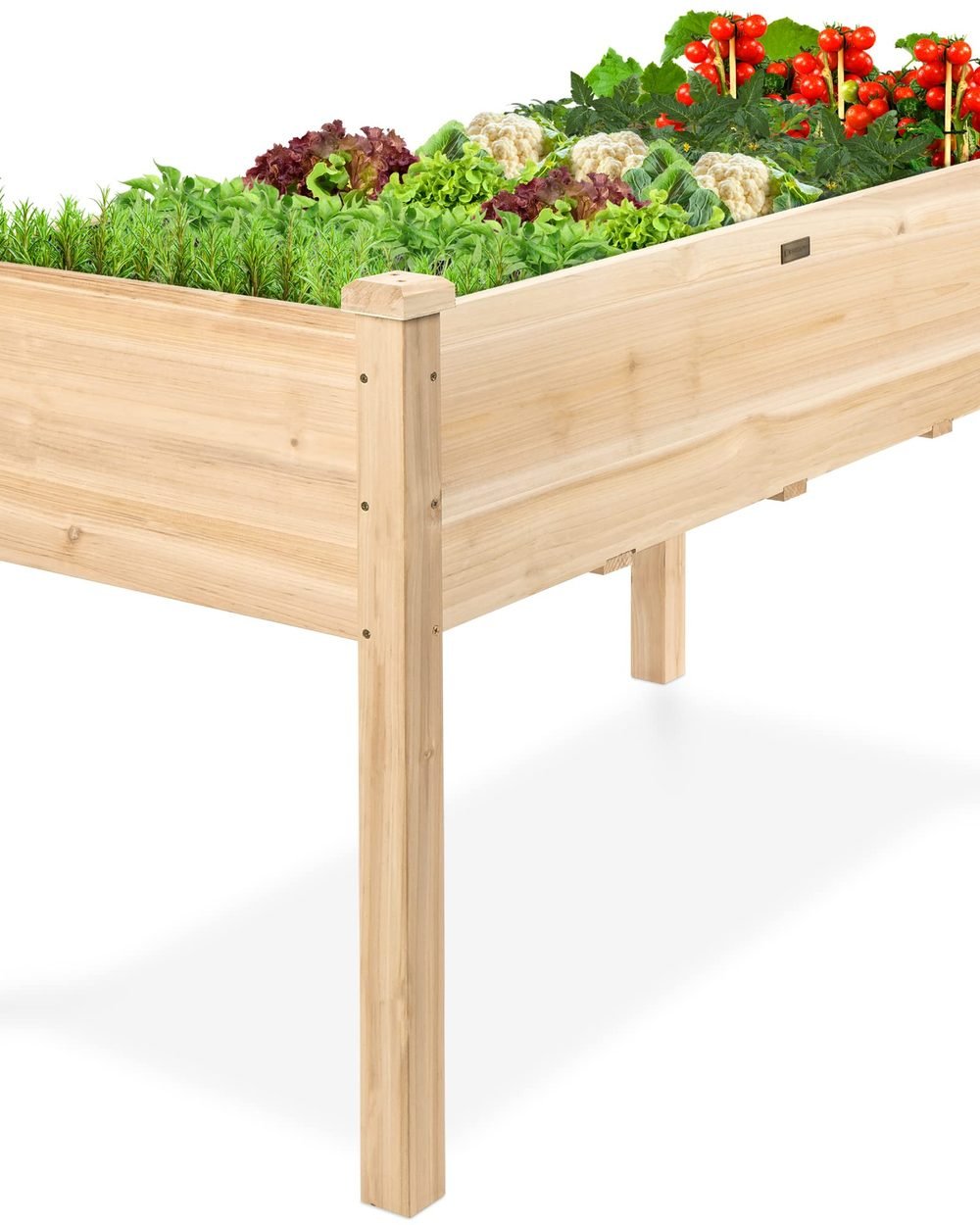
Best Choice Products wins the specialist role because the 30-inch overall height brings the growing surface closer to standing level. It is the most relevant option here for a patio, balcony or gardener who wants to reduce repeated kneeling, provided the surface can safely support the filled planter.
The contained wooden box, liner and drainage holes create a different ownership model from the two open-bottom metal beds. It uses less soil and can isolate a small crop area, but the roughly five-cubic-foot planting volume limits crop scale and the fir wood requires seasonal inspection.
- + 30-inch overall height reduces repeated ground-level work
- + Contained format is better suited to patios and hard surfaces
- + Included liner and drainage holes simplify first setup
- + Smaller soil volume is manageable for herbs and greens
- x Smaller growing volume than the open-bottom beds
- x Fir wood needs more weather monitoring than metal
- x Loaded weight and balcony limits must be checked first
- Material: Chinese fir wood with liner
- Size: 48 x 24 x 30 inches
- Capacity: About 5 cubic feet planting area
- Features: Drainage holes and included liner
Best Choice Products Elevated Planter: Why It Wins for Accessibility
The Best Choice Products planter changes the task by bringing the soil surface to roughly waist height. The official page lists overall dimensions of 48 by 24 by 30 inches, a 16-inch planter depth, a 33-pound product weight and approximately 10 cubic feet of planting space. The current Amazon snapshot for the exact ASIN showed about $49.99, a 4.3 rating and 536 reviews, while the brand’s direct page showed a different price. Check the seller and variant before buying.
For a patio gardener, the closed elevated structure is an advantage. It does not depend on native soil, limits kneeling and creates a contained zone for herbs, lettuce, radishes and compact vegetables. For a buyer seeking maximum yield, the narrow planting area is the limitation. Four legs and a box cannot match the broad soil volume of a ground bed, and tall top-heavy crops may need support that does not destabilize the planter.
Placement requires more thought than the product photo suggests. Ten cubic feet of moist soil adds substantial weight beyond the empty 33-pound frame. A deck or balcony must be suitable for the loaded planter, and the owner should follow building rules rather than relying on a generic product capacity. Drainage water also needs a safe path that will not damage flooring or drip onto a neighbor’s space.
Wood care belongs in the ownership cost. Inspect joints, corner posts, liner position and drainage holes each season. Keep standing water away from the feet and avoid trapping wet leaves against the panels. A food-compatible exterior treatment may be appropriate if the manufacturer allows it, but the instructions and current warranty should guide any finish applied near edible crops.
This planter is the least interchangeable of the three picks. It should not be chosen merely because elevated beds look tidy. Choose it when reduced kneeling, paved placement or a small patio is the decisive constraint. In that scenario its limited area is not a defect; it is the tradeoff that makes gardening possible in a location where an open-bottom bed cannot go.
What You Can Trust in This Comparison
Prices, ratings and review counts are dated snapshots and can change. Manufacturer material and dimension claims are identified as specifications, not independent test results. ReviewGuid did not receive samples or payment from these brands for inclusion.
The ranking follows buyer fit: Vego for a flexible long-term backyard build, Land Guard for the lowest-cost first bed on soil, and Best Choice Products for a contained elevated setup. No Amazon rating or frame specification can replace correct site selection, soil preparation and watering.
Buyer guide: match the product to the job
Use the physical constraint, frequency of use, setup time, storage space, and total cost as the five filters for Best Raised Garden Beds for Beginners: 3 Easy-Start Picks. Remove any product that fails a non-negotiable filter before comparing ratings.
Then compare the three roles in order: Best Overall for broad fit, Best Budget for a simpler value path, and Best for the specific use case when one use case dominates. The role is more useful than a universal winner claim.
Check the current seller, delivery, returns, warranty, accessories, and replacement parts immediately before checkout. Those details can change the value of a product without changing its name.
Start With the Site, Not the Product Badge
A raised garden bed is a boundary around soil, so the site does more to determine success than any badge on the frame. Before comparing Vego Garden, Land Guard and Best Choice Products, watch the proposed area through a clear day. Fruiting vegetables such as tomatoes and peppers generally need a full-sun location. Leafy greens tolerate less, but a deeply shaded bed cannot be fixed by premium metal or expensive soil.
Access is the next non-negotiable. A four-foot-wide ground bed is workable only when both long sides stay open. Against a fence, the center can become difficult to weed, plant and harvest. The elevated Best Choice planter is narrower and reachable from a patio edge, while the Vego modular layout can be configured to suit a path. Land Guard’s compact four-by-two footprint is the easiest to place in a small ground-level trial.
Check water movement before assembly. On native soil, an open-bottom frame should connect with loosened ground rather than sit over impermeable plastic. On a deck or patio, water needs a controlled exit that will not stain the surface or drain toward the house. University of Minnesota Extension recommends access to water and notes that raised beds dry faster than surrounding garden soil.
Soil Volume Is the Hidden Price Tag
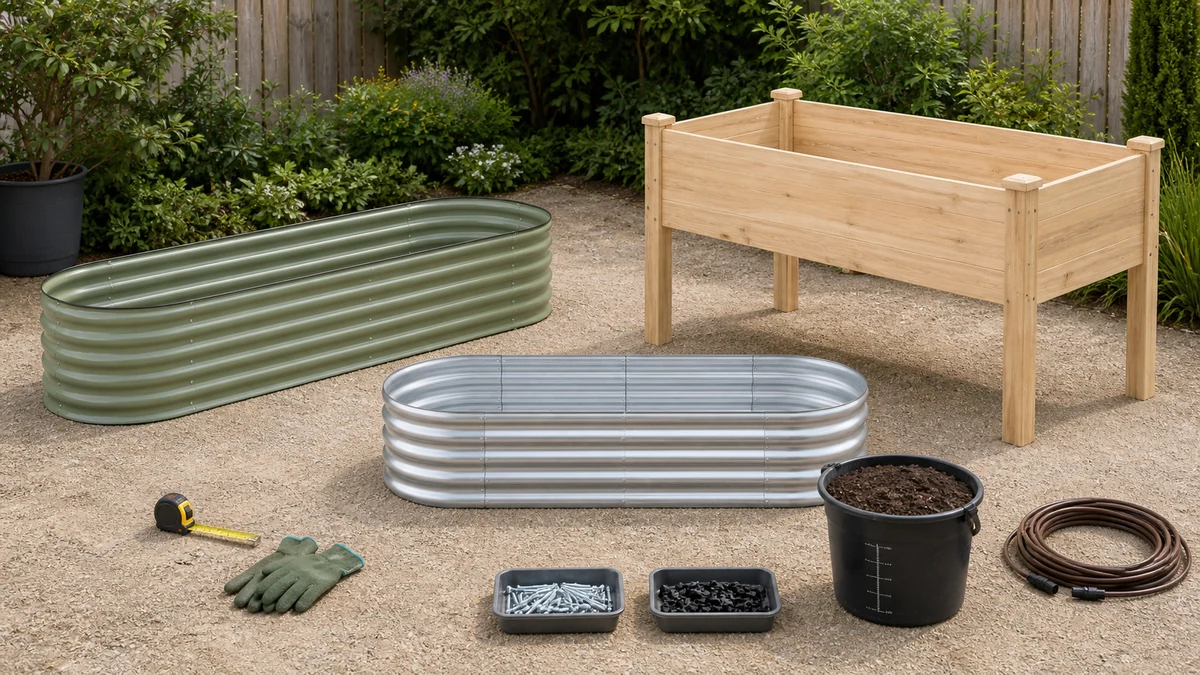
The frame is often the smallest part of the first-year budget. Soil volume rises quickly as length, width and depth increase. A four-by-two-foot bed filled one foot deep needs about eight cubic feet before settling. A larger modular bed at a full 17-inch depth can require many times that amount. Bulk delivery can be more economical than individual bags, but delivery minimums and access to the backyard matter.
Depth should follow the crop and the underlying surface. On healthy loosened soil, an open-bottom bed does not need to hold the entire root system inside its walls. On concrete, the planter must provide all usable root volume and retain soil while still draining. This distinction is why the 17-inch Vego frame can be partially integrated with the ground, while the elevated Best Choice planter behaves more like a large container.
Penn State Extension recommends a 70 percent soil and 30 percent compost starting mix. Oregon State University Extension cautions against filling a framed bed with compost alone. These recommendations favor stable loam plus measured organic matter. They also explain why a cheap frame paired with poor fill is not a value purchase.
How the three beds change the fill calculation
Vego Garden’s height and configurable footprint create the largest potential soil bill in this comparison. That cost buys deeper controlled soil and a comfortable wall height, but beginners should calculate the selected layout rather than assume every configuration uses the same volume. If bulk soil cannot reach the site, moving dozens of bags through a house may become the hardest part of the project.
Land Guard limits the first experiment. Its four-by-two-foot footprint and roughly one-foot walls make the volume easier to understand and spread the budget across frame, soil and irrigation. The limitation is equally clear: it offers less vertical reserve for deep fill and keeps the gardener close to ground level. It is economical because it is smaller and simpler, not because it matches the premium bed feature for feature.
Best Choice Products lists a 16-inch planting depth and about 10 cubic feet of planting space on its current official product page. Because the planter stands above the ground, that whole volume must be supported by the structure and managed as container soil. The smaller surface area controls total fill, but moisture can change faster than in a broad open-bottom garden bed.
Material Choice Changes the Maintenance Plan
Coated and galvanized metal
Vego Garden uses coated metal panels with rounded edging and modular bolts. The official listing describes VZ 2.0 zinc-aluminum-magnesium coated steel and nine possible layouts. For a beginner, the practical advantages are durable sidewalls and the ability to reconfigure the footprint before filling. Once full, moving or reconfiguring the bed means removing a large amount of soil, so modularity is most useful during planning rather than after planting.
Land Guard uses a more basic galvanized metal shell. Galvanized steel is popular because the zinc coating protects the underlying metal, but cut edges, scratches and constantly wet debris remain worth inspecting. The budget kit should be assembled on a level site with every fastener snug and the protective top edge installed correctly. Thin panels can feel flexible before soil is added; the filled soil mass helps stabilize the shape.
Fir wood on an elevated frame
The Best Choice planter uses fir wood. Wood offers a warmer patio appearance and does not create a hot metal edge, but it asks for seasonal inspection. Water exposure, constant soil contact and blocked drainage shorten the life of any wooden container. The current official listing describes non-toxic fir, reinforced corners and built-in drainage. A liner can reduce direct soil contact, but it must not seal the drainage path.
Drainage, Irrigation and Hot-Weather Behavior
Raised beds drain and warm faster than many in-ground plots. That can extend the spring window on cold wet soil, but it increases summer monitoring. Metal does not boil plant roots in normal use, yet dark exposed walls and a small dry soil volume can increase edge stress. Mulch, adequate soil volume and consistent watering matter more than simplistic claims about one wall material.
Drip irrigation is the easiest repeatable system for the two ground beds. Run lines along crop rows, secure them so emitters stay near roots and test pressure before mulch hides the layout. The elevated planter needs a shorter loop with careful drainage observation. A timer can reduce missed watering, but it cannot detect a clogged emitter or a planter outlet blocked by roots.
Water at soil level to reduce leaf splash and disease pressure. The goal is to wet the root zone, not perform a quick surface rinse. Check moisture with a finger or trowel several inches below the surface. Newly planted seedlings, mature tomatoes and cool-season greens do not use water at the same rate, so a schedule should change with crop size and weather.
Mulch moderates evaporation and reduces soil splash. Use a layer that leaves stems clear rather than piling material against plants. In an elevated planter, mulch also reduces the rapid moisture swing common to containers. In a new deep metal bed, allow for settling and keep the final soil line below the rim so mulch and irrigation water stay inside.
Crop Planning for the First Season
A beginner bed works best with fewer crop types than the catalog image suggests. Choose one vertical crop, one or two compact crops and a quick crop that can be harvested early. Put tall plants on the north side in the Northern Hemisphere so they are less likely to shade shorter neighbors. Confirm local planting dates through a regional Extension office rather than copying a national calendar.
Land Guard’s eight square feet rewards restraint. One compact tomato with support, several herbs and a border of lettuce is more realistic than crowding several full-size tomato plants. The Vego provides more layout options and can separate crop families across zones. The Best Choice planter is naturally suited to herbs, greens, radishes and compact varieties that make use of its comfortable height.
Crop rotation still matters in permanent beds. Avoid planting the same family in the same soil every season when space allows. Multiple small beds make rotation easier, which is one argument for starting with Land Guard and expanding later. In a single bed, records, disease-resistant varieties and replacing affected plant material become more important.
Plan support before roots fill the bed. Trellises, cages and hoops are easier to place when the soil is open. Do not attach a wind-catching structure to a lightweight panel unless the manufacturer supports that use. An independent stake driven into the ground works for open-bottom beds; an elevated planter may need a compact support fastened according to its manual.
Assembly and Safety Checklist
Inventory every panel, post, fastener, edge strip and liner before starting. Compare the parts with the manual and photograph any damage before assembly. Sheet-metal kits are easier with two people because long panels can flex while bolts are started. Wooden elevated planters need even tightening so the box remains square and all legs share the load.
Wear gloves, keep children away from loose hardware and assemble on a surface that will not scratch the finish. Tighten in stages rather than locking the first corner completely. For the ground beds, level the perimeter and remove sharp stones that could distort a panel. For the elevated planter, verify that every drainage opening remains clear after the liner is installed.
Do not fill a bed until it is in the final location. Even the smallest option becomes impractical to move after watering. Confirm gate width and the route for soil delivery in advance. If bags must travel through the house, calculate their number and protect floors. These logistics often matter more than the advertised assembly time.
After the first watering, inspect seams, corners and level. Soil settlement can pull away from an edge or expose a low spot. Top up with the same balanced mix instead of pure compost. Check again after a heavy rain and after winter freeze-thaw in cold regions. Early inspection catches movement before roots and irrigation lines make corrections disruptive.
Value Over Several Seasons
Land Guard has the lowest cost of entry, but value depends on continued use. A small bed that is planted every spring can outperform a larger frame abandoned after one season. Vego asks for more money and soil upfront but spreads that cost across a flexible, durable layout. Best Choice converts spending into accessibility and patio placement rather than maximum soil area.
Include recurring costs: compost top-ups, mulch, drip parts, replacement liners and wood finish if approved. Also include time. A bed near the kitchen and water source is more likely to be checked than one placed at the far edge of a property. Convenience is an operating feature, even though it does not appear in the product specification table.
Returns become difficult after soil touches the product. Inspect finish, dimensions, hardware and fit before filling. Verify the live seller, variant, warranty and return terms at checkout. Marketplace listings can combine colors or sizes under one review pool, so confirm that the selected variation matches the measurements used in this comparison.
The best overall recommendation remains Vego for a committed backyard beginner. Land Guard is the more rational trial for cost-sensitive buyers. Best Choice Products is the correct specialist when standing access or paved placement is the reason for buying. Those roles are stable because they follow the physical use case rather than a temporary coupon.
Climate and Regional Fit
Heat, freeze and wind exposure
A raised bed changes soil temperature and moisture, but the direction of that change depends on climate. In a cool wet spring, faster drainage and earlier warming can help a gardener start sooner. In a hot dry summer, the same exposed soil volume can lose water quickly. The frame cannot replace regional planting dates, shade planning or a watering method sized for local heat.
Vego’s larger soil mass buffers moisture better than the small elevated planter when both are filled correctly, although its exposed metal perimeter still needs mulch and consistent irrigation. Land Guard has less depth and a broad low surface, so seedlings near the edge deserve attention during heat. Best Choice is fully above ground and should be treated like a very large container, especially on a sunny paved surface.
Cold climates create another difference. Soil in an elevated container freezes from more sides than soil connected to the ground. University of Minnesota Extension cautions that perennial roots in raised beds can experience faster freezing. Beginners in cold zones should use the elevated planter mainly for annual vegetables and herbs unless a chosen perennial is hardy enough for the additional exposure.
Wind affects tall crops and lightweight structures. A full ground bed is difficult to move, but a trellis attached poorly to one panel can still act as a sail. The elevated wooden planter raises foliage above the deck and can become top-heavy. Place supports before plants are large, keep the path of prevailing wind in mind and follow the manual rather than improvising a large canopy.
Accessibility Is More Than Wall Height
Wall height helps only when the gardener can approach the bed. Paths should be firm, wide enough for the intended user and free of hoses that create a trip hazard. A tall Vego wall reduces the reach toward ground level but still requires leaning across the bed. The Best Choice planter brings the surface higher, yet its legs and lower space determine how close a chair or mobility aid can come.
Oregon State Extension describes roughly 28 to 34 inches as a useful wheelchair-accessible raised-bed height. Height alone is not a certification of access. Knee clearance, reach to the center, path slope and the strength needed to operate a hose all matter. Buyers with a specific mobility need should measure their comfortable reach at home before relying on a catalog description.
Land Guard is not an accessibility substitute. Its low frame can make the soil edge easier to see and keeps the bed defined, but most work still occurs near knee level. It is best for buyers who are comfortable kneeling or using a garden stool. Adding a safe stable sitting edge is a separate construction project and should not be improvised on thin metal panels.
Tool storage and water placement also affect access. Keep hand tools at the working height, use lightweight hose fittings and position shutoff valves where they can be reached without stepping over the bed. The best accessible setup may include fewer crops and wider spacing so every plant can be inspected without twisting or leaning into foliage.
Soil Safety and Urban Sites
Raised beds are often recommended where native soil is compacted or potentially contaminated, but a frame does not automatically isolate risk. Buyers on older urban properties should consult local Extension or public-health guidance and consider a soil test before mixing native soil into the bed. Imported topsoil should come from a reputable supplier that can explain its source and screening.
When separation is needed, use a system that still permits drainage and matches the local recommendation. Impermeable plastic under an open-bottom bed can create a basin. A permeable geotextile may separate materials but can also limit deep rooting. Hardware cloth addresses burrowing animals, not chemical contamination. The correct barrier depends on the actual problem.
Material claims also need context. The official Vego page describes food-safe coated steel, and the Best Choice page describes non-toxic fir. Those manufacturer statements are useful product evidence, but they do not test the soil or water added by the owner. Clean fill, appropriate compost and safe irrigation remain part of the garden system.
Do not use unknown salvaged wood, railroad ties or containers that previously held chemicals around edible crops. A bargain frame made from uncertain material can undermine the main benefit of controlling the growing environment. The three products here are commercially identified kits, which makes materials and support easier to trace than an unmarked secondhand container.
Total Installed Cost Worksheet
Start with the live frame price, then list soil volume, bulk delivery or bags, compost, mulch, drip tubing, a timer, hardware cloth if needed and crop supports. Add surface protection for an elevated patio planter and any approved wood finish. This worksheet prevents a $22 metal shell from being compared directly with a $149 modular kit as though the frames created equal gardens.
For Vego, soil and delivery are likely the largest additions. For Land Guard, the small footprint keeps fill manageable, so irrigation and crop supports may represent a larger share of the total. For Best Choice Products, the soil volume is limited but a deck-safe placement, drainage management and future wood care belong in the calculation.
Value should be divided by realistic seasons of use, not by an advertised durability number alone. A premium bed used for vegetables every year can be inexpensive per season. A budget bed left in shade after one failed crop is costly despite the low receipt. Site quality and routine determine whether the material investment is recovered.
Keep an emergency margin for replacement seedlings, an extra soil top-up and a failed irrigation fitting. Beginners often spend the full budget on the frame and fill, then delay the inexpensive items that protect the crop. A complete modest setup is more useful than a premium shell without mulch, water control or appropriate plants.
Final Decision Path
Choose Vego Garden if the site is permanent, the soil budget is ready and layout flexibility matters. Choose Land Guard if the goal is to start small, learn the routine and control first-year spending. Choose Best Choice Products if the garden must sit on a patio or if reducing kneeling matters more than planting area.
If two options remain, calculate total installed cost rather than frame price. Add soil, compost, delivery, irrigation, mulch and any support structure. Then imagine the weekly routine: reaching the center, watering, inspecting leaves and harvesting. The bed that makes that routine easiest is usually the better purchase.
If none fits the site, wait. A fabric grow bag, a large container or an unframed mounded bed may solve the problem with less material. A comparison should make a no-buy decision possible. The frame is useful only when it turns the selected location into a garden that the owner can maintain.
Who Each Pick Is For
Choose Vego Garden for a flexible long-term backyard bed, Land Guard for the simplest low-cost start on soil, or Best Choice Products for a contained patio planter that reduces kneeling.
This framing matters because shopper regret usually comes from solving the wrong problem well. A cheaper product can still be the smartest choice when the buying constraint is simple and narrow.
Choose it for deeper soil, modular layouts and a multi-season backyard plan.
Choose it for a compact first bed when soil and cost control come first.
Choose it for a patio or a higher working surface with contained soil.
Frequently Asked Questions
What is the best raised garden bed for most beginners?
Vego Garden is the best overall choice here for buyers who want a flexible long-term bed with 17-inch walls and multiple layouts. Land Guard is the stronger value choice, while the Best Choice planter serves a different elevated-patio need.
Which raised bed is the best option under $50?
Land Guard had the lowest verified price in this comparison. Budget for the soil and site preparation as well as the frame, because those costs can exceed the price of a small metal kit.
Is an elevated planter better than an open-bottom raised bed?
An elevated planter can reduce kneeling and work on a hard surface, but it has less soil volume and creates a concentrated loaded weight. Open-bottom beds offer more root connection to native soil but require an appropriate ground site.
How much sun does a beginner raised bed need?
The correct exposure depends on the crops. Many fruiting vegetables need substantial direct sun, while some leafy crops tolerate less. Observe the site before choosing the bed location.
Do raised beds need special soil?
They need a stable, well-draining growing mix suited to the crops rather than a frame filled with one unbalanced ingredient. Avoid assuming that more compost or a deeper frame automatically creates healthy soil.