

Disclosure: As an Amazon Associate, I earn from qualifying purchases. This article contains affiliate links at no additional cost to you. – Maya Bennett

Ultrasonic anti-barking devices are surging because buyers want a no-contact interruption at a low price. They are not universal behavior fixes: response varies, the cause of barking matters, and any brief interruption should lead into reward-based teaching.
current price band here
stated range span
handheld and outdoor
no electric collar picks
AKC, ASPCA, AVSAB
Why anti-barking devices are surging now
The anti-barking-device category is growing because owners are looking for an immediate interruption without putting an electric collar on the dog. Handheld ultrasonic units now appear beside clickers, treat pouches and ordinary walking gear rather than only in specialty training catalogs. That visibility does not prove effectiveness. It shows that buyers want a portable answer to door barking, window barking and tense neighborhood encounters, often before they have identified the reason for the behavior.
Three product patterns define the current market. Compact handhelds let a person decide exactly when to trigger a sound. More elaborate handhelds add several settings or emitters. Fixed outdoor units listen automatically and cover a defined yard zone. Those designs solve different jobs, so a single star rating cannot determine the best choice. A device for a supervised front-door routine should not be evaluated as if it were an automatic fence-line monitor.
Low prices are accelerating trial. The two handheld products in this cluster sit around the mid-$20 range, while the established PetSafe yard unit is around $40 on the current Amazon snapshot. That is inexpensive compared with a private training session, but it can encourage impulse purchases. The real cost includes time spent identifying triggers, reinforcing quiet behavior and returning a tool that the dog ignores or finds stressful.
Marketplace scale is another signal. YUYQA’s current listing shows thousands of reviews and SEDULAN has built a four-figure feedback base, while PetSafe has accumulated years of mixed owner reports. Review volume gives buyers more patterns to inspect, yet it cannot resolve whether one particular dog hears or tolerates ultrasound. Recent critical reviews are especially useful because they expose charging failures, exaggerated range expectations and welfare concerns hidden by a headline average.
The most important trend is not the device itself but the move toward no-contact formats. Buyers are explicitly searching for alternatives to shock collars and prong collars. That preference aligns with the American Veterinary Society of Animal Behavior, which recommends reward-based methods for training and behavior modification. An ultrasonic interrupter still creates an unpleasant or surprising sensation for some dogs, so no-contact should not be mistaken for automatically harmless.
Barking is information. A dog may alert at a delivery, react to another dog, seek attention, guard a territory, express frustration or struggle with fear and separation distress. Stopping the sound without addressing that function can move the problem elsewhere. A worried dog may pace, hide, destroy objects or become more reactive even if vocalization briefly decreases. The buying decision should therefore begin with the trigger and the dog’s body language, not range or battery life.
“There is no one-size-fits-all approach to stopping it.”
Stephanie Gibeault, MSc, CPDT – American Kennel Club
What changed in the 2026 category
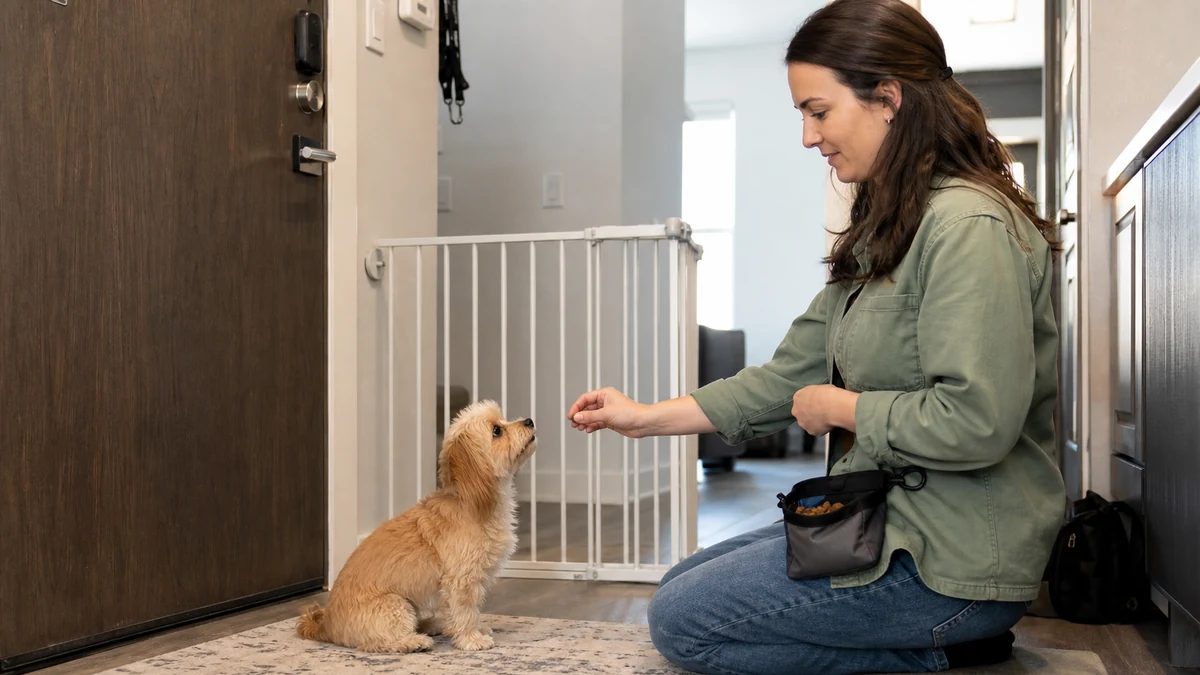
The American Kennel Club’s training guidance stresses that owners should learn why a dog is barking and teach an alternative behavior. Stephanie Gibeault, MSc, CPDT, writes that there is no one-size-fits-all approach to stopping it. That observation explains the wide spread in owner reviews: the same device can interrupt one alert barker, be ignored by an older dog and frighten a sound-sensitive dog.
The ASPCA also separates territorial, alarm, attention-seeking and compulsive barking, among other causes. Its guidance focuses on management and training, including reducing visual triggers and teaching quiet behavior. That context matters for shoppers because a privacy film panel or change in room access may prevent hundreds of barking repetitions without any electronic tool. Prevention is often easier for the dog to understand than repeated correction.
Range claims need careful reading. A 50-foot maximum usually assumes open space and favorable aim. Upholstery, walls, wind, fences, landscaping and the orientation of the speaker reduce useful reach. Ultrasonic output is also outside normal adult human hearing, so the owner cannot judge intensity by listening. Testing should start at the shortest practical distance and lowest setting while observing whether the dog disengages and recovers comfortably.
Automatic outdoor units introduce a second issue: detection. The microphone must hear the target bark and the speaker must face the dog. Traffic, lawn equipment, nearby dogs and echoes can create missed activations or false triggers. A fixed unit cannot know whether the dog is warning about a stranger, responding to fear or simply vocalizing during play. Owners should supervise the initial setup and narrow the range to the intended zone.
Handheld units offer better timing but depend on human skill. Pressing a button after barking has continued for thirty seconds, then giving no guidance, teaches less than a prepared sequence. The useful pattern is to recognize the trigger early, cue a known action, interrupt only if needed and reward the first quiet orientation. The device is a momentary break in a behavior loop, not the lesson that follows.
Battery specifications are less important than routine reliability. A rechargeable handheld may claim weeks between charges, but frequent button use, cold storage and aging cells change that result. A 9-volt yard unit may last two months in a quiet area and far less beside a busy sidewalk. Date each charge or battery change and test controls during the return period instead of waiting for the next stressful event.
| Barking situation | First response | Device fit |
|---|---|---|
| Door or window alert | Block view, cue a mat, reward quiet | Supervised handheld may help |
| Fence-line barking | Visual barrier and recall | Outdoor unit needs monitoring |
| Separation distress | Veterinary or behavior plan | Skip the device |
| Demand barking | Teach and reward an alternative | Training usually matters more |
What buyers should check before ordering
Multi-pet homes require extra caution. Ultrasound aimed at one dog can be heard by another dog and possibly other household animals. A second pet may have no connection to the barking trigger yet still experience the signal. If animals show avoidance, scanning, tucked posture or reluctance to enter the area, stop using the device and redesign the environment or training plan.
Age and health also change the decision. Hearing loss can make an ultrasonic product ineffective, while noise sensitivity or anxiety can make interruption counterproductive. Sudden new barking, nighttime vocalization or discomfort deserves veterinary evaluation. A product listing cannot screen for pain, cognitive change, fear or separation-related behavior, and a quieter dog is not necessarily a more comfortable dog.
The better 2026 buying question is therefore not whether ultrasonic bark devices work in general. It is whether a specific form factor can support a humane plan for a clearly defined trigger. A handheld can fit supervised door or walking routines. A yard unit can cover a line-of-sight zone when placement is controlled. Neither should be used as a substitute for exercise, enrichment, medical care or professional behavior help.
Shoppers should set a short evaluation window with measurable outcomes. Record how often the trigger occurs, how quickly the dog can turn away, which reward works and whether stress signals increase. Improvement means fewer repetitions and faster voluntary recovery, not simply silence while the product is active. If progress stalls, the responsible next step is to change the plan, increase distance or consult a qualified professional rather than escalating exposure.
The welfare standard matters more than the gadget
The American Veterinary Society of Animal Behavior humane training statement recommends reward-based methods and warns against aversive training. The ASPCA barking guide explains that barking has several functions, while the AKC training article emphasizes identifying the cause and teaching another response. These sources do not endorse a particular ultrasonic product.
Write down the trigger and function.
Reduce views, distance or access.
Reward a clear quiet alternative.
Stop if stress increases.
Compare the three no-shock picks
See YUYQA, SEDULAN and PetSafe compared by activation, range, power, owner evidence and real-world fit.
Frequently asked questions
Do ultrasonic anti-barking devices work for every dog?
No. Hearing, sensitivity, motivation, distance and environment vary. Use a short monitored trial and pair any interruption with reward-based teaching.
Are ultrasonic bark devices the same as shock collars?
No. These products do not attach to the dog or deliver electric stimulation, but the sound can still be aversive or stressful for some animals.
What should I do before buying an anti-barking device?
Identify why and where the barking occurs, reduce obvious triggers, teach a quiet alternative and consult a professional for fear, aggression or separation distress.
Can I use an ultrasonic unit for a neighbor’s dog?
That is a poor first choice because you cannot assess the dog’s welfare, health or training context. Discuss the issue constructively and check local rules.