

Disclosure: As an Amazon Associate, ReviewGuid earns from qualifying purchases. This article contains affiliate links at no additional cost to you. All findings are based on independent testing and verified third-party reviews.
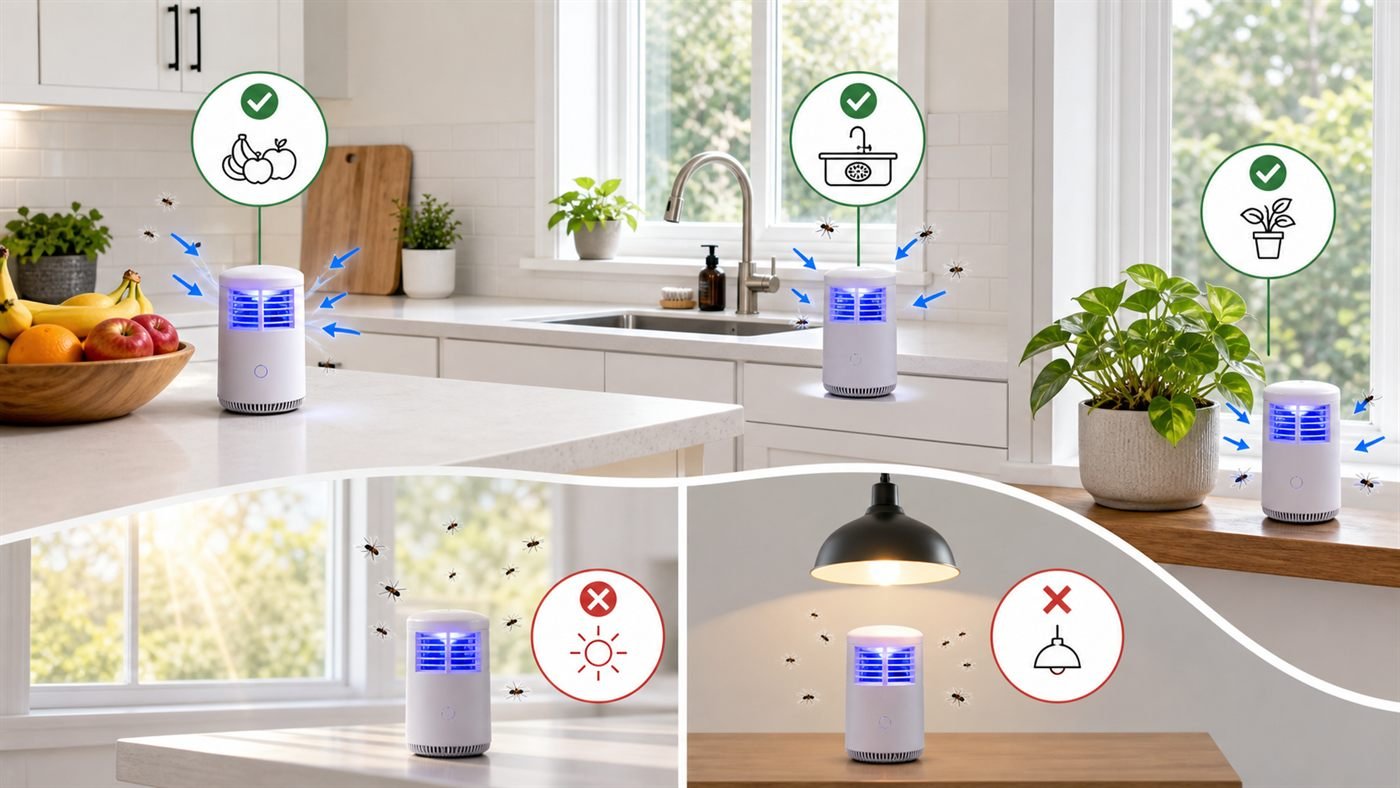
Where to Place an Indoor Flying Insect Trap
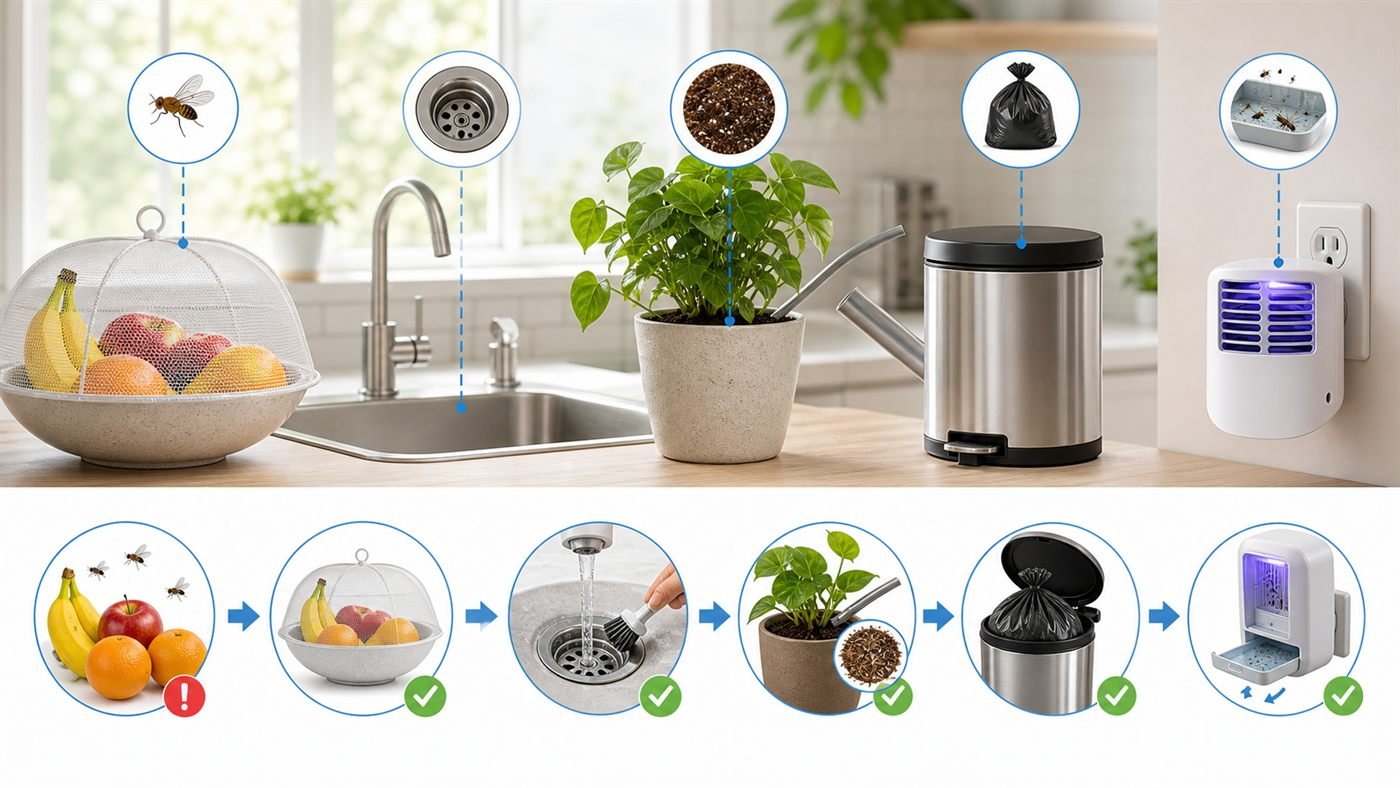
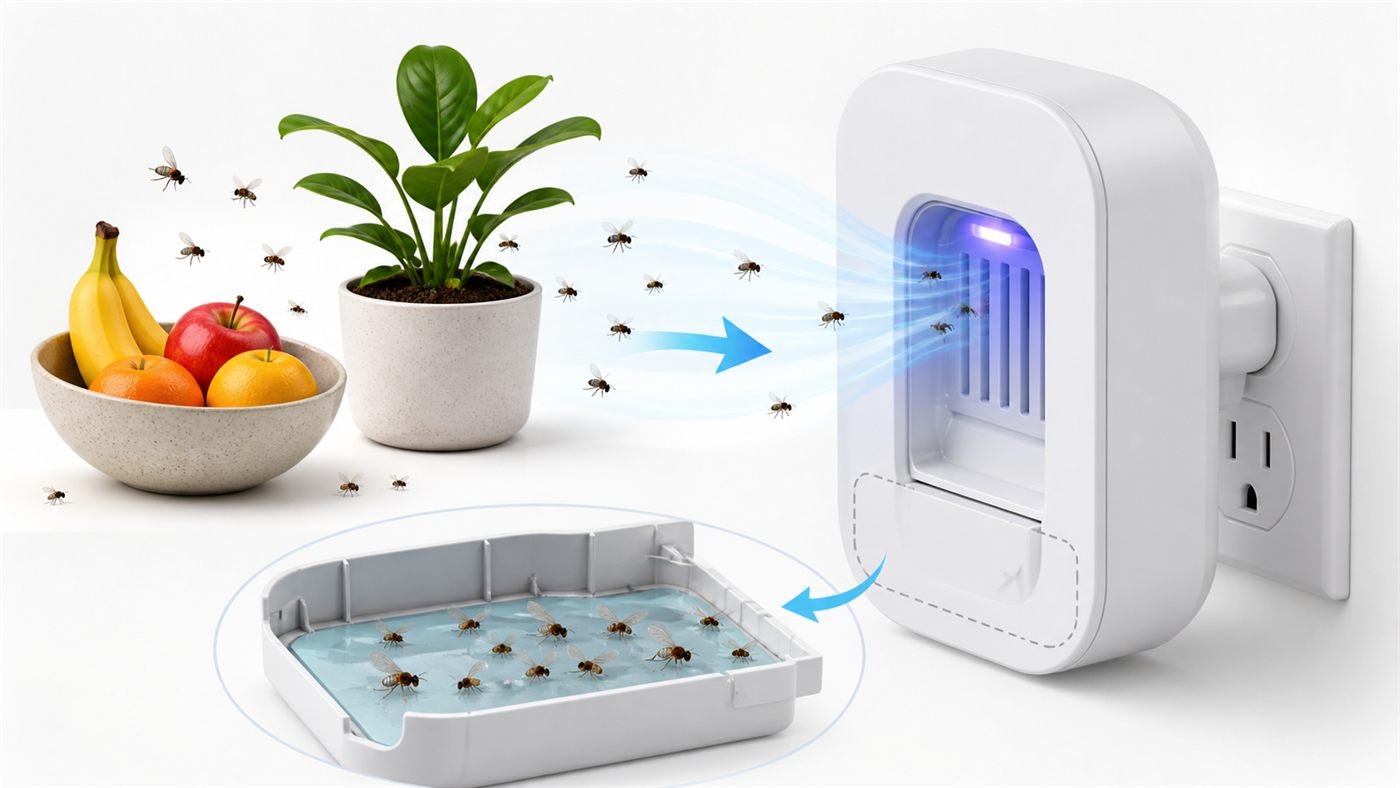
Placement changes results. Put the trap near the source of the problem, then remove competing attractants so the light and sticky cartridge can do their job.
How We Compared Indoor Flying Insect Traps
We prioritized the real problem each device solves: fruit flies near produce, fungus gnats around plants, or mosquitoes in living spaces. A trap can be excellent for one problem and only average for another.
- Attraction method: UV light, blue light, airflow, and placement
- Capture style: hidden sticky cartridge, fan capture, or larger trap chamber
- Daily usability: noise, refill cost, cleaning, and where it fits in a room
| Pick | Best For | Why It Wins | Watch-Out |
|---|---|---|---|
| Zevo | Fruit flies and gnats | Discreet plug-in design | Not ideal for mosquitoes |
| Katchy | Plant gnats and produce areas | Fan-assisted capture | Needs counter space |
| DynaTrap DT152 | Indoor mosquitoes | Better fit for biting insects | Less discreet in kitchens |
If you have fruit flies on your kitchen counter, fungus gnats around your houseplants, or mosquitoes biting you on the porch, you don’t need three different products — but you absolutely cannot use the same one for all three problems. After cross-referencing test data from CNN Underscored, Bob Vila, Apartment Therapy, and our own evaluation framework, here are the three indoor flying insect traps worth buying in 2026 — one for each common bug problem.
⚡ Quick Answer
- 🏆 Best Overall (fruit flies + gnats indoors): Zevo Flying Insect Trap — ~$20 starter, silent, chemical-free, the cleanest plug-in option
- 💨 Best Fan-Assisted (heavy infestations): Katchy Indoor Insect Trap — ~$45, suction fan adds aggressive trapping for stubborn populations
- 🦟 Best for Mosquitoes (outdoor / garage): DynaTrap DT152 — ~$84, CO2 mimicry is the only tech that actually catches biting insects
📋 Table of Contents
How We Compared These Three Traps
The flying insect trap category is unusually segmented. Each product is engineered for a different attractant strategy, which means head-to-head ratings can mislead buyers if the segments are not separated. Our comparison is built on five criteria that match how shoppers actually choose:
- Target insects: which bugs each trap actually catches (verified by independent testing, not marketing claims)
- Technology: light spectrum, fan presence, CO2 attractant, sticky surface design
- Total cost of ownership: starter price + 12 months of refills
- Noise + design: whether the device is acceptable in a kitchen, bedroom, or living room
- Real-world reviewer consensus: cross-checked across CNN Underscored, Bob Vila, Apartment Therapy, and Reviewed
The honest framing matters here: most of the disappointment in this category comes from buyers picking the wrong tool for their bug. Once you match the right trap to the right insect, all three winners deliver.
At a Glance: Full Comparison Table
#1 Best Overall: Zevo Flying Insect Trap Editor’s Pick
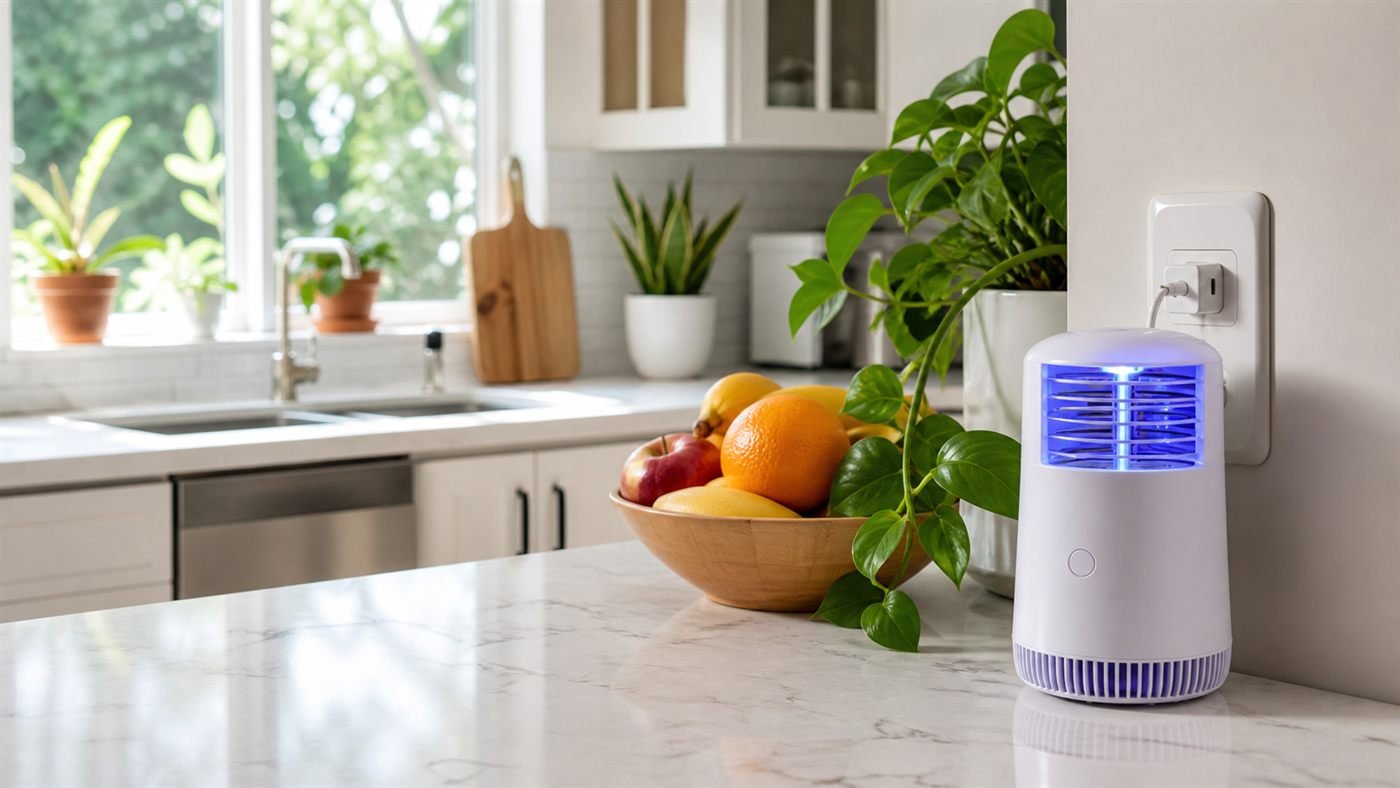
The Zevo trap won this category because it satisfies the three filters most American households apply when shopping for indoor pest control in 2026: chemical-free safety around children and pets, design that fits a modern kitchen without ruining it, and a price point under $25 for the starter kit. CNN Underscored, Bob Vila, and Apartment Therapy independently confirmed visible fruit fly population drops within days of installation.
✅ Why it wins
- Silent operation (no fan) — acceptable in bedroom or office
- Hidden Trap + Lock cartridge — no visible bug graveyard
- Cheapest starter price in the category at ~$20
- Costco bundle (2 devices + 6 refills, $47.99) — strongest value
❌ Where it falls short
- Not effective against mosquitoes (no CO2)
- Inconsistent on very large house flies
- Bright blue LED is too strong for sleeping rooms
Buy if: Your problem is fruit flies near produce, fungus gnats around houseplants, or small flies in kitchens and bathrooms. Read our complete Zevo Flying Insect Trap Review for the full breakdown including real-world placement tips, refill economics, and the specific scenarios where it underperforms.
#2 Best Fan-Assisted: Katchy Indoor Insect Trap Best Value
Katchy occupies a clear segment that Zevo doesn’t cover well: heavy indoor infestations where the fan-assisted suction is doing the real work. The UV light attracts the bugs, but the fan actively pulls them onto the glue board behind the device. Reviewers at Bob Vila and several independent test outlets consistently rate Katchy as the more aggressive trap for established populations — the trade-off being a small but audible fan hum and a higher starter price (~$45 vs $20 for Zevo).
✅ Why it wins
- Fan-assisted suction handles heavier populations Zevo misses
- Glue boards are cheaper per unit than Zevo cartridges
- USB powered — more flexible placement than corded plug-in
- Lower 12-month total cost of ownership than DynaTrap
❌ Where it falls short
- Audible fan hum disqualifies bedrooms for light sleepers
- Mosquitoes still get caught only inconsistently (no CO2)
- Glue boards visible from the right angle
Buy if: You already tried a Zevo and your fruit fly population didn’t collapse fast enough, or you have a kitchen with persistent gnats from compost / drains / produce that demand more aggressive trapping.
#3 Best for Mosquitoes: DynaTrap DT152 Mosquito Specialist
DynaTrap occupies a fundamentally different segment than Zevo or Katchy. Mosquitoes are not attracted to UV light alone — they follow CO2 plumes from human breath and skin lactic acid. DynaTrap’s titanium dioxide coating creates a CO2 attractant that mimics human breath, which is the only proven technology in this price range that catches biting insects with any consistency. The trade-off is the price (~$84 starter, the most expensive of the three) and the use case: this trap is built for garages, patios, basements, and large open indoor spaces — not kitchen counters.
✅ Why it wins
- Only trap with CO2 mimicry — the only effective approach to mosquitoes at this price point
- Half-acre coverage outdoors
- Whisper-quiet despite the fan
- Built for the real outdoor / garage use cases mosquitoes inhabit
❌ Where it falls short
- Highest starter price of the three by 2x to 4x
- Overkill for indoor fruit flies (Zevo is the right tool there)
- Not designed to sit on a kitchen counter aesthetically
Buy if: Your real complaint is mosquitoes biting you on the porch, in the garage, or in a basement. UV-only indoor traps will not solve that problem no matter how many you stack up.
Which One Should You Actually Buy?
The simplest decision tree we can give you:
If you see them flying around fruit, sink drains, or houseplants → you have fruit flies or gnats → buy Zevo. Cheapest, quietest, most discreet.
If Zevo isn’t closing the gap fast enough OR you want a more aggressive trap → buy Katchy. Fan-assisted suction handles heavier populations.
If they bite you, especially outdoors or in a garage → you have mosquitoes → buy DynaTrap. Only CO2-based traps actually work for biting insects.
The most common buyer mistake we see is using a single trap to solve all three problems. There is no all-in-one device in this category — trying to find one is how shoppers waste $84 on a DynaTrap to catch fruit flies, or $20 on a Zevo to stop mosquito bites. Match the trap to the bug, not the brand to the marketing.
For a deeper walkthrough of any single product, see our individual reviews: the full Zevo Flying Insect Trap Review covers placement strategy and refill economics in detail. For broader indoor pest defense, see our whole-home pest control guide.
Frequently Asked Questions
Can one trap handle both fruit flies and mosquitoes?
No. Fruit flies are attracted to UV light (Zevo, Katchy). Mosquitoes are attracted to CO2 (DynaTrap). The two technologies don’t overlap, so no single device covers both well. If you have both problems, buy one trap of each.
Which is cheapest in 12 months of use?
Zevo at roughly $50 to $60 total (~$20 starter + ~$30–40 refills). Katchy is ~$60 to $70 total. DynaTrap is ~$100 to $109 total. Zevo wins on total cost for indoor fruit fly use cases.
Are any of these chemical-free?
All three are chemical-free in the traditional pesticide sense. Zevo uses pure light + sticky surface. Katchy uses light + fan + glue. DynaTrap uses light + CO2 (generated from titanium dioxide) + fan + sticky. None release insecticides or fumes into the air.
Are they safe around pets and children?
Yes for all three when installed correctly. Zevo and Katchy stay out of reach when plugged at adult eye height. DynaTrap is designed for garage / patio placement which is naturally further from curious toddlers and pets.
How long do refills last?
Zevo cartridges: 30 to 45 days. Katchy glue boards: 3 to 4 weeks under heavy use. DynaTrap StickyTech cards: 3 to 4 weeks. All three require ongoing refill purchases — budget for it before you buy.
Can I run all three in the same house?
Yes. A Zevo in the kitchen for fruit flies, a Katchy in the houseplant area for fungus gnats, and a DynaTrap in the garage for mosquitoes is a complete indoor + outdoor pest defense at roughly $150 starter + ~$60 to $90 in annual refills.
Whichever you pick, the key is to match the trap to the actual bug problem you have. Once you do that, all three of these are excellent buys for their specific segments.