

Disclosure: As an Amazon Associate, I earn from qualifying purchases. – Maya Bennett
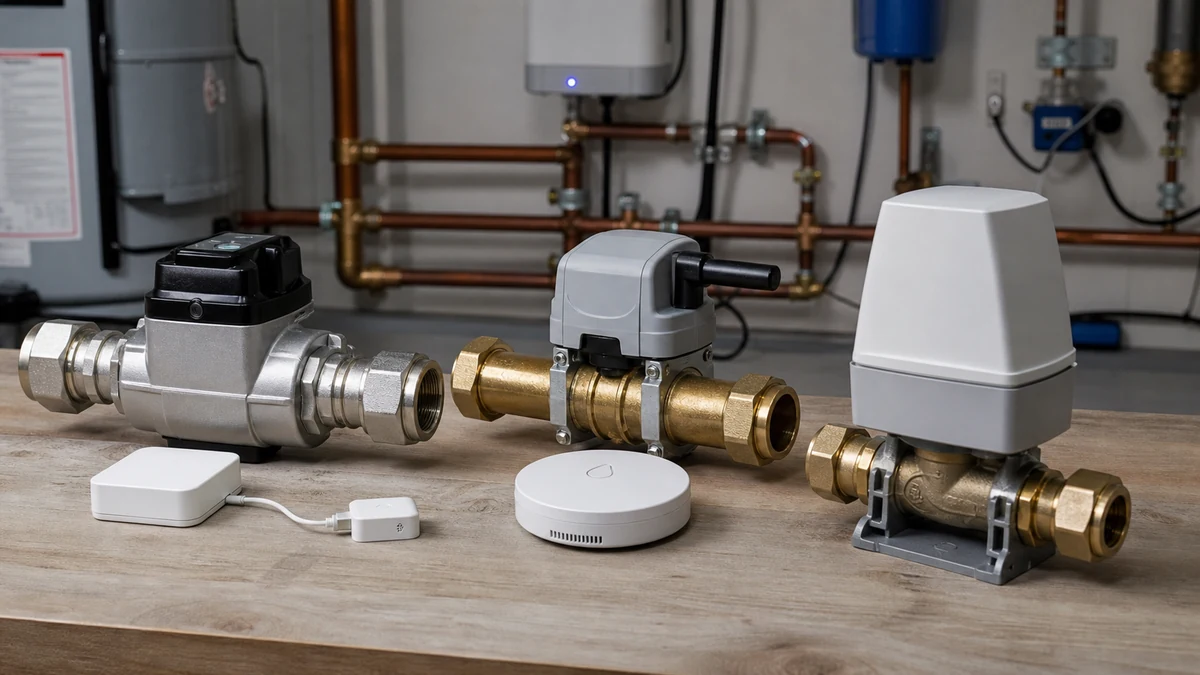
Moen Flo is the best smart water leak detector with automatic shutoff for most homeowners because it balances insurer fit, monitoring quality, and whole-home confidence. If you searched for best smart water leak detector with automatic shutoff 2026, this is the clearest starting point. Buy YoLink if DIY cost control matters most, and buy StreamLabs Control if premium monitoring detail matters more than purchase price.
How I picked these 3 shutoff systems
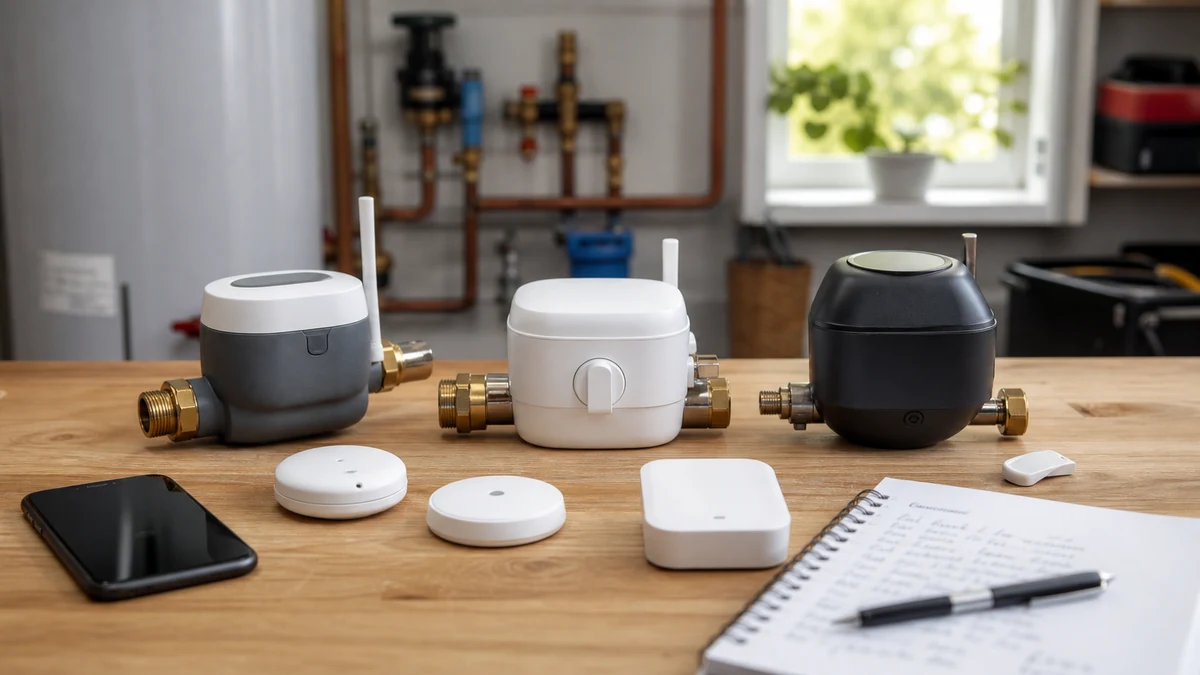
The category is crowded with sensors, app-connected alarms, and a smaller number of true automatic shutoff devices. For this guide, I filtered for systems that can actually stop water flow rather than only notify the homeowner. That immediately cuts out most of the cheap sensor-only noise and keeps the comparison honest. It also keeps the article aligned with buyers who are explicitly searching for best smart water leak detector with automatic shutoff 2026.
I then separated the remaining products by install path, because that is the decision most buyers get wrong. Some homeowners can justify a plumber and want a polished inline system. Others want a lower-cost route that attaches to an existing valve without pipe cutting. A third group is willing to pay more for richer monitoring and analytics if the long-term trust story is better.
Scoring emphasized five criteria: insurer fit, shutoff confidence, install friction, app quality, and long-term value. I also used Consumer Reports, Mercury, Nationwide, Bob Vila, and Wirecutter-style buying logic as authority context rather than relying on marketing copy alone.
Sources: Consumer Reports, Mercury, Nationwide, Bob Vila, and Wirecutter.
Full spec sheet at a glance
| Feature | Moen Flo | YoLink | StreamLabs |
|---|---|---|---|
| Best for | Best Overall | Best Budget | Best for Ultrasonic Monitoring |
| Install type | Inline main-line valve | Clamp-on actuator on existing valve | Inline shutoff with monitoring |
| Approx. price | $499 | $279.99 | $699 |
| Rating snapshot | 4.5 | 4.6 | 4.3 |
| Review volume | 4200 | 1100 | 1050 |
| Insurance story | Strong | Moderate | Strong |
| DIY friendliness | Low | High | Low |
| Monitoring depth | High | Medium | Highest |
⇆ swipe horizontally on mobile – prices last verified May 31, 2026
The 3 picks, in detail
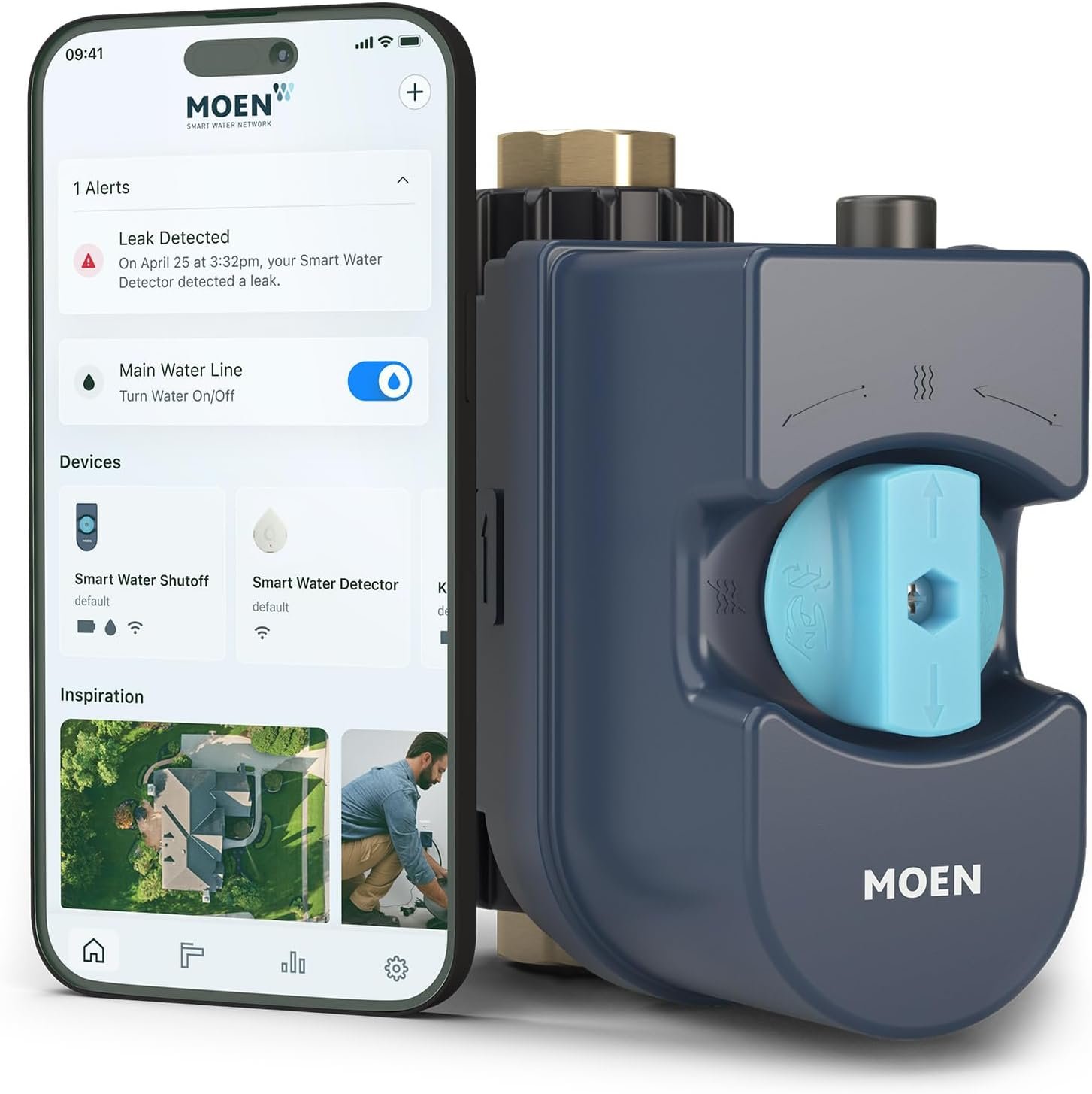
#1 – Flo by Moen 3/4-Inch Smart Water Shutoff and Whole-Home Leak Detector
Moen Flo matters because it represents one of the three practical routes homeowners are actually choosing in 2026. In this guide, I care less about whose app has the most colorful dashboard and more about whether the buyer gets a believable shutoff story, a realistic install plan, and a system they will still trust six months later.
The insurance angle changes the buying bar. A notification-only leak detector can still be useful, but it does not answer the same question as an automatic shutoff system. Once insurers, discounts, and renewal language enter the conversation, buyers need cleaner logic around what happens when water is moving and nobody is home.
That is why the best product is not automatically the cheapest or the most premium. The best product is the one that solves the right friction point. For one buyer that is plumber-installed confidence. For another it is avoiding a plumber bill by using a clamp-on actuator. For a third it is richer monitoring data across a larger home.
On pure editorial scoring, Moen Flo lands at 4.5/5 in this comparison because its tradeoffs are clear. The product makes sense for the buyer segment named above, and it becomes a weaker value only when the installation route or budget is mismatched from the start.
Another reason to compare carefully is that every product here carries a different hidden cost. One hides plumbing labor, one hides the effort of proper sensor placement, and one hides the reality that premium monitoring only pays off if the buyer actually values that detail. Hidden costs are where many smart-home purchases go sideways.
I also weigh maintenance burden. A product that is slightly less impressive on paper can still be the better recommendation if the homeowner is more likely to keep it tested, powered, and trusted over time. Reliability in ownership is worth more than elegance in a feature grid.
The right way to read this section is to imagine the first real leak. Which product gives you the cleanest response path with the least guesswork? That scenario is more important than marketing phrases about intelligence, analytics, or platform integrations.
A useful buyer scenario for Moen Flo is the homeowner who can already picture the weak point in the house. Maybe it is a laundry-room hose, a water heater corner, or a finished basement utility space. The product only makes sense if it reduces the buyer’s anxiety about that exact zone instead of adding a second layer of technical uncertainty.
I also compare failure modes, not just happy-path promises. If Wi-Fi drops, if a sensor battery weakens, if a spouse ignores app notifications, or if the main valve is awkwardly placed, how much confidence is left? That is the type of question that separates a reassuring purchase from a performative one.
This is where editorial rankings usually become more useful than marketplace filters. Marketplace filters can sort by stars and price, but they do not tell a buyer whether the hardware category itself is wrong for the home. The wrong category choice creates more regret than buying the second-best product in the right category.
In short, Moen Flo should be judged by fit before flair. Buyers who match the product to the right install and risk story tend to be satisfied. Buyers who mismatch that story often feel like the system is disappointing, when the deeper issue is that they bought the wrong kind of answer.
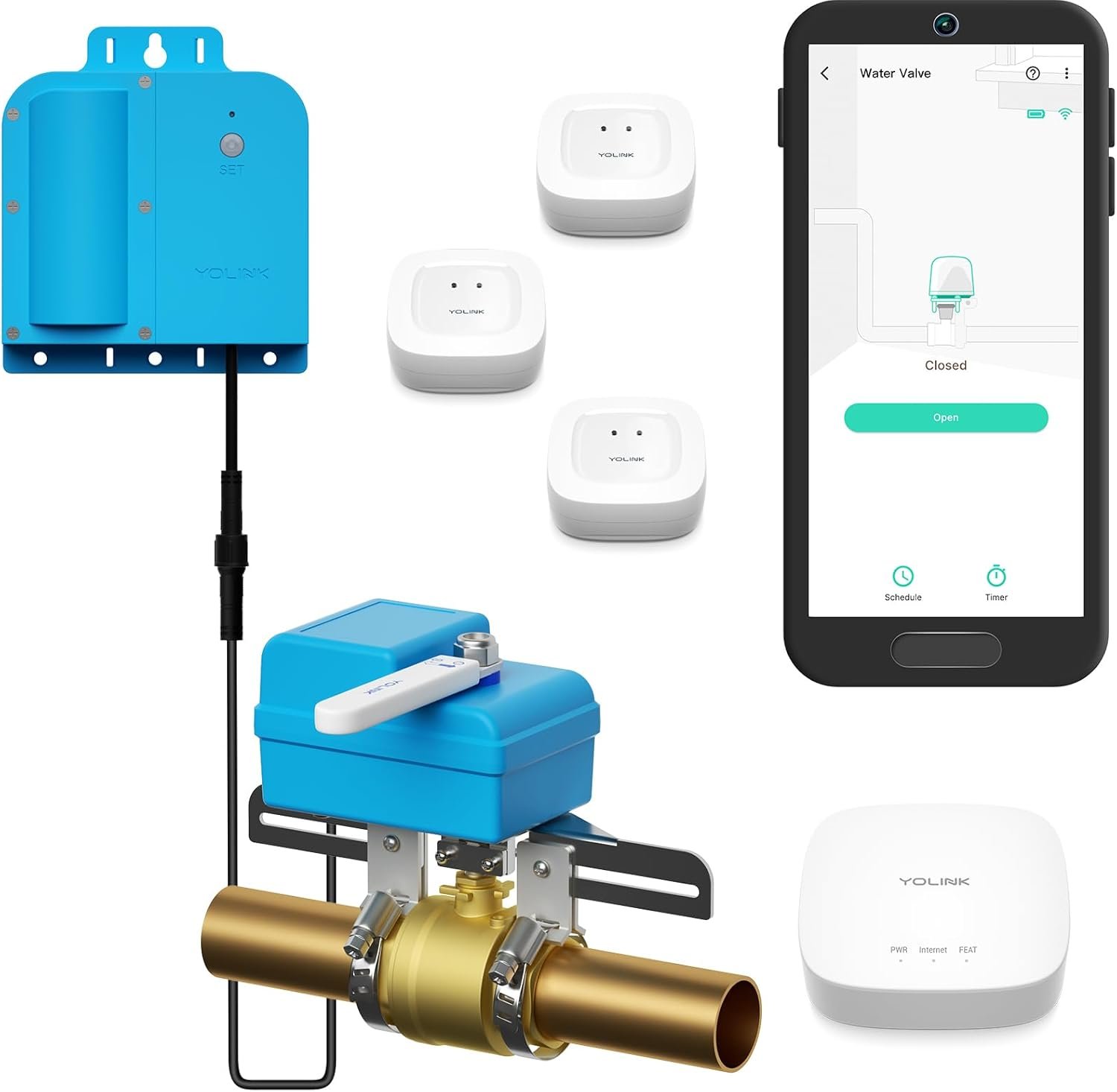
#2 – YoLink Automatic Water Leak Detection and Shut-Off Starter Kit

#3 – StreamLabs Control Smart Water Shutoff
“When water is flooding your home, the clock is ticking. The ability to stop that immediately is a big advantage.”
How smart water leak detectors work
A smart water leak system has two jobs: notice water where it should not be, and ideally do something about it. The simplest devices are spot sensors, small pucks you place on the floor near a water heater, under a sink, behind a toilet, or by a washing machine. When the contacts touch water they trigger an alert to your phone. They are inexpensive, easy to place, and great for early warning, but on their own they only tell you a leak is happening.
The more capable systems add an automatic shutoff valve on your main water line. When a leak is detected, or when the system sees an abnormal flow pattern, it can close the valve and stop water before a slow drip becomes a flooded room. Some units also monitor water pressure and flow continuously, learning your normal usage so they can flag a running toilet, a burst pipe, or a hose left on. That shift from notify-only to notify-and-act is the single biggest difference between budget and premium options.
Connectivity matters because a leak alert is useless if it never reaches you. Most systems use home Wi-Fi, while some use a low-power radio hub for better range to far corners and basements. Either way, confirm the device reaches the spot you need to protect and that you will actually get the notification when you are away from home, since the away-from-home case is exactly when leaks do the most damage.
Spot sensors vs automatic shutoff
Choosing between a simple sensor kit and a full shutoff system comes down to what failure you are guarding against. If your worry is a known trouble spot, such as an aging water heater or a finished basement, a few well-placed spot sensors give you fast warning at low cost. They are renter-friendly, need no plumbing work, and you can add more pucks over time as you find new risk areas.
If your worry is catastrophic loss while nobody is home, an automatic shutoff system is the stronger answer. It does not just tell you about the leak; it closes the valve so the damage stops even if you are traveling or asleep. That protection is most valuable for homeowners with a slab, multiple bathrooms, or a history of plumbing issues, and it is the configuration insurers tend to reward. The tradeoff is a higher price and, for inline valves, a more involved install.
Many buyers land on a hybrid: a shutoff valve on the main line for whole-home protection, plus a handful of cheap spot sensors at the highest-risk fixtures so the system reacts quickly to a localized leak. Reading the comparison through the lens of your first real leak, which product gives you a believable shutoff story and a realistic install plan, is the fastest way to the right pick.
What to check before you buy
First, match the install to your skills and your home. An inline shutoff valve usually wants a clear section of main pipe and, for many people, a plumber for the initial fit, while clamp-style or sensor-only options are far more DIY-friendly. Measure your pipe and look at the space around your shutoff before assuming a given system will fit.
Second, plan for power and connectivity over the long term. Battery sensors are convenient but need occasional battery checks, and a valve controller needs reliable power and a stable connection to be worth anything. Confirm whether the system keeps protecting you during a Wi-Fi outage, and whether critical functions depend on a paid subscription.
Third, weigh the insurance angle honestly. A notification-only detector can still be useful, but it does not answer the question that matters when you are away, which is whether the water actually gets shut off. Many insurers offer a discount for a monitored automatic shutoff, so it is worth asking your provider what qualifies before you choose, since the right paperwork can offset part of the cost.
Finally, plan to test the system after install rather than trusting it blindly. Trigger a sensor with a damp cloth, confirm the alert reaches your phone, and if you have a shutoff valve, watch it actually close once so you know the whole chain works. Set a reminder to repeat that check a couple of times a year and to refresh sensor batteries, because a leak system is only worth its price on the day it has to perform.
Which one should you buy?
Frequently Asked Questions
Do I need an automatic shutoff or just sensors?
If the main goal is reducing whole-home damage risk, automatic shutoff is the stronger answer because it can act instead of only notify.
Can I install these without a plumber?
Clamp-on kits are far more DIY-friendly. Inline valves are usually better treated as plumbing work.
Will this satisfy my insurer?
Possibly, but you need to confirm your insurer’s exact requirement or approved-device language.
Which pick is best for most homes?
Moen Flo is the best overall pick in this guide because it balances insurer fit, whole-home confidence, and app maturity.
The short version is that most households should not try to solve every water-risk scenario with the cheapest possible sensor. Buyers should start with the consequence they are trying to avoid, then choose the install style that actually gets them to automatic shutoff. That is the logic behind the ranking in this comparison.
For some homes, that means paying a plumber once and moving on. For other homes, that means using a clamp-on shutoff kit because the best system is the one that gets installed this month, not the one that stays in the cart while the homeowner debates labor costs.
How the 3 routes compare in real life
An inline premium system usually wins on finished feel, insurer signaling, and whole-home confidence, but it asks more from the buyer on install day. That route fits homeowners who already accept that some problems are worth solving with a cleaner permanent install instead of a cheaper workaround.
A clamp-on shutoff kit wins when urgency and practicality matter more than polish. If the buyer’s real blocker is plumber cost or the hassle of cutting pipe, a clamp-on actuator can be the difference between deploying real shutoff protection this month and postponing the purchase indefinitely.
A premium monitoring-first system earns its place when the buyer wants more insight, more data, or simply prefers a higher-end approach to whole-home protection. That route is harder to justify if the household only wanted the cheapest possible way to stop a leak. It is easier to justify if the buyer already treats water risk as a serious property-protection issue.
This is why the ranking is not just about hardware quality. It is about the relationship between buyer intent and install reality. The best hardware in abstract terms is not always the best purchase in practical terms.
When people ask which product I would choose with my own money, the honest answer is that I would first choose my install route. That route determines the category, and the category determines which product can win. Skipping that step is how shoppers end up comparing unlike alternatives and feeling confused by the results.
The strongest buying discipline in this category is to imagine the first 2 a.m. leak alert. Which product gives the household the clearest, quickest, most believable response? That thought experiment usually points buyers toward the right pick faster than another round of feature-grid scrolling.
Budget sequencing matters too
Another practical point is budget sequencing. Some buyers can afford the premium system but not the plumber visit this month. Others can afford the labor but do not actually need the richest analytics package. Sequencing the spend in the right order can matter just as much as choosing the right product name.
That is part of why the budget pick in a category like this should not be treated as second-rate by default. Sometimes the best budget pick is the only route that turns good intentions into an installed, working shutoff system quickly. In risk products, working now often beats theoretically better later.
The reverse is also true. A premium buyer who already knows they want a cleaner insurer-friendly install should not force themselves into the cheapest route just because it looks efficient on paper. If the result is lower confidence and a muddier ownership story, the cheaper purchase can become the weaker value.
This comparison is built to help buyers avoid both mistakes: overbuying the wrong route and underbuying the wrong promise. Once the route is clear, the winner usually becomes obvious.
Seen that way, the ranking is less about chasing the fanciest product and more about matching the right kind of protection to the right kind of home. That is what separates a smart purchase from a merely expensive one.
If you are still torn after reading this far, return to the three routes: polished inline confidence, DIY clamp-on practicality, or premium monitoring depth. Most indecision disappears once buyers admit which route they actually want to live with.
Moen Flo
Moen Flo wins because it gives most homeowners the cleanest mix of shutoff confidence, insurer-friendly framing, and mature whole-home monitoring.
As an Amazon Associate, I earn from qualifying purchases. Prices, ratings, and availability accurate as of May 31, 2026 and subject to change.