

Disclosure: ReviewGuid may earn from qualifying purchases through links in related reviews. This maintenance guide is written to help readers use fountains safely and consistently.
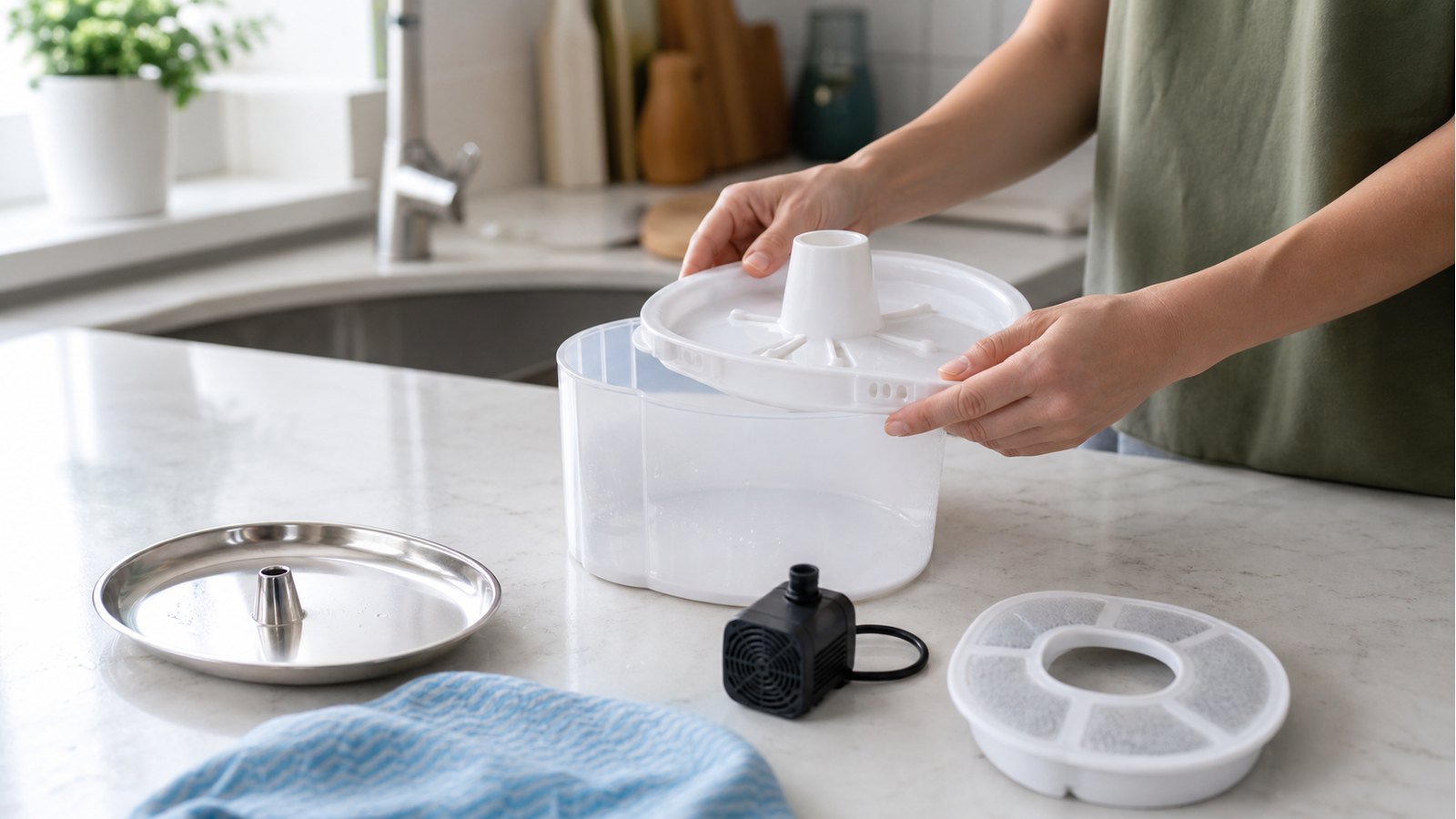
The Weekly Cleaning Rhythm That Actually Works
The biggest mistake with cat water fountains is assuming moving water stays clean by itself. Moving water can help cats notice the station, but it still collects hair, dust, food crumbs, and mineral residue. A realistic cleaning schedule is simple: quick rinse several times per week, full disassembly weekly, and filter replacement according to the exact model.
If you are still choosing a model, start with our Best Cat Water Fountain 2026 comparison. It links to PETLIBRO, Veken, and PETKIT reviews, each with different maintenance tradeoffs.
Quick rinse target
Deep clean target
Pump inspection rhythm
Filter timing varies
Filters Help, But They Do Not Replace Cleaning
Replacement filters are useful, especially for hair and odor control, but they are not a substitute for cleaning the bowl and pump. Before buying a fountain, check whether replacement filters are easy to find. If the filter listing is confusing, the owner experience will be annoying later.
Do Not Ignore The Pump
The pump is where many fountains fail first. Hair and mineral buildup can reduce flow, increase noise, and make the fountain less appealing to the cat. During weekly cleaning, remove the pump cover if the manufacturer allows it and rinse the impeller area gently.
| Part | Fast Clean | Deep Clean |
|---|---|---|
| Bowl/tray | Rinse and wipe | Wash with mild soap |
| Reservoir | Refresh water | Wash inside corners |
| Pump | Check flow | Remove hair and residue |
| Filter | Inspect color/odor | Replace on schedule |
Stainless Steel vs Plastic Maintenance
Stainless steel is popular because it feels sturdier and can be easier to wipe clean. Plastic can still work well, especially in compact smart fountains, but scratches and odor are worth watching. Our cat water fountain trend report explains why owners are comparing smart features and cleaning materials more closely in 2026.
Frequently Asked Questions
How often should a cat water fountain be cleaned?
Most fountains should be rinsed and wiped several times per week, with a deeper clean at least weekly.
Do filters replace cleaning?
No. Filters help with debris and odor, but the bowl, pump, and reservoir still need regular cleaning.
Is stainless steel easier to clean than plastic?
Often yes, because stainless surfaces are less prone to scratches and can show residue more clearly.
Should the old water bowl stay out?
Yes. Keep the old bowl available while a cat adjusts to the new fountain.
Sources checked: ReviewGuid cat fountain reviews, brand cleaning instructions, Cornell Feline Health Center, and VCA Animal Hospitals hydration guidance.