

Disclosure: As an Amazon Associate, I earn from qualifying purchases. This article contains affiliate links at no additional cost to you. – Maya Bennett
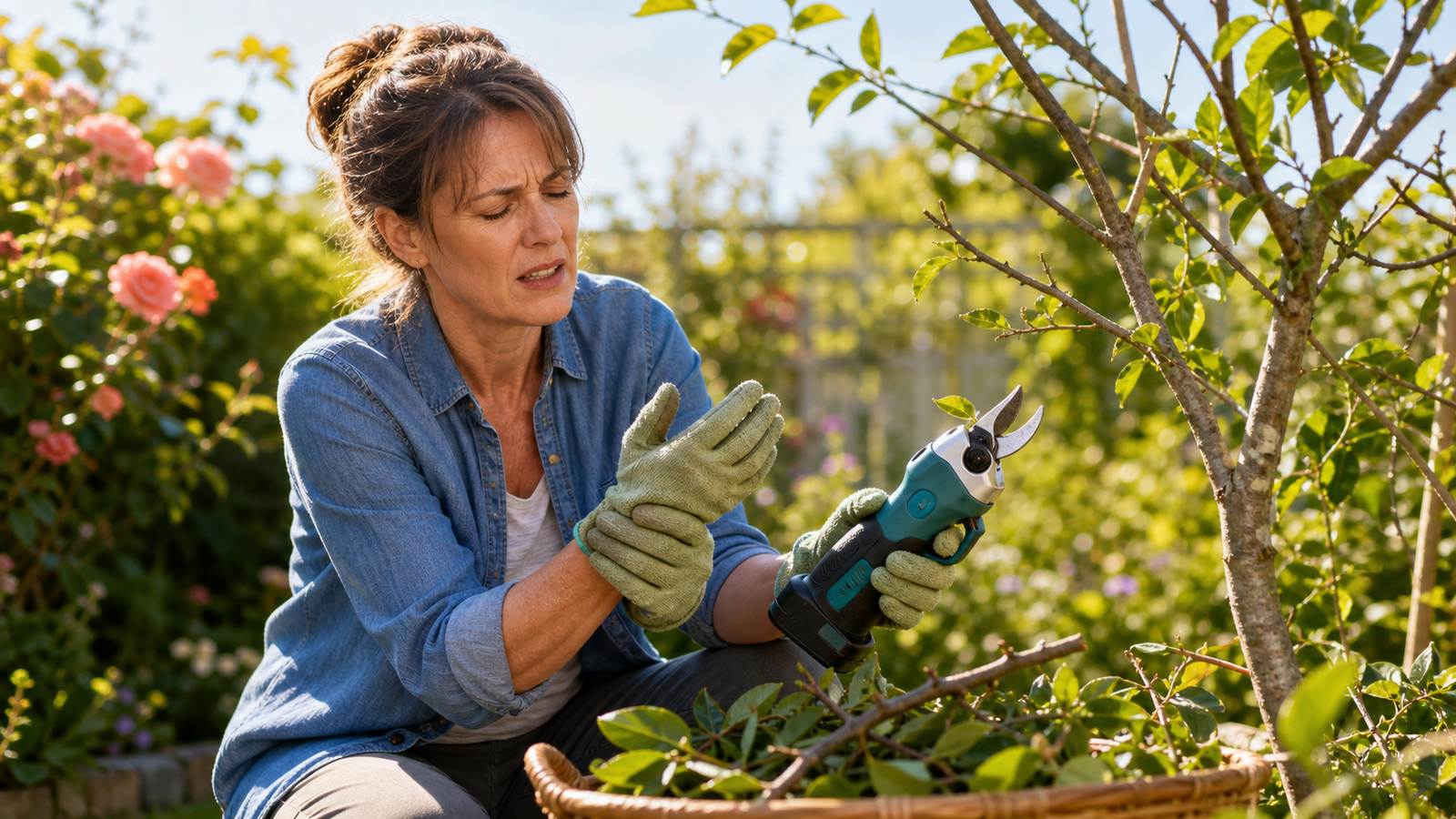
Cordless pruning shears are moving from commercial orchards into ordinary home gardens because the pain point is easy to understand: pruning is repetitive, and repeated squeezing wears out hands before the job is finished. The 2026 shopping trend is not about replacing every manual pruner. It is about homeowners with roses, hedges, berry canes, fruit trees, and mature shrubs deciding that spring cleanup should not feel like a grip-strength contest.
That shift shows up in current electric secateur coverage and in the way shoppers compare tool ecosystems. Gardeners are looking for the same thing they already expect from drills and string trimmers: a battery platform that turns a tiring task into a controlled trigger pull. Our full buying guide is here: best cordless pruning shears 2026.
Why This Category Is Heating Up
The first driver is hand fatigue. Anyone who has cleaned up a row of roses or a neglected hydrangea hedge knows that the last fifty cuts are rarely as clean as the first fifty. Fatigue changes grip, and weaker grip changes cut quality. A powered pruner keeps the cutting motion consistent, which is why the category appeals to older gardeners, people with limited hand strength, and homeowners tackling a larger yard than they had a few years ago.
The second driver is battery familiarity. Homeowners who already own cordless drills, blowers, and trimmers are comfortable with bare tools. They understand that one battery platform can lower the practical cost of a new tool. That is why DEWALT, WORX, and RYOBI are natural comparison points: each one speaks to a different existing battery drawer.
The third driver is plant health. Extension guidance repeatedly emphasizes clean cuts and appropriate tools. Powered shears do not remove the need for judgment, but they can help maintain a clean cutting motion on material within their rated capacity. The best use case is high-volume, moderate-diameter pruning, not forcing a hand tool through branches that call for loppers or a saw.
The Practical Buying Question
The key question is not simply which cordless pruning shear is strongest. It is which model matches your plants, your hand strength, and the batteries you already own. A gardener pruning a few annuals does not need a powered shear. A gardener maintaining roses, fruit trees, woody ornamentals, and seasonal cleanup piles may feel the difference after the first hour.
For this cluster I selected three roles: DEWALT as the best overall pick, WORX as the budget choice, and RYOBI as the ecosystem pick for ONE+ owners. Those roles avoid a fake one-size-fits-all winner and make the comparison more useful for actual shoppers.
What To Check Before Buying
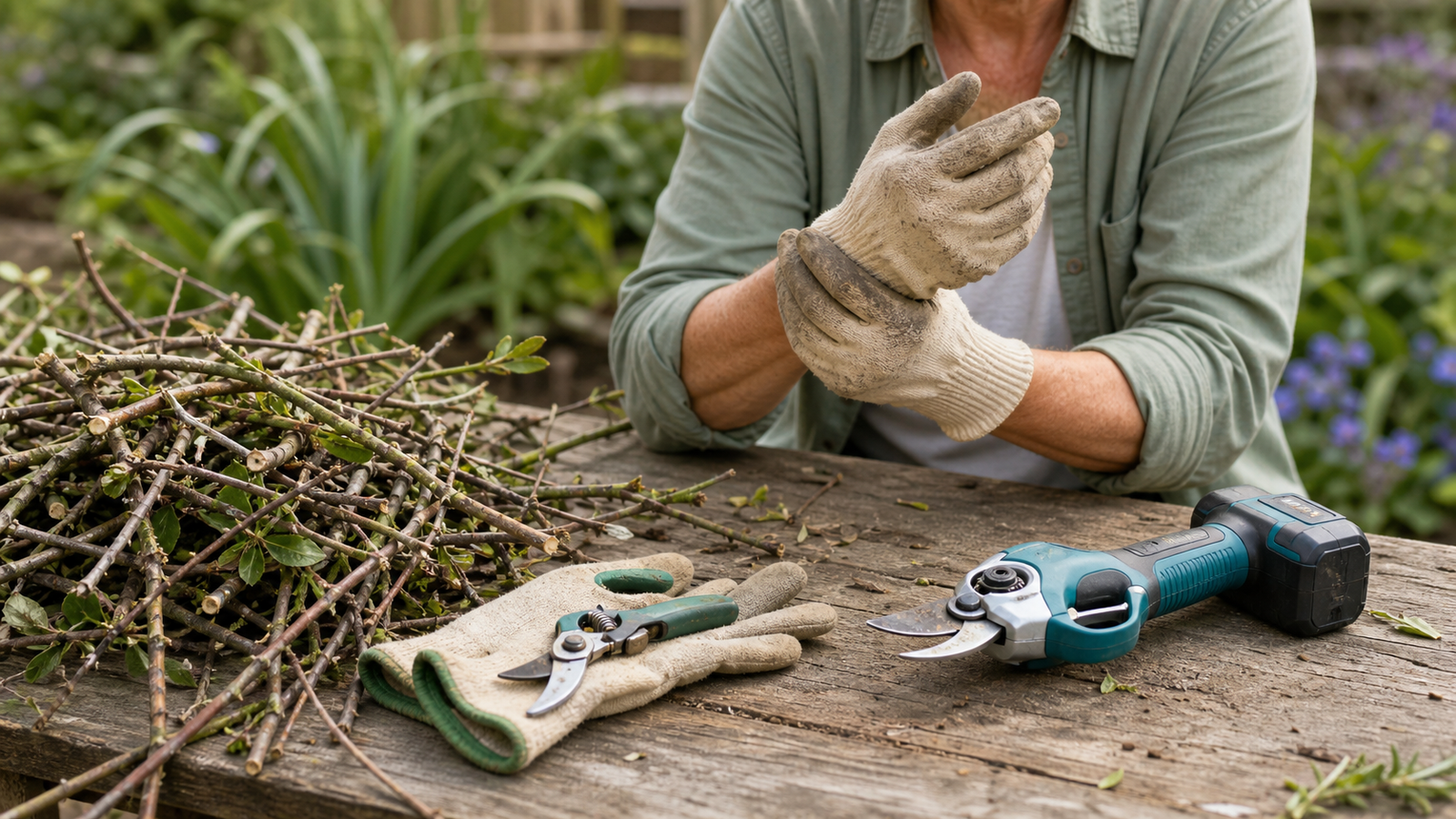
- Confirm the maximum branch diameter and treat it as a practical ceiling, not a challenge.
- Check whether the listing includes a battery and charger.
- Look for a safety lock, predictable trigger behavior, and a blade cover.
- Plan to clean sap from blades and keep the edge sharp.
- Keep manual bypass pruners nearby for delicate shaping cuts.
Expert Guidance
UNH Extension warns that dull pruning tools can crush or tear plant tissue and raise disease risk. That guidance is the guardrail for this category: powered cuts are only useful when the blade is sharp, clean, and matched to the stem. A cordless pruner should make good pruning easier, not encourage careless cuts.
Which Shoppers Benefit Most
The best candidate is a gardener who already owns several shrubs or small trees and dreads the repetitive squeeze of manual shears. The second-best candidate is a household with one dominant battery platform, because the bare-tool price becomes much easier to justify. The third candidate is someone recovering from hand strain who still wants to maintain a garden without outsourcing every seasonal cleanup.
There are also shoppers who should skip the category. If your work is mostly deadheading flowers or making precise shaping cuts on soft growth, a quality bypass pruner remains cheaper, lighter, and more tactile. If your work is mostly thick branches, a lopper or compact pruning saw is safer and more appropriate.
The deeper comparison, including the three product roles and review links, is in the cordless pruning shears buying guide.
Bottom Line
Cordless pruning shears are trending because they solve a real seasonal problem: repeated cutting can wear out hands, slow cleanup, and reduce cut quality. The winning model depends less on marketing specs and more on branch diameter, safety controls, and battery ownership. For most shoppers, the right shortlist starts with DEWALT for overall strength, WORX for value, and RYOBI for existing ONE+ owners.
The buying discipline is to match the tool to the plant. Use cordless pruning shears for repeated moderate cuts, manual bypass pruners for delicate shaping, loppers for thicker branches, and a saw when the cut is no longer a shear job. That simple boundary keeps the purchase useful and keeps the garden healthier.