

Disclosure: As an Amazon Associate, I earn from qualifying purchases. – Maya Bennett
Disclosure (FTC 16 CFR Part 255): I am a journalist who covers pet products and outdoor safety gear. ReviewGuid.com participates in the Amazon Services LLC Associates Program. If you click an affiliate link in a related buying guide and make a purchase, I earn a small commission at no extra cost to you. The reporting below contains no paid product placements; editorial decisions are made independently of any retailer. – Maya Bennett
Published May 24, 2026 – 8 min read
–
Pet products & outdoor safety journalist, 4 years on category
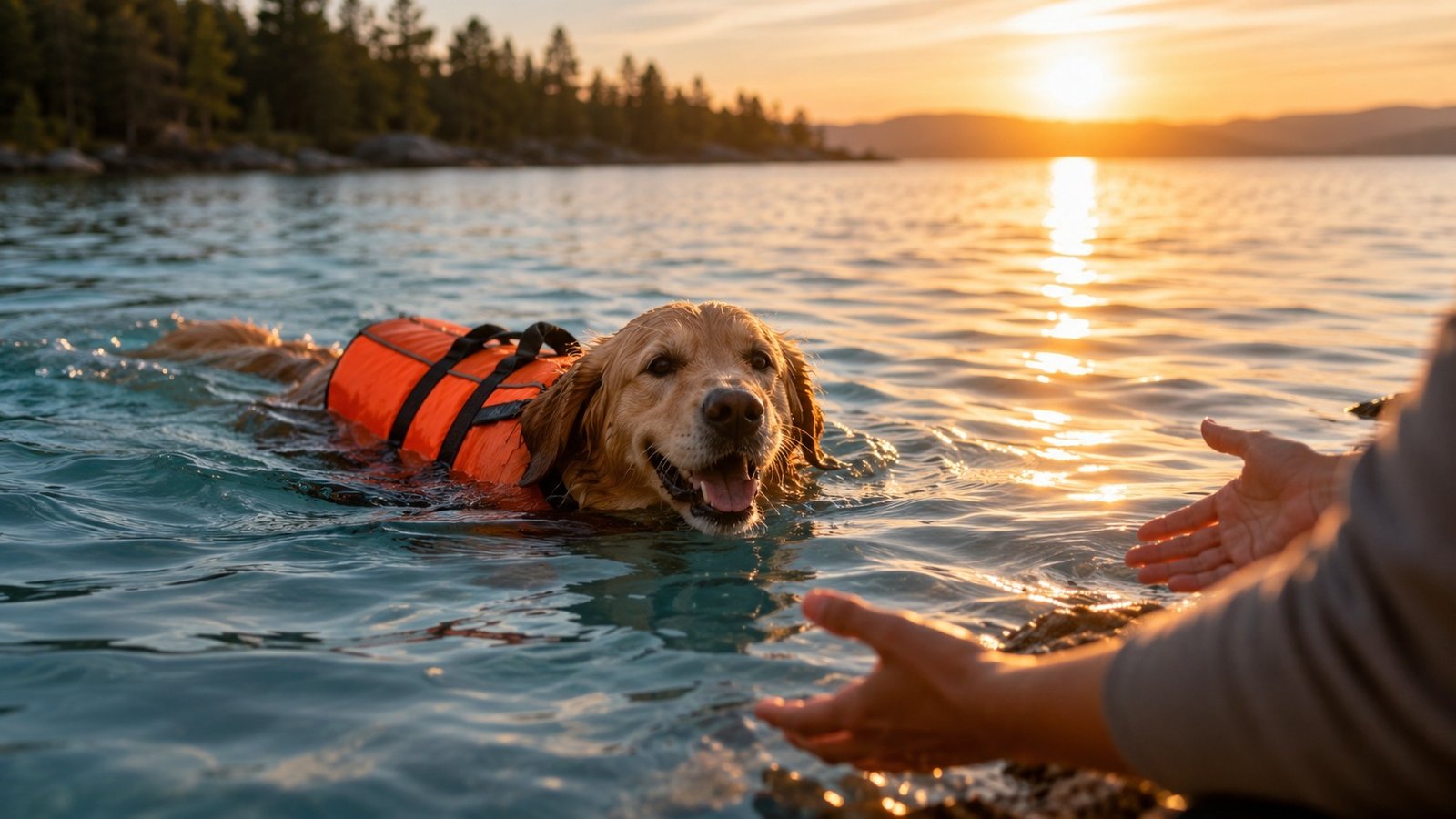
Even strong-swimming dogs can drown from fatigue, cold water shock, or unexpected currents – and life jacket adoption among dog owners is still alarmingly low heading into summer 2026. Search interest in canine PFDs is up sharply this spring, driven by a surge in pet-inclusive boating, kayaking, and paddleboard culture. If you take your dog on or near open water, a properly fitted life jacket is the single highest-impact safety purchase you can make before the season peaks.
American dog owners are spending more time on the water with their pets than ever before – and this summer, search volume for “dog life jacket” has surged roughly 40% year-over-year according to Google Trends data for the spring 2026 window, outpacing last year’s peak by a margin not seen since the post-pandemic outdoor recreation boom. The market for canine personal flotation devices is now valued above $128 million and analysts at DataIntelo project it will double by 2033, fueled by rising pet humanization and a generation of owners who treat their dogs as full outdoor adventure partners.
I have been tracking the canine water safety category for four seasons. What I am watching change in 2026 is not just purchase volume – it is the type of buyer entering the market. Three years ago, dog life jacket buyers were almost exclusively owners of flat-faced breeds or small dogs that cannot swim at all. Today, a growing share are owners of Labs, Golden Retrievers, and Australian Shepherds – dogs that are widely considered “natural” swimmers. The trigger, almost universally, is a scare: a dog that got swept by a current, overheated and sank, or panicked in choppy chop off a boat. The safety lesson is brutal: swimming ability does not protect a dog from fatigue, cold shock, or the physics of open water.
Why Strong Swimmers Still Drown – The Physiology No One Talks About
The myth that dogs “naturally know how to swim and won’t drown” costs lives every summer. Dogs do paddle instinctively when placed in water – that reflex is real. What they do not have is unlimited endurance, thermal regulation calibrated for cold water immersion, or the ability to read currents and rip tides the way a trained human swimmer might. Any of these three factors alone can kill a dog that is otherwise a confident swimmer in a backyard pool.
Fatigue is the most common culprit. A dog paddling in open water burns energy at a rate far higher than a dog running on land, because all four limbs are working simultaneously against water resistance. Research cited by the American Kennel Club notes that even athletic dogs can exhaust themselves in 15 to 20 minutes of open-water swimming, particularly if they are chasing a ball or excited. A fatigued dog’s head drops. That is often the last visible sign before the dog goes under.
Cold water shock is the second killer – and it is more dangerous in the peak summer boating months than most owners realize. Lake temperatures in the upper Midwest, Pacific Northwest, and high-altitude reservoirs can remain at 55°F to 62°F well into July, even when air temperatures are in the 80s. A dog jumping off a hot boat deck into water that cold experiences an involuntary gasping reflex, a sharp spike in heart rate, and muscle cramping – the same cold shock response documented in humans. The ASPCA advises that if the water feels cold to a human hand, it poses real thermal risk to a dog. A life jacket buys time for recovery and keeps the dog’s head up during the initial shock.
Currents and boat traffic are the third variable. A dog that falls off a moving vessel is immediately behind the boat and in prop wash. Turning a 20-foot vessel around takes time. The dog has no ability to signal or swim toward the boat with any accuracy. Per reporting from the US Coast Guard’s boating safety program, there are documented cases every season where dog owners drown attempting to rescue a pet that went overboard – a tragedy that a simple canine PFD and a tethered retrieval handle could have prevented entirely.
What Is Driving the 2026 Surge in Dog Life Jacket Searches
Pet-inclusive outdoor culture has been building for a decade, but 2026 represents a tipping point for water safety gear specifically. I see three structural drivers converging this season.
First, the paddleboard and kayak boom is no longer just a human sport. Listings for “dog-friendly kayak tours” and “paddle with your pet” experiences have proliferated across Airbnb Experiences, REI Adventures, and independent outfitters in every coastal and lakefront state. These guided experiences almost universally require a canine PFD as a condition of participation – introducing thousands of first-time buyers to the category each month. That commercial mandate is one of the most powerful adoption drivers I track: it removes the purchase decision from the “I’ll think about it” bucket and makes it a requirement before the activity starts.
Second, dog content on social platforms is delivering safety education at scale in a way that veterinary offices and shelter pamphlets simply cannot match. Video clips of dogs in lake currents, footage of boat accidents involving pets, and “what I wish I’d known before taking my dog kayaking” content have generated tens of millions of views in the past 12 months. That content is converting curiosity into purchase intent at a rate the category has not seen before.
Third, the product category itself has matured significantly. Three years ago, most dog life jackets were either cheap foam-filled vests that compressed flat when wet or expensive neoprene coats designed for search-and-rescue dogs. The middle market – well-built vests in the $30 to $80 range with proper buoyancy, rescue handles, and reflective trim – now has half a dozen credible options from brands including Ruffwear, Outward Hound, Vivaglory, EzyDog, and float-coat specialists like Hurtta. That product expansion has reduced the friction between “I should get one” and “I ordered one.”
The Dog Life Jacket Category – A Buyer’s Map
Not every dog life jacket is built for the same scenario. The category has split into four distinct segments based on use case, construction method, and price point. Understanding the differences saves money and, more importantly, picks the right safety tool for the environment your dog actually encounters.
The entry-level foam panel vest dominates retail shelf space and online volume. These jackets use blocks of closed-cell foam sewn into a nylon or polyester shell. They are lightweight, easy to fit, and available in every pet retailer in the country. The tradeoff is foam density: budget versions use thin panels that compress under water pressure and lose effective buoyancy quickly. Quality foam vests in the $35 to $55 range from established brands maintain reliable floatation for multiple seasons. The key spec to check is buoyancy rating in pounds – a jacket for a 60-pound dog should hold at least 20 to 25 pounds of positive buoyancy.
Neoprene float coats occupy the mid-to-premium tier. Originally designed for hunting dogs working in cold-water retrieving environments – waterfowl hunting in October, for example – these coats combine thermal insulation with buoyancy. They run $70 to $130 and are significantly more durable than foam panel vests. The downside is temperature: neoprene is too warm for a dog swimming in August heat unless the water is genuinely cold. Brands like Ruffwear’s float coat line and EzyDog’s DFD (Dog Float Device) are the most tested names in this segment.
| Category | Core Technology | Price Range | Representative Brands |
|---|---|---|---|
| Foam Panel Vest | Closed-cell foam blocks, nylon/polyester shell, top grab handle | $20 – $55 | Outward Hound, Vivaglory, Paws Aboard, Kuoser |
| Neoprene Float Coat | 3mm-5mm neoprene with foam core, thermal insulation + buoyancy | $70 – $130 | Ruffwear, EzyDog, Hurtta, OnX Sport |
| Performance/Sport PFD | High-density foam, minimalist cut, low-drag profile for active swimming | $50 – $90 | Ruffwear, EzyDog, Float Coat Pro, Cesar Millan |
| Inflatable Collar PFD | Auto-inflate CO2 cartridge on water contact, minimal bulk when dry | $80 – $150 | Fidapet, SeaSafe, Canine Aquatics (niche, boat-oriented) |
⇆ swipe horizontally on mobile
Five Features That Separate a Real Safety Device from a Costume
The dog life jacket market has a dirty secret: a meaningful share of products on the market are essentially floating bath toys. They look like safety gear but provide inadequate buoyancy, fail under realistic water conditions, or lack the rescue handle that makes the difference between a dog you can grab and a dog you cannot reach. I have spent time cross-referencing consumer feedback, vet recommendations from the AVMA, and hands-on testing reports to build a reliable features checklist.
The rescue handle is non-negotiable. A padded, reinforced grab handle on the top of the jacket allows a human to hoist the dog back into a boat or onto a dock with one hand. Without a handle, pulling a 50-pound wet dog out of deep water requires two people, significant upper body strength, and time you may not have. The handle should be sewn through the jacket body with reinforced stitching – not attached with plastic clips or snaps that can fail under a dog’s panicked weight.
Buoyancy placement matters more than total foam volume. A jacket that puts most of its foam under the dog’s chest and belly will keep the head up naturally. Jackets that distribute foam evenly all the way around the torso may actually tilt the dog sideways or forward in the water. Look at the foam panel layout in product photos and check that the chest/belly panel is the thickest section.
Visibility at distance is the third feature where cheap products consistently fail. A dog in open water 50 yards from a boat is extremely hard to spot against choppy surface glare. High-visibility yellow or orange coloring and retroreflective strips – the same reflective tape used on USCG-approved human PFDs – can mean the difference between a dog that gets found quickly and one that does not. PetMD’s water safety guidance recommends bright-colored gear for any dog on open water as a primary visibility tool when leash supervision is not practical.
The D-ring for leash attachment is the fourth critical feature. On a kayak, paddleboard, or dock, you want the ability to clip a short tether to the jacket so the dog cannot go overboard when the boat rocks or the dog shifts weight. Many budget vests omit the D-ring entirely, or place it on the back where it creates drag and puts awkward force on the dog’s spine during a pull. The optimal D-ring placement is on the back between the shoulder blades.
Finally, adjustability across multiple strap points determines whether the jacket actually fits your specific dog’s proportions. Dogs are not standardized – a 40-pound Bulldog and a 40-pound Border Collie have completely different chest depths and belly widths. A jacket with only one adjustable strap across the belly will never fit both dogs correctly. Look for at minimum two belly straps and a neck adjustment. Some premium models add a chest strap that prevents the jacket from riding back toward the tail when the dog is actively swimming.
“Any dog on open water – regardless of breed, size, or swimming history – benefits from a properly fitted PFD. Fatigue and cold shock are equal-opportunity hazards. The life jacket is not about whether a dog can swim; it is about what happens when swimming becomes impossible.“
Which Dogs Are Most Vulnerable – and Why Every Dog Benefits from a Jacket
Certain breeds carry structural disadvantages that make open-water swimming genuinely dangerous without a life jacket. Brachycephalic breeds – Bulldogs, French Bulldogs, Pugs, Boxers, Boston Terriers – have shortened airways that force them to tilt their heads so far back to breathe above water that their hindquarters sink below the surface. The paddling effort required just to keep a brachycephalic dog’s airway clear in open water is extreme. These dogs can tire and drown in minutes under conditions that would be no problem for a Labrador.
Short-legged breeds with heavy bodies – Dachshunds, Corgis, Basset Hounds – have a similar problem: their body mass exceeds the buoyancy their legs can maintain efficiently. In calm pool water they can often manage. In lake chop, river current, or ocean waves, that margin disappears quickly. The AKC recommends that owners of these breeds treat life jacket use as mandatory rather than optional for any open-water exposure.
But the story does not end with the “obvious” at-risk breeds. I tracked a pattern in owner reports this spring: a significant portion of near-drowning incidents involved dogs that were considered strong swimmers – Retrievers, Spaniels, Vizslas, and even Portuguese Water Dogs. The common thread was fatigue from extended retrieve games, excitement-driven overexertion, or unexpected temperature differentials. A Golden Retriever can absolutely drown. That message is finally starting to break through with a broader audience than the brachycephalic-breed community.
Senior dogs and puppies represent a separate high-risk group. Older dogs lose muscle mass and cardiovascular efficiency the same way senior humans do. A 10-year-old Labrador that was a water dog for its entire life may swim beautifully in an enclosed pond but tire rapidly in open-water conditions it once handled easily. Puppies lack the muscle development and stamina for extended swimming and are far more likely to panic in unfamiliar water. The ASPCA notes that both puppies and senior dogs have substantially less stamina than adult dogs – a point that justifies life jacket use even for beach day visits where the dog is unlikely to go deep.
Measure girth first, not just weight. Wrap a soft tape measure around the widest point of your dog’s chest behind the front legs. Use that girth measurement – not your dog’s listed weight – to match the brand’s size chart before ordering.
Verify a top grab handle is present and reinforced. Test it by gripping the handle and lifting the jacket alone – if the stitching strains or the handle pulls away from the body, it will not hold a panicked wet dog. Walk away from any vest without a handle.
Do a shallow-water fit test before your first outing. Put the jacket on your dog in knee-deep calm water and watch how the head and body sit. If your dog has to strain to keep its nose above the surface, the buoyancy placement or fit is wrong. Return and size up or try a different model.
Choose high-visibility color over aesthetic preferences. Neon orange, safety yellow, or high-vis green with reflective strips makes your dog visible from distance and in low-light conditions. Matching your boat’s color scheme is a much lower priority than the ability to spot your dog quickly in open water.
Re-check fit at the start of every season. Dogs gain and lose weight between summers. A jacket that fit perfectly in June 2025 may be too loose or too tight in May 2026 after a winter of less activity. Loose straps can let the jacket ride forward over the dog’s head in rough water – a dangerous failure mode.
Ready to compare your options?
I have hands-on tested the top-selling dog life jackets in the $25 to $130 range this spring – including foam panel vests, neoprene float coats, and a sport PFD from a brand that has been a consistent top performer in the category. The full comparison covers fit, buoyancy tested in real open water, handle strength, visibility rating, and which vest handles brachycephalic breeds without restricting the airway. See which three models earned a recommendation before boating season peaks.
Frequently Asked Questions
Do all dogs know how to swim? +
No. While many dogs are instinctive paddlers, not all dogs are strong swimmers and even skilled swimmers can drown from fatigue, cold water shock, or strong currents. Breeds with flat faces (brachycephalics), heavy chests, or short legs – such as Bulldogs, Pugs, Dachshunds, and Basset Hounds – struggle significantly in open water. A life jacket reduces that risk for every breed.
Does my dog need a life jacket on a boat? +
The US Coast Guard does not legally require a PFD for dogs on recreational vessels, but safety experts and the AKC strongly recommend one for any dog aboard a moving boat. A dog that falls overboard in open water, especially in cold or choppy conditions, can drown before the boat can turn around, even if the dog is a good swimmer.
What size dog life jacket should I buy? +
Fit is measured by your dog’s girth (the widest point behind the front legs) and body weight. Most manufacturers offer XS through XL. Always check the brand’s specific size chart, as sizing varies widely. You should be able to slip two fingers under the straps comfortably – too tight restricts breathing, too loose lets the dog slip out.
How do I know if a dog life jacket actually works? +
Test any new jacket in calm, shallow water before heading out. Watch that the jacket holds your dog’s head above the surface without the dog having to paddle constantly to keep afloat. Look for a top handle for quick retrieval, bright color or reflective strips for visibility, and a sturdy D-ring for leash attachment. Avoid jackets with no handle or with foam that compresses flat when wet.