

Disclosure: As an Amazon Associate, I earn from qualifying purchases. – Maya Bennett
Key Takeaway
A dog cooling vest adds a water-holding surface that can shed heat through evaporation. It works best with airflow and lower humidity, must be fitted and rewetted correctly, and cannot make unsafe heat exposure acceptable.
The evaporation mechanism in plain language
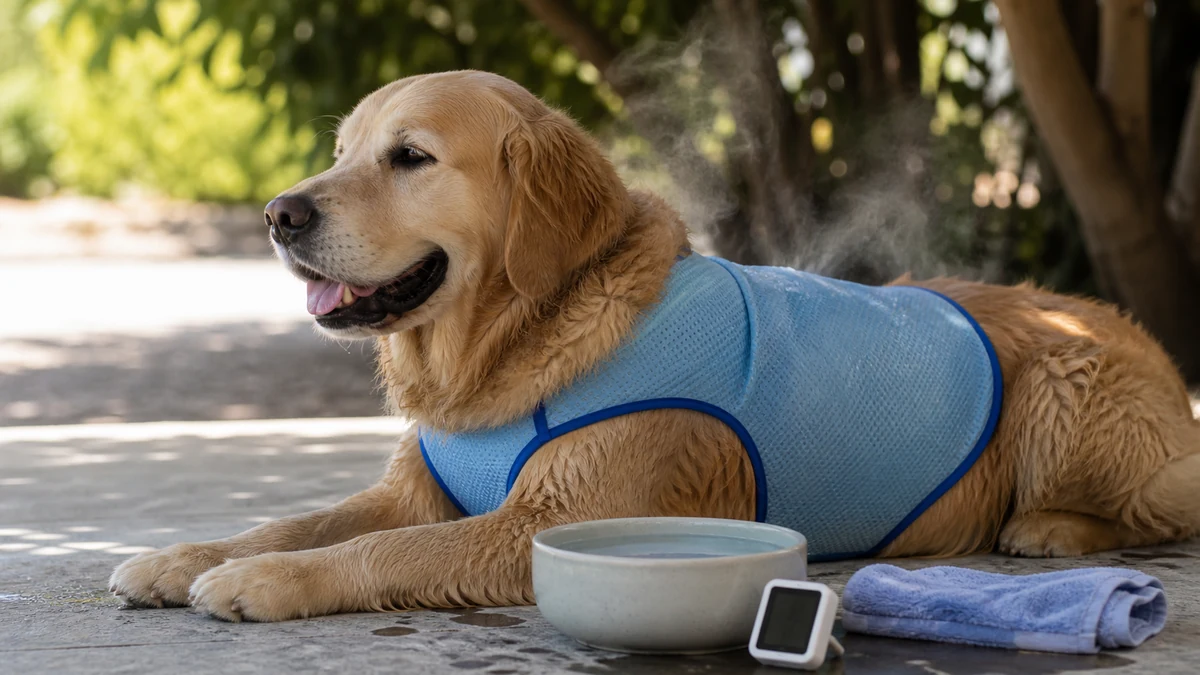
Evaporation is a phase change: liquid water becomes vapor and carries energy away from the wet surface. A cooling vest spreads water across textile layers so a larger area can interact with moving air, which is why soaking, wringing and exposing the garment to airflow are central to the design rather than optional preparation steps.
The dog is not being cooled by a battery, refrigerant or chemical reaction in the three products covered by this cluster. Canada Pooch uses mesh around an absorbent interior, Back on Track uses a PVA-based lining, and Ruffwear separates a wicking outer layer, absorbent middle layer and mesh lining; each construction manages water differently while relying on the same broad evaporative principle.
Because the vest sits over fur, results depend on coat density, garment contact, water capacity and air movement. A damp exterior alone does not reveal how much heat is leaving the dog’s body, so owners should judge comfort and behavior conservatively instead of interpreting cool fabric as a medical measurement.
Why humidity slows evaporative cooling
Air can accept water vapor more readily when it is relatively dry. When relative humidity rises, the difference between the wet fabric and surrounding air shrinks, evaporation slows and the vest may remain damp longer without producing the same cooling rate that it could provide in a dry breeze.
Back on Track publishes the most concrete caution in this shortlist, stating that humidity above 75 percent starts to reduce the cooling properties gradually. That threshold is not a universal cutoff for every textile, dog or climate, but it gives buyers a useful reason to lower expectations during muggy weather and avoid using moisture alone as proof of protection.
Humidity also affects the dog’s primary cooling process because panting relies on evaporation from respiratory surfaces. PetMD notes that hot, humid exercise can contribute to heatstroke risk, so a humid forecast is a reason to shorten or reschedule activity even when the dog owns a cooling vest.
Fit controls comfort, coverage and movement
Start with the measurement requested by the maker: Canada Pooch uses a numbered back-length system, Back on Track sizes by back length in centimeters, and Ruffwear uses chest girth around the widest part of the rib cage. Converting a normal collar or harness size by memory can create a poor fit because the reference point may be different.
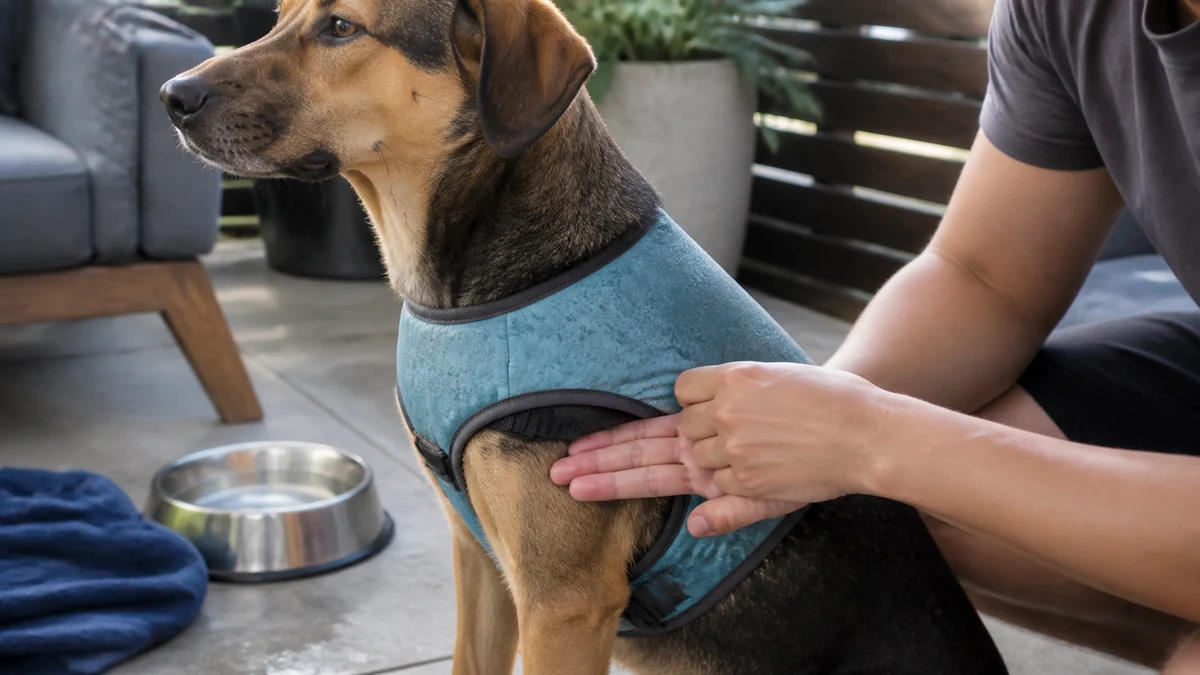
A correct vest should lie smoothly without squeezing the chest, cutting into the armpits or changing the dog’s stride. Check the neck, shoulder opening, belly closure and rear edge after several minutes of movement, and remove the garment if it shifts, causes rubbing, traps debris or seems to make the dog reluctant to walk normally.
Closure style matters for tolerance. A pullover can be simple once fitted but stressful for a dog that dislikes head handling; side-release buckles reduce that concern; hook-and-loop panels offer broad adjustment but can collect hair; and a leash portal matters when the vest will sit above an existing harness.
A practical soak, fit and rewet routine
Use clean tap water at a comfortable temperature, saturate the garment according to its instructions and remove excess water before fitting. Back on Track specifically warns owners to wet the dry PVA material before bending it, while Canada Pooch and Ruffwear frame activation as soak, wring or put on, and go.
Carry separate water for drinking and recharging the vest so a gear decision never consumes the dog’s hydration reserve. Rewet when the material is drying, but remember that a dog showing worsening panting, fatigue or behavioral change needs the outing stopped rather than a longer walk after another soak.
After use, follow the maker’s cleaning and drying rules. Dirt and body oils can reduce airflow, sealed damp storage can create odor or mold, and fabric softeners or heat drying may damage specialized layers; the product page is the correct source for care because PVA, mesh and multilayer constructions do not share one universal laundry method.
The medical and behavioral limits
PetMD describes canine heatstroke as an emergency and lists excessive panting, reddened gums, dehydration, vomiting, diarrhea, disorientation, weakness, collapse and seizures among warning signs. Suspected heatstroke requires immediate veterinary direction, not a product adjustment or a home review of which vest stayed wet longer.
ASPCA hot-weather guidance keeps the hierarchy clear: fresh water, shade, sensible exercise and never leaving an animal in a parked vehicle come before accessories. Flat-faced, elderly, overweight or medically compromised dogs may require even more conservative limits set with a veterinarian.
A cooling vest is most defensible as one layer in a cautious plan for a healthy dog: walk during cooler hours, choose shade, test pavement, carry water, observe breathing and posture, and turn back early. It should never be used to extend a route solely because the garment is still damp.
How to choose among the three formats
Choose Canada Pooch when the priority is a balanced everyday vest with a broad size range and adjustable chest closures; choose Back on Track when the lower verified price and transparent humidity warning outweigh hand-wash care; choose Ruffwear when hiking coverage, UPF 50+ fabric and a harness leash portal justify the higher cost.
The full dog cooling vest comparison shows those tradeoffs side by side, while the Ruffwear Swamp Cooler review goes deeper on the trail-oriented option and its harness layering.
Common mistakes to avoid
Do not put a dry PVA coat on a dog and then force the stiff material into shape, do not leave a wet vest sealed in a warm bag, and do not assume the size worn in one brand transfers to another. Each mistake is preventable by reading the product-specific activation, measurement and storage instructions before the first outing.
Do not pour the dog’s drinking supply onto the garment without keeping enough fresh water for hydration, and do not use icy water or frozen inserts unless the manufacturer explicitly designed the product for that method. The purpose of an evaporative vest is controlled wetting and airflow, not creating an extreme cold surface against skin.
Most importantly, do not wait for collapse before ending activity. A dog that lags, searches for shade, pants harder, refuses to continue or behaves differently is giving useful information; stop, move to a cooler place and contact a veterinarian when symptoms are concerning or fail to improve promptly.
FAQ
How does an evaporative dog cooling vest work?
Water stored in the fabric absorbs heat as it evaporates into surrounding air; airflow and lower humidity support the process.
Do dog cooling vests work in high humidity?
They can provide less evaporative effect because moist air accepts water vapor more slowly, so expectations and activity should be reduced.
How tight should a dog cooling vest be?
It should stay in place without restricting breathing, shoulder movement or skin; follow the brand chart and check for rubbing.
Can a cooling vest prevent heatstroke?
No. It cannot replace shade, water, cooler activity times, observation or emergency veterinary care.
Source note: this guide is documentation-led and does not claim a physical product test or veterinary diagnosis.