

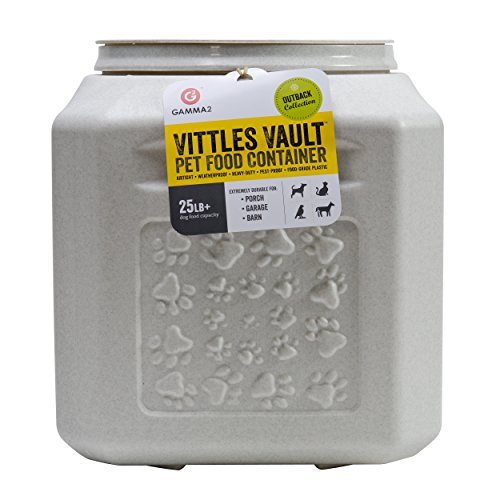
If you’re buying kibble in bulk (which most of us do), your dog food can go stale long before you finish the bag. The fix isn’t complicated — but there’s one common mistake that quietly ruins freshness: dumping new food directly into a bin that still has old residue. This guide explains the most defensible method we’ve found for keeping dry dog food fresh, safe, and easy to manage: the bag-in-a-bin method.
Key Takeaways
- Keep kibble in the original bag (then seal it) to retain lot/“best by” info and reduce oxidation.
- Place the sealed bag inside an airtight bin to limit humidity and keep pests out (ants, pantry bugs — and curious pets).
- Store below 80°F in a dry place and avoid garages that run hot/humid (heat accelerates rancidity).
- Safety matters: breached containers can pose suffocation risk for pets — placement behind a door is a real, practical safeguard.
- Why dog food goes stale
- The bag-in-a-bin method (step-by-step)
- How to choose an airtight container
- Common storage mistakes
- Cleaning & refill rules (avoid contamination)
- Pet safety: container design & suffocation risk
- FAQ
- Next steps
Why dog food goes stale
Once a bag is opened, kibble is exposed to oxygen and humidity. Over time, fats can oxidize (rancidity), aromas dissipate, and texture changes — which can make food less appealing and less nutritionally “true” to the label. Purina treats the “best by” date as meaningful for quality, but also notes that once a bag is opened, storage conditions become the deciding factor for freshness.
Three things accelerate staling:
- Heat: warmer storage speeds oxidation. Purina points to FDA guidance recommending storage in a dry place where the temperature is below 80°F.
- Humidity: moisture makes kibble less crisp and can increase spoilage risk.
- Pests + contamination: crumbs and oils left in a bin can taint the next bag — even if the new bag is “fresh”.
The bag-in-a-bin method (step-by-step)
Here’s the method we recommend because it’s simple and defensible:
- Keep kibble in the original bag. This retains lot numbers and label information (useful for recalls and expiration tracking).
- Press out excess air and seal the bag tightly. Use a strong clip, roll-top closure, or the bag’s built-in zipper if it has one.
- Put the sealed bag inside an airtight container. This adds a second barrier against humidity and pests, and keeps odors contained.
- Store in a cool, dry place. If your storage area routinely runs hot (especially above ~80°F), move it indoors.
- Use within a reasonable window. As a general guideline, opened dry food is best used within a couple of months if stored properly.
How to choose an airtight container
There isn’t one “best” container for everyone. Choose based on your household constraints:
- Safety-first homes (cats that explore everything): consider a screw-lid style container that’s harder for pets to breach.
- Kitchen-visible storage: a stainless can with a locking handle can be more convenient for daily feeding (and looks better).
- Small spaces / mobility: rolling bins help, but be disciplined about where you store them.
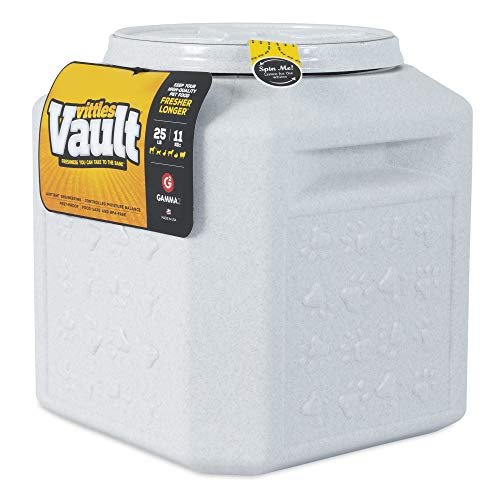
Quick sizing rule: match the container to the bag size you actually buy. If you buy 30–40 lb bags, you’ll want a container rated for that range (or plan to store two smaller bags). If you’re between sizes, going slightly bigger is safer — you can always keep the bag sealed inside.
See our full review: Gamma2 Vittles Vault review.
Common storage mistakes (and quick fixes)
- Mistake: pouring kibble into a bin and “topping it off” later.
Fix: finish the batch, wash/dry the bin, then refill (or keep the food in its bag inside the bin). - Mistake: storing in a hot garage.
Fix: move storage indoors or choose a cooler, climate-stable spot. - Mistake: keeping the lid cracked for convenience.
Fix: treat the lid like a pantry door — always fully closed and secured. - Mistake: forgetting what’s what.
Fix: keep the label visible, or tape the bag label (brand + formula + lot/best-by) to the bin.
Cleaning & refill rules (avoid contamination)
If you ever pour food directly into a bin, treat cleaning as non-negotiable. Old oils and crumbs can taint the next batch and accelerate staleness. At minimum:
- Empty fully, then wash with mild soap and warm water.
- Rinse thoroughly and dry completely before refilling (moisture is the enemy).
- Do not “top off” a bin that still has old kibble dust at the bottom.
Extra tip: if you store the original bag inside the bin, you still want to wipe out crumbs occasionally — but you’ll dramatically reduce direct contact between food oils and the container walls.
Pet safety: container design & suffocation risk
This is the part most guides skip: pets can and do breach storage containers. The Center for Pet Safety evaluated common container styles after incidents reported to Prevent Pet Suffocation, noting that in a large share of reported events pets were unable to escape after entering containers. Their testing emphasizes that lid design (including relatching behavior) can matter — and that placement behind a closed door meaningfully reduces risk.
Practical safety rules:
- Store containers in a pantry/closet with the door closed.
- Don’t leave the lid open “for convenience”.
- If you use a hinged-lid bin, double-check that it can’t re-latch easily if bumped.
If you have a cat that opens cabinets, this is where “kitchen convenience” can turn into a real hazard. The safest upgrade is often not a new container — it’s a closed-door storage habit.
FAQ
Should I keep dog food in the original bag inside a container?
Yes — this is the simplest way to retain label/lot info while adding an airtight barrier. Purina explicitly recommends keeping dry food in the original bag, sealing it, then placing the bag inside a bin with an airtight seal.
Is an airtight container always better?
It’s better when used correctly. If the bin is dirty or damp, it can make things worse. Airtight storage works best when the bag is sealed, the container is clean/dry, and the storage area stays cool.
What’s the best place to store kibble?
A cool, dry indoor space (pantry/closet) is usually best. Avoid spots that swing hot/humid.
Next steps
If you want the most “set it and forget it” storage option for a safety-first home, start here: Gamma2 Vittles Vault review.