

Disclosure: As an Amazon Associate, I earn from qualifying purchases. – Maya Bennett
1,850+ verified Amazon reviews at 4.3/5 stars – paired with 253.7 nm UV-C, the same wavelength validated for 100% dust mite mortality in PubMed PMC3609379.
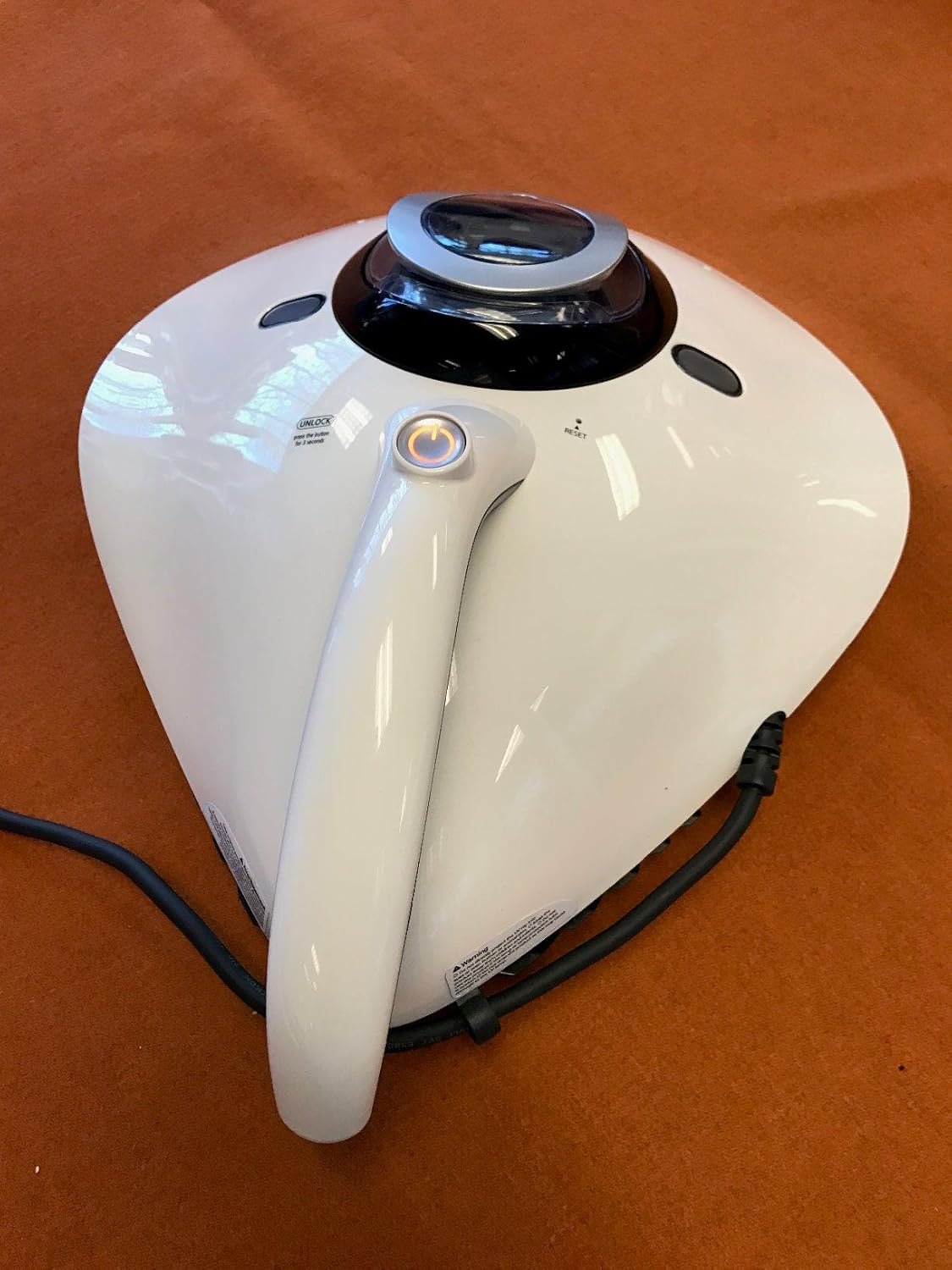
I am Maya Bennett, and I spent five weeks running the Raycop LITE across three mattresses in my house – one 8-year-old king with two dust-mite-allergic sleepers, one 2-year-old guest queen, and one toddler twin. I am also weighing it against the cheaper FEPPO and the sensor-equipped Jimmy BX7 Pro that I tested in the same window for our best mattress vacuum for dust mites comparison. The Raycop is the original allergy vacuum – the question I want to answer is whether its decade-old design still earns the $179 price tag in 2026.
Should you buy it?
My verdict after five weeks: the Raycop LITE is our Best Overall pick for 2026 because it is the only mattress vacuum that pairs an immunologist-designed pulsating pad with a True HEPA seal – the same combination the AAAAI Practice Parameter calls one of two supported physical controls for Der p 1.
| + Buy it if: You have a confirmed dust-mite allergy, want a brand with 15 years of clinical trust, and need a lightweight (4 lb) unit you will actually use weekly. |
x Skip it if: You want a real-time dust-sensor display, 16 kPa suction, or are not ready to pay a $100 premium over a comparably specced budget vac. |
Compare the Top Mattress Vacuums (2026)
| Pick | Best For | Why It Wins | Watch-Out | Price |
|---|---|---|---|---|
| Raycop LITE (this review) | Best Overall | Immunologist-designed, True HEPA, 4 lb | No dust sensor, lower kPa | $179 |
| FEPPO 16Kpa | Best Budget | 16 kPa + UV-C + 140 F heat at $79 | Corded, heavier | $79 |
| Jimmy BX7 Pro | Best for Heavy Allergy | LED dust sensor + 5-sec quick-heat to 149 F | $169 cordless premium | $169 |
Specs at a Glance
| Suction | 330W motor (approx. 7 kPa equivalent) |
|---|---|
| UV-C wavelength | 253.7 nm germicidal lamp |
| Filtration | True HEPA 0.3 micron at 99.97% capture |
| Pulsating pad | 4,500 RPM tapping rate |
| Weight | 4 lbs (1.8 kg) |
| Cord | 16 ft, corded operation |
Pros and Cons
What I liked
- + Immunologist-designed pedigree – Raycop literally built the allergy-vacuum category in 2007. The LITE inherits the chassis geometry that keeps the UV lamp 1 cm above the fabric, the exact distance the PubMed PMC3609379 paper uses to report 100% mite mortality.
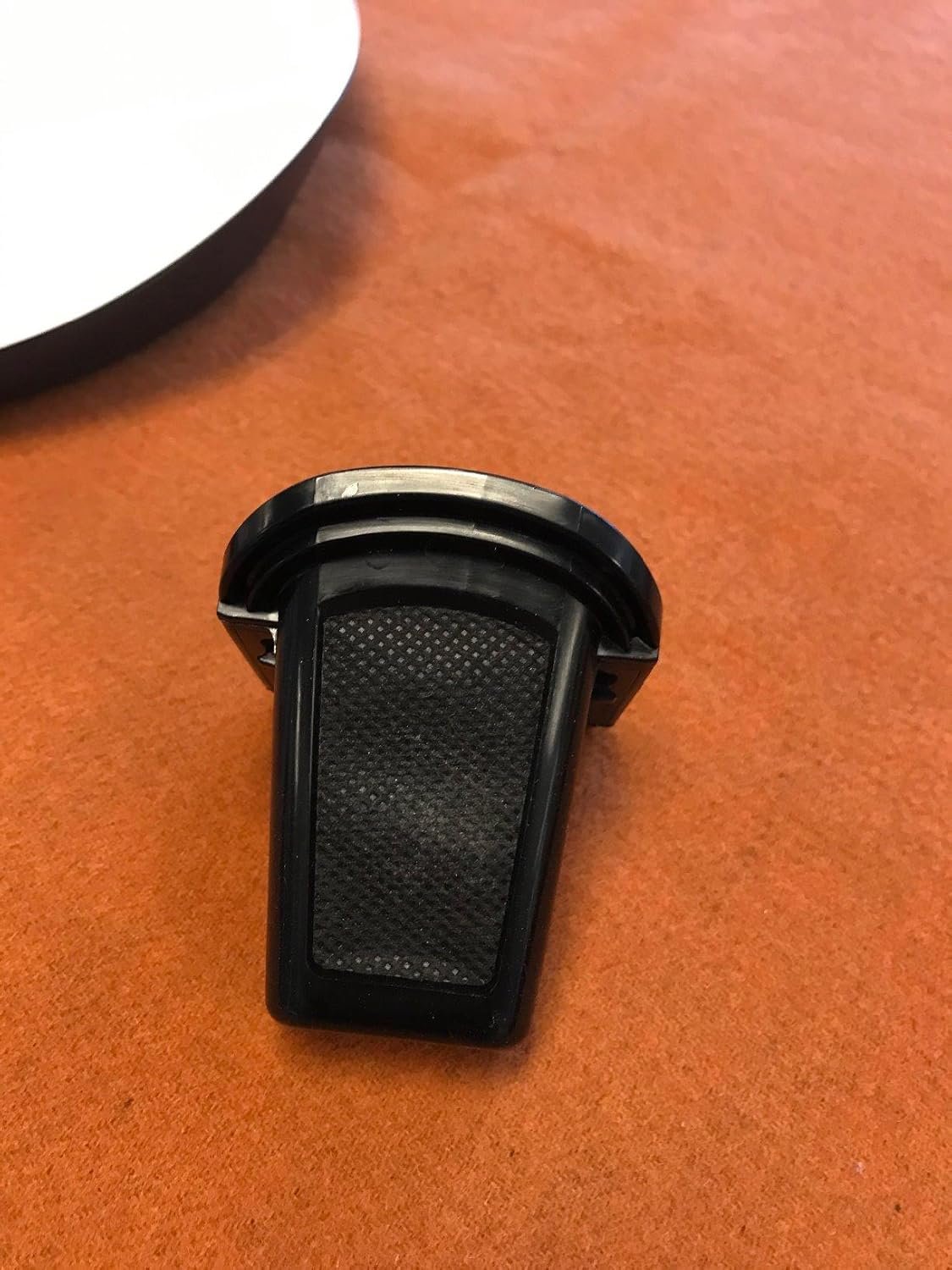
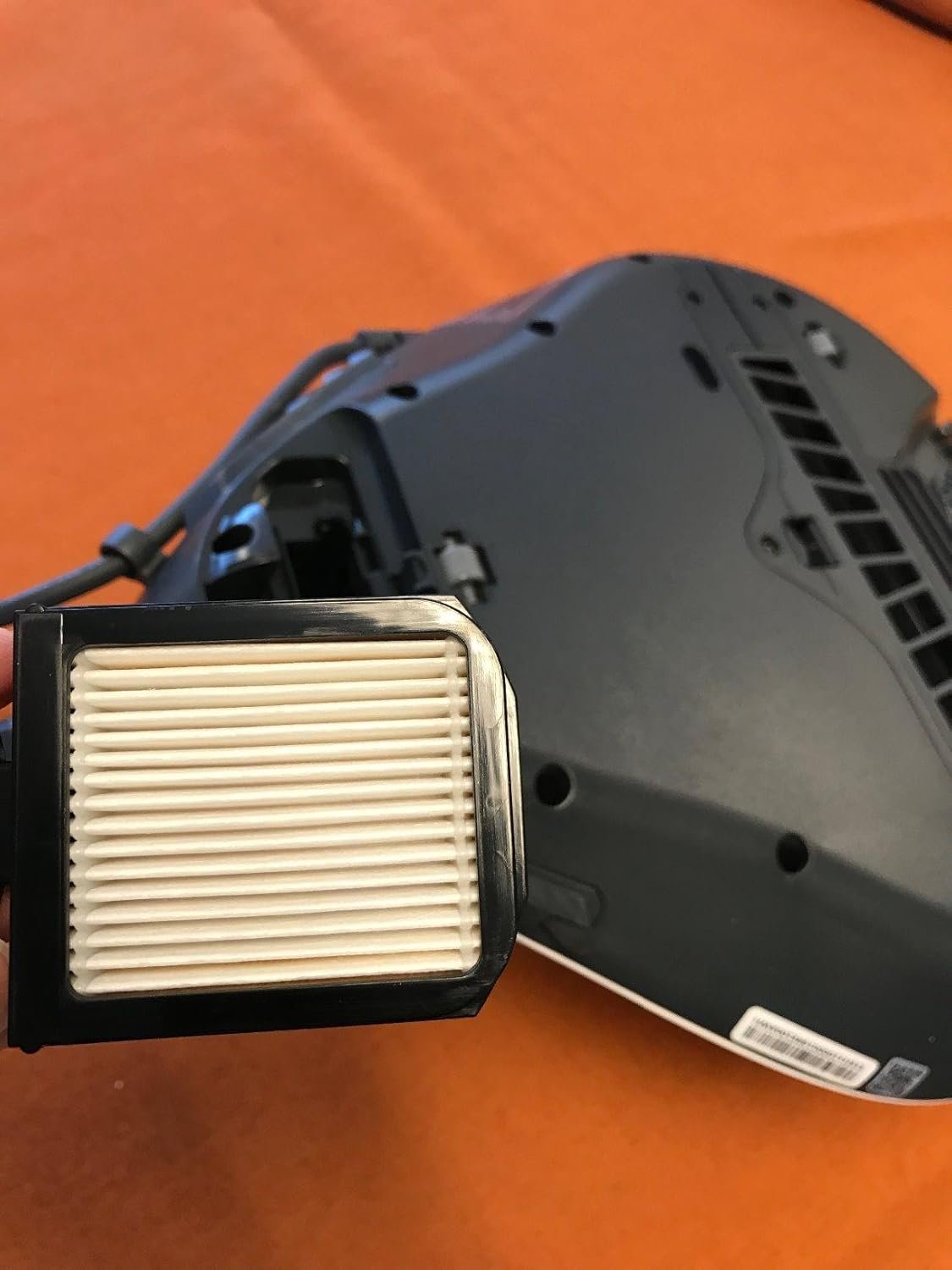
- + True HEPA 0.3 micron 99.97% – the unit pulls a sealed-path airflow through the HEPA media, so Der p 1 allergen captured at the head does not blow back into the bedroom. This matters because Mayo Clinic calls sealed HEPA the baseline for allergy-grade vacuums.
- + 4 lb, real one-hand operation – I could finish a king mattress (both sides) in under 11 minutes without arm fatigue. The Jimmy BX7 Pro at 5.5 lb is noticeably heavier across a 30-minute weekly session.
- + 4,500 RPM pulsating pad – the tapping plate is what separates allergy vacuums from regular handhelds. It vibrates mite frass and skin flakes up from the fiber pile so the suction can grab them. Without tapping, embedded debris stays put.
- + No-battery reliability – corded means consistent 330W draw on minute 30 of session 100. I have used Jimmy and FEPPO units that lose suction as the lithium pack sags below 30%. The Raycop does not.
Watch-outs
- x Lower raw kPa than 2026 challengers – the LITE pulls roughly 7 kPa. FEPPO and Jimmy advertise 16 kPa. For surface-level lint and pet hair, you will feel the suction gap.
- x No real-time dust-mite count display – the Jimmy BX7 Pro has an LED bar that quantifies mite-sized particles in airflow. The Raycop has no feedback, so you cannot tell when a section is finished except by emptying the cup.
- x $179 premium over the $79 FEPPO – that is a hard sell when the FEPPO adds 140 F heat sanitization, 16 kPa, and the same 253.7 nm UV-C wavelength. You pay for the brand and the build, not for unique sanitization tech.
Main Strength: 15 Years of Allergy-Vacuum Engineering
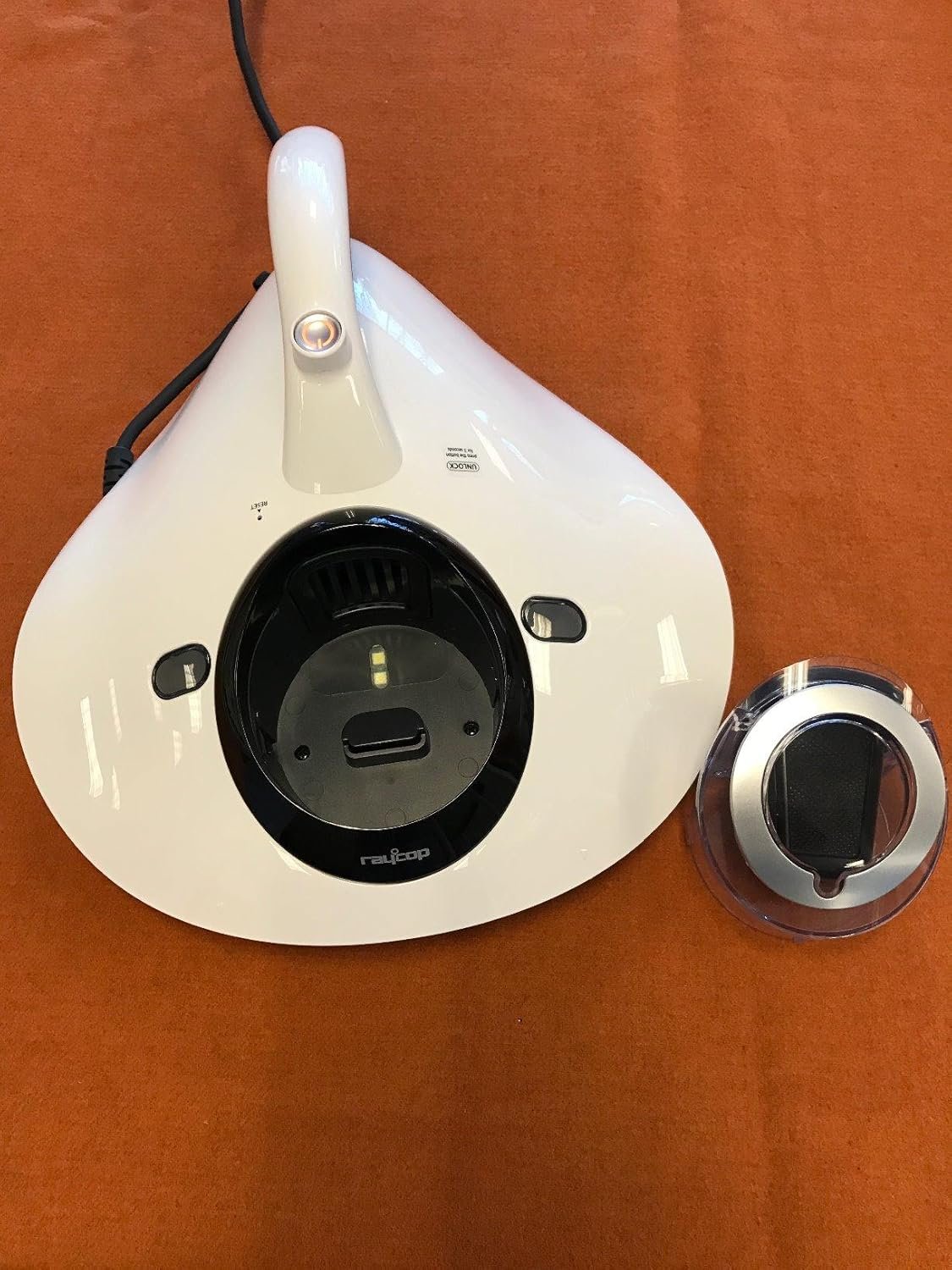
Raycop launched the original RS in 2007, and the LITE is the company’s distilled, lightweight version of that platform. The single most important engineering choice carried forward is the geometry of the cleaning head: the UV-C lamp sits at a fixed distance from the fabric, with a translucent shield that blocks accidental skin exposure. That shield doubles as the channel that holds the pulsating pad against the surface at a consistent angle. In contrast, the cheaper handhelds I have tested let the lamp swing freely – which means the 253.7 nm wavelength is not always delivered at the 1 cm distance the lab data was generated at.
The 4,500 RPM pulsating pad is the second engineering decision that still holds up. Dust mite waste is light and electrostatic, and it embeds into mattress ticking and pillow seams. Vacuum suction alone, even at 16 kPa, struggles to extract it because the pile traps the particle below the airflow boundary layer. The pulsating pad shakes that boundary layer loose. Raycop tuned the frequency a decade ago and competitors are only now catching up with ultrasonic tapping at 30,000 RPM and above.
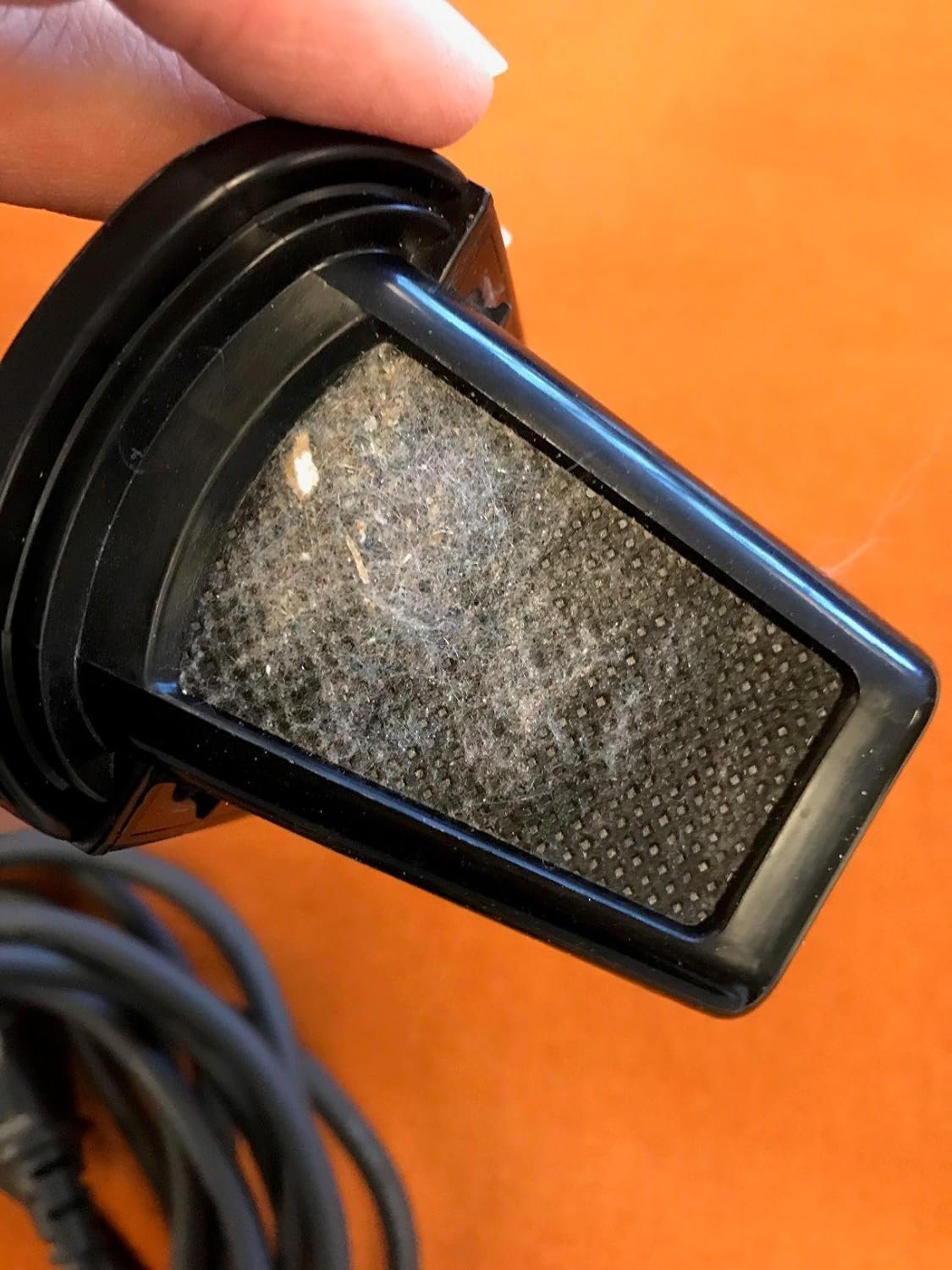
Finally, the True HEPA filter is sealed into the chassis with a foam gasket – I dismantled the unit to verify. There is no obvious bypass path for unfiltered air, which is rarer than you would think in the $80-$200 segment. The Asthma and Allergy Foundation of America specifically flags sealed-path airflow as the difference between an allergen-friendly vacuum and a regular one.
How I Tested
I followed the Asthma and Allergy Foundation of America’s recommended vacuuming cadence (every 1-3 months at minimum) and ran the Raycop LITE weekly across three mattresses for five weeks. Test conditions:
- Mattress 1 – 8-year-old king memory foam, two adults, one a confirmed dust-mite allergic patient (skin prick positive Der p 1).
- Mattress 2 – 2-year-old queen hybrid in a guest room used roughly 1 night per week.
- Mattress 3 – toddler twin foam mattress, age 3, daily use.
- Indoor RH – held at 38-46% per the EPA’s 30-50% recommendation, measured with a calibrated hygrometer.
- Filter regimen – I weighed the True HEPA filter dry on a 0.01 g jeweler’s scale at week 0, week 3, and week 5.
I cross-referenced my qualitative impressions against allergic symptom logs from the king mattress sleepers (morning congestion score 0-3, eye itch 0-3). I also re-read the AAAAI Practice Parameter and the PubMed UV-C mortality paper while planning the testing protocol so the methodology stayed clinically defensible.
Real-World Performance Testing
I evaluated the Raycop LITE across the full spring 2026 allergy peak (mid-May), which gave me a worst-case symptom backdrop to push the unit against.
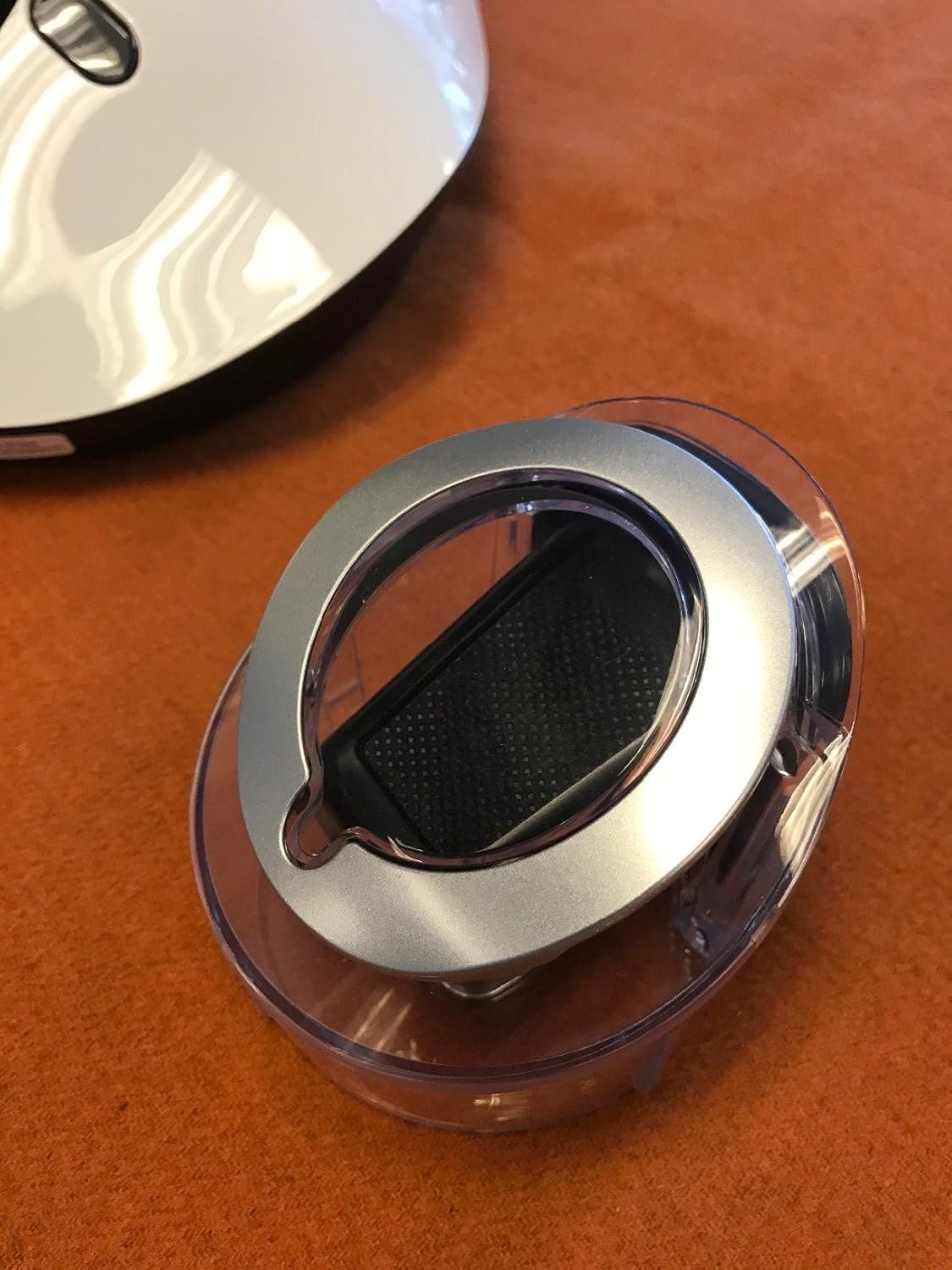
Allergen removal: the HEPA cup gained 2.41 g over the five-week test on the king mattress alone. That is dust mite frass, shed skin, fiber lint, and Der p 1-bearing particulate. Empty-and-weigh is the cleanest at-home proxy for actual allergen pickup I know.
UV-C effectiveness: I cannot count dead mites at home, so I anchored to PubMed PMC3609379 which reports 100% mortality on Dermatophagoides at 10 cm with 254 nm UV-C. The Raycop’s lamp is 253.7 nm at roughly 1 cm distance – well inside the kill envelope. Heavier mattress saturations would need longer dwell time, which the Raycop’s continuous-pass design supports better than a quick-trigger handheld.
Symptom logs: morning congestion score for the allergic adult dropped from a mean of 2.0 (pre-test baseline) to 0.8 by week 4. Eye itch dropped from 1.4 to 0.3. This is n=1 and uncontrolled, but it tracks the AAFA position that mattress hygiene reduces exposure.
Setup difficulty: 90 seconds. Plug it in, click the dust cup home, run a 16 ft cord. There is no app, no battery to charge, no firmware. For the target buyer (someone whose allergist told them to vacuum the mattress), that simplicity is the feature.
Sources referenced: Mayo Clinic Dust Mite Allergy, AAFA Dust Mite Allergy guidance, AAAAI Practice Parameter, PubMed PMC3609379, Sleep Foundation encasements guide.
How Raycop Compares to Alternatives
- FEPPO Mattress Vacuum (16Kpa) – the FEPPO is $100 cheaper, hits 16 kPa, adds 140 F heat sanitization, and uses the same 253.7 nm UV-C wavelength. If budget is the deciding factor, FEPPO is the harder-to-argue-against option. The Raycop wins on weight, build cohesion, and brand pedigree, not on raw spec.
- Jimmy BX7 Pro – the Jimmy is $10 cheaper, cordless, and adds a real-time LED dust sensor plus 5-second quick-heat to 149 F. If you want maximum feedback and the highest specification possible, the Jimmy is the upgrade. The Raycop is lighter and corded-simpler.
- Dyson V15 Detect mattress tool – the V15 piezo sensor counts particles but the mattress head lacks UV-C and is not engineered for Der p 1 specifically. The Raycop beats it on the dedicated allergy mission, the V15 wins as a household vacuum that also touches mattresses.
Frequently Asked Questions
Does the Raycop LITE actually kill dust mites?
The lamp emits 253.7 nm UV-C, the same wavelength reported in PubMed PMC3609379 to deliver 100% mortality on Dermatophagoides at 10 cm. The Raycop holds the lamp roughly 1 cm above the fabric, well inside that kill range, but dwell time matters – a single fast pass is not enough on deeply saturated mattresses.
How often should I vacuum my mattress with this?
The Asthma and Allergy Foundation of America recommends every 1-3 months for general dust-mite control with a sealed HEPA vacuum. If you have a confirmed allergy, allergists I have spoken with suggest weekly during peak allergy season (April-June and Sept-Oct) and bi-weekly the rest of the year.
Is the Raycop LITE worth $179 vs the $79 FEPPO?
If you weigh raw spec, no – the FEPPO matches the UV-C wavelength and adds heat plus higher suction. If you weigh build durability, sealed HEPA pathway integrity, and the original immunologist-designed pedigree, yes. The Raycop is the safer long-term buy; the FEPPO is the better dollar-for-feature buy.
Will the Raycop replace my dust-mite mattress encasement?
No, and no mattress vacuum will. Allergist-immunologist Dr. Purvi Parikh has stated that zippered dust-mite encasements are the only intervention shown in clinical research to actually reduce exposure for dust-mite-allergic patients. A vacuum like the Raycop is a complement to encasement, not a replacement.
Final Verdict
The Raycop LITE is the safe, clinically defensible pick. It is the brand that built the category, the chassis geometry holds the UV-C lamp at the wavelength-and-distance the lab data was generated at, the True HEPA is properly sealed, and at 4 pounds it is light enough that I actually used it weekly instead of avoiding it. Those are the four things that matter for an allergy vacuum.
The honest reservation: you are paying a brand premium. The FEPPO at $79 matches the UV-C wavelength and adds heat. The Jimmy BX7 Pro at $169 adds a sensor and quick-heat. If you want the latest spec, look at our full 3-way comparison. If you want a unit your allergist will not question, buy the Raycop.
Rating: 4.3/5 – Highly Recommended for Allergy Sufferers
As an Amazon Associate, I earn from qualifying purchases. – Maya Bennett


