


Disclosure: As an Amazon Associate, I earn from qualifying purchases. – Maya Bennett
A shower glass hard water stain remover targets deposits, not etched glass. Check the coating’s care instructions before choosing a formula or pad.
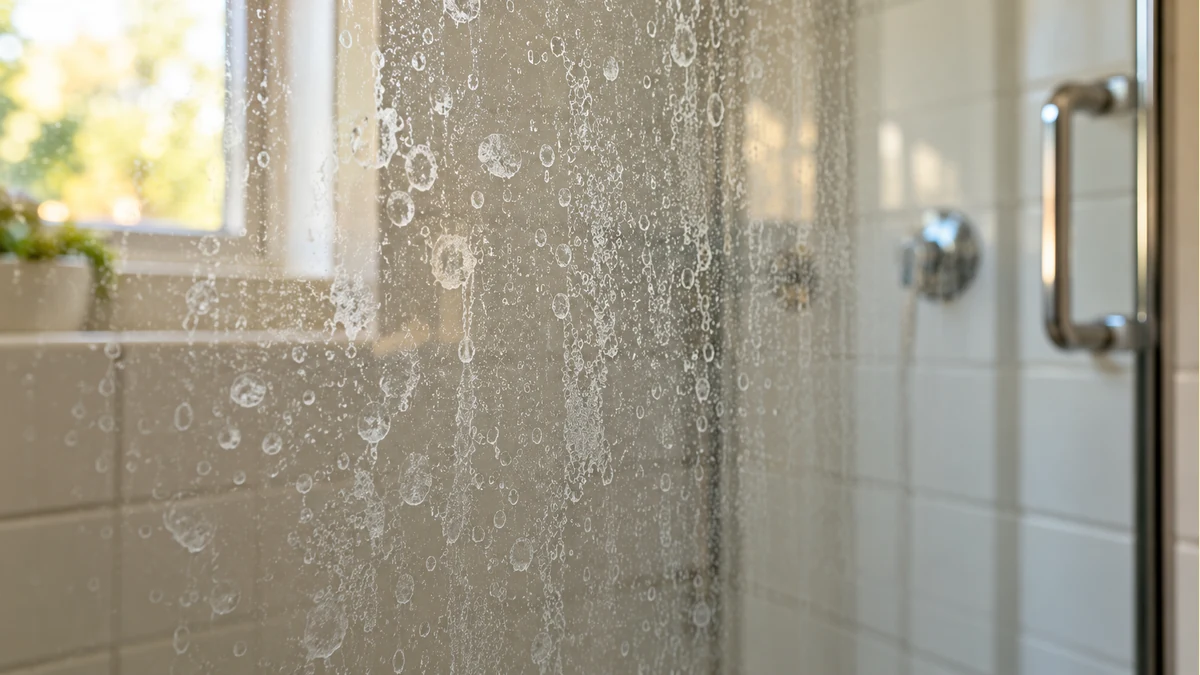
Why the cloudy film returns
USGS classifies water above 180 mg/L hardness as very hard. This explains buildup, not which cleaner your door tolerates.USGS water-hardness classifications
This October 2026 guide draws on water-science and manufacturer guidance to distinguish residue, coatings and permanent glass damage.
Dissolved calcium and magnesium contribute to hardness and interact with soap. A shower door can therefore carry both mineral deposits and soap residue, rather than one uniform stain.NDSU Extension on hard water
By the numbers
Soft water
Moderately hard water
Hard water
Very hard water
Calcium and magnesium
Hardness ranges are expressed as calcium carbonate equivalents. These are water classifications, not cleaner-performance scores.
Check the glass before the cleaner
Kohler prohibits abrasive cleaners on CleanCoat-treated glass. A label saying “glass” does not override the door manufacturer’s instructions.Kohler CleanCoat care restrictions
Delta also restricts certain chemicals and aggressive scrubbing. An inconspicuous test is an additional precaution, not permission to ignore a prohibited ingredient. Check nearby stone, seals and metal finishes too.Delta shower-door care
| Category | Approach | Buying context | Compatibility check |
|---|---|---|---|
| Rub-and-rinse removers | Manual application and thorough rinsing | Check bottle size and pack | Glass coating permits manual rubbing Source |
| Acid-based mineral removers | Chemical action with label-specific contact time | Check dilution and pack | Confirm acid tolerance of glass and neighboring finishesSource |
| Routine shower-care cleaners | Maintenance between deeper cleans | Ready-to-use versus concentrate | Door maker approves routine maintenance formula Source |
Understand the cleaner categories
These categories describe jobs, not rankings. Creams may combine chemical action and abrasion; compatibility depends on the formula and surface.
CRL distinguishes removable deposits from advanced glass corrosion. Persistent haze warrants the door manufacturer’s advice, not progressively harder scrubbing.CRL guidance on deposits and etching
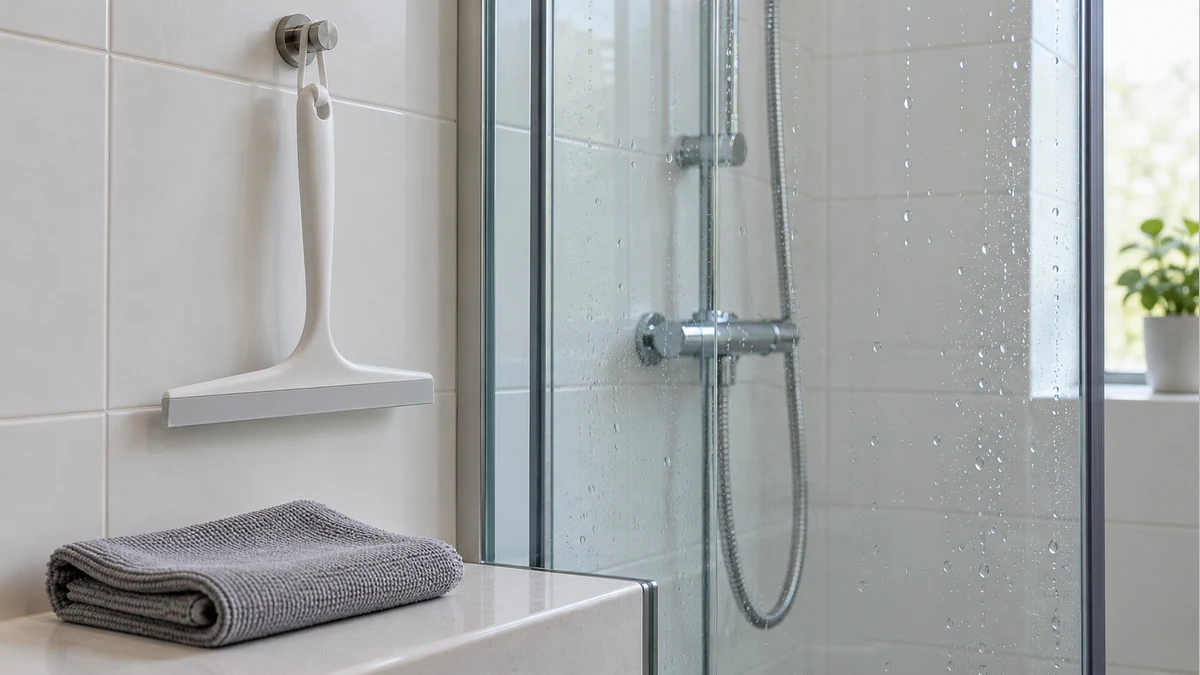
“I am a big fan of squeegeeing and drying down the shower walls”
Carolyn Forte, Home Care & Cleaning Lab Executive Director, Good Housekeeping Institute –Source
Reduce the next round of buildup
Removing water after showering is a practical maintenance step. It does not reverse existing etching or replace the care instructions for coated glass.Good Housekeeping shower-door cleaning guide
Read application, rinsing and protective-equipment directions. Never mix bleach or disinfectants with other cleaners; ventilate indoor work and follow the current product label. Budget for the specified applicator and repeated manual work.CDC cleaning and bleach safety

A quick buying checklist
Compare three shower-glass stain removers, their application steps and compatibility limits. Start with whether your glass permits them.
Frequently Asked Questions
Does hard water mean the glass is damaged?
No. Deposits can sit on the surface; persistent haze may need professional assessment.
Are all glass cleaners safe for coated doors?
No. Follow the door manufacturer’s coating-specific care instructions.
Can a stain remover repair etching?
Removing deposits does not repair corrosion within the glass surface.
Is stronger scrubbing the next step if cleaning fails?
Not automatically. Stop and check compatibility before increasing abrasion.
Reporting by Maya Bennett for ReviewGuid. Sources checked October 19, 2026. Documentary research; no hands-on performance results. The expert quotation is excerpted from Good Housekeeping, not a ReviewGuid interview.
As an Amazon Associate, I earn from qualifying purchases.