

Disclosure: As an Amazon Associate, I earn from qualifying purchases, and this page also contains a paid link to a digital product. I have not been given access to that product, so nothing here is a hands-on assessment of it. – Maya Bennett
Tiny House Made Easy is a 47 dollar build guide from Adam Ketcher covering plans, materials lists, utilities and permitting. The guide is cheap; the project is not, at 25,000 to 50,000 dollars for a realistic DIY build in 2026. And the decision that matters is not covered by any guide: whether your jurisdiction will let a tiny house sit on your land at all. Settle the zoning question first, then decide about the 47 dollars.
See what the build guide covers
What the 47 dollars buys
The package is a build guide, plans, tools and materials lists, utility and permitting guidance and five bonus guides, at 47 dollars against a claimed 422 dollar value, with a 60 day refund. The author is Adam Ketcher, named and pictured, describing himself as a building contractor with 300 tiny houses built over twenty years. Those figures are self-reported and no licence number or trade body is cited.
| Detail | What is published |
|---|---|
| Price | 47 dollars, one payment |
| Covers | framing, foundation, utilities, permitting guidance, layout |
| Bonuses | five additional guides including trailers and off-grid living |
| Guarantee | 60 days, no questions asked |
| Author | Adam Ketcher, self-reported contractor credentials |
| Oddity | the copyright notice names a different domain than the site it sits on |
The question to answer before you spend anything
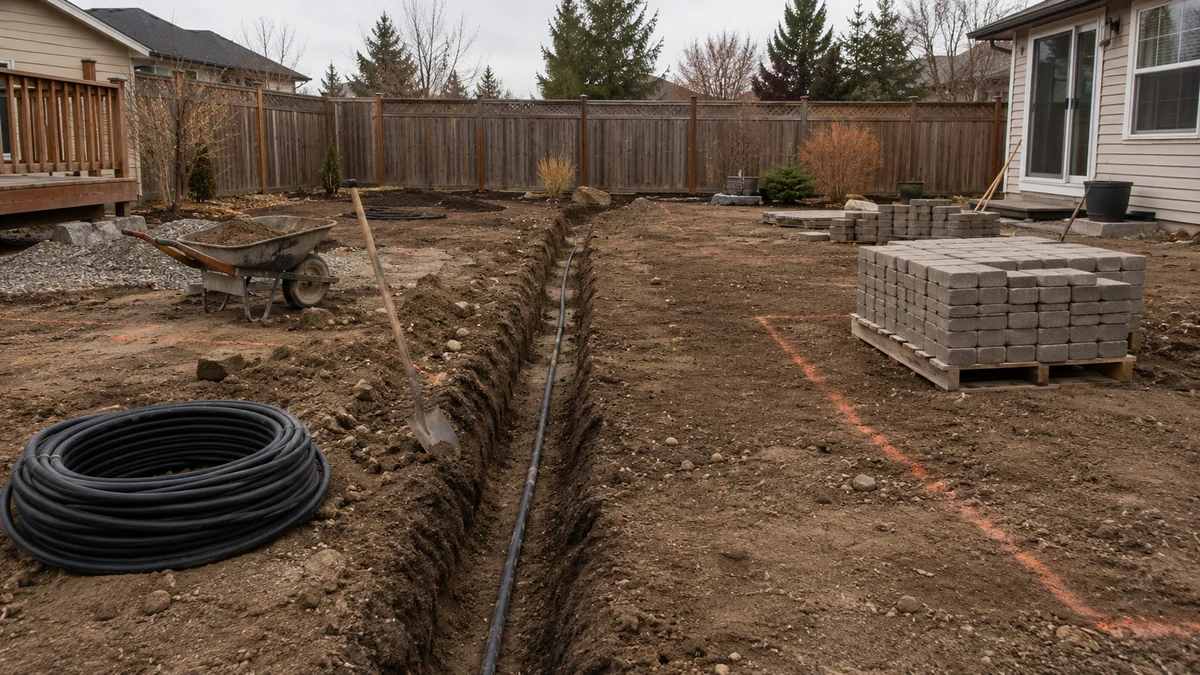
Almost every tiny house project that fails, fails on land use rather than on construction. The distinction that decides it is whether the house has wheels.
A tiny house on wheels is classified in most US jurisdictions as a recreational vehicle. Many of them permit an RV on a lot temporarily and prohibit it as a permanent dwelling, which is exactly the use most buyers have in mind. A tiny house on a permanent foundation is instead a dwelling under the residential code, and Appendix Q of the International Residential Code sets out relaxed ceiling height, loft and stair provisions for dwellings under 400 square feet. Appendix Q only applies where a jurisdiction has adopted it, and many have not.
So the sequence is: call the planning department, ask specifically whether a dwelling under 400 square feet is permitted on your parcel and whether Appendix Q has been adopted, and only then consider buying a guide. The International Code Council publishes the model text, but your county publishes the version that binds you.
What the build really costs
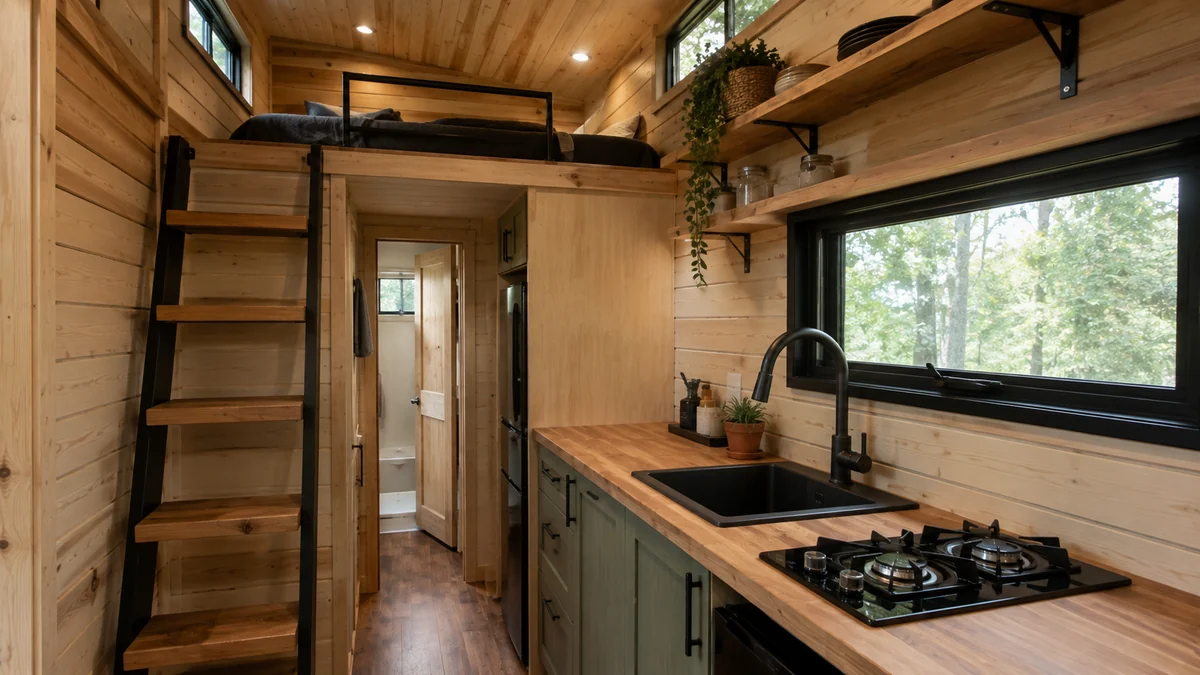
No affiliate page in the top results for this product publishes a build budget, which makes the 47 dollar price look like the decision when it is a rounding error against the real one.
| Component | 2026 US range |
|---|---|
| Trailer, rated for finished weight | 5,000 to 9,000 dollars |
| Framing, sheathing, roofing | 6,000 to 12,000 dollars |
| Windows and doors | 3,000 to 7,000 dollars |
| Insulation and interior finish | 4,000 to 9,000 dollars |
| Plumbing, electrical, heating | 5,000 to 10,000 dollars |
| Realistic DIY total | 25,000 to 50,000 dollars |
Read against that, a 47 dollar guide is not the risk in this project. The risk is a trailer rated below the finished weight, or a build that cannot legally be occupied where you put it. Both are decided before the first cut.
Where the page overstates
The sales copy leans on cost-avoidance language that is not sourced: buyers are said to be losing “tens of thousands of dollars” to common mistakes, and the guide is said to “cut the cost of your project by 30 percent”. Neither figure has a basis on the page. A 30 percent saving on a 35,000 dollar build would be over 10,000 dollars, which is a very large claim to make without showing the arithmetic.
The copyright notice naming a different domain is a smaller thing but worth noticing: it suggests the page was adapted from a sibling product. Combined with credentials that are stated rather than evidenced, this is the thinnest transparency record of any offer covered here, on the most expensive project of the four. Weigh the 60 day refund accordingly.
Check the current Tiny House Made Easy price
Who it suits
It suits somebody who has already confirmed the project is legal where they intend to build, has construction experience, and wants a single document covering the sequence from trailer to utilities. At 47 dollars against a 25,000 dollar build, the guide is a cheap way to avoid one sequencing error.
It does not suit somebody exploring the idea. Explore with your planning department, which is free. And it does not suit anyone expecting stamped drawings for a permit application, which no 47 dollar document produces. If a garden building rather than a dwelling is what you actually need, the Ryan Shed Plans analysis covers a project an order of magnitude cheaper and far less regulated. General consumer guidance on evaluating claims like these is published by the FTC.
The trailer arithmetic that sinks these projects
On a build with wheels, weight is the one constraint that cannot be renegotiated later, and it is where amateur projects turn unusable rather than merely late.
The trap is that weight accumulates invisibly. Framing, sheathing, insulation, cladding, roofing, windows, panelling, flooring, a water heater, a fridge, a full tank, batteries, and finally every possession that goes inside. Each decision looks minor on its own. Together they routinely push a design past the axle rating of the chassis it was drawn for.
A chassis rated below the finished weight cannot be fixed without moving the house onto another one, which means taking it apart. So the calculation belongs on paper before any steel is bought, carried with a margin rather than to the last pound, and every material substitution during the build has to be checked against it instead of waved through.
Two things follow from that. When the choice sits between two chassis ratings, take the heavier one, because the price gap is small next to the cost of being wrong. And put the finished build over a public scale before towing it any distance, so the real number turns up somewhere safe rather than at a roadside inspection.
Get Tiny House Made Easy with the 60 day refund
Frequently asked questions
What does a tiny house actually cost to build? +
For a DIY build on a trailer, 25,000 to 50,000 dollars is the realistic 2026 range once the trailer, framing, insulation, windows, roofing, plumbing, electrical and finishes are counted. Shell-only builds land lower, professionally built units higher. A 47 dollar guide sits at roughly one tenth of one percent of that budget, which is the right way to think about what it can and cannot influence.
Can I legally park a tiny house on my own land? +
That is the question to answer before anything else, and the answer is local. A tiny house on wheels is usually treated as a recreational vehicle, which many jurisdictions prohibit as a permanent dwelling. A tiny house on a foundation falls under the residential code, where Appendix Q sets out relaxed provisions for dwellings under 400 square feet, but only where a jurisdiction has adopted it.
Is a guide worth buying before I know the zoning answer? +
No. Zoning decides whether the project is possible at all, and no guide can change your county’s rules. Call your planning department first. If they tell you a tiny house on wheels cannot be a permanent residence on your lot, you have saved yourself both 47 dollars and several years.
Does the guide include actual construction drawings? +
The page lists plans, tools and materials lists and utility guidance alongside the main build guide, with several bonus documents. What it does not do, and cannot do, is produce engineer-stamped drawings, which many jurisdictions require for a permanent structure. Budget for those separately if you are building on a foundation.
What is the most common expensive mistake? +
Building before confirming where it can legally sit. The second is underestimating the trailer: a chassis rated below the finished weight is not fixable after the fact, and weight creeps up with every sheet of plywood and every appliance. Weigh the design on paper before buying steel.
Build cost ranges are 2026 US estimates and move sharply with finish level, region and how much labour the owner supplies. Zoning and code adoption are decided by your jurisdiction, not by any national rule quoted here. ReviewGuid has not purchased this guide; the button above is a paid link.