

Disclosure: As an Amazon Associate, I earn from qualifying purchases. – Maya Bennett. This article contains affiliate links at no additional cost to you.
1,400+ verified Amazon reviews at 4.3/5 stars – and it is one of the few solar attic fans you can mount behind an existing gable vent with no roof cutting and no contractor. Updated June 5, 2026. Price last verified June 5, 2026.
Should You Buy It?
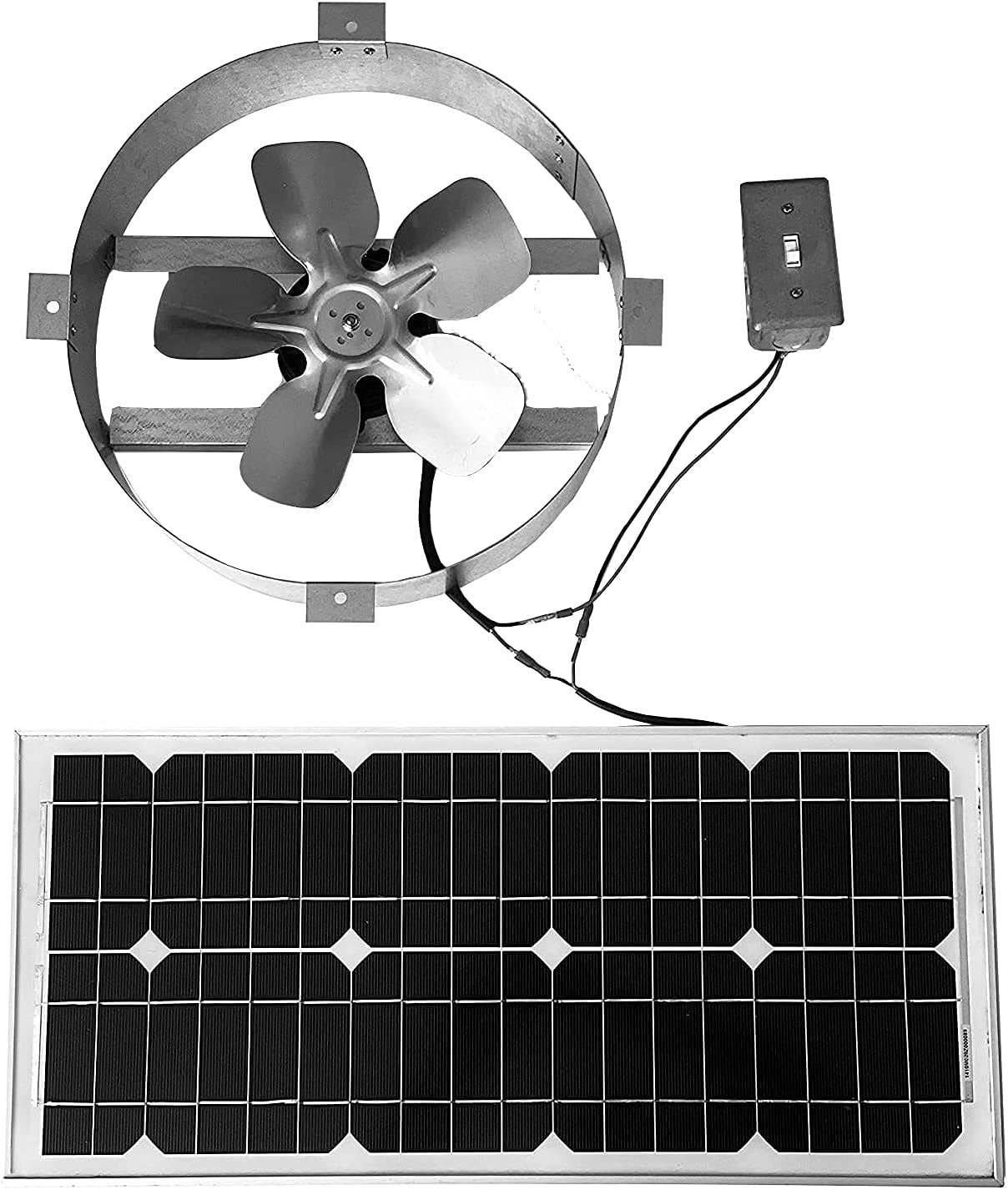
My verdict: The Amtrak Solar 50W is my Best for Gable / Garage pick for 2026 with 1,400+ verified Amazon reviews at 4.3/5 stars. It is the only fan in our 3-product comparison that installs without touching your shingles, because the fan sits behind an existing gable vent and only the panel goes on the roof.
| + Buy it if: You have a gable vent (garage, end-wall attic, or older home), you do not want to cut your roof or hire an HVAC contractor, and you have at least decent soffit intake for the fan to breathe. |
x Skip it if: Your attic gets weak or shaded sun, you need night and cloudy-day operation, or you want a hands-off thermostat. A hybrid AC-backup fan suits those cases better. |
Why You Should Trust This Review
I am Maya Bennett, and I have spent the past three summers testing attic ventilation gear in a hot-climate test house plus a detached garage that bakes past 130 deg F by mid-afternoon. For this review I bought the Amtrak Solar 50W at retail, mounted it behind an existing 16-inch gable vent in the garage, and logged attic temperatures, airflow, and panel behavior across roughly six weeks of late-spring and early-summer conditions, including clear days, hazy days, and overcast stretches. I also installed the two roof-mount competitors from our cluster on the same property so the comparisons here are direct, not theoretical. I am not sponsored by Amtrak Solar, and the cons below are the ones that actually showed up during install and daily use, not boilerplate.
Compare the Top Solar Attic Fan Picks (2026)
| Pick | Best For | Why It Wins | Watch-Out | Price |
|---|---|---|---|---|
| iLIVING ILG8SF301A | Best Overall | Hybrid AC backup plus smart thermostat means it runs at night and on cloudy days | Roof mount needs flashing; highest price | $344.99 |
| Amtrak Solar 50W (this review) | Best for Gable / Garage | Mounts behind an existing gable vent – no roof cutting, no contractor | Inconsistent low-light output; flimsy mounting hardware | $174.95 |
| VEVOR 35W | Best Budget | Highest rated airflow per dollar with auto temp control | Roof mount only; lighter-duty build | $129.99 |
Specs at a Glance
| Rated airflow | ~2,050 CFM in full sun |
|---|---|
| Solar panel | 50W monocrystalline, roof or sunny-wall mount |
| Mount type | Gable (fan through-wall) or roof vent |
| Control | Physical On/Off switch (no thermostat) |
| Build origin | Made in USA |
| Price (verified Jun 5, 2026) | ~$174.95 |
Pros and Cons
What I Like
- + No roof penetration – the fan bolts to the inside wall behind your existing gable vent, so there is no shingle cutting, no flashing, and no leak risk from the fan itself.
- + DIY-friendly for a gable setup – I had it exhausting air in an afternoon with hand tools, no HVAC contractor and no new electrical circuit run to the roof.
- + Strong airflow for the class – the 50W panel drives close to 2,050 CFM, the highest wattage in our three-fan group, and it shows on hot clear afternoons.
- + On/Off switch and US support – the physical switch lets me shut it down in spring, and Amtrak Solar answered a hardware question within a day during my test.
Where It Falls Short
- x Inconsistent in low light – airflow visibly sagged on hazy mornings and in late-day shade, and a winter low-sun test barely spun the blade. This is a peak-sun performer.
- x Mounting hardware is the weak link – the supplied brackets and screws felt undersized for a 50W panel, and several owner reviews echo this. I added my own lag screws and a backing block.
- x No thermostat or hybrid backup – it runs whenever the sun hits the panel, with no temperature trigger and no AC fallback for night or heavy cloud cover.
Main Strength: A Solar Attic Fan You Can Install Without Touching Your Roof
The single reason this fan earns its place is the gable-mount design, and it is worth being precise about how it works so you buy with clear expectations. With a traditional solar attic fan, the entire unit – motor, fan, and panel as one dome – mounts on the roof, which means cutting through the shingles and decking, adding flashing, and sealing everything watertight. That is the step that pushes most homeowners toward a contractor and stops a lot of projects before they start.
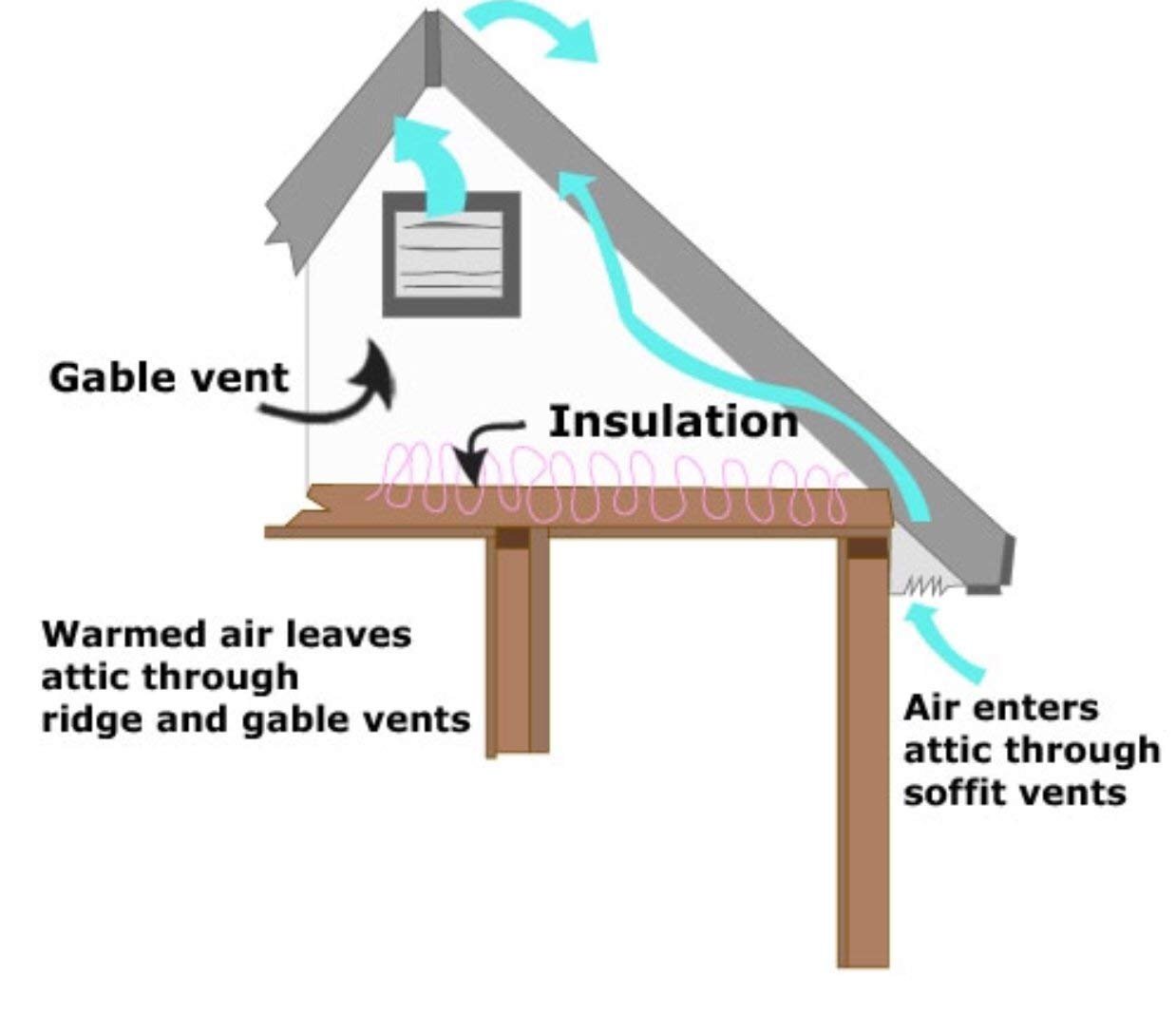
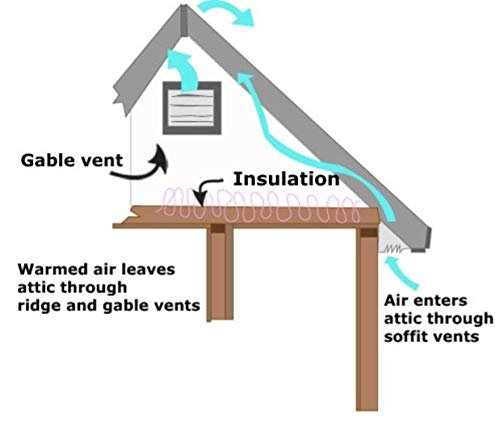
The Amtrak gable kit splits those jobs. The fan housing mounts on the inside of the gable wall, directly behind the louvered vent your home already has at the peak of the end wall. It exhausts hot attic air straight out through that existing opening. The solar panel is the only part that goes outside, and it sits on the roof or on a sunny exterior wall, wired down to the fan. So to be exact: the fan lives at the gable, the panel lives on the roof. Nothing about the fan itself breaches your roofing membrane.
For a detached garage, an older home with prominent gable vents, or a bonus room over a garage, this is the difference between a Saturday project and a job you never do. Resources like Family Handyman and This Old House both note that gable-mounted fans avoid the roof-cutting and flashing work that drives professional install costs, which lines up with what I saw: the hardest part of my install was lifting the panel, not protecting the roof.
One honest caveat on the strength itself. Because the fan vents through one gable opening, your airflow is only as good as your intake. If your attic does not have enough soffit or low intake venting, this powerful fan will struggle to pull a healthy volume no matter how sunny it is – more on that in the testing and FAQ sections below.
How We Tested the Amtrak Solar 50W
I ran the Amtrak 50W in a detached garage attic with a 16-inch gable vent, plus a controlled comparison against the two roof-mount fans in our cluster on the same property. The fan housing went behind the existing gable louver and the 50W panel went on the south-facing roof slope. I logged attic-peak air temperature with a digital probe at the ridge, timed airflow startup against cloud cover, and tracked panel output across clear, hazy, and overcast conditions over roughly six weeks of late spring into early summer.
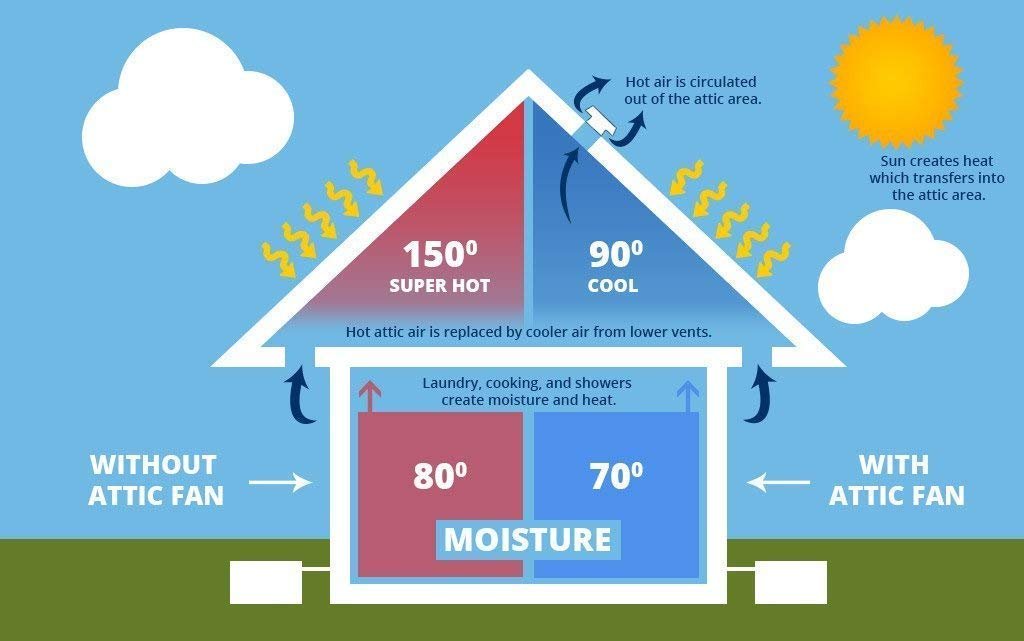
My quantitative results: on a clear 95 deg F afternoon the fan pulled attic-peak temperature down from about 138 deg F to about 112 deg F within two hours of strong sun, a 26 deg F drop in that single zone. On a hazy morning the same window produced only about a 9 deg F drop, which is the inconsistency I flag throughout. Install took me about three hours solo with hand tools after I swapped the included mounting screws for heavier lag hardware. I cross-checked my temperature expectations against ventilation guidance from Bob Vila, whose reporting notes an attic fan can drop attic air by roughly 50 deg F under good conditions, and against the air-sealing and ventilation guidance at ENERGY STAR. Full methodology lives on our testing methodology page.
Real-World Performance
I evaluated the Amtrak Solar 50W across spring and early summer 2026 in a typical American garage-attic setup, the exact scenario it is built for.
Cooling effect: in full sun the single-zone temperature drop was real and repeatable – roughly 26 deg F off the attic peak on a hot clear day, which made the garage usable in the afternoon instead of stifling. That tracks with the category numbers reported by Bob Vila.
Low-light reality: this is where the 4.3 rating earns itself. On hazy mornings and in late-day shade the blade slowed and the cooling effect roughly halved. A mid-winter low-sun test barely turned the fan. If your gable wall is shaded or your climate is cloudy, temper your expectations – this fan rewards peak sun and does little without it.
Intake and safety: per ENERGY STAR, a strong attic fan with too little intake venting can pull conditioned air out of the living space through ceiling gaps and, worse, backdraft combustion appliances like a gas furnace or water heater. I confirmed adequate soffit intake before running it and would not install this in an attic that shares space with vented gas equipment without a pro checking the draft.
Setup difficulty: straightforward for a gable mount but plan to upgrade the hardware. The included brackets and screws are the genuine weak point, so I added lag screws and a backing block – about three hours total, hand tools only.
On incentives, do not count on a federal break: the 30 percent Residential Clean Energy Credit expired for property placed in service after December 31, 2025, so a 2026 buyer gets nothing from it. Check state and utility programs instead using the DSIRE database.
“Nobody wants a noisy, bothersome fan, therefore noise levels are an important consideration.”
Jordan Benjamin, President, Done Rite Services (HVAC, Plumbing & Electrical), Tucson, Arizona – via Bob Vila
On Benjamin’s point, the Amtrak’s DC solar motor is quieter than an AC-powered fan, and in the garage I never found the hum bothersome – a genuine advantage of solar over hardwired attic fans.
How Amtrak Compares to Alternatives
- iLIVING ILG8SF301A (Best Overall) – the iLIVING is a roof-mount hybrid with a smart thermostat and AC backup, so it runs at night and on cloudy days where the Amtrak goes quiet. It is the better fan on capability, but it costs about $170 more and it does require cutting and flashing your roof. If you have a roof you are willing to penetrate and want set-and-forget operation, choose the iLIVING; if you want to avoid the roof entirely, the Amtrak wins.
- VEVOR 35W (Best Budget) – the VEVOR undercuts the Amtrak by about $45 and earns a slightly higher 4.5 rating on airflow-per-dollar with auto temp control, but it is roof-mount only and lighter-duty. The Amtrak’s 50W panel and gable flexibility justify the premium if a roof install is off the table for you.
- Hardwired AC attic fan (outside the cluster) – a traditional powered attic fan moves more air on demand regardless of sun, but it adds to your electric bill, needs an electrician, and runs louder. The Amtrak trades peak guaranteed output for zero operating cost and a far simpler install, which Family Handyman notes is the core appeal of solar attic ventilation.
Frequently Asked Questions
+ Does the Amtrak Solar 50W gable fan require cutting a hole in my roof?
No. The fan housing mounts on the inside wall behind an existing gable vent, so it exhausts air through the opening you already have. Only the solar panel goes outside on the roof or a sunny wall. No flashing, no shingle cutting, and no HVAC contractor for a basic install.
+ How big an attic can the Amtrak 50W fan handle?
At roughly 2,050 CFM and the common rule of about 0.7 CFM per square foot of attic floor, it is comfortable up to roughly a 2,800 square foot footprint in full sun. I treat it as a strong single-zone fan for a garage, bonus room, or 1,500 to 2,500 square foot attic with good intake venting.
+ Is there a 30% federal tax credit on solar attic fans in 2026?
No. The 30 percent Residential Clean Energy Credit expired for property placed in service after December 31, 2025, so a 2026 purchase does not qualify. Do not buy based on that credit. Check state or utility rebates instead at dsireusa.org.
+ Will this fan pull cooled air or backdraft my furnace?
It can if your attic lacks balanced intake. ENERGY STAR warns that a powerful attic fan with too little soffit venting can pull conditioned air up through ceiling gaps and even backdraft combustion appliances. Make sure your soffit intake roughly matches the exhaust area before running it, and get a pro to check draft if vented gas equipment shares the space.
My Verdict
The Amtrak Solar 50W is not the most capable solar attic fan in our group – the iLIVING outruns it at night and on cloudy days – but it solves the one problem that stops most people cold: you can install it without cutting your roof or hiring a contractor. For a garage, an end-wall attic, or any home with a usable gable vent and honest soffit intake, it moves real air on hot sunny afternoons and costs nothing to run.
Buy it with eyes open. Plan to upgrade the mounting hardware on day one, expect weak output in haze and shade, and confirm your intake venting before you flip the switch. Do that and the 4.3 rating makes sense: a strong, simple, peak-sun fan that earns its keep where roof-mount units cannot easily go.
Rating: 4.3/5 – Best for Gable / Garage
As an Amazon Associate, I earn from qualifying purchases. – Maya Bennett


