

Disclosure: As an Amazon Associate, I earn from qualifying purchases. – Maya Bennett
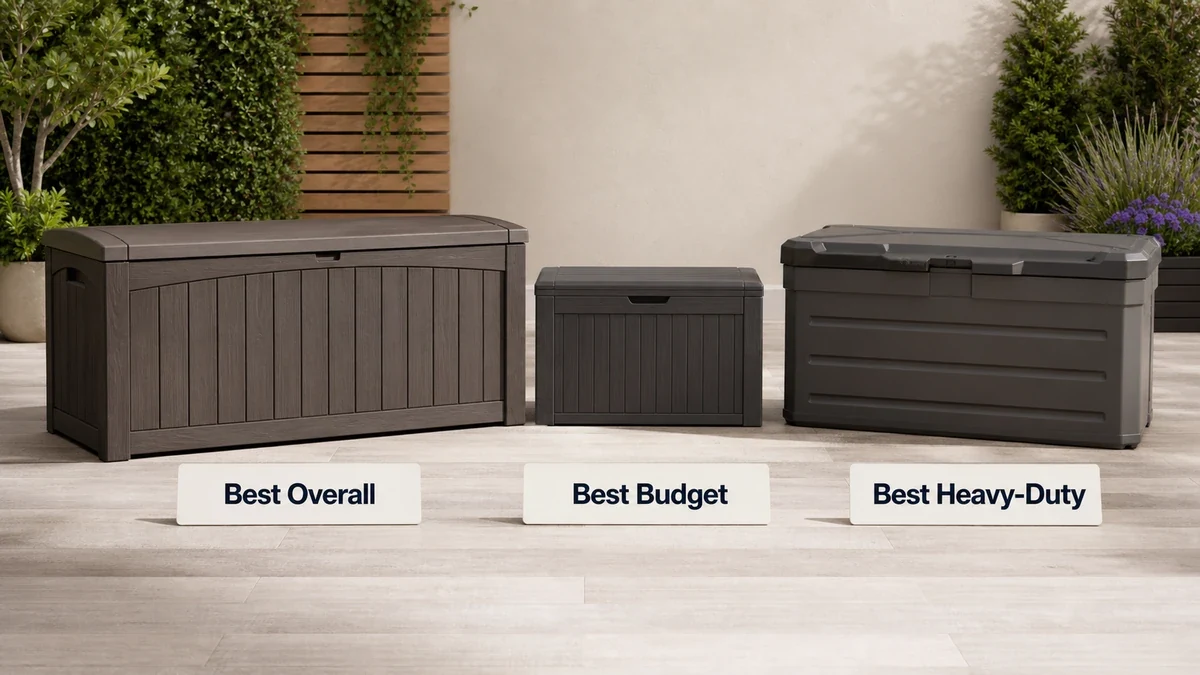
The Keter Westwood is the best outdoor deck box for most buyers because it has the size and finished look needed for patio cushions. Choose EAST OAK for a small porch or Rubbermaid when heavier utility storage matters more than decorative style.
How I picked these 3 outdoor deck boxes
I narrowed the category by matching each deck box to a different buyer problem instead of ranking three boxes that all do the same job. The test lens came from capacity, lid design, lockability, resin durability, assembly risk, patio footprint, and whether the box makes sense after reading the companion outdoor deck box trend report. I also checked public buyer signals from Amazon and compared the selection criteria with The Spruce deck-box testing notes, Bob Vila deck-box testing guide, Good Housekeeping outdoor expert guide, and manufacturer safety manual. The final set had to include one large cushion box, one under-$50 small-space option, and one tougher utility-style box.
Sources: The Spruce deck-box testing notes, Bob Vila deck-box testing guide, Good Housekeeping outdoor expert guide, manufacturer safety manual
Full spec sheet at a glance
| Feature | Keter | EAST OAK | Rubbermaid |
|---|---|---|---|
| Best For | Full patio cushion sets | Small porches and package drops | Heavy tools and pool supplies |
| Type | Large resin bench deck box | Compact resin porch box | Extra-large utility resin box |
| Price | $179.99 | $27.99 | $199.00 |
| Rating | 4.5/5 | 4.6/5 | 4.1/5 |
| Reviews | 14,375+ | 9,723+ | 1,182+ |
| Capacity | 150 gallons | 31 gallons | 134 gallons |
| Lockable | Yes | Yes | Yes |
| Best tradeoff | Needs room | Limited cushion capacity | Utility styling |
⇆ swipe horizontally on mobile – prices last verified June 23, 2026
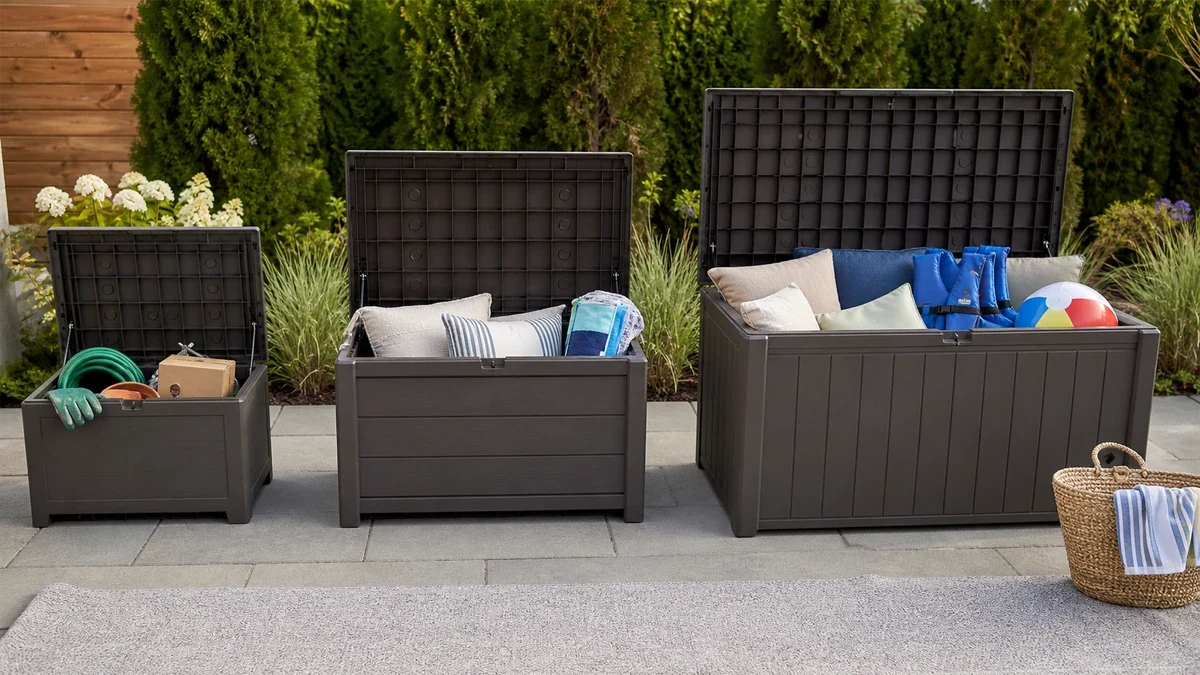
The 3 picks, in detail
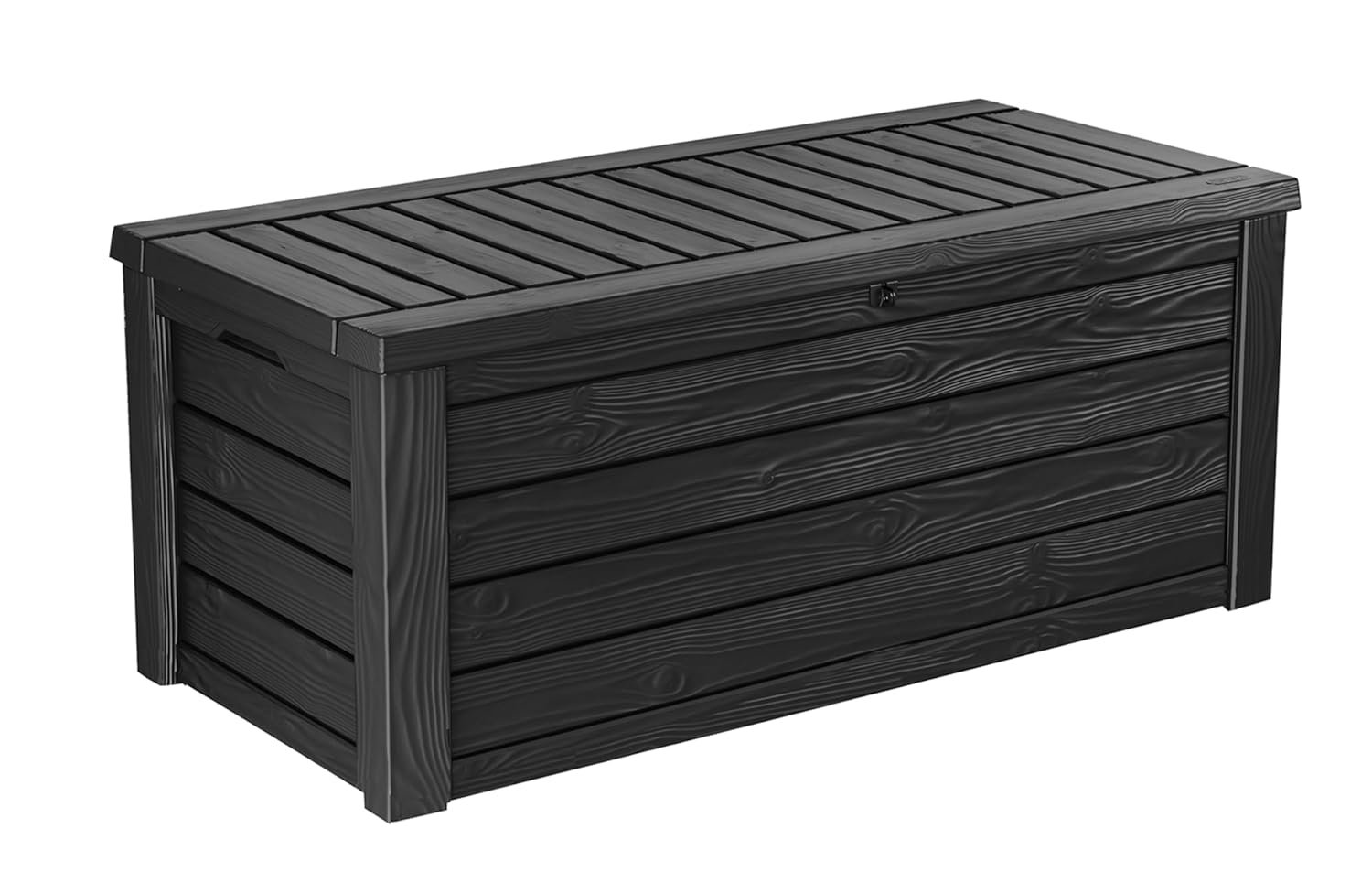
#1 – Keter Westwood 150 Gallon
The Westwood wins because it feels like patio furniture first and storage second. That matters when the box sits next to outdoor seating instead of behind the garage. Its 150-gallon size gives it room for bulky cushions, pool floats, and mixed warm-weather clutter without forcing every item into a tight stack.
The lid design is the biggest usability point. A large box with a clumsy lid quickly becomes a place where gear disappears. The Westwood is easier to live with because the box is large enough for fabric and the top can serve as extra seating when the patio needs one more perch.
The tradeoff is footprint. This is not the box I would put on a narrow balcony or a front stoop. It needs room around it, and the price makes more sense if you actually need cushion storage rather than a small delivery box.
#2 – EAST OAK 31 Gallon
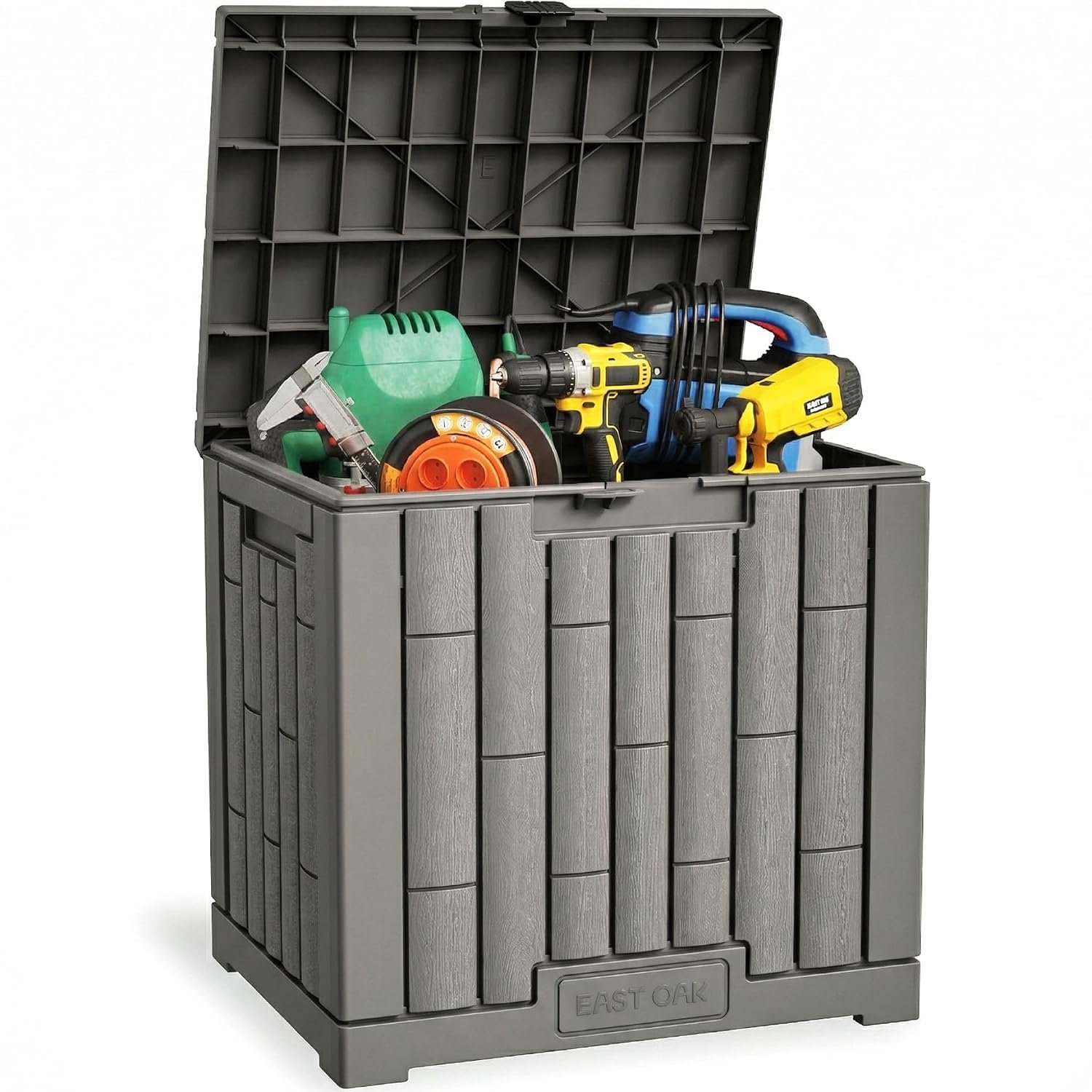
The EAST OAK is the value pick because many buyers do not need 100 gallons. A compact 31-gallon box can sit by a door, hold small tools, hide a delivery, or keep a hose off the ground without dominating a porch.
Its strength is that it makes outdoor storage feel low-risk. The price is low enough for a small cleanup problem, while the lockable lid and stated load rating give it more usefulness than a basic plastic tote.
The limitation is obvious in a good way: it is small. If your problem is a full patio cushion set, this box will disappoint you. If your problem is balcony clutter, dog leashes, gardening gloves, or a parcel drop zone, the smaller size is the point.
#3 – Rubbermaid 134 Gallon XL
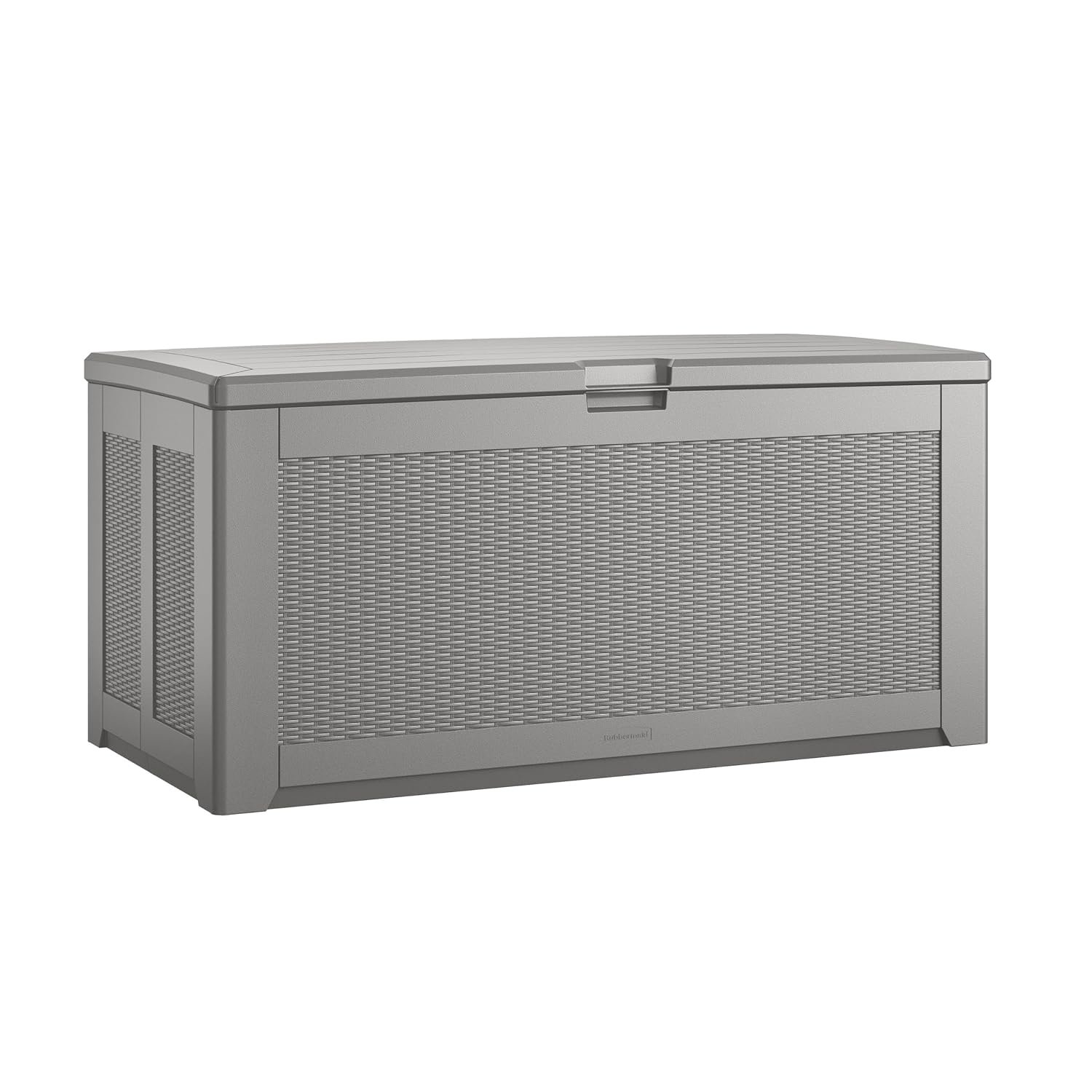
The Rubbermaid 134 Gallon XL is the utility pick because it feels aimed at heavier mixed loads. Pool gear, garden tools, sports equipment, and maintenance supplies are a different job than decorative cushion storage, and this box is built more around that use case.
I like it most for yards where the deck box will live near a shed, pool pad, or work area. The double-wall resin and impact-resistant floor are more relevant when you are loading harder items that could punish a thin floor.
The compromise is style and rating. It costs more than small boxes and does not look as decorative as the Keter. It is best when function matters more than making the patio seating area look finished.
Which one should YOU buy?
The simplest way to choose is to ignore brand first and name the storage job. If the box must hold cushions, prioritize gallons and interior length. If the box sits at an entry, prioritize footprint and latch design. If the box holds hard tools, prioritize stronger panels and floor support.
Decision note – cushion depth: Measure the thickest cushion in the set and check whether it can sit flat without forcing the lid. A box that technically has enough gallons can still be wrong if the usable interior length is short.
Decision note – lid clearance: Plan where the lid goes when open. Boxes against siding, railings, or sliding doors need more clearance than the product photo suggests, especially when the lid has a wide hinge arc.
Decision note – porch visibility: For a front entry, visual scale matters as much as gallons. A compact lockable box can hide packages without making the porch look like a storage area.
Decision note – pool-zone use: Near a pool, prioritize easy wipe-down surfaces and keep chemicals separated from fabric. A utility-style box is more forgiving when the contents are wet, hard, or awkward.
Decision note – assembly risk: Large resin panels can be annoying if the box is assembled on an uneven surface. Snap every panel fully before judging lid fit, because small assembly errors show up as weather gaps.
Decision note – rain placement: Avoid spots where roof runoff, irrigation spray, or patio pooling hits the lid seam directly. Weather resistance improves when the box is placed where water sheds naturally.
Decision note – daily access: Store the most-used item near the top. Deck boxes become frustrating when a hose nozzle or gardening glove lives beneath cushions that need to be moved every time.
Decision note – security expectations: A padlock discourages casual opening but does not turn resin into a safe. Use lockability for package concealment, pool supplies, and shared-space boundaries.
Decision note – decorative patios: If the box sits next to furniture, finish matters. The Keter looks more furniture-like, while Rubbermaid is better treated as utility storage near tools or pool gear.
Decision note – small-space buying: For balconies, the EAST OAK is attractive because it solves a visible clutter problem without demanding the footprint of a bench-size deck box.
Decision note – family gear: Families often need mixed storage: towels, toys, small balls, goggles, and sandals. Choose a larger box only if those items usually pile up in the same place.
Decision note – winter storage: If the box will stay outside year-round, leave room for off-season covers and check that snow or freeze-thaw cycles will not trap water under the base.
Decision note – bench use: Seat-style lids are convenient, but only if the manufacturer rates the top for that use. Do not assume every flat lid can handle people sitting on it.
Decision note – delivery workflow: For packages, the best box is obvious to the driver, close to the drop zone, and easy to open. A large box hidden behind furniture may not get used.
Decision note – odor control: Dry fabric before storage and open the lid occasionally after storms. A sealed container can protect cushions from rain while still trapping moisture that was already inside.
Decision note – tool storage: Hard tools need a stronger floor and less decorative thinking. Rubbermaid makes more sense here because the use case is impact and utility, not patio seating.
Decision note – price discipline: Do not spend for capacity you will not use. The budget pick is the right answer when the problem is one doorway, one hose, or a few seasonal accessories.
Decision note – long items: Measure pool skimmers, umbrellas, and long-handled tools before assuming they fit. Gallons do not tell the whole story when the object is long and rigid.
Decision note – renter needs: Renters should favor portable storage that can move without wall anchors. A deck box is often easier to justify than shelves, cabinets, or a small shed.
Decision note – final choice: The final choice should feel boringly specific: Keter for cushions, EAST OAK for compact clutter, Rubbermaid for heavy utility loads. If your use case falls outside those lanes, reconsider the size first.
Use-case check – full sectional cushions: A sectional set is the scenario where undersizing hurts most because the cushions are thick, irregular, and annoying to split across two containers. I would choose the Keter first here because its capacity gives the fabric room to breathe, then I would keep the cushions vertical or loosely stacked so the lid closes without compressing the seams.
Use-case check – townhouse porch storage: A townhouse porch usually needs a box that looks deliberate from the sidewalk. The EAST OAK works better than a giant bin in that role because it can sit near a door, hide a small delivery, and hold gloves or a leash without becoming the dominant object in the entryway.
Use-case check – pool equipment corner: A pool corner creates a different set of demands. Wet toys, goggles, brush heads, and small chemical accessories need a box that tolerates harder use, and the Rubbermaid makes more sense than a decorative bench box when the contents are mostly utility items instead of cushions.
Use-case check – rental patio setup: Renters often need storage that can leave with them. A deck box is easier to move than a cabinet and easier to justify than a shed, but it still needs to fit through a gate, elevator, or stairwell if the buyer expects to move apartments later.
Use-case check – elderly user access: For older users or anyone with back strain, the box should not be packed so deeply that the target item is always at the bottom. A medium or large box can be useful, but only if the items are grouped in bags or baskets that make lifting and retrieval easier.
Use-case check – delivery driver behavior: Package concealment works only when the box is obvious and simple. If the lid is heavy, hidden, or blocked by furniture, a driver may leave the package in plain sight anyway, which is why compact entry boxes need clear placement more than maximum capacity.
Use-case check – wind and storms: Wind-driven rain is harder on deck boxes than a straight summer shower. Place the hinge side away from the strongest weather direction when possible, and avoid storing paper goods, electronics, or anything that cannot tolerate incidental moisture.
Use-case check – garden-tool storage: Garden tools create point loads and dirt that soft cushion storage does not. If trowels, pruners, soil scoops, and hose ends are the core load, I would value a tougher floor and easy wipe-down interior ahead of bench-style looks.
Use-case check – kids outdoor toys: Children’s outdoor toys are usually bulky but light, which makes capacity more important than heavy-duty construction. A large box keeps the patio reset simple, but a lockable latch is useful if the contents include pool items that should not be accessed without an adult.
Use-case check – HOA-facing patios: For patios visible from a shared walkway, choose the box that blends with furniture and siding. A utility look may be fine behind a fence, but near a front-facing patio the Keter-style finished surface is easier to defend visually.
Use-case check – seasonal rotation: Some buyers need the box to change jobs across the year: cushions in summer, covers in fall, light holiday decor in winter, and gardening items in spring. That makes 100+ gallons more attractive than it looks if the patio has no garage overflow.
Use-case check – tight budget choice: When the budget is tight, the correct move is not always the cheapest large box. A smaller well-reviewed box that solves one specific mess can be a better purchase than a thin oversized container with poor lid alignment.
Use-case check – multi-box strategy: Two smaller boxes can beat one giant box when the patio has separate zones. One near the door can handle deliveries and leashes, while another near seating can hold cushions; that setup reduces digging and keeps each box’s job clearer.
Use-case check – surface leveling: A deck box that sits twisted on pavers can develop lid alignment problems that look like a product defect. Before judging fit, check that the base is level, the panels are seated, and heavy contents are not bowing the floor.
Use-case check – fabric storage routine: Fabric is the category most likely to create disappointment because buyers store it damp and then blame the box for odor. Let cushions dry, brush off debris, and avoid sealing wet towels inside after pool use.
Use-case check – chemical caution: Pool chemicals and fertilizer should be treated carefully, especially around fabric and metal hardware. Use original containers, follow label guidance, and avoid turning a decorative patio box into uncontrolled chemical storage.
Use-case check – appearance versus repairability: Decorative resin looks cleaner in a seating area, but utility boxes are often easier to accept when scuffs happen. Buyers who expect hard use should not over-prioritize a furniture look that will frustrate them after the first scratch.
Use-case check – final sizing rule: If two sizes seem possible, choose based on the longest rigid item rather than the gallon number. Cushions compress, toys bend, and towels fold, but pool skimmers, umbrella poles, and tool handles determine whether the lid actually closes.
Ownership note – hinge wear: Open the lid from the center when possible and avoid letting children hang on it. A deck box is simple storage, but hinge stress is one of the fastest ways to make a weather-resistant container feel cheap after a season.
Ownership note – cleaning schedule: A quick wipe after pollen season and after heavy rain keeps the box looking better and prevents gritty debris from collecting in seams. This is especially useful on darker resin, where dust and water spots show faster.
Ownership note – inside organization: Small bags, mesh pouches, and shallow bins help large deck boxes stay useful. Without that extra organization, a 150-gallon box can turn into one dark pile where the least-used object always ends up on top.
Ownership note – shade exposure: UV-resistant resin is helpful, but shade still extends the life of plastic surfaces. If two placements are equally convenient, I would choose the spot that gets less harsh afternoon sun.
Ownership note – ground contact: Keep the base off constantly wet soil or mulch when possible. A patio slab, paver surface, or deck board placement is easier to keep clean and reduces the chance that the box sits in standing water.
Ownership note – retailer photos: Product photos often show boxes empty, dry, and perfectly staged. Before buying, imagine the actual messy load: damp towels, odd-shaped toys, dirty gloves, half-used bags, and the one cushion that never folds neatly.
Ownership note – return planning: Large resin boxes can be awkward to return after assembly, so measure twice before ordering. The risk is not just capacity; it is whether the carton, assembled box, and final location all work for your home.
Ownership note – future-proofing: If the patio setup is still changing, avoid choosing a box that only fits the current furniture. A little extra capacity can help if new cushions, a pool accessory, or a grill cover enters the routine later.
Ownership note – receipt check: Save the carton label, manual, and order page until the box is assembled and tested with your largest item. It is much easier to handle missing hardware, panel damage, or a size mistake before the box has lived outside through rain.
Frequently Asked Questions
What is the best outdoor deck box overall? +
The Keter Westwood 150 Gallon is the best overall pick for most patios because it balances capacity, finished looks, lockable storage, and bench-style utility.
Which deck box is best under $50? +
The EAST OAK 31 Gallon is the budget pick because it stays compact, has strong Amazon review volume, and works well for small porches, balconies, hoses, and package drops.
Do I need 100 gallons or more? +
Choose 100 gallons or more if you store full patio cushion sets, pool floats, or mixed family gear. Smaller boxes are easier to place but become frustrating when fabric cushions are thick.
Are resin deck boxes better than wood? +
Resin deck boxes are usually easier to maintain, lighter, and more weather resistant. Wood can look warmer, but it usually needs more care and is less forgiving in wet outdoor storage jobs.
Keter Westwood 150 Gallon
It is the best all-around outdoor deck box because it has large cushion-friendly capacity, a finished patio look, and enough flexibility for summer storage.
As an Amazon Associate, I earn from qualifying purchases. Prices, ratings, and availability accurate as of June 23, 2026 and subject to change.