

Disclosure: As an Amazon Associate, I earn from qualifying purchases. – Maya Bennett
Outdoor deck boxes are becoming a practical patio upgrade because they solve three everyday problems at once: wet cushions, scattered tools, and visible package drops. The best 2026 buys are no longer just big bins; buyers are comparing size, lid design, resin quality, and whether the box can live on a small porch without looking like a shed.
Outdoor deck boxes are moving from afterthought storage to one of the more practical summer patio purchases of 2026, especially for buyers trying to protect cushions, pool toys, small garden tools, and deliveries without adding a full outdoor shed.
Real Simple recently covered Amazon deck boxes as a current way to hide packages from porch pirates, while shopping guides from The Spruce deck-box testing notes, Bob Vila deck-box testing guide, and Good Housekeeping outdoor expert guide keep emphasizing capacity, seal design, and durability. That combination matters because buyers are not just organizing a patio; they are trying to keep fabric dry, keep clutter off the ground, and avoid spending shed money for a problem that may only need 30 to 150 gallons of covered storage.
Why patio storage is getting more specific
Five years ago, many outdoor storage searches were broad: storage shed, plastic bin, or patio cabinet. The current deck-box shopper is more specific. They want a box that fits one cushion set, hides a package by the door, or stores a hose without swallowing a balcony. That is why 30-gallon porch boxes and 150-gallon cushion boxes are both showing up in the same buyer journey.
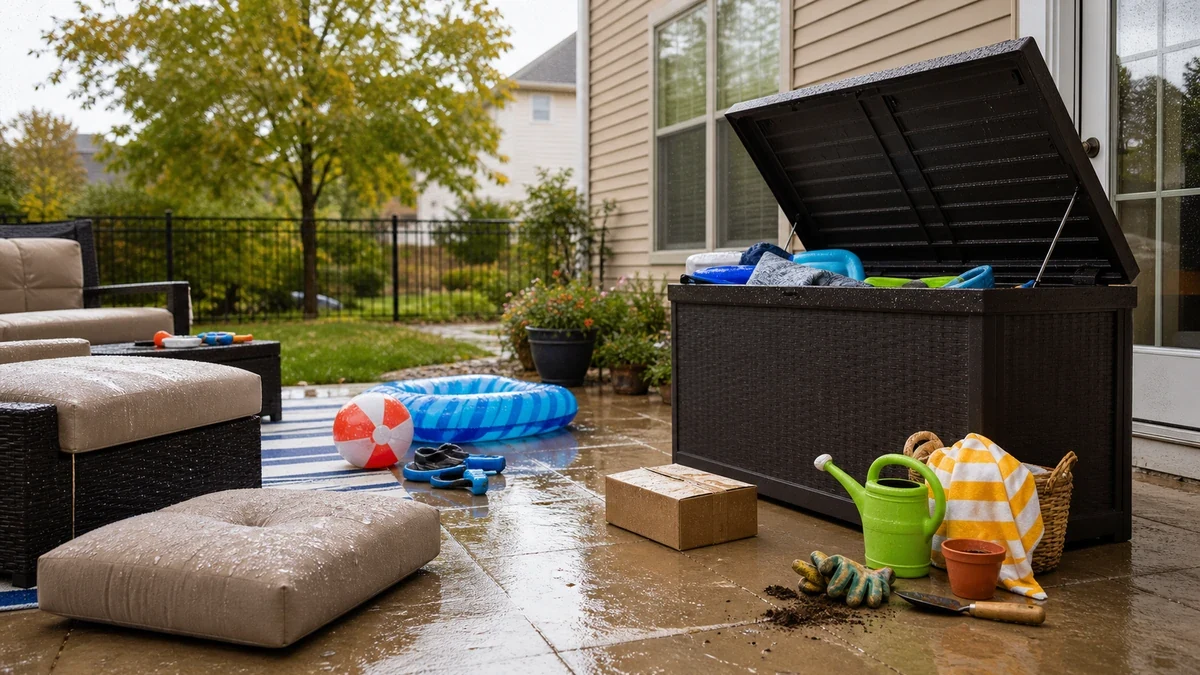
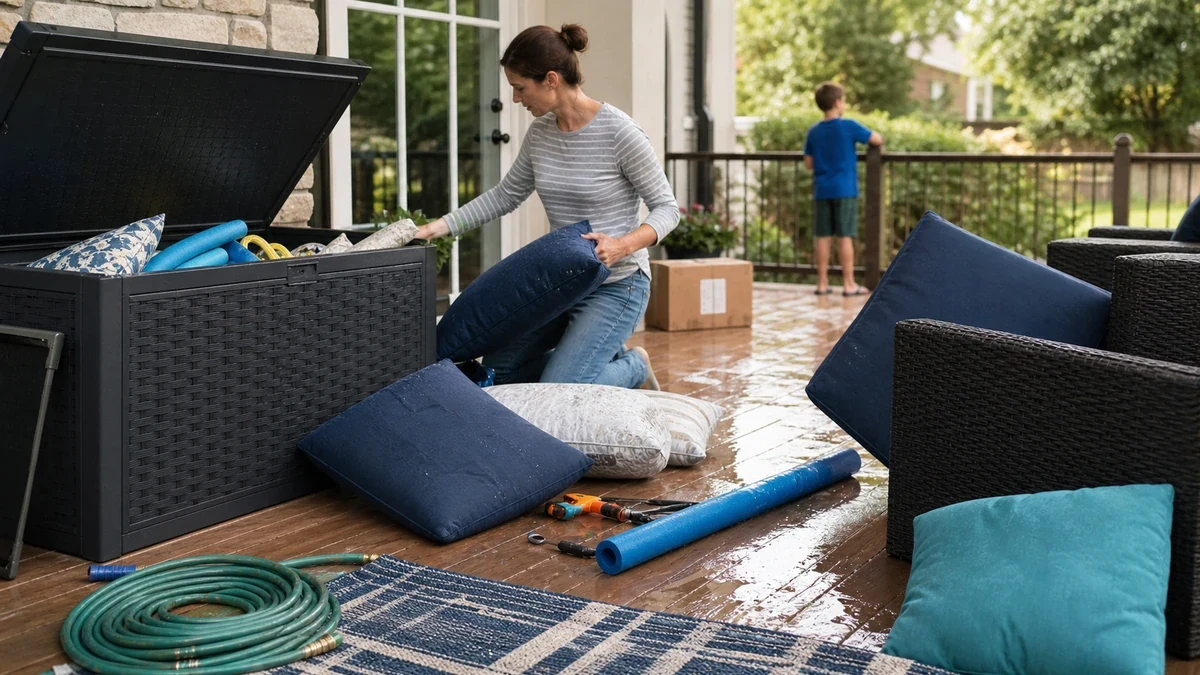
The change is partly about space. More buyers are furnishing patios and balconies as working outdoor rooms, but they still need to clear the surface quickly when rain is coming. A deck box gives a seat cushion, throw pillow, watering can, and pool noodle a single landing zone. It also lets renters add order without drilling into a wall or assembling a shed.
By the numbers: what shoppers are comparing
Capacity is the first filter, but it is not the only one. The manufacturer safety manual I reviewed warns owners to avoid storing corrosive chemicals or hot items and to wipe away pooled water before opening, which is a reminder that even a weather-resistant box still needs normal care. I also looked for lockable lids, resin panels that can handle sun exposure, and enough interior depth to prevent cushions from being crushed.
Small boxes and large boxes are serving different jobs
A compact 30- to 40-gallon deck box is often the better choice for a front porch, balcony, or side door. It can hold small deliveries, hand tools, and one or two cushions without blocking the walkway. It also has a lower visual profile, which matters if the storage box sits next to the front entry instead of behind patio furniture.
Large boxes in the 100- to 150-gallon range are different. They are usually bought for cushion sets, pool floats, and mixed summer gear. A large box may double as a bench, but the top-load design also means the most frequently used item should stay near the top. Buyers who throw everything inside without zones often end up digging for a hose nozzle under a pile of wet pool toys.
| Category | Core Technology | Price Range | Representative Brands |
|---|---|---|---|
| Compact porch box | Snap-together resin body, lockable lid | $25-$60 | EAST OAK, Suncast, Keter |
| Large cushion box | Bench-style resin shell with hinged top | $100-$220 | Keter, Suncast, Lifetime |
| Heavy-duty utility box | Double-wall resin and reinforced floor | $150-$300 | Rubbermaid, Suncast, Lifetime |
| Delivery concealment box | Lockable lid, porch-friendly footprint | $40-$170 | EAST OAK, Step2, Cosco |
⇆ swipe horizontally on mobile
Weather resistance is about the lid, not just the resin
Resin is popular because it does not rust, usually does not need painting, and is lighter than many wood storage solutions. But water resistance depends on more than the material. Lid overhang, hinge alignment, panel fit, and where the box sits on the patio all change how dry the interior stays during a wind-driven storm.
I am watching shoppers become more cautious about the word waterproof. A deck box can shed normal rain and still let in moisture if it is placed where water pools, hit by sprinklers, or packed so tightly that the lid cannot sit flat. Buyers who store fabric cushions should air them out before closing the box, because trapping damp fabric inside a sealed container can create odor even when the box itself did its job.
The expert note buyers should not skip
One expert point from The Spruce stood out because it sounds basic but prevents most bad purchases: measure the space before choosing capacity. Noah James, a professional landscaper and owner of Liberty Lawn Maintenance, told The Spruce, “Always measure your space and consider your storage needs before buying.”
“Always measure your space and consider your storage needs before buying.“
What to check before buying
The right deck box is less about the biggest capacity and more about matching the job. A box for pool toys needs drainage-minded packing and easy access. A box for cushions needs interior length and a lid that does not crush fabric. A box for package drops needs porch scale, a lockable latch, and a lid a delivery driver can understand quickly.
The next buying question
Once the size category is clear, the next decision is value. A small porch box can be a good under-$50 solution, while a full cushion box costs more because it needs more material, stronger hinges, and enough interior depth for bulky fabric. A heavy-duty utility box may be worth it when tools and pool gear are the main load.
The most useful shopper habit I saw in this category is simple inventory. Count the cushions, measure the longest one, then add the awkward items that never seem to have a home: hand sprayers, goggles, dog toys, gardening gloves, and delivery bags. That list keeps buyers from choosing a box that looks neat online but fails the first weekend after the pool is open.
Placement also changes the answer. A box against the house may need a lid that opens without hitting siding or a window sill. A box near a pool should be easy to wipe down and should not require people to step around sharp corners. A box by a front door needs to look intentional because it becomes part of the entry, not just an outdoor utility item.
For 2026, I would treat outdoor deck boxes as a small infrastructure purchase for the patio. They are not exciting in the way a grill, conversation set, or pergola is exciting, but they decide whether the area can reset quickly after weather, kids, pets, or deliveries. That quiet usefulness is why the category keeps showing up in summer shopping coverage.
Ready to compare your options?
I compared three outdoor deck boxes for different jobs: a large cushion box, a compact budget porch box, and a heavier utility-style storage box.
Frequently Asked Questions
Why are outdoor deck boxes trending in 2026? +
Outdoor deck boxes are riding three practical trends at once: smaller patios, more outdoor cushions and pool accessories, and buyers who want a simple place to hide deliveries from street view.
Are deck boxes actually waterproof? +
Most resin deck boxes are weather resistant, not submersible. A sloped lid, tight seams, and careful placement away from sprinkler spray matter as much as the material.
What size deck box do I need for patio cushions? +
Small 30-gallon boxes fit hoses and one or two cushions. Full cushion sets usually need 100 to 150 gallons, especially if the cushions are thick or sectional sized.
Should a deck box be lockable? +
A lockable latch is useful for package concealment, pool chemicals, and shared spaces. It is not a safe substitute for storing valuables indoors, but it prevents casual opening.