

Disclosure (FTC 16 CFR Part 255): As an Amazon Associate, I earn from qualifying purchases. I am a journalist who covers consumer cleaning tech; if you click an affiliate link in a related buying guide and make a purchase, I earn a small commission at no extra cost to you. The reporting below contains no paid placements. – Maya Bennett
Published June 4, 2026 – 8 min read
–
Consumer cleaning-tech journalist, 3 years on the home-cleaning category
Handheld steam cleaners are having a moment in 2026 because they promise chemical-free grout and tile cleaning, and because a string of high-profile CPSC recalls has pushed shoppers toward safer, recall-free models. Steam is great at lifting baked-on grime and killing many germs on contact, but it sanitizes rather than disinfects in the regulatory sense. Buy on tank size, pressure, attachments, and a clean recall record, and always verify any model against the official CPSC list first.
I have been tracking the handheld steam cleaner category for most of 2026, and the search data tells a clear story: shoppers are abandoning chemical sprays and stiff-bristle brushes for compact steamers aimed squarely at grout and tile.
The pain point is universal. Stained, mildewed grout and grease-streaked tile resist ordinary scrubbing, and the chemical sprays that finally cut through often leave behind fumes that renters and parents would rather avoid. A handheld steamer flips that equation: it uses nothing but heated water to soften and lift grime from the porous channels between tiles. That promise, plus a wave of safety news that put the whole category in the headlines, is why interest has climbed sharply this spring.
Why handheld steam cleaners are trending right now
Three things converged in 2026. The first is the chemical-free movement: more buyers want to clean bathrooms and kitchens without bleach, ammonia, or proprietary sprays, and steam is the obvious substitute. The second is price accessibility. Capable handhelds now start well under $50, so the barrier to trying one has collapsed. The third, and the one that genuinely moved the needle, is safety news.
In early 2026 the U.S. Consumer Product Safety Commission announced recalls affecting several widely sold handheld steam cleaners over burn-hazard concerns. When a product safety story like that breaks, it does two things at once: it scares some buyers off, and it sends the rest searching for safe, recall-free alternatives. According to the CPSC recall notice, more than a million units of one popular model were affected, which is exactly the kind of figure that turns a quiet category into a trending one.
Why grout and tile are the category killer app
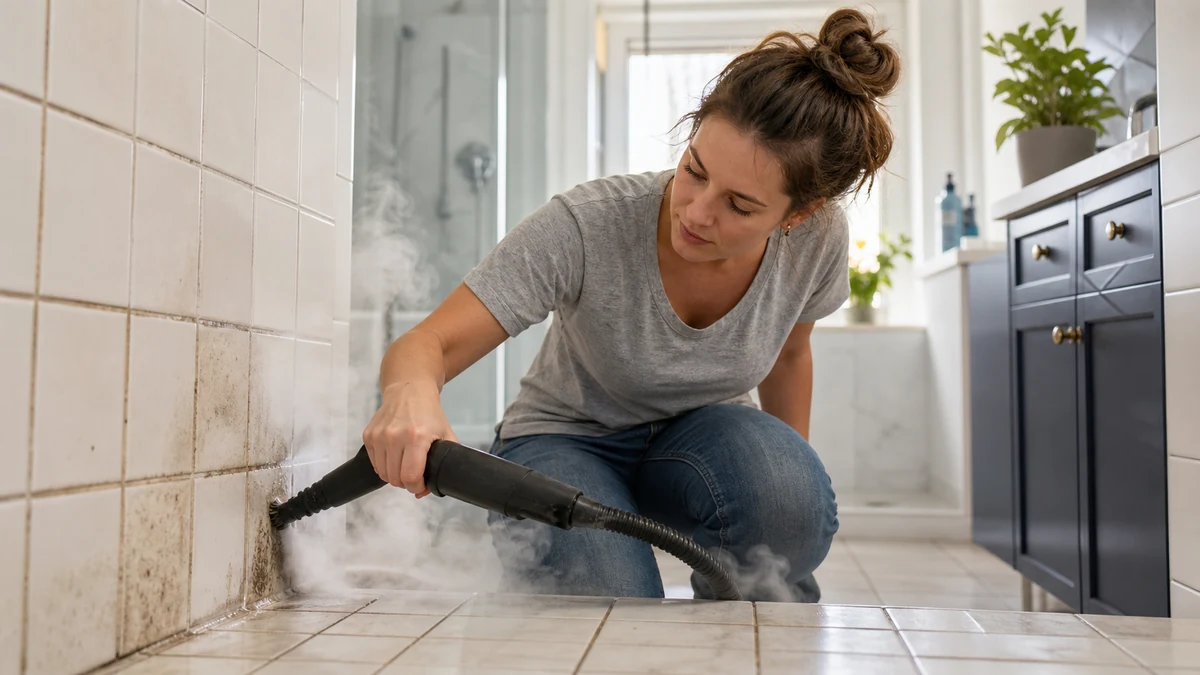
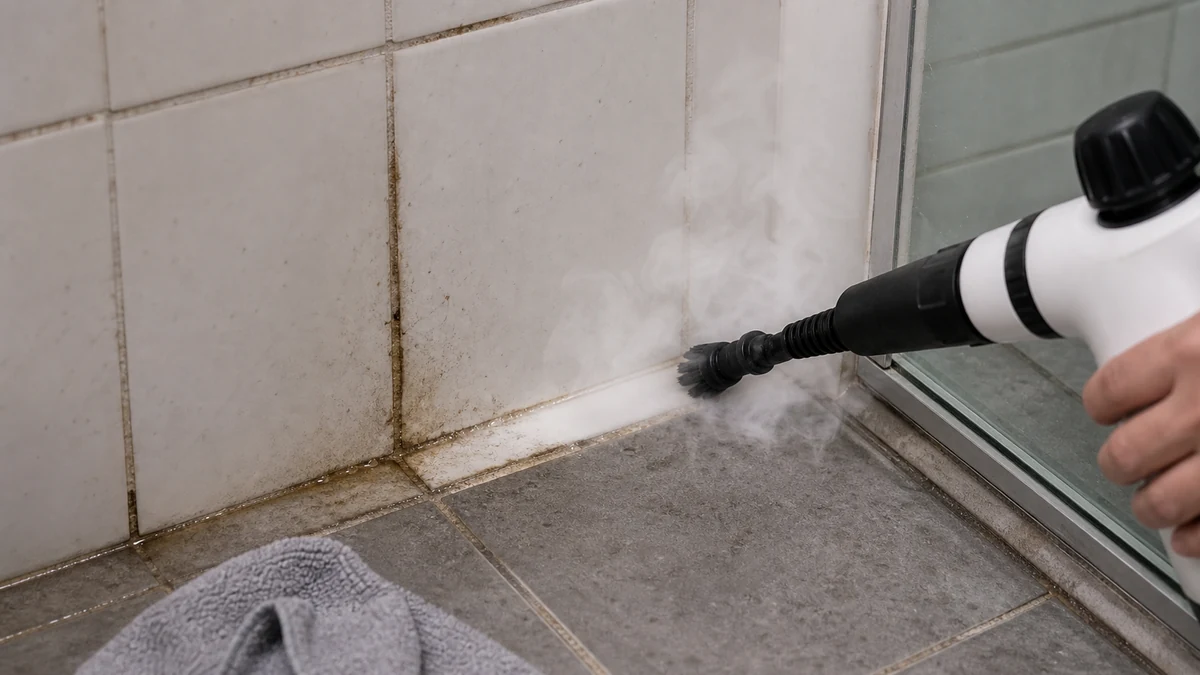
Grout is porous and sits below the tile surface, so dirt, soap scum, and mildew settle into channels that a flat sponge can never reach. That is precisely where pressurized steam excels. A narrow jet nozzle drives heat and moisture into the grout line, softening buildup so it wipes away with a fraction of the elbow grease a scrub brush demands. Detail brushes then agitate the loosened grime without you reaching for a single chemical.
This is also where buyers care most about specifications. Consumer testing groups have noted that runtime, tank size, and steam pressure are the variables that separate a tool that cleans a whole shower from one that quits halfway. Consumer Reports has covered the handheld steam-cleaner category and the practical trade-offs between compact spot cleaners and larger canister units, and the same logic applies to grout: more pressure and a longer continuous trigger mean fewer interruptions on a stubborn bathroom floor.
The 2026 recalls, in context (and why panic is the wrong response)
It would be easy to read the recall headlines and conclude the whole category is dangerous. That is not what the record shows. In 2026 the CPSC flagged specific models over attachment and burn-hazard issues, including the Bissell Steam Shot OmniReach and the Dupray Neat, plus the PurSteam Elite steamers, which the CPSC has warned consumers to stop using. A recall is the safety system working as intended: it identifies a defect in a particular product and gets it out of homes. It is not a verdict on every steamer ever made.
The practical takeaway is simple. Before you buy any handheld steamer, look it up on the official CPSC recall database, and if you already own one, do the same. For the record, the three models featured in our companion buying guide carry no active recall, and I deliberately excluded any Bissell Steam Shot unit from that lineup for this exact reason. Checking takes thirty seconds and removes the only real risk that the headlines were pointing at.
| Category | Core Technology | Price Range | Representative Brands |
|---|---|---|---|
| Budget handheld spot steamer | Small tank, ~1000W, multi-piece kit, doubles as garment steamer | $30 – $50 | LABIGO, PurSteam, Comforday, Steamica |
| High-pressure grout specialist | Higher PSI, lockable trigger, jet + detail brushes for caked grime | $50 – $70 | McCulloch, Wagner, Dupray, Vapamore |
| Multi-purpose canister handheld | Large tank, long runtime, long hose, 15+ piece accessory kit | $80 – $130 | Steamfast, McCulloch, Bissell, Karcher |
⇆ swipe horizontally on mobile
The claim to be careful with: sanitize is not disinfect
This is the part of the steam story marketers love to overstate, so it is worth getting right. Per the CDC guidance on steam sterilization, saturated moist heat is genuinely microbicidal: it denatures the proteins and enzymes that microbes need to survive. A household steamer running near 200 to 212F can kill many bacteria, viruses, mold spores, and dust mites on direct contact, which is real and useful.
The accuracy limit is this: sanitizing is not the same as disinfecting in the eyes of the regulators. As the EPA notes, consumer steam cleaners are not EPA-registered disinfectants, and they are not validated sterilizers the way an autoclave is. Contact time, surface coverage, and temperature all vary in real-world home use. My advice mirrors what testing groups recommend: use steam to lift grime and reduce the microbial load, then follow with an EPA-registered disinfectant if a surface genuinely needs to be disinfected. Treat any product that promises hospital-grade germ kill from a handheld nozzle with skepticism.
Steam safety: what every new owner should know
Steam exits the nozzle near boiling, so the same heat that lifts grout grime can scald skin in an instant. The non-negotiable rules are straightforward. Never aim the jet at skin, people, or pets. Let the unit fully cool and depressurize before you open the cap or swap an attachment, and always lock attachments in place before you pull the trigger. These steps are exactly the failure points that the 2026 recalls centered on, so they are not theoretical.
Surface compatibility matters just as much. Do not steam unsealed or waxed hardwood, laminate, unsealed stone or grout that can thermally crack, painted or water-sensitive surfaces, silk, or electronics. Always test an inconspicuous area first, and fill the tank with distilled water to limit mineral scaling that shortens the life of the heater. Used this way, a handheld steamer is a safe, repeatable tool rather than a hazard.
“Steam cleaning is one of my favorite ways to clean because it makes cleaning quick and painless – without the use of harsh chemicals typically found in household cleaners.“
What to look for before you buy
If you are shopping the category for grout and tile specifically, a handful of specs predict whether you will be happy. Tank size and continuous runtime determine how much you can clean before refilling and waiting through another heat-up cycle. Steam pressure, often quoted in PSI, is what powers through caked grout lines, and a lockable trigger spares your hand on long jobs. The accessory kit is the unsung hero: an angled jet nozzle plus a set of detail and corner brushes is what makes grout work fast.
Beyond the numbers, weigh the trade-offs honestly. A large-tank canister handheld with a long hose is ideal for whole-shower grout, while a small budget unit shines for quick spot jobs and doubles as a garment steamer. There is no single best answer – only the best match for your bathroom, your budget, and how much grout you actually plan to tackle.
Ready to compare your options?
I tested three recall-free handhelds head to head for grout and tile – a long-runtime all-rounder, a budget value pick with the widest accessory kit, and a high-pressure grout specialist. The full guide breaks down tank size, PSI, runtime, and which one fits your bathroom.
Frequently Asked Questions
What is driving the handheld steam cleaner trend in 2026? +
Two forces are pushing the category. First, renters and parents want a chemical-free way to lift stained grout, mildew, and kitchen grease without harsh fumes. Second, a wave of 2026 CPSC recalls on a few popular models put steam-cleaner safety into the news, sending shoppers searching for safe, recall-free alternatives. The result is a clear shift toward compact, accessory-rich handhelds aimed at grout and tile.
Does a steam cleaner actually disinfect grout and tile? +
Not in the regulatory sense. Per the CDC, saturated moist heat is microbicidal and household steamers running near 200 to 212F can kill many bacteria, viruses, mold, and dust mites on direct contact. But the EPA and Consumer Reports are clear that sanitizing is not the same as disinfecting: consumer steamers are not EPA-registered disinfectants or validated sterilizers. Use steam to lift grime, then an EPA-registered product if you truly need disinfection.
Were any handheld steam cleaners recalled in 2026? +
Yes. In 2026 the CPSC announced recalls affecting several popular handheld steam cleaners over burn-hazard concerns, including the Bissell Steam Shot OmniReach and the Dupray Neat; the CPSC has also warned consumers to stop using the PurSteam Elite steamers. Before you buy any unit, check it against the official CPSC recall list. The three picks in our companion buying guide (the Steamfast SF-370WH, LABIGO, and McCulloch MC1230) carry no active recall or warning, but checking is always the smart first step.
Are handheld steam cleaners safe to use at home? +
They are safe when used correctly, but steam exits near 200 to 212F and can scald. Never aim the nozzle at skin, people, or pets; let the unit fully cool and depressurize before opening the cap or swapping attachments; and lock attachments before triggering. Avoid steaming unsealed or waxed hardwood, laminate, unsealed stone, painted or water-sensitive surfaces, silk, and electronics. Test an inconspicuous spot first and use distilled water to limit scaling.