

Disclosure (FTC 16 CFR Part 255): As an Amazon Associate, I earn from qualifying purchases. I am a journalist who covers consumer pet-products tech. ReviewGuid.com participates in the Amazon Services LLC Associates Program. If you click an affiliate link in a related buying guide and make a purchase, I earn a small commission at no extra cost to you. The reporting below contains no paid placements. – Maya Bennett
Published June 10, 2026 – 8 min read
–
Pet-products and consumer-tech journalist, covering the category since 2023
The fastest-growing corner of the self-cleaning litter box market in 2026 is the multi-cat, app-connected box that logs how often and how long each cat visits. Owners juggling two or three cats and full-time jobs are buying these less to skip scooping and more for the per-cat data, which may help them notice changes worth raising with a vet. It is a real shift in why people buy, but the smart box is still only one box in a household that the n+1 rule says needs several.
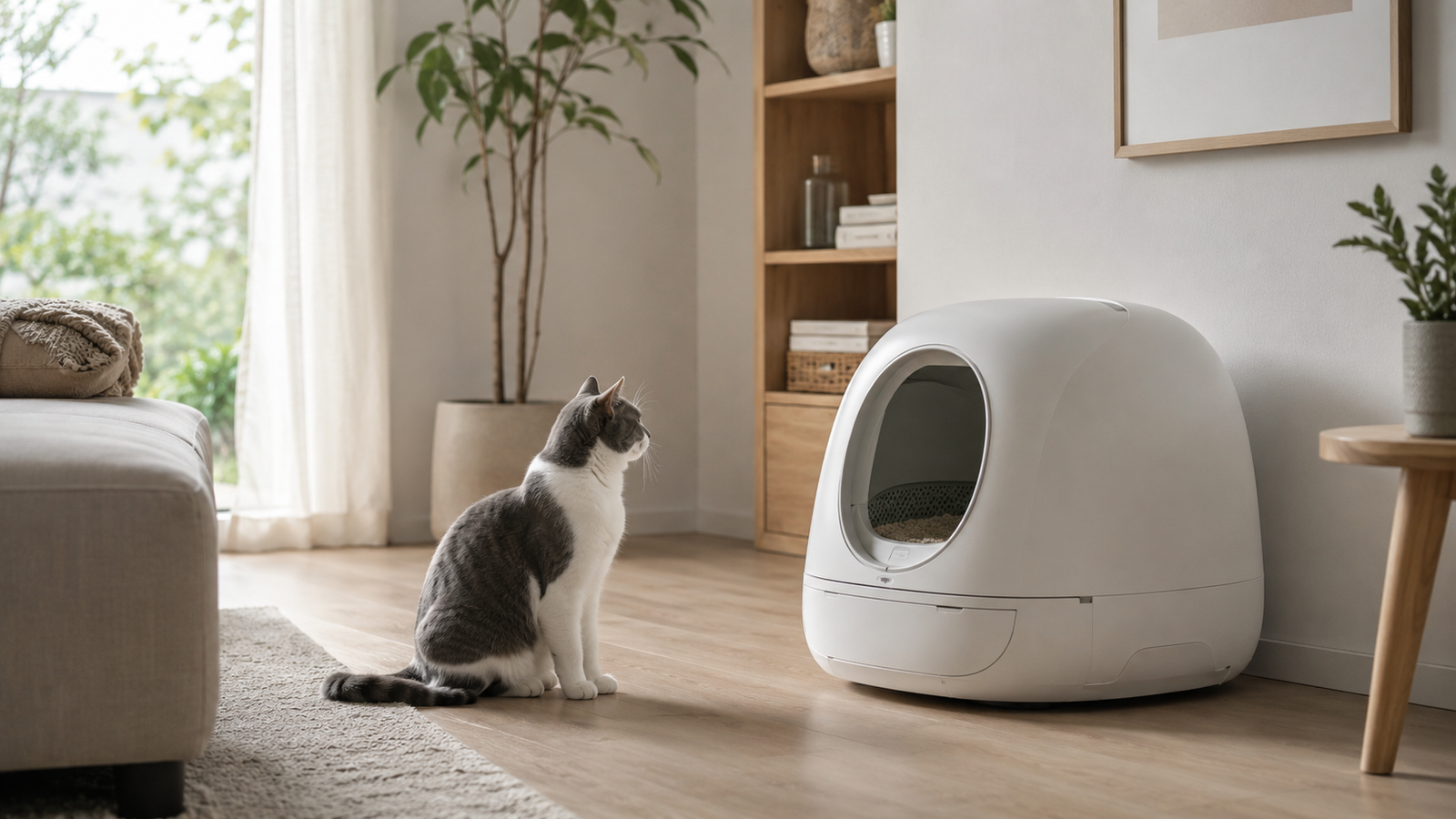
The self-cleaning litter box used to be sold on one promise: never scoop again. In 2026 the pitch has quietly changed. The boxes getting the most attention now are the multi-cat models that connect to a phone app and track each cat individually – how many times it visited, how long it stayed, and roughly what it weighs – turning a labor-saving appliance into something owners increasingly treat as a quiet wellness monitor.
I have been tracking the automatic litter box category since 2023, and the change in buyer questions is hard to miss. Two years ago shoppers asked which box jammed the least. Now a growing share ask whether a box can tell them which of their three cats is using it more than usual. That is a different motivation, and it is being driven by a collision of trends: more households keeping multiple cats, more of those owners working full time and away from the box all day, and veterinary care that keeps getting more expensive, which makes catching a problem early feel financially as well as emotionally worth it.
Why the surge is happening now
Three forces are pushing this category at once. The first is simple math about cats per home. American Pet Products Association owner surveys have shown for years that cat households frequently keep more than one cat, and multi-cat homes are where a single shared box struggles most. A box that two or three cats use may need cleaning eight to ten times a day, far beyond what an owner who leaves for work can manage by hand.
The second force is time. The same owners adding a second or third cat are often back to full-time, in-office or hybrid schedules, which means nobody is home to scoop midday. That is exactly the gap an automatic box fills. The third force is cost. Veterinary prices have climbed steadily, and a urinary blockage or advanced kidney case can run into four figures. Against that backdrop, a box that surfaces a behavior change early – even just a nudge to book an appointment sooner – starts to look like cheap insurance rather than a luxury gadget.
None of this is hypothetical positioning by brands. It tracks with long-standing veterinary guidance. The AAHA/AAFP n+1 litter box rule already tells multi-cat owners they should be running multiple boxes, and the feline life-stage guidelines stress monitoring as cats age. The app-connected box is, in part, the consumer-tech industry answering a need vets have described for years.
From a chore device to a wellness monitor
The technical change that makes this trend possible is the move from a box that simply cycles to a box packed with sensors. The newest multi-cat models combine a weight scale in the base with infrared profiling to estimate which cat just entered, then attribute that visit to a pet profile the owner sets up in an app. Over days and weeks, the app builds a per-cat picture: visit frequency, time spent, and weight trends.
That last point is where the wellness framing comes from, and where it needs care. A cat that suddenly visits the box far more often, strains, or shows a drifting weight trend is showing exactly the kind of pattern an owner might otherwise miss in a busy multi-cat home, where it is genuinely hard to know whose deposits are whose. Cornell’s feline health center on early kidney disease signs notes that shifts in urination and water balance can appear before other symptoms, which is precisely the window owners hope these logs help them catch.
The important word is “notice.” A good app may help you notice a change worth discussing with your vet. It does not detect or diagnose anything, and I would treat any brand that implies otherwise with caution. The data is a prompt to pay attention, not a medical readout.
How the category is splitting
As demand has grown, the multi-cat segment has split into a few clear designs rather than one winning formula. Enclosed globe-style boxes seal odor best and tend to publish the highest cat-count ratings, but their fully enclosed shape spooks some cats. Open-top sifting boxes accept a wider range of cats, including kittens, very large cats, and skittish ones, at the cost of a little more odor escaping. And a third group leans hardest into the app, prioritizing per-cat tracking and sensor counts over raw drum size.
The table below breaks down the main category types buyers are weighing in 2026. It is a map of the landscape, not a ranking – the right design depends on how many cats you have, how big and how nervous they are, and whether you actually want the tracking data or just want to stop scooping.
| Category | Core Technology | Price Range | Representative Brands |
|---|---|---|---|
| Enclosed globe / drum | Rotating sealed drum sifts clumps into a lined waste compartment; no rake arm to jam. Best raw odor sealing for several cats. | $450 – $700 | Whisker, PETKIT (enclosed line), Casa Leo |
| Open-top sifting | Low or open entry with a sifting bed; suits skittish cats, kittens and cats over ~30 lbs that refuse enclosed boxes. | $300 – $500 | Neakasa, Leo’s Loo (open), Petree |
| App-first tracking | Sensor-heavy designs that log per-cat visit frequency, duration and weight trends to a phone app, plus odor control. | $250 – $400 | PETKIT, Pawbby, Litter-Robot (Whisker app) |
⇆ swipe horizontally on mobile
What the health framing gets right – and where it overreaches
There is a legitimate basis for treating litter-box habits as a health signal. Feline veterinary groups have long emphasized that changes in how often or how long a cat uses the box are frequently the earliest owner-detectable sign of urinary or kidney trouble. Stress-linked conditions such as feline idiopathic cystitis also show up as changes in litter behavior, and weight trends matter as cats age, which is why AVMA senior cat preventive care guidance leans on regular monitoring.
Where marketing can overreach is in implying the box does the medicine. It does not. No self-cleaning litter box is an FDA-regulated medical device, none is cleared to diagnose, and per-cat attribution gets shakier when your cats are close in weight, because the sensor can guess wrong about who just visited. The honest framing – the one I would want a friend to hear – is that the app may help you notice a change worth raising with your vet sooner than you otherwise would. That is genuinely useful. It is not a diagnosis.
“Feline veterinary groups including the AAFP note that changes in how often or how long a cat uses the litter box are frequently the earliest owner-detectable sign of urinary or kidney trouble – sometimes weeks before other symptoms appear.“
The one thing the smart box still cannot fix
There is a catch buyers should hear before they spend $300 to $700 on a single appliance: one automatic box, however clever, does not satisfy the n+1 rule. The AAHA/AAFP guidance is that a household should keep one litter box per cat plus one more, in separate, quiet locations. A two-cat home wants three boxes; a three-cat home wants four. A self-cleaning box is, at best, one of those boxes that happens to clean itself.
This matters for both behavior and health. Cats that have to queue for a single box, or that dislike its enclosed shape, may start avoiding it, and avoidance can mask the very signals the app is meant to surface – or create stress that triggers cystitis on its own. The smart box is a strong addition to a well-set-up multi-cat litter plan. It is not a license to collapse three boxes into one.
How to shop the trend without overpaying
If you are drawn to this category, the goal is to buy for your actual household rather than the headline feature. The biggest mistakes I see are buying a box rated for fewer cats than you own, choosing an enclosed model for a cat that hates enclosed spaces, and paying a premium for tracking you will never open. The checklist below is the short version of what I would check before adding one to a cart.
Get those five right and the rest is preference. The category has matured enough in 2026 that several models do the core job well; the differences that matter are capacity, entry style, and whether the per-cat data earns its keep in your home.
Ready to compare your options?
I put three of the most-bought multi-cat boxes through real-world testing – an enclosed globe, an open-top design, and an app-first tracker – to see how they handle capacity, anti-jam reliability, odor, and per-cat data. The full guide breaks down which household each one actually fits.
Frequently Asked Questions
Does one self-cleaning litter box satisfy the n+1 rule for a multi-cat home? +
No. The AAHA/AAFP n+1 guideline still applies: a two-cat home wants three boxes, a three-cat home wants four. A single self-cleaning box reduces scooping labor, but it does not replace the need for multiple boxes in separate, quiet locations. Treat an automatic box as one of those boxes, not all of them.
Can an app-connected litter box detect a urinary or kidney problem in my cat? +
No, and any brand that claims it can is overstating things. These boxes log how often and how long each cat visits, plus rough weight trends. That data may help you notice changes worth discussing with your vet, sometimes earlier than you would have spotted them on your own, but it does not detect or diagnose disease. Only a veterinarian can do that.
How does per-cat tracking work if I have two or three cats sharing one box? +
Most 2026 app-connected boxes use a weight sensor in the base plus an infrared profile to estimate which cat just entered, then attribute that visit to a pet profile you set up. Accuracy is best when your cats differ noticeably in weight. Cats of similar size are the most likely to be mislabeled, so review the app’s per-cat log occasionally rather than trusting every entry.
Are multi-cat self-cleaning boxes safe for kittens or very large cats? +
It depends on the design. Enclosed globe-style boxes publish minimum and maximum weight ranges, and most ask you to wait until a kitten reaches roughly 5 pounds before automatic cycling. Open-top models tend to accept a wider range, including cats over 30 pounds and skittish cats that dislike enclosed spaces. Always check the weight window and entry style against your specific cats before buying.