

Disclosure: As an Amazon Associate, I earn from qualifying purchases. – Maya Bennett. I am a journalist who covers home cooling and HVAC tech. ReviewGuid.com participates in the Amazon Services LLC Associates Program. If you click an affiliate link in a related buying guide and make a purchase, I earn a small commission at no extra cost to you. The reporting below contains no paid placements; editorial decisions are made independently of any retailer.
Published June 5, 2026 – 8 min read
–
Home cooling and consumer-tech journalist, 6 years on category
Search interest in solar attic fans is climbing because they vent superheated attic air with zero operating cost and no electrician on the roof. But there is a catch many 2026 shoppers have not heard: the 30 percent federal solar tax credit expired at the end of 2025, so the real savings now come from utility rebates and a lower AC bill – not the IRS.
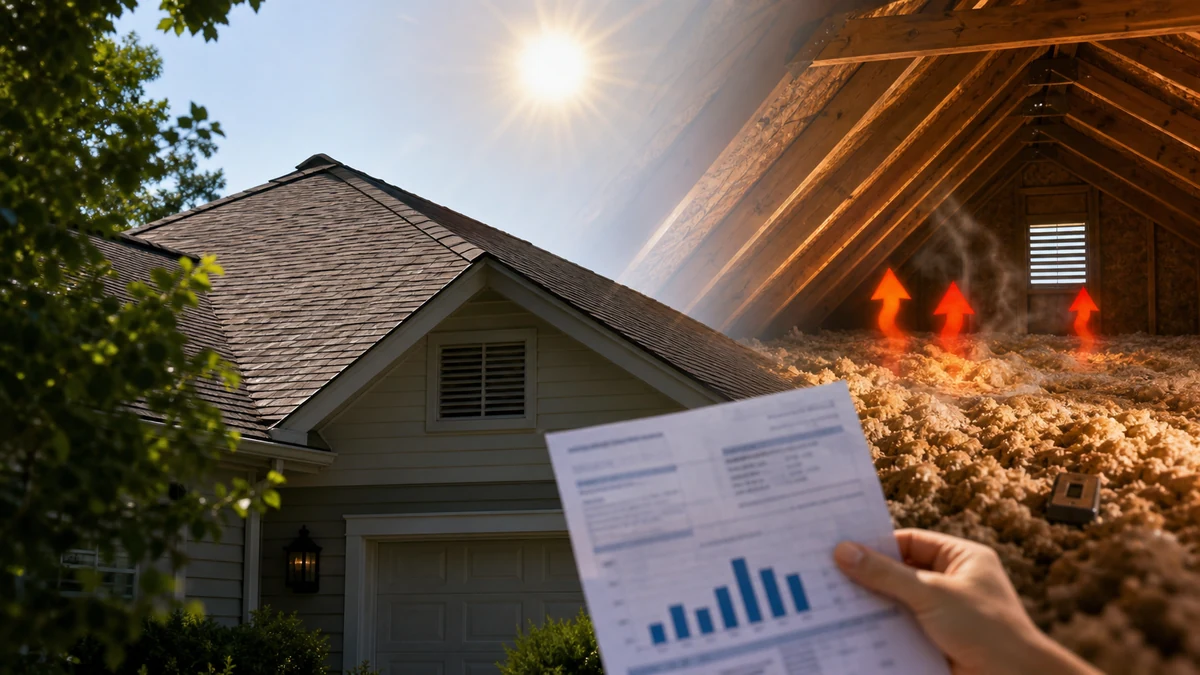
On a typical summer afternoon, the air trapped inside an un-vented American attic reaches 150 to 180F – and that heat does not stay up there. It radiates straight down through the ceiling into the bedrooms below, which is why upstairs rooms feel like ovens by 4 p.m. and why air conditioners run themselves ragged.
I have been tracking the home-cooling category for six summers, and the product buyers keep landing on this year is the solar attic fan: a roof or gable exhaust unit driven by its own photovoltaic panel. It runs hardest exactly when the sun is fiercest, costs nothing to operate, and – critically for a lot of homeowners – does not require running a new electrical circuit to the roofline or hiring an HVAC contractor for the install. That combination is driving the 2026 surge in searches.
Why solar attic fans are surging right now
Three forces are converging. First, cooling costs. Rather than chase a cooler thermostat setting all summer, more buyers are attacking the source – a roasting attic that dumps heat into the living space. Per Bob Vila’s reporting, an attic fan can pull attic air temperature down by roughly 50F and shave about 5F off the air inside the home, which directly eases how hard the AC has to work during the worst part of the day.
Second, the install story. Hard-wired powered attic fans mean an electrician, a circuit, and often a permit. A solar unit ships with its own panel and a sealed DC motor, so for many gable installs it is a weekend job with hand tools. That do-it-yourself accessibility has pushed the category into the kind of shopping conversations that used to be reserved for ceiling fans.
Third, the energy-efficiency framing. The EPA’s ENERGY STAR program notes that homeowners save an average of 15 percent on heating and cooling by air sealing and adding attic insulation. A solar attic fan is not insulation, but it slots neatly into the same mental bucket: a one-time attic upgrade that keeps paying you back every hot afternoon. Buyers researching insulation are finding ventilation in the same breath.
How a solar attic fan actually works
The mechanism is refreshingly simple. A photovoltaic panel – usually 35 to 50 watts on the units buyers are shopping – feeds a brushless DC motor that spins an exhaust blade. As sunlight intensifies, panel output rises and the fan moves more air. There is no wiring to your panel box and no meter spinning, which is the whole appeal: it generates the most airflow at the precise moment your attic is hottest.
Most units pull cooler outside air in through the soffit vents at the eaves and push hot air out through the roof or gable. That circulation is what breaks the heat-soak cycle. As Family Handyman explains, solar attic fans have zero operating cost and run hardest when sun and attic heat peak – a self-regulating loop that conventional powered fans cannot match without a thermostat and a power bill.
One detail trips up first-time buyers: a fan is only as good as its intake. If the attic does not have enough soffit or eave venting to feed it, the fan starves, and in worst cases it can pull air from inside the house or backdraft a gas water heater. Balanced intake is not optional – it is the difference between a fan that works and one that creates a new problem.
The tax credit reality check nobody mentions
Here is the part of the 2026 story that gets buried in older shopping guides: there is no longer a 30 percent federal tax credit for a solar attic fan. The 30 percent Residential Clean Energy Credit expired for property placed in service after December 31, 2025, under the One Big Beautiful Bill Act (PL 119-21, signed July 2025). If you buy and install a solar attic fan in 2026, you cannot claim that federal credit – full stop. Any guide still promising it is working from outdated rules.
That does not mean the incentives are gone entirely. They have just moved local. State programs and individual utilities still offer cooling, weatherization, and efficiency rebates in many regions, and the cleanest way to check what applies to your address is the DSIRE database, the most comprehensive index of state and utility energy incentives in the country. Run your zip code before you buy – a utility rebate of even $50 to $150 changes the math on an entry-level unit.
The honest framing for 2026: the real return on a solar attic fan is the lower AC bill and the longer roof-deck life from venting trapped heat, not a line on your tax return. Treat any rebate you find as a bonus, not the reason to buy.

The three categories buyers are weighing
Shoppers are not choosing between brands so much as between formats, and the market has settled into three rough categories. Understanding which one fits your roof matters more than the logo on the box.
The premium hybrid roof units pair a larger panel with a smart thermostat and an AC backup, so the fan can keep running at night or on a cloudy day. The budget roof units strip that back to a weatherproof panel and an auto temperature control for the lowest entry price. And the gable units sidestep roof penetration entirely by mounting through an existing gable vent – the format DIY buyers and garage owners gravitate toward.
| Category | Core Technology | Price Range | Representative Brands |
|---|---|---|---|
| Premium Hybrid Roof | 40W+ panel, smart thermostat, AC backup for night/cloud | $300 – $400 | iLIVING, Natural Light, QuietCool |
| Budget Roof | 35W panel, weatherproof, auto temp control, no app | VEVOR, ECO-WORTHY, Remington | |
| Gable / Garage | Through-wall mount, on/off switch, no roof penetration | Amtrak Solar, Yellowblue, US Sunlight |
⇆ swipe horizontally on mobile
Sizing it right: CFM, the 1:300 rule, and intake
The number that matters most is airflow, measured in cubic feet per minute. A widely used rule of thumb is roughly 0.7 CFM per square foot of attic floor, which means a 1,500 square foot attic wants around 1,050 CFM of exhaust. Undersize the fan and the attic stays hot; oversize it without enough intake and the fan simply cannot pull the air it is rated for.
Ventilation code gives you a second guardrail. The IRC 1:300 rule calls for one square foot of net free vent area for every 300 square feet of attic floor, split between soffit intake at the eaves and exhaust at or near the ridge. That balance is the part casual buyers skip, and it is the most common reason a new fan underperforms. ENERGY STAR is blunt about the risk: an exhaust fan without balanced intake can starve, reverse, or pull conditioned air out of the house.
Watt rating is the proxy most listings lead with, and it is a reasonable shorthand. A 40 to 50 watt panel sustains airflow even in partial sun and through the shoulders of the day; 35 watt panels are the entry tier and lean on bright, direct light to hit their rated CFM. Match the watts and CFM to your square footage first, then worry about features.
What I am watching shoppers get wrong
The most common mistake is treating a solar attic fan as an air conditioner substitute. It is not. It vents heat to take load off the AC; it does not push cold air into your bedrooms. Buyers who expect a 10-degree drop in the living room end up disappointed, while buyers who frame it as attic heat management end up happy.
The second is ignoring noise. A roof-mounted DC fan is generally quieter than an old AC-powered attic fan, but cheaper units can develop a buzz or motor hum that carries into upstairs rooms. It is worth reading owner reviews specifically for noise complaints on any budget model before committing.
“Nobody wants a noisy, bothersome fan, therefore noise levels are an important consideration.“
The third miss is the warranty. A solar attic fan has two failure points – the motor and the panel – and they do not always carry the same coverage. Look for at least five years on both. A fan that dies in year three on a generic warranty erases any savings it earned.
CFM vs attic size. Target ~0.7 CFM per sq ft and meet the 1:300 net free vent area code minimum.
Panel wattage. 40 to 50W sustains airflow in partial sun; 35W is the entry-level tier that needs bright light.
Balanced soffit intake. Without enough intake the fan starves or backdrafts combustion appliances (ENERGY STAR).
Warranty 5+ years. On both the motor and the solar panel, since they can fail independently.
Tax reality check. No 30 percent federal credit in 2026 – check state and utility rebates at dsireusa.org instead.
Where the category goes from here
The trend has momentum because the value proposition is honest once you strip away the expired tax-credit hype: a one-time attic upgrade that runs free, installs without an electrician on many homes, and quietly takes a bite out of your summer AC load. As hybrid models with thermostats and AC backup get cheaper, the line between a basic solar fan and a smart-home ventilation device keeps blurring. For a buyer this summer, the work is matching CFM and watts to your attic, confirming your intake venting, and checking for any local rebate before the heat peaks.
Ready to compare your options?
I tested three solar attic fans head to head across the categories above – a premium hybrid roof unit, a budget roof pick, and a gable-mount option for garages and no-roof-penetration installs. The full guide breaks down CFM, panel wattage, noise, and install effort so you can match a fan to your attic.
Frequently Asked Questions
Do solar attic fans really lower cooling bills? +
They can ease the load on your air conditioner by venting trapped heat. Bob Vila reports an attic fan can drop attic air temperature by roughly 50F and indoor air by about 5F on a hot day. They are not a replacement for an AC unit, but a vented attic forces the AC to work less during peak afternoon heat, which is exactly when a solar fan runs hardest.
Is there still a 30 percent federal tax credit for solar attic fans in 2026? +
No. The 30 percent federal Residential Clean Energy Credit expired for property placed in service after December 31, 2025, under the One Big Beautiful Bill Act (PL 119-21). A 2026 buyer cannot claim it. Instead, check state and local utility rebates using the DSIRE database at dsireusa.org, where some utilities still offer cooling or weatherization incentives.
What size solar attic fan do I need? +
A common rule of thumb is about 0.7 CFM per square foot of attic floor, so a 1,500 square foot attic needs roughly 1,050 CFM. You also want to satisfy the IRC 1:300 rule for net free vent area and make sure soffit intake is balanced with exhaust so the fan does not starve or backdraft.
Roof mount or gable mount – which is better? +
Roof-mounted fans usually move air from the highest point of the attic but require cutting and flashing the roof for a watertight seal. Gable-mounted fans install through an existing gable vent or wall opening with no roof penetration, which many DIY buyers prefer. Gable units are popular for garages and homes where roof work is a concern.