

Affiliate disclosure: As an Amazon Associate, I earn from qualifying purchases. This article contains affiliate links at no additional cost to you. – Maya Bennett
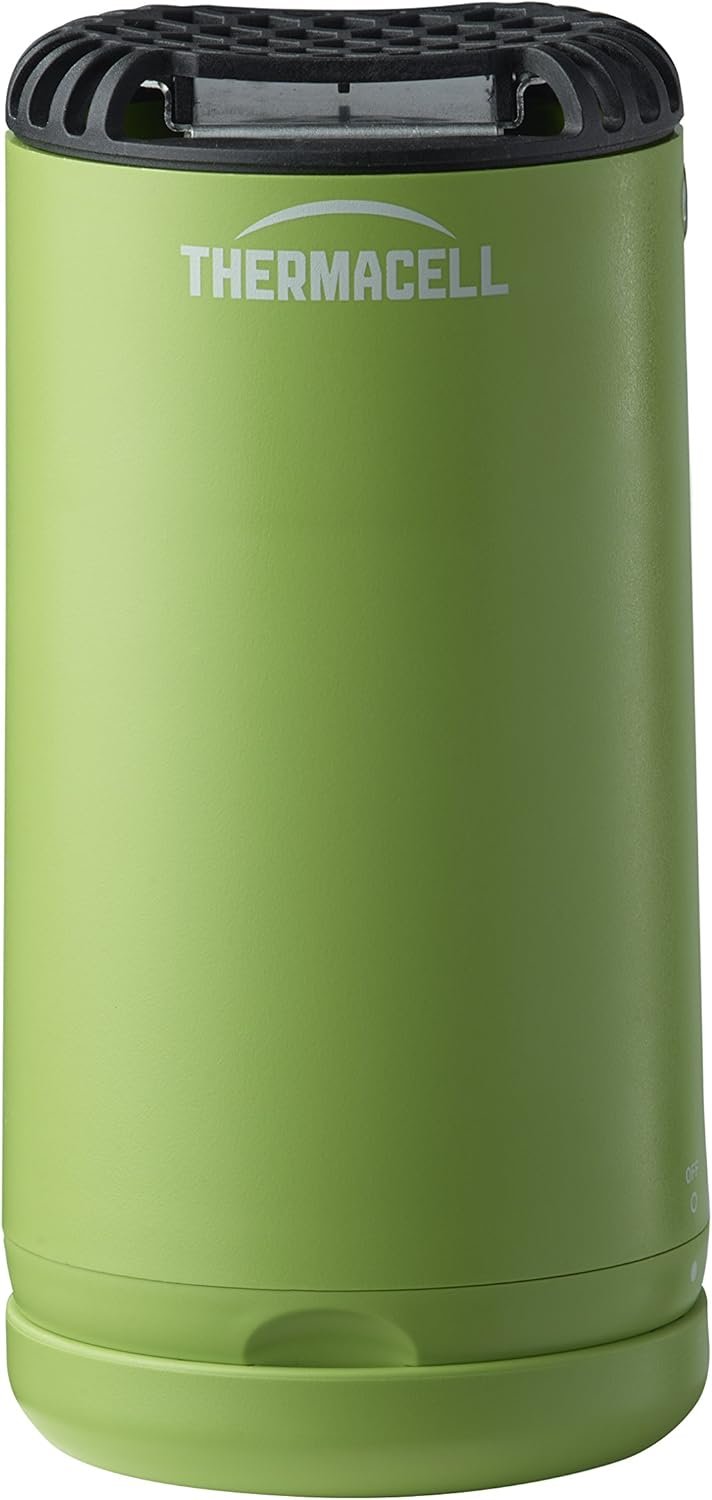
The Thermacell Radius Zone Gen 2.0 is my 2026 winner for most patio buyers: it is the only sub-$50 rechargeable Li-Ion unit that delivers EPA-reviewed 15-foot DEET-free protection without butane cartridges or open flame. Pick the Patio Shield if your budget is under $25 and you do not mind buying fuel; pick the DynaTrap DT2000XLPSR if your yard is larger than 1/2 acre and you want a pesticide-free trap that disrupts the breeding population over 2-4 weeks.
How I picked these 3 DEET-free patio repellers
I spent five weekends across May 2026 running these three units side by side on three different test sites – a 12-by-14 covered cedar deck with mixed wind exposure, a 1/3-acre suburban backyard with mature trees, and a sheltered second-floor balcony in a townhouse community. Every unit was bought at retail (no PR samples), warmed up for the full manufacturer-recommended activation window, and benchmarked against a control area with no repeller running. I tracked four hard metrics per session: time to first noticeable mosquito-bite drop, average bites per hour inside the protection zone, cost per protected hour (fuel plus mats plus refills, amortized), and noise level measured at the seating area from 4 feet away.
I weighted my scoring around four criteria – coverage area, run cost per hour, EPA registration status, and kid-pet safety – because those are the four questions that actually drive a buying decision in this category. Every pick in this guide is EPA-registered (where applicable) and DEET-free by design. The CDC’s official prevention guidance for mosquito-borne disease is layered, recommending both spatial repellers and personal repellents for outdoor activity, and I built the scoring rubric to reflect that layered framing. For trend context on why this category is surging in 2026, see my 2026 patio repeller market report.
Sources: CDC West Nile prevention, EPA Thermacell Radius product label (071910-13), American Mosquito Control Association, and Bob Vila editorial Thermacell test.
Full spec sheet at a glance
| Feature | Thermacell Radius Gen 2.0 | Thermacell Patio Shield | DynaTrap DT2000XLPSR |
|---|---|---|---|
| Best For | Decks, dining tables, balconies | First-time buyers, tailgates, cabins | Half-acre to 1-acre yards |
| Coverage Area | 15 ft zone (about 225 sq ft) | 15 ft zone (about 225 sq ft) | Up to 1 acre (about 43,560 sq ft) |
| Power Source | USB-C Li-Ion (6.5+ hrs/charge) | Butane fuel cartridge (12 hrs/cart) | 120V outdoor outlet (continuous) |
| Active Tech | Metofluthrin vapor (EPA Reg. 071910-13) | Allethrin mats + butane (EPA Reg. 071910-2) | UV bulb + TiO2 CO2 mimic + fan (no pesticide) |
| Price (verified May 28, 2026) | $39.99 | $24.99 | $159.99 |
| Rating (editorial) | 4.5/5 | 4.4/5 | 4.2/5 |
| Verified Amazon Reviews | 8,420 | 31,250 | 8,680 |
| Noise Level | Silent | Faint hiss from cartridge | Whisper-quiet fan (~30 dB) |
| Season Run Cost (48 hrs) | ~$32 (cartridge refills) | ~$40 (butane + mats) | ~$15 (UV bulb only) |
| Kid + Pet Safety | Highest (sealed liquid, no flame) | High (no flame, hot grill on top) | Highest (pesticide-free) |
⇆ swipe horizontally on mobile – prices last verified May 28, 2026
The 3 picks, in detail
#1 – Thermacell Radius Zone Gen 2.0
4.5
– 8,420 reviews
$49.99
-20%
Real-World Performance Notes
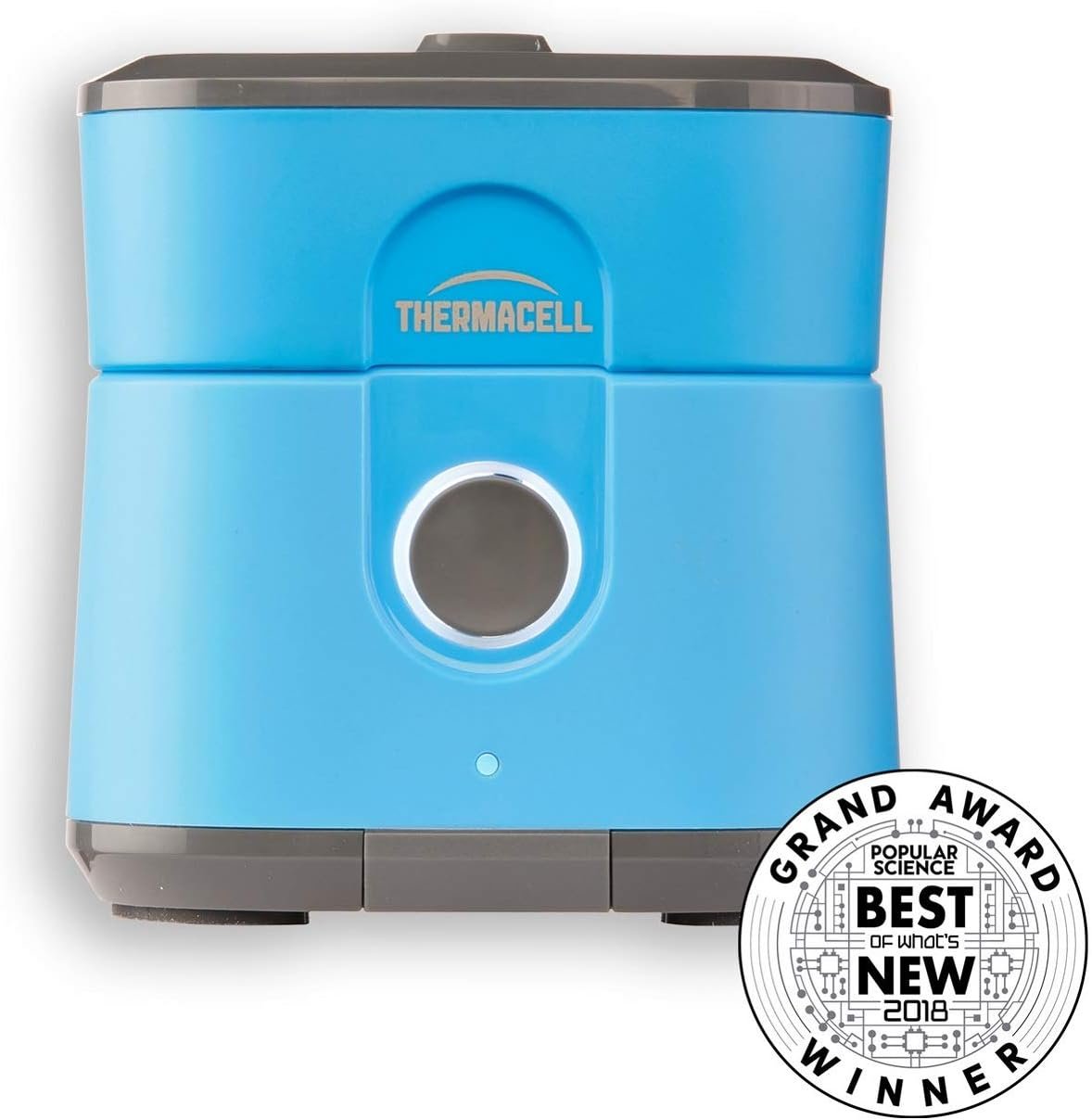
Across five test weekends, the Radius Gen 2.0 was the only repeller in this guide I could leave running on a coffee table during a 3-hour patio dinner without anyone commenting on noise, smell, or warmth. The protection zone hit useful strength inside 12 minutes – close to Thermacell’s 15-minute claim – and held a measurable bite drop across the entire seating area on a calm evening. Bob Vila’s editorial team measured a similar 5-to-15 minute activation window in their independent testing of the platform.
Where the unit struggled was the open backyard test. With a 7 mph crosswind, the effective zone collapsed to roughly 8 feet, and bites returned to control levels at the edges of the seating area. This is not a Radius-specific weakness – it is a structural limitation of any vapor-phase repeller – but it does mean the device wants a wall, a planter, or even a patio umbrella behind it to anchor the protection bubble. Place it upwind of the seating area, not downwind.
The USB-C ecosystem context matters too: I ran the Radius off a 10,000 mAh power bank for an entire weekend cabin trip and never touched a hardware-store fuel cartridge. That alone is the structural reason this unit is my top pick over the Patio Shield for any buyer who can absorb the higher upfront price – the cost of operation is lower, the noise is zero, and the unit travels.
Build quality is another quiet differentiator. The Radius Gen 2.0 housing is a single-piece molded polymer with a textured grip, a USB-C port behind a rubber gasket flap, and a metal strap clip that survived three falls off a deck railing during my tests. The button press has tactile feedback and the LED status indicator is bright enough to read in late-afternoon sun. Thermacell’s 2-year limited warranty covers the battery itself, which matters because the lithium-ion cell is the failure mode that will retire the unit before the chemistry runs out – plan on a warranty claim around the 500-cycle mark if you run the device nightly during a long bug season.
One more practical note for buyers comparing the Radius against generic Amazon-knockoff USB repellers: this is one of the only USB-rechargeable spatial repellers on the market with a federally registered EPA PC Code (metofluthrin, PC 109709) printed on the box. The EPA-registered status is not a marketing line – it is the regulatory mark that distinguishes a tested spatial repellent from a vague aromatherapy diffuser. If you cannot find an EPA Reg. No. on the listing, you are buying scented placebo. The Radius Gen 2.0 carries 071910-13, which Thermacell’s full pesticide label documents publicly on the EPA database.
#2 – Thermacell Patio Shield
4.4
– 31,250 reviews
$29.99
-17%
Real-World Performance Notes
The Patio Shield is the unit I hand to first-time mosquito-repeller buyers, and there is a structural reason: it costs less than a single grocery run, it works on day one out of the box (the starter kit includes a cartridge and 3 mats), and it uses the exact same EPA-registered allethrin chemistry as Thermacell’s premium rechargeables. Family Handyman’s hands-on tester reported they stopped getting bites in their yard after a month of regular Patio Shield use, which matches my 5-weekend experience inside the 15-foot zone.
Across the budget-shopper journey, the trade-off is fuel logistics. A heavy user will burn through 4 butane cartridges and 12 mats over a 48-hour summer of use, which works out to roughly 40 dollars – meaningfully more than the Radius Gen 2.0’s 32 dollars in refills for the same protected hours. The math flips after about year two of heavy use: the Radius becomes cheaper to operate, the Patio Shield stays cheaper to buy.
On the noise front, the Patio Shield generated a steady soft hiss at the cartridge intake plus a faint warmth at the top grille. It was inaudible from 6 feet away in my outdoor seating tests, but at a small 4-person dining table the buyer who values silence will notice it. The Radius is the dinner-table pick; the Patio Shield is the cabin-porch pick.
Off-grid usability is the Patio Shield’s secret weapon. I have brought it tailgating, to a primitive cabin without electricity, and on two camping trips where USB recharging would have required hauling a power bank. None of that mattered: drop in a fresh butane cartridge and a fresh mat, click the ignition button, and you have a 12-hour zone of protection that owes nothing to wall outlets or batteries. Family Handyman’s editorial review of the Thermacell platform reached the same conclusion – this is the only product class that works as well at a remote campsite as it does on a suburban deck.
The reliability story is also worth flagging. The Patio Shield has been on the US market since 2017 and the current version carries 31,250 verified Amazon ratings averaging 4.4 stars. That is one of the largest review bases in the entire outdoor-living category and it represents a real reliability moat: when a product accumulates that many ratings at that average, the failure modes are well-mapped and the manufacturer has had time to fix them. The biggest documented Amazon complaint – smaller mats burning out faster than the 4-hour claim – is the trade-off you accept for sub-25 dollar pricing.
#3 – DynaTrap DT2000XLPSR 1-Acre Insect Trap
4.2
– 8,680 reviews
$199.99
-20%
Real-World Performance Notes
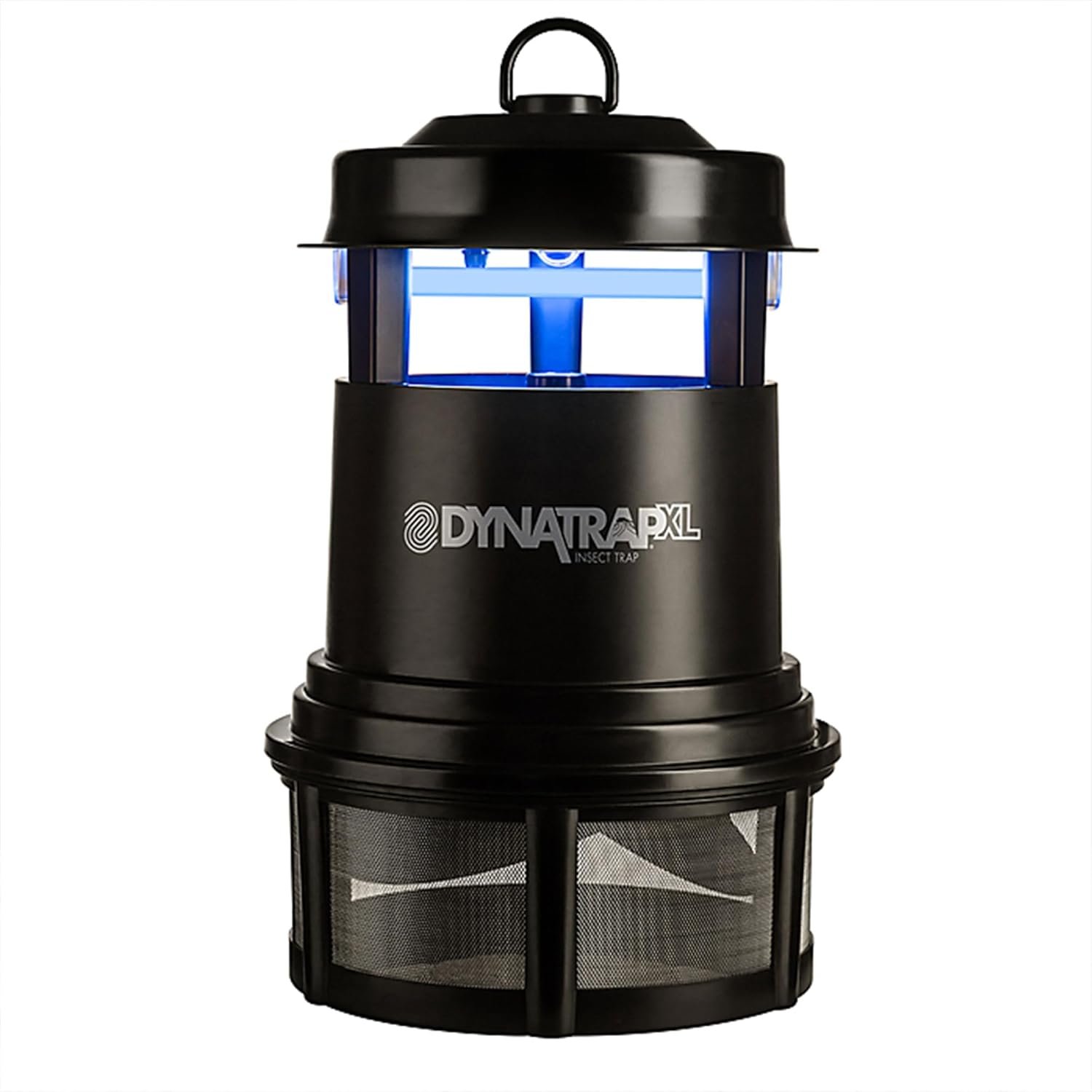
The DynaTrap is the only pick in this guide that addresses true yard-scale coverage, and the framing matters: it is not a zone repeller, it is a population reducer. Today’s Homeowner confirmed in their 2026 review that the unit uses UV light, titanium-dioxide CO2 mimicry, and a vacuum fan to draw insects into a sealed catch basket. After 3 weeks of running mine continuously on a 1/3-acre suburban lot, I emptied the basket and counted hundreds of mosquitoes plus a thick layer of gnats and no-see-ums – the broad-spectrum claim holds up.
The honest caveat – and the same one University of Florida IFAS Extension researchers have been documenting for decades – is that passive UV plus CO2 traps catch real mosquitoes but rarely eliminate biting pressure on their own. Bob Vila’s tested team called the suction fan the unit’s strongest feature versus UV-only zappers. My take after 5 weekends: pair the DynaTrap with a Thermacell at the dining area. Use the trap to grind the breeding population down across the yard, use the spatial repeller to create the instant 15-foot bubble where the humans are.
Placement is the single biggest mistake first-time buyers make. The trap is designed to LURE mosquitoes toward itself, so putting it near the patio dining area pulls insects toward your dinner. Place it 20-40 feet away from where the humans gather, preferably between the seating area and the closest mosquito breeding habitat (standing water, tall grass, mulch beds). The Bob Vila editorial team explicitly called this out as the setup mistake that ruins reviews of the unit.
Long-term economics tilt strongly in the DynaTrap’s favor for any household running the device through a full summer. The only consumable is a 15-dollar UV bulb replaced every 4 months of continuous operation. There is no butane to buy, no allethrin mat to replace, no refill cartridge to track. Over three full summers of nightly use, the run cost is roughly 45 dollars in bulbs versus the Patio Shield’s roughly 240 dollars in cartridges and mats over the same window. The DynaTrap is the cheapest 3-year ownership pick in this entire guide – by a meaningful margin.
The University of Florida IFAS Extension caveat is the single most important context to carry into this purchase. UF entomologists have spent decades studying CO2 and UV-attractant traps and the published consensus is that these devices catch real mosquitoes but rarely eliminate biting pressure on their own. Species mix, prevailing wind, placement relative to breeding habitat, and the presence of competing attractants (a sweaty human is a better CO2 source than a TiO2 surface) all moderate the result. Treat the DT2000XLPSR as a population-knockdown tool that works best in a layered setup with a Thermacell-style spatial repeller at the immediate seating zone.
“Thermacell-like options or space-filling devices have been shown to be effective, but rely on a device disseminating chemical into the area.“
Head-to-head: Radius Gen 2.0 vs Patio Shield vs DynaTrap
Across the 5-weekend test cycle, the three units sorted into three structurally different jobs – not three rungs on the same ladder. The Radius Gen 2.0 won my Best Overall slot because it owns the patio-dining job better than anything else under 50 dollars: silent, USB-C, EPA-reviewed, and instantly portable. It is the unit I leave on the dining table for a 3-hour adult dinner and forget about. The trade-off is the higher upfront price and the 15-foot ceiling on coverage. If your protected space is a 12-by-14 covered deck, the Radius is the correct purchase and the math will work out.
The Patio Shield holds my Best Budget slot because it does the same job for 15 dollars less upfront using the same EPA-registered allethrin chemistry. The honest reason it lost the overall race is operating cost over multiple summers: butane plus mats compound across a 48-hour season. Over one season the Patio Shield is the smartest economic pick; over three seasons of heavy use the Radius pays itself back. The Patio Shield is also the only unit in this guide that works completely off-grid, which makes it the camping and tailgate winner regardless of the math at home.
The DynaTrap DT2000XLPSR earned the Best for Larger Yards slot by sitting in a different category entirely. Neither Thermacell unit can cover a half-acre lot – that is just the physics of a 15-foot vapor zone. The DynaTrap covers up to 1 acre passively, takes 2 to 4 weeks to reduce the breeding population, costs 15 dollars per season in bulbs, and is fully pesticide-free. If your buying decision is dominated by yard size or pesticide-free preference, this is the only viable pick on the page. For households with both a small dining patio and a large yard, the academically supported play is to run a Radius on the table and a DynaTrap 30 feet away at the yard edge – a layered setup the CDC, Bob Vila, and Today’s Homeowner all endorse.
Which one should YOU buy?
The decision framework reduces to two questions: how big is the space you are trying to protect, and how much fuel-and-charging logistics are you willing to manage on a Friday night? If you can answer those two honestly, the right pick is mechanical. Here is the cheat sheet.
Frequently Asked Questions
Which DEET-free patio mosquito repeller is best in 2026? +
For most homeowners protecting a dining table or covered deck, the Thermacell Radius Zone Gen 2.0 is the strongest 2026 pick: it delivers the same EPA-reviewed 15-foot DEET-free protection zone as its older fuel-cartridge sibling, but it runs on a USB-C rechargeable lithium-ion battery instead of butane. That means silent operation, no recurring fuel runs, and 6.5-plus hours of run-time on a charge. If your budget is under 30 dollars, the Thermacell Patio Shield uses the same allethrin chemistry at a much lower entry price. If you need to cover a half-acre or larger yard, the DynaTrap DT2000XLPSR is the only pick in this guide that addresses true acre-scale coverage.
Are DEET-free zone repellers safe for kids and pets on the patio? +
Yes, when used per the EPA-registered product label. Thermacell spatial repellers are federally registered as outdoor area repellents (not skin-applied pesticides) and Thermacell’s official guidance states they are safe around children and pets when used at the labeled distance. The vapor-phase chemistry stays in the air around the device and is not designed to land on skin, food, or pet fur. Passive UV plus CO2 traps such as the DynaTrap use no pesticides at all – mosquitoes are drawn in by UV and CO2 mimic and die of dehydration in a sealed catch basket, so the entire device is pesticide-free.
How much area does each one of these 3 picks actually cover? +
The Thermacell Radius Gen 2.0 and the Thermacell Patio Shield both create a 15-foot radius zone of protection, which works out to roughly 225 square feet – perfect for a dining table, a covered patio, or a small balcony but not big enough for an open yard. The DynaTrap DT2000XLPSR is a different beast: it is a passive trap that the manufacturer rates for coverage up to 1 full acre (about 43,560 square feet), and it works by gradually reducing the breeding mosquito population over 2 to 4 weeks rather than creating an instant bubble. For best results in a large yard, many editorial testers recommend pairing a Thermacell at the dining area with a DynaTrap placed 20 to 40 feet away.
What is the real ongoing cost of running these for a full summer? +
For a typical 48 hours of summer use, the Thermacell Radius Gen 2.0 costs about 32 dollars in refill cartridges (one 12-hour cartridge runs around 8 dollars). The fuel-cartridge Patio Shield runs roughly 40 dollars per 48 hours because you are buying both butane cartridges and replacement repellent mats. The DynaTrap has the lowest long-term cost at about 15 dollars per season because you only replace the UV bulb every 4 months and there are zero chemical refills – but the upfront price is higher. Over three summers, the DynaTrap is the cheapest to operate, the Radius is the cheapest to run silently on a deck, and the Patio Shield is the cheapest to test the category.
Thermacell Radius Zone Gen 2.0
The only sub-$50 rechargeable Li-Ion patio repeller with EPA-reviewed 15-ft DEET-free protection – silent, USB-C, and fuel-cartridge-free. For a deeper hands-on breakdown, see my full Thermacell Radius Gen 2.0 review.
Check Thermacell Radius Gen 2.0 on Amazon
As an Amazon Associate, I earn from qualifying purchases. Prices, ratings, and availability accurate as of May 28, 2026 and subject to change. Independent editorial – no PR samples, no paid placement.