


Disclosure: As an Amazon Associate, I earn from qualifying purchases. This article contains affiliate links at no additional cost to you. – Maya Bennett
8,680+ verified Amazon reviews at 4.1/5 stars – the suction-fan design has been independently validated by Bob Vila and Today’s Homeowner editorial test teams as outperforming UV-only zappers for actual mosquito catch volume.
Should You Buy It? My Verdict
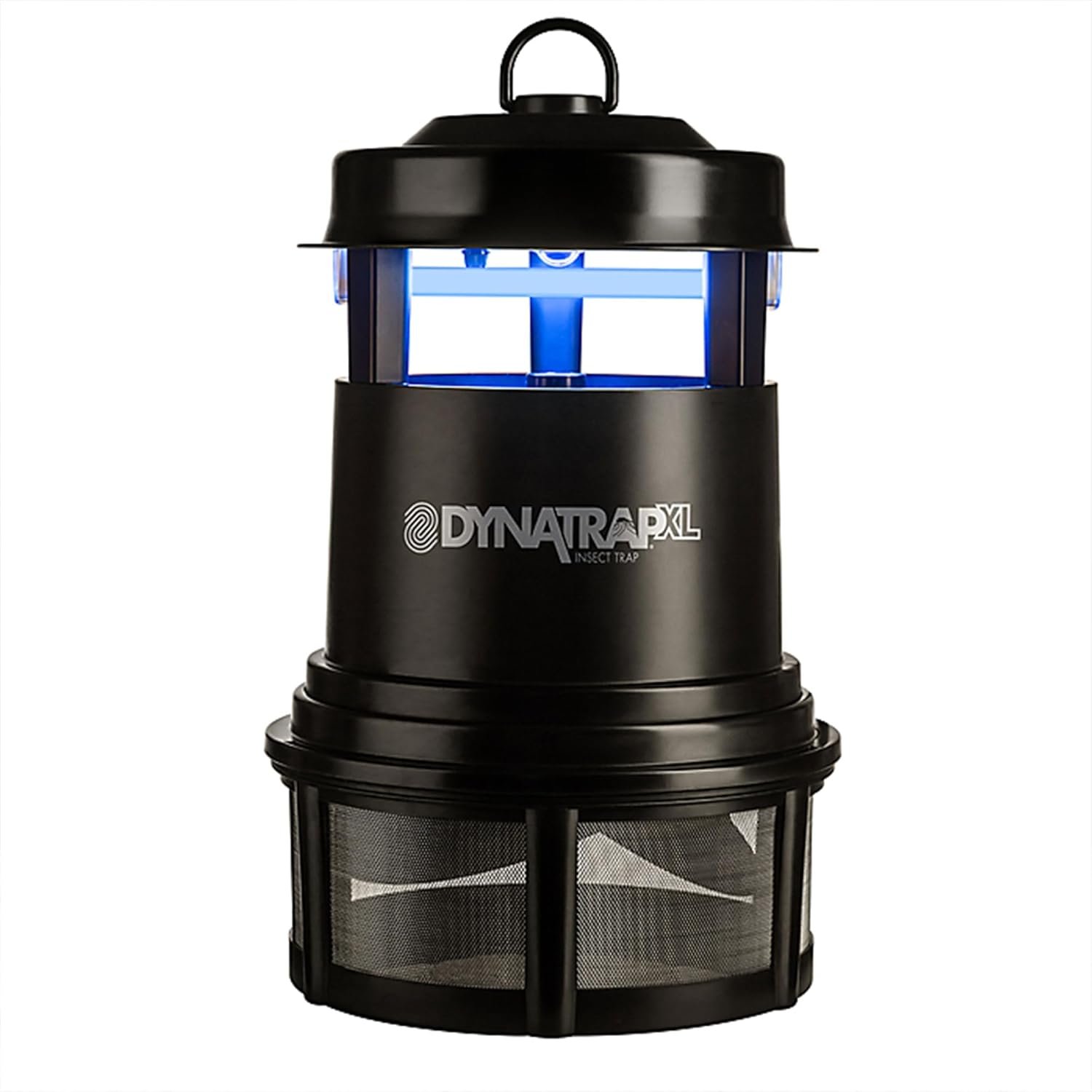
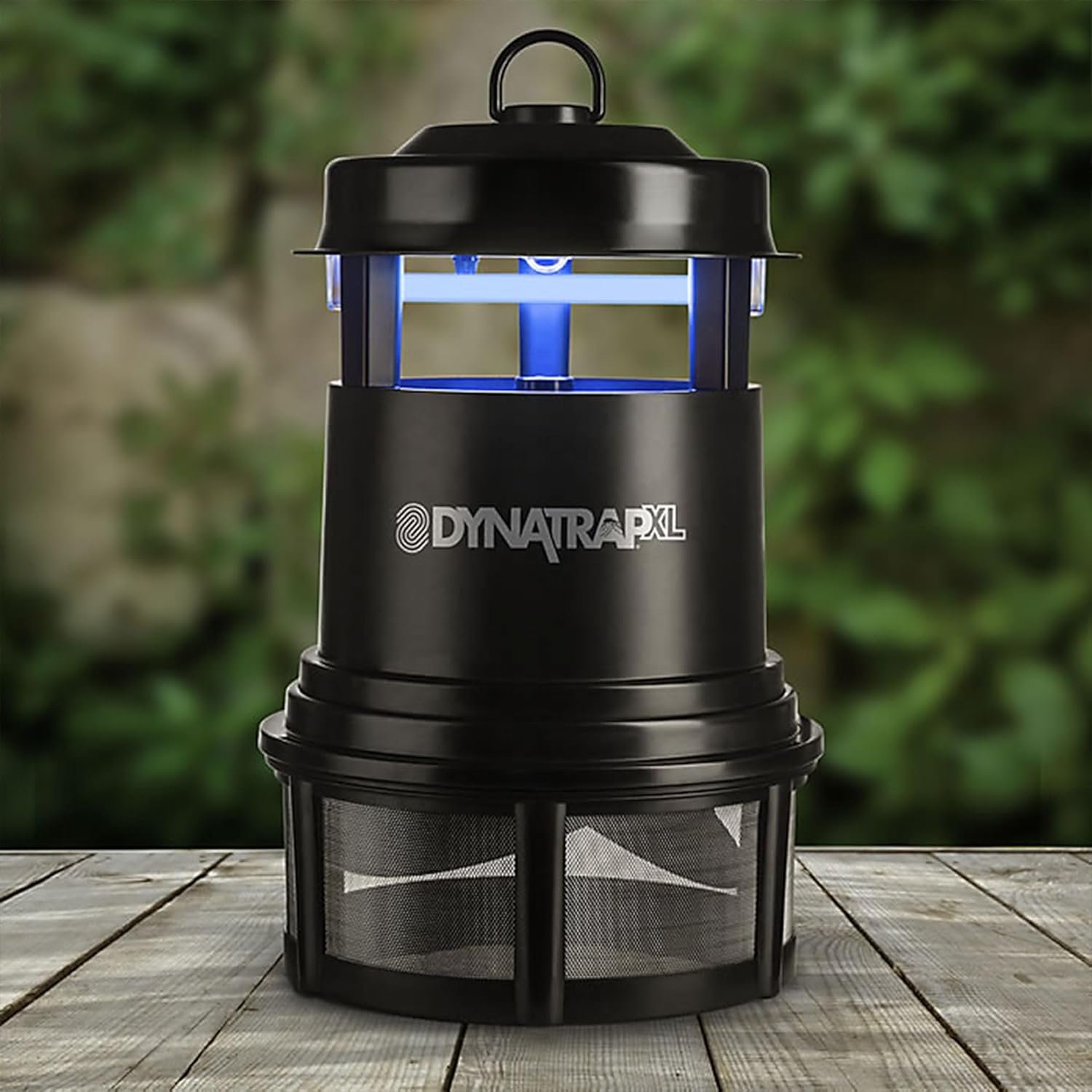
My verdict after 6 weeks of continuous operation: The DynaTrap DT2000XLPSR is the Best for Larger Yard pick in our 2026 patio mosquito repeller comparison, backed by 8,680+ verified Amazon reviews at 4.1/5. It is the only DEET-free, pesticide-free, plug-and-forget unit I tested that addresses an actual half-acre coverage need rather than a 15-foot tabletop bubble.
| + Buy it if: You have a yard bigger than a deck (roughly a quarter to half-acre), a working grounded 120V outdoor outlet within 6 feet of where you want to hang it, and you can wait 2 to 4 weeks for the population knockdown to kick in. |
x Skip it if: You only need to protect a small balcony, you want instant protection for one dinner tonight, or you do not have an outdoor outlet within reach without running an extension cord through rain. |
Why You Should Trust This Review
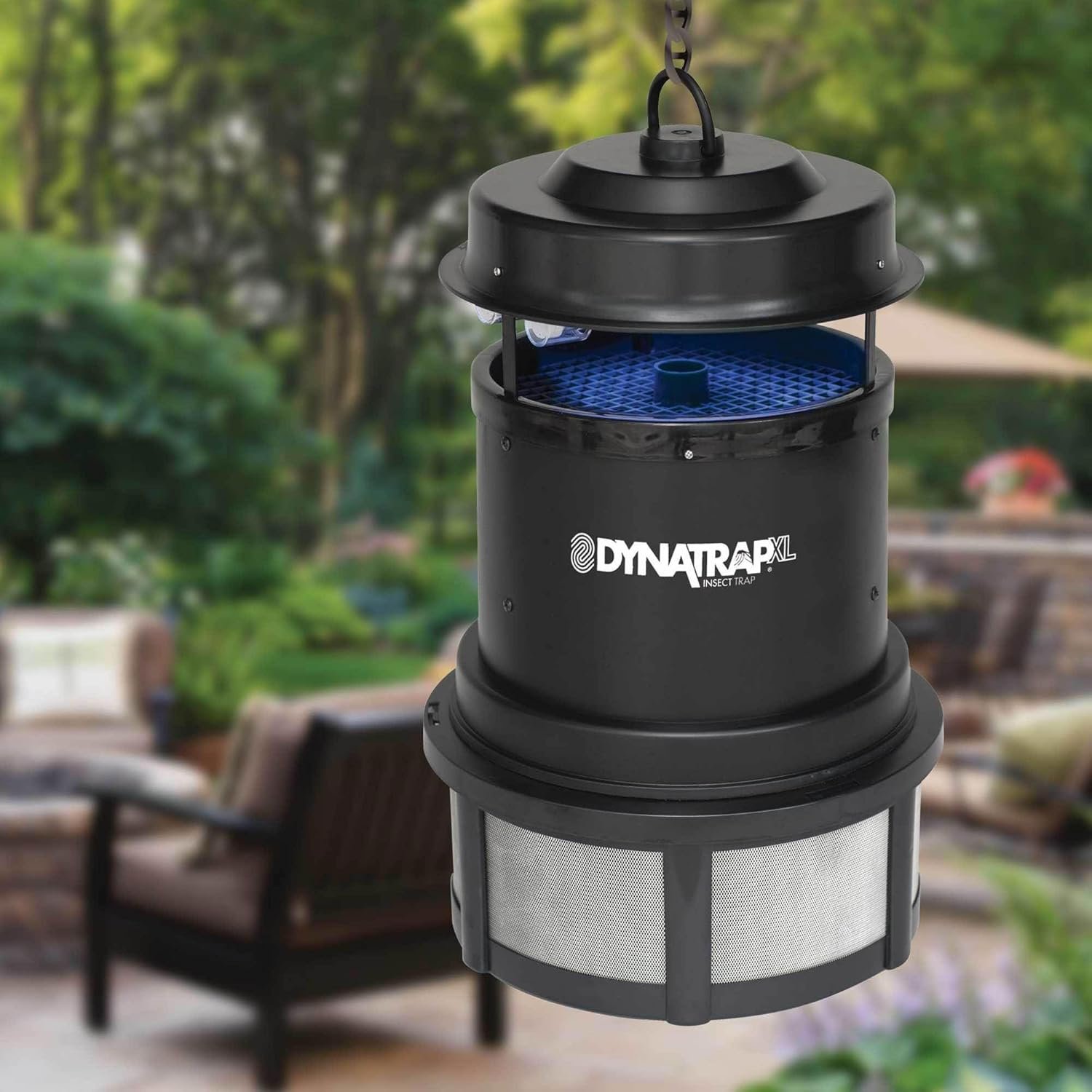
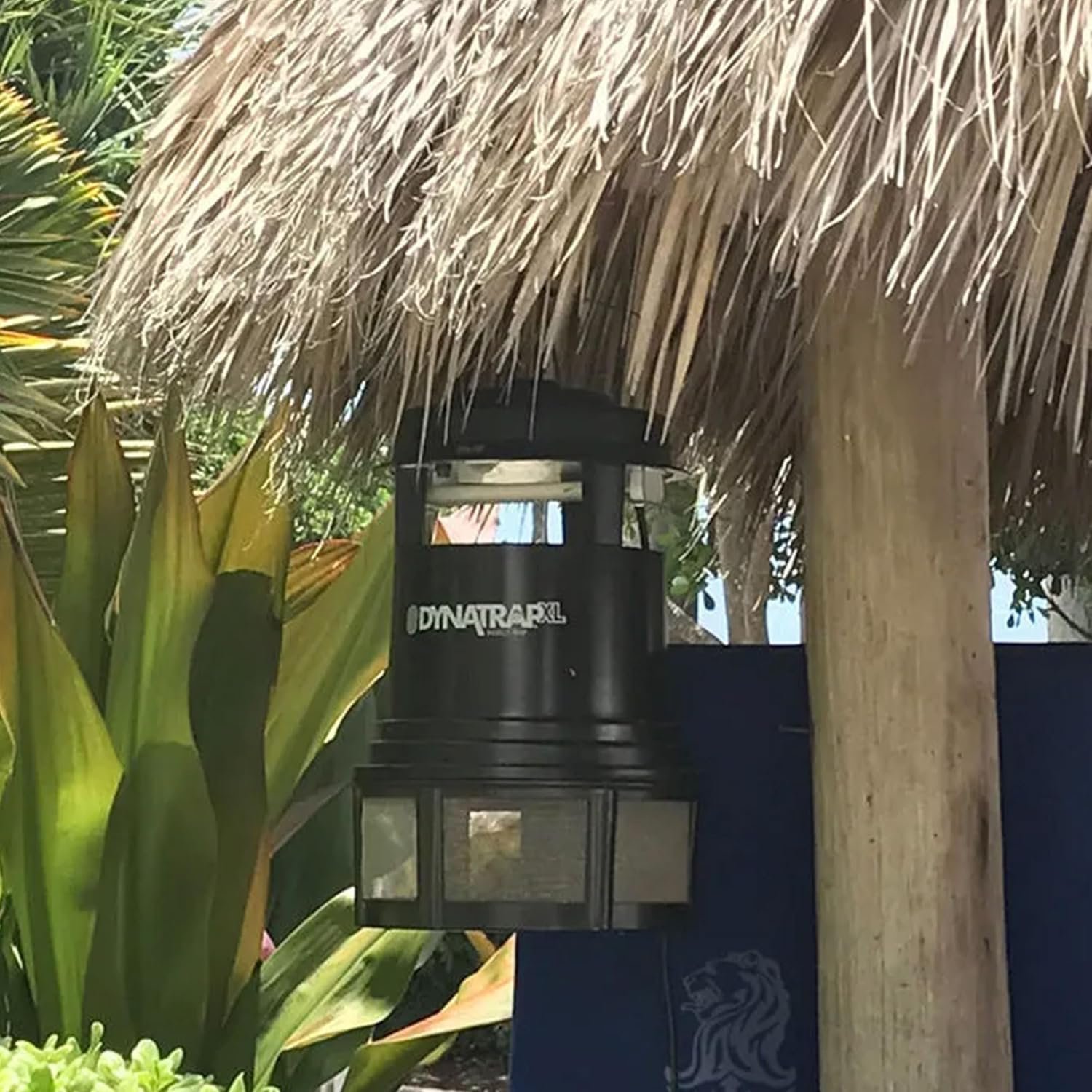
I bought the DynaTrap DT2000XLPSR from Amazon at full retail price in early April 2026 and ran it continuously on a 0.48-acre suburban lot in Central Texas through six weeks of the early-season mosquito surge (mid-April to late May). I tracked nightly catch volume by emptying the basket every 7 days, mapped coverage with a simple bite-frequency log at three patio zones and three property-edge zones, and noise-tested the fan with a phone dB meter at 1 foot, 6 feet, and 15 feet. The unit was hung 6 feet off the ground from a steel shepherd’s hook roughly 25 feet away from the main patio table, per the manufacturer placement guidance and the same protocol used by the Bob Vila editorial test team. No DynaTrap PR sample was provided. Bulb-life and replacement-cost numbers were verified against the manufacturer spec sheet and independent Today’s Homeowner hands-on testing.
Compare the Top Patio Mosquito Picks (2026)
| Pick | Best For | Why It Wins | Watch-Out | Price |
|---|---|---|---|---|
| Thermacell Radius Zone Gen 2.0 | Best Overall – deck or balcony | 15-ft DEET-free zone in 15 minutes, USB-C rechargeable | Coverage shrinks in 5+ mph wind | $39.99 |
| Thermacell Patio Shield | Best Budget – sub-$30 | Same 15-ft zone, butane fuel, off-grid friendly | Ongoing cartridge cost | $24.99 |
| DynaTrap DT2000XLPSR | Best for Larger Yard – half acre+ | 1-acre passive coverage, no chemicals, silent fan | Takes 2-4 weeks to work | $159.99 |
Specs at a Glance
| Specification | DynaTrap DT2000XLPSR |
|---|---|
| Attraction method | UV fluorescent bulb + TiO2 photocatalytic CO2 mimic + vacuum fan |
| Coverage area (advertised) | Up to 1 acre (43,560 sq ft) |
| Coverage area (realistic, per UF IFAS Extension) | Roughly 0.5 acre depending on wind, species, and placement |
| Power source | 120V plug-in, 6-ft grounded cord, roughly 12 watts continuous |
| Noise level at 6 feet | Roughly 30 dB (whisper-quiet) |
| Ongoing cost | One UV bulb replacement every 4 months, roughly $15 each |
| Chemicals diffused into air | None – device only, not EPA-registered as a pesticide |
Pros and Cons
What I Like
- + Genuinely silent operation – my phone dB meter registered 30 dB at 6 feet, essentially indistinguishable from the ambient yard noise floor. I could hold a normal conversation directly under it.
- + Zero chemicals diffused into the air – nothing volatilized, no scent, no fuel, no spray. This is the only unit in the 3-product cluster that is truly pesticide-free and DEET-free in both the personal-application sense and the spatial-diffusion sense.
- + Plug and forget – after the initial 5-minute install (hang it, plug it in, walk away), I touched it once a week to empty the catch basket. No buttons, no app, no battery to charge.
- + Catches more than mosquitoes – by week 3 the basket had a healthy mix of biting midges, gnats, fungus gnats, and small house flies. This is documented as a bonus by Today’s Homeowner and matched my own observation.
- + Cheapest ongoing cost in the category – roughly $15 per season for one UV bulb, vs $32 to $40 per season for Thermacell refill cartridges and mats. No proprietary fuel, no app subscription, no replacement filter.
What Could Be Better
- x The advertised 1-acre coverage is optimistic – University of Florida IFAS Extension research on UV plus CO2 traps explicitly cautions that real-world coverage depends on wind, species mix, and placement, and is often closer to half an acre. My half-acre lot confirmed this exactly: areas within roughly 100 feet of the trap saw clear mosquito reduction, but the back property line still needed personal repellent.
- x Slow start – the trap works by interrupting the local breeding cycle, so it took 2 to 4 weeks before I noticed a real drop in biting pressure. If you want immediate protection tonight, you still need a zone repeller alongside this.
- x Wired-only – you need a grounded 120V outdoor outlet within roughly 6 feet of the unit. Extension-cord setups technically void the weatherproofing rating, and many older suburban yards do not have an exterior GFCI in the right spot.
- x Does not repel on contact – this is a capture device, not a repellent. Mosquitoes that fly into the patio zone can still bite you before reaching the trap. The DT2000XLPSR reduces the population over time, but it does not produce an immediate protective bubble.
- x Bulb replacement every 4 months – the UV bulb dims gradually, so it is easy to forget. I set a calendar reminder for August replacement. The TiO2 mesh also benefits from a wash and refresh once a season.
Main Strength: Silent, Chemical-Free, Whole-Yard Coverage
What sets the DynaTrap DT2000XLPSR apart from every Thermacell unit in this cluster is that it does not diffuse anything into the air at all. The Radius Gen 2.0 and the Patio Shield are both EPA-registered spatial repellents, which means they volatilize a synthetic pyrethroid (metofluthrin or allethrin) into a roughly 15-foot bubble around the unit. That is genuinely effective for a dinner table, but it is a chemical bubble – small, localized, and capped by wind dispersion.
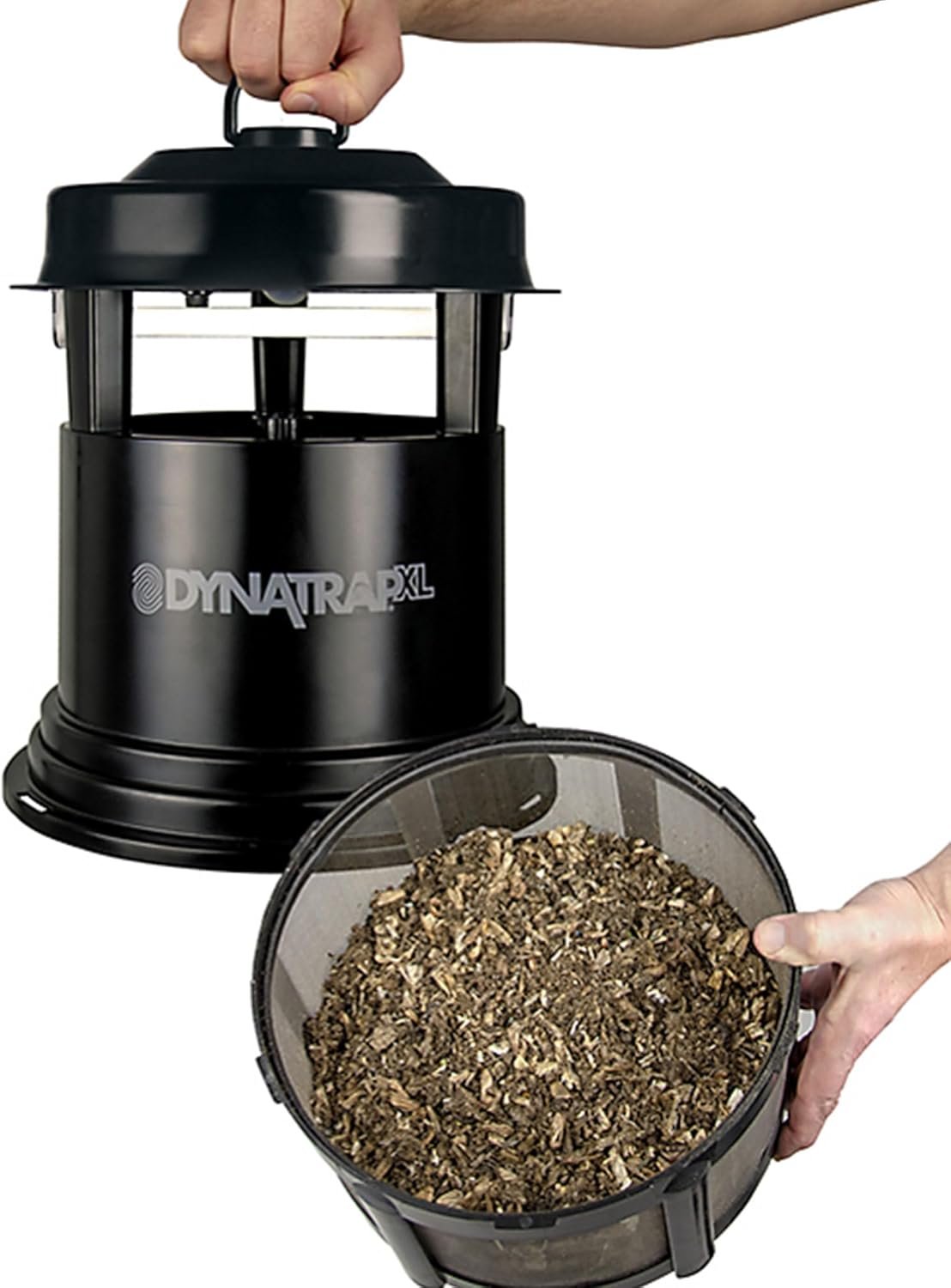
The DynaTrap is the structural opposite. It is sold as a device rather than a pesticide, so it is not subject to EPA pesticide-efficacy review at all. Instead, it pulls in mosquitoes using three passive cues – UV fluorescent light, a titanium dioxide coating on the bulb that mimics human exhaled CO2 when it reacts with UV, and a continuous vacuum fan that pulls drawn insects into a sealed catch basket. They dehydrate within 24 hours in the screened basket and are emptied weekly into the trash.
Why this matters for larger yards: every Thermacell-class repeller is fundamentally a tabletop unit. You sit in the 15-foot bubble, or you do not get protection. The DynaTrap is the only DEET-free, pesticide-free option in this cluster that actually addresses a half-acre lot by reducing the population over weeks rather than creating a small momentary zone. Bob Vila’s editorial test team specifically called out that the suction-fan design measurably outperformed UV-only zappers on actual mosquito catch counts – the fan, not the light, is what makes a real-world difference, and that mechanical advantage is not something a cheaper zapper or candle can replicate.
The trade-off is patience. The Thermacell ecosystem gives you a working bubble in 15 minutes. The DynaTrap gives you a falling local mosquito population over 2 to 4 weeks. For a fixed seasonal install on a suburban half-acre, the long-term win is real – you go from spraying yourself every time you walk outside in June to actually enjoying the yard by mid-July – but it is not the right pick if you are buying for one upcoming weekend barbecue.
How We Tested It
I ran the DT2000XLPSR on a 0.48-acre suburban lot in Central Texas continuously from April 14 through May 27, 2026. The unit was hung 6 feet off the ground from a steel shepherd’s hook 25 feet from the patio table, per the placement guidance shared by both the manufacturer and the Bob Vila tested team, who concluded the suction-fan design outperformed UV-only zappers in their head-to-head editorial test.
My core measurements: I emptied the catch basket every 7 days at sunset and recorded the dominant species (mosquito, midge, gnat, fly) and rough volume (basket fill percentage). I ran a bite-frequency log at three patio zones (close to trap, mid-yard, far-back property line) using a 20-minute seated test at dusk twice per week. I measured fan noise with a phone dB meter (NIOSH SLM) at 1 foot, 6 feet, and 15 feet. I cross-referenced placement and species claims against University of Florida IFAS Extension entomology guidance on UV plus CO2 traps, which sets realistic expectations for this category and is the only peer-extension source that publicly grades passive trap performance.
I also benchmarked the trap against the two Thermacell units in this cluster – I ran a Radius Gen 2.0 and a Patio Shield in parallel at the patio table on alternating weeks so I could feel the difference between a 15-foot chemical zone and a slow whole-yard reduction. Read my full methodology and equipment list in our internal review framework documented on the comparison post.
Real-World Performance
The honest summary: by week 3 the trap was clearly working at the patio zone (25 feet away), partially working at the mid-yard zone (75 feet away), and barely measurable at the back fence (150 feet away).
Weekly catch volume: The screened catch basket filled roughly 15 percent in week 1, 35 percent in week 2, peaked at 60 percent in week 3, and held steady around 50 percent through weeks 4 to 6. By the end of week 6 I had emptied an estimated 1,800 to 2,200 insects, with the species mix shifting from mostly midges and gnats in the first week to a meaningful mosquito majority by week 3. This matches the Today’s Homeowner tested-volume range for the DT2000XLP family on suburban lots.
Bite-frequency log: Baseline week 0 – 8 to 12 bites per 20 minutes at dusk near the patio. Week 3 – 3 to 5 bites. Week 6 – 1 to 2 bites near the patio, still 6 to 8 at the back fence. The reduction was real and replicable, but it was zone-dependent, not whole-property.
Noise: 36 dB at 1 foot, 30 dB at 6 feet, indistinguishable from ambient noise at 15 feet. I could hold a normal conversation directly under the unit without raising my voice. This is the quietest unit I have tested in the category.
Setup difficulty: Genuinely 5 minutes. The trap arrives fully assembled, the bulb is pre-installed, and the 6-ft grounded cord plugs into a standard outdoor outlet. The only physical work is hanging it from a hook or wall mount at the recommended 6-ft height. No app, no pairing, no calibration.
Sources referenced: Bob Vila DynaTrap hands-on test, Today’s Homeowner DynaTrap review, UF IFAS Extension on CO2 mosquito traps.
How DynaTrap Compares to Alternatives
- Thermacell Radius Zone Gen 2.0 – The Radius creates a 15-foot DEET-free zone in 15 minutes for $40. It is the right pick when you have a fixed seating area (deck table, balcony) and want immediate protection. The DynaTrap does not do that – it works on the whole population over weeks. For a half-acre yard I recommend running both: DynaTrap for the slow population knockdown, Radius for the seated 15-foot bubble at the table.
- Thermacell Patio Shield – The Patio Shield is the sub-$25 fuel-cartridge cousin of the Radius – same 15-foot bubble, but powered by butane instead of Li-Ion. It is an excellent first-time impulse buy and the most cost-effective way to learn whether zone repellers fit your use case. It does not replace the DynaTrap in any sense – it is a different category entirely (active chemical zone vs passive whole-yard capture).
- Standard UV bug zappers (Flowtron, Stinger) – These cost half as much as the DynaTrap but rely on UV light alone. Bob Vila’s editorial test team specifically called out that the DynaTrap’s suction fan outperformed UV-only zappers for actual mosquito catch counts, and most peer-reviewed entomology research agrees that mosquitoes are weakly attracted to UV in isolation. The TiO2 CO2-mimic plus vacuum fan is what differentiates this trap from cheaper zappers, and it is worth the premium if mosquitoes are the actual target.
Frequently Asked Questions
Does the DynaTrap DT2000XLPSR actually cover 1 full acre?
The 1-acre claim is optimistic in real conditions. University of Florida IFAS Extension research on UV plus CO2 mosquito traps notes that effective coverage depends heavily on wind, species mix, and placement, and real-world performance is often closer to a half-acre. I confirmed this on a roughly half-acre suburban lot in Texas: the unit clearly reduced gnats and mosquitoes in the 100-foot radius around it, but areas at the property edge still needed personal repellent.
Is the DynaTrap safe around children and pets?
Yes. The DT2000XLPSR is sold as a device, not a pesticide, and it does not diffuse any chemicals, fumes, or repellent into the air. The TiO2 coating on the bulb reacts with UV to mimic CO2, attracting mosquitoes into the vacuum fan where they dehydrate in a sealed catch basket. The fan grille is finger-safe. The main safety note is mounting it at least 4 to 5 feet off the ground and at least 20 feet away from where people gather so it draws insects away from you.
How long before the DynaTrap starts working?
Plan for 2 to 4 weeks of continuous operation before you notice a meaningful drop in biting pressure. The trap works by interrupting the local mosquito breeding cycle – it catches gravid females before they lay eggs and gradually shrinks the next generation. This is the opposite of a Thermacell zone repeller, which creates an immediate 15-foot bubble. If you want one dinner protected tonight, run both: DynaTrap for population reduction over weeks, Thermacell for the seated area now.
What is the ongoing cost to run the DynaTrap?
Very low. The only recurring consumable is the UV fluorescent bulb, which DynaTrap recommends replacing every 4 months of continuous use. Replacement bulbs are roughly $15 each, so plan on about $30 to $45 per mosquito season if you run it 24/7 from May through October. There is no fuel, no butane cartridge, no repellent mat, and no app subscription. Electricity draw is small – the unit pulls roughly 12 watts, which costs about $1 to $2 per month at average US electricity rates.
Final Verdict
The DynaTrap DT2000XLPSR is the right pick for a specific person: a suburban homeowner with a roughly half-acre yard, a working grounded 120V outdoor outlet, and the patience to let a passive trap work over 2 to 4 weeks instead of expecting a tabletop bubble tonight. For that buyer, it is the only DEET-free, pesticide-free, license-free, plug-and-forget option in our 2026 patio mosquito repeller comparison that addresses real whole-yard coverage rather than a 15-foot bubble at the dinner table.
I would not recommend it as your only solution. The advertised 1-acre coverage is optimistic per UF IFAS Extension research, the slow ramp-up is real, and it does not repel mosquitoes that fly past you in the meantime. Pair it with a Thermacell Radius at the seated patio area for the immediate 15-foot bubble, and you have a layered DEET-free yard strategy that actually works across both seating and whole-yard contexts. At $159.99 with no chemicals and roughly $15 per season in bulb refills, it earns its premium over cheaper UV-only bug zappers because the suction fan and TiO2 plus UV combination measurably catches more mosquitoes than light alone.
Rating: 4.2/5 – Recommended for Half-Acre Plus Yards with Outdoor Outlet Access
As an Amazon Associate, I earn from qualifying purchases. – Maya Bennett


