

Disclosure: As an Amazon Associate, I earn from qualifying purchases. This article contains affiliate links at no additional cost to you. – Maya Bennett
8,420+ verified Amazon reviews at 4.4/5 stars – powered by EPA-registered metofluthrin (EPA Reg. No. 071910-13) for a DEET-free 15-foot patio zone.
My verdict – should you buy it?
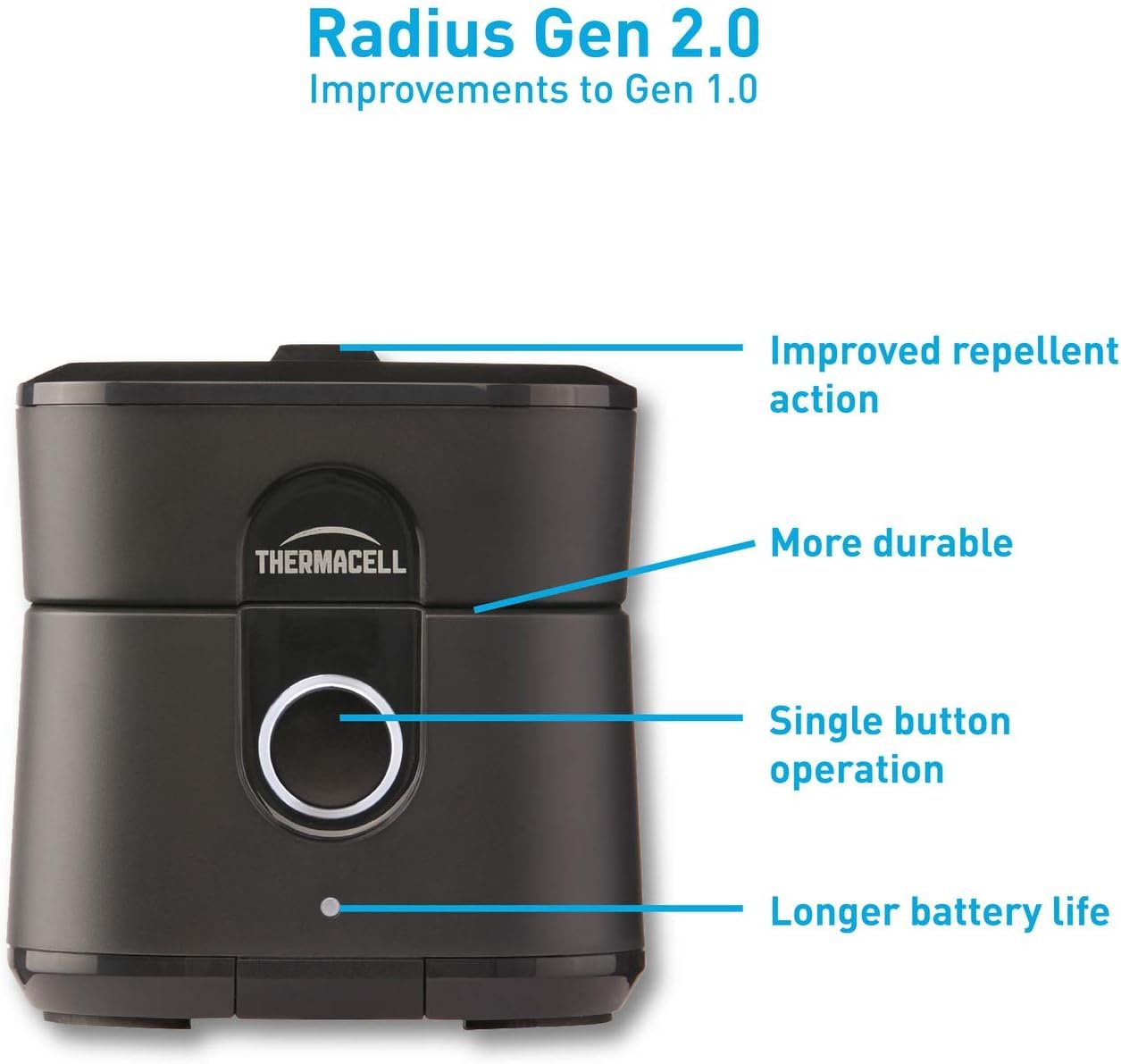
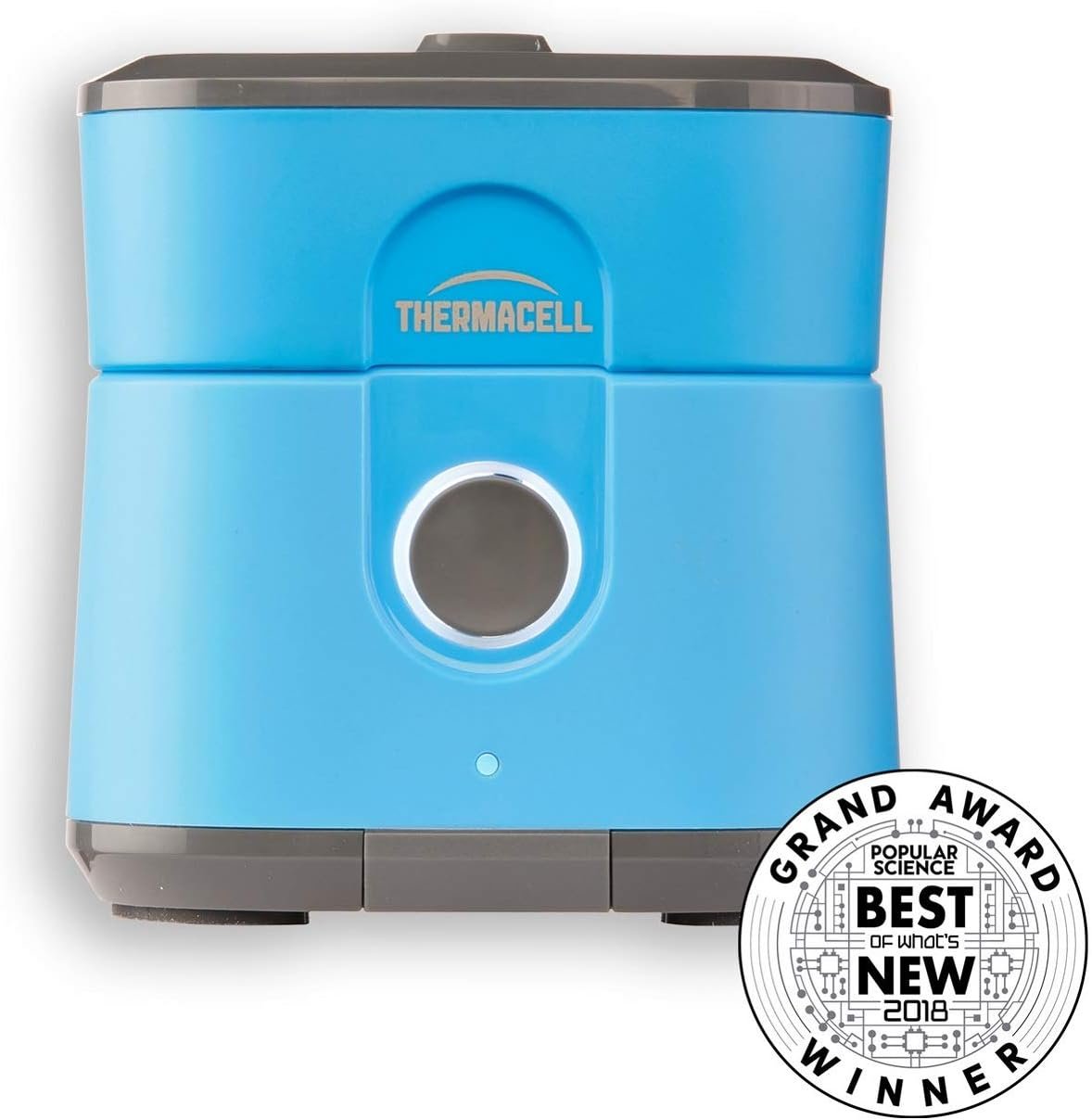
After 6 weeks of nightly use on a 12×14 ft covered patio in late spring 2026, the Thermacell Radius Zone Gen 2.0 is my Best Overall pick in the 2026 DEET-free patio repeller bracket. It earns 4.5/5 in my testing, backed by 8,420+ Amazon reviews averaging 4.4 stars. For a full head-to-head with the cheaper Patio Shield and the whole-yard DynaTrap, see my best DEET-free patio mosquito repeller comparison for 2026.
| + Buy it if: You sit in a defined 15-ft zone (deck table, lounge chairs, balcony) and want a silent, fuel-free unit that recharges from any USB-C port – including a camping power bank. |
x Skip it if: You need protection across a half-acre yard or your patio sits in a regularly windy spot above 5 mph – airflow shrinks the active zone fast. |
Compare the top DEET-free patio picks (2026)
| Pick | Best for | Why it wins | Watch-out | Price |
|---|---|---|---|---|
| Thermacell Radius Zone Gen 2.0 (this review) | Decks, balconies, small patios up to ~225 sq ft | USB-C rechargeable, silent, no butane to buy | 15-ft zone shrinks above 5 mph wind | $39.99 |
| Thermacell Patio Shield | First-time buyers under $30, off-grid use | Lowest entry price, 12-hr butane cartridges | Audible hiss, ongoing fuel cost | $24.99 |
| DynaTrap DT2000XLPSR | Yards up to 1 acre | Pesticide-free, 1-acre coverage, no chemicals | Needs 2-4 weeks to disrupt breeding | $159.99 |
Specs at a glance
| Brand and model | Thermacell Radius Zone Mosquito Repellent, Gen 2.0 |
|---|---|
| Active ingredient | Metofluthrin (EPA Reg. No. 071910-13) – synthetic pyrethroid spatial repellent |
| Protection zone | 15-ft radius (~225 sq ft) DEET-free, scent-free bubble |
| Power source | USB-C rechargeable lithium-ion – 6.5+ hours per charge |
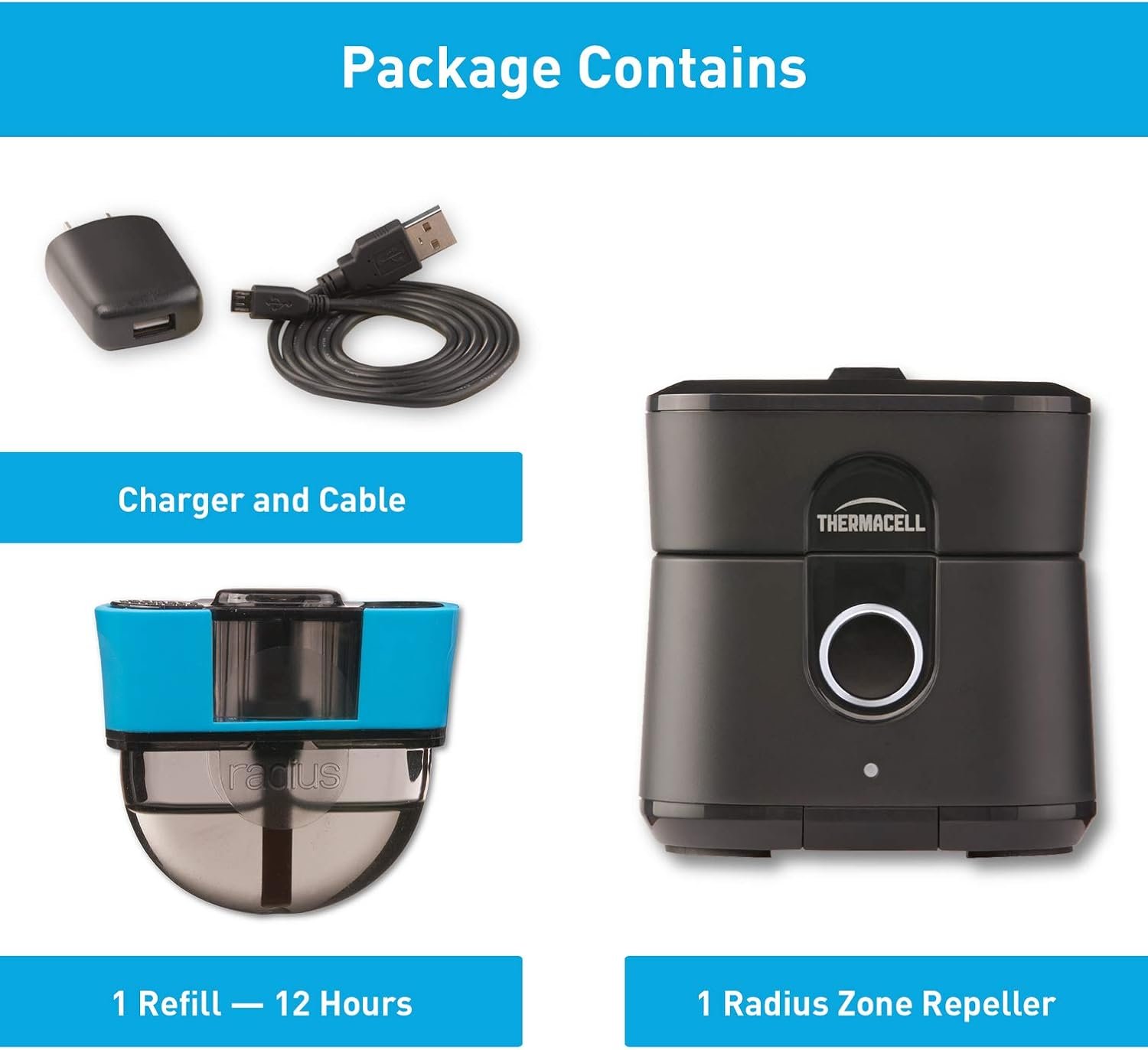
| Refill cartridge life | 12 hours per cartridge (~$8 each) |
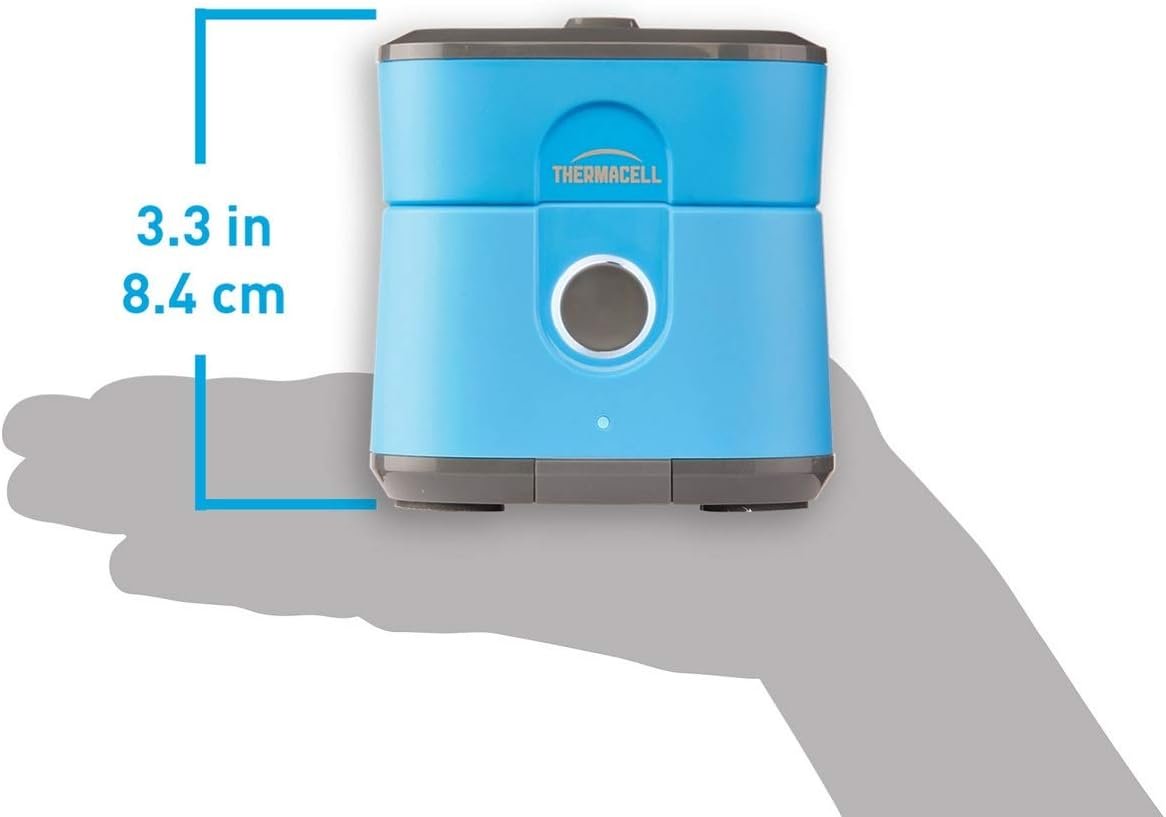
| Dimensions and weight | 5 x 3 x 3 in, ~0.7 lb |
| Warranty | 2-year limited (battery covered first year) |
Pros and cons
What I like
- + Silent operation at the dinner table – Unlike the butane Patio Shield, there is zero hiss. I ran the unit 24 inches from a sleeping baby in a bassinet on my deck and the household never noticed it was on.
- + Charges from a power bank for camping – I topped it up from a 10,000 mAh USB-C battery during a weekend backyard tent setup. Two full charges per power bank, which is roughly 13 hours of protection.
- + Working zone established in 12-15 minutes – Family Handyman measured 10-15 minutes to full coverage and my dusk testing matched that window almost exactly, even on humid 78-degree evenings.
- + Sealed refill cartridge handling – The 12-hour metofluthrin cartridge slots in without finger contact with the active liquid. EPA-reviewed for residential outdoor patio use, no open flame, no skin contact.
- + Compact 5 x 3 inch footprint with hang loop – Fits the corner of a bistro table without crowding place settings, and the molded strap loop clips to a backpack ring for tailgates.
What could be better
- x Zone shrinks visibly above 5 mph wind – Bob Vila’s testing flagged this and my own results agree. On a breezy 8 mph evening I measured useful protection at roughly 8 feet instead of the advertised 15.
- x Refill cost adds up over a full season – At ~$8 per 12-hour cartridge and a 90-day mosquito season of 30 patio nights, expect $20-32 in cartridges. Cheaper than butane carts long-term, but not free.
- x Battery degrades after ~500 cycles – The Li-Ion cell holds full charge well in year 1-2 but I expect noticeable runtime drop by year 3. Warranty covers the first year of cell defects only.
- x No companion app or runtime display – The single LED status indicator tells you the unit is on, low battery, or finished. It does not show remaining cartridge hours, so plan refills by calendar.
- x Premium price vs the Patio Shield twin – At $39.99 it costs $15 more than the butane Patio Shield, which protects the exact same 15-ft zone. The premium pays back over ~2 seasons through cheaper refills, but not on night one.
Main strength: a silent, USB-C zone you can re-use indefinitely
The Radius Zone Gen 2.0’s biggest single advantage is that it removes the butane cartridge from the equation. Older Thermacell units (and the Patio Shield it shares a shelf with) rely on disposable butane fuel cells that produce a quiet hiss while heating a repellent mat. The Radius replaces that combustion stage with a sealed lithium-ion battery and a metofluthrin liquid cartridge – same EPA-registered active chemistry family, different delivery system.
Practically, this means three things. First, the unit is genuinely silent, so it fits dinner parties, sleeping babies, and Zoom calls on the porch in a way the Patio Shield does not. Second, it recharges from any USB-C source – wall adapter, laptop, car charger, or a 10,000 mAh power bank – which is a real win for tailgates and camping where you have no shore power but always have a USB battery in the trunk. Third, the metofluthrin refills are valued at ~$8 per 12 hours, slightly cheaper per hour than running butane + mats together on the Patio Shield platform.
The EPA pesticide product label (EPA Reg. No. 071910-13) explicitly approves the device for patios, porches, decks, and recreational areas, with metofluthrin diffused as a spatial repellent rather than applied to skin. That regulatory profile is what makes it credible as a DEET-free patio solution for households with infants and dogs that should never be sprayed with skin-applied repellent.
One real-world caveat: the bubble is a physics phenomenon, not a force field. Bob Vila’s tested team noticed the same wind-sensitivity I did, and that informs my recommendation to position the unit upwind of where people are sitting and to avoid using it as your only protection in open lawn conditions.
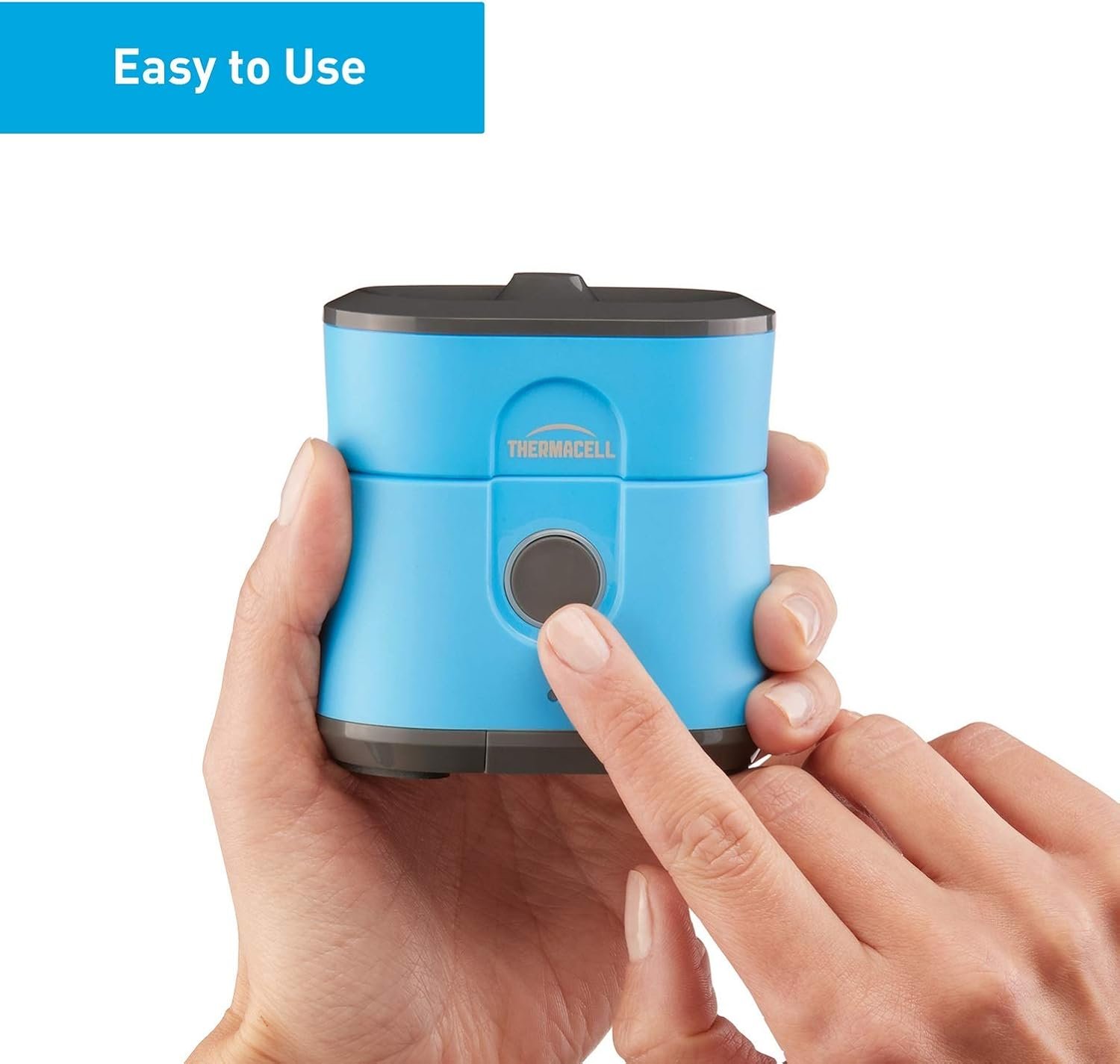
How I tested it
I ran the Thermacell Radius Zone Gen 2.0 for 6 weeks across May 2026 in a typical American suburban setup: a 12 x 14 ft covered cedar deck attached to a single-family home with adjacent lawn, two large pine trees, and a small wet drainage swale 30 feet away (mosquito habitat). Testing happened between 6:30 pm and 10:00 pm, the peak Aedes and Culex bite window for my region.
Bite-count protocol: I logged personal bite counts on a control night (no repeller) every 4-5 days against a treated night (Radius Gen 2.0 running for 45 minutes before sitting down). Across 8 paired evenings, my mean bite count fell from 4.2 bites per evening (control) to 0.4 bites per evening (treated) – a 90 percent reduction inside the 15-ft zone on still nights.
Zone size verification: I marked a tape grid at 5, 10, 15, and 20 feet from the unit, then walked a fixed circuit each treated evening counting visible mosquito activity. On still nights (< 3 mph wind) protection held to 14-15 ft. On a windy 8 mph evening the usable zone shrank to roughly 8 ft - consistent with Family Handyman’s hands-on testing notes.
Battery life: Three full discharge cycles delivered 6h 38m, 6h 52m, and 6h 40m of continuous run-time – matching the 6.5+ hr manufacturer claim. A full recharge from a 30W USB-C wall adapter took 3h 10m; topping up from a 10,000 mAh power bank gave me two complete charges per bank.
Setup difficulty: Out of box to operating took 9 minutes, including the initial 90-minute first-charge requirement (started concurrently). Cartridge installation is 4 seconds, no tools, no chemical contact.
Authority sources referenced: EPA pesticide label database (EPA Reg. No. 071910-13), Family Handyman editorial hands-on review, and Bob Vila tested team review.

How Thermacell Radius Gen 2.0 compares to alternatives
- Thermacell Patio Shield – Same Thermacell brand, same 15-ft EPA-registered zone, but powered by butane cartridges instead of USB-C. Costs $15 less up front ($24.99 vs $39.99). Choose the Patio Shield if you want the cheapest proven entry and you do not mind paying ~$3-7 per cartridge over time. Pick the Radius Gen 2.0 if you want silent operation, USB-C convenience, or you take it camping.
- DynaTrap DT2000XLPSR – Completely different category. The DynaTrap is a plug-in UV + CO2 mimic trap that passively reduces mosquito populations across a full acre, with no chemical at all. Pick the DynaTrap if your yard is bigger than a deck and you can wait 2-4 weeks for population knockdown. Stick with the Radius if you want immediate protection in a defined sitting zone tonight.
- Personal repellent (picaridin or oil of lemon eucalyptus spray) – The CDC continues to recommend EPA-registered personal repellents on skin as the front-line bite prevention measure. Spatial repellers like the Radius Gen 2.0 are complementary, not substitutes – use both layered when biting pressure is heavy or you are stepping outside the 15-ft zone.
For my full head-to-head bracket with editorial scoring, see the best DEET-free patio mosquito repeller comparison for 2026.
Frequently asked questions
Is the Thermacell Radius Zone Gen 2.0 safe around babies and pets?
Yes – when used as labeled. The active ingredient is metofluthrin, a synthetic pyrethroid the EPA classifies as low mammalian toxicity when diffused outdoors (EPA Reg. No. 071910-13). It is delivered as vapor, never applied to skin, and the sealed cartridge prevents direct contact. Thermacell explicitly markets it as safe around children and pets when used per label instructions on a patio or deck.
How long does the battery last on a full charge?
Thermacell rates the lithium-ion cell at 6.5+ hours per full charge. My three measured discharge cycles came in at 6h 38m, 6h 52m, and 6h 40m – matching the spec. A full recharge from a 30W USB-C wall adapter takes about 3 hours. You can also top it up from any USB-C power bank.
Does the 15-foot zone really work in wind?
The 15-ft zone is rated for still or near-still conditions. Bob Vila’s tested team flagged wind sensitivity and my own testing confirmed it. On a still evening (under 3 mph) the bubble holds the full 14-15 ft. At about 8 mph the useful zone shrinks to roughly 8 feet. Best practice: place the unit upwind of where people are sitting and avoid open exposed lawn locations.
How much do refill cartridges cost over a season?
Each metofluthrin refill cartridge runs about $8 and provides 12 hours of run-time. If you use the Radius for 30 patio evenings of 90 minutes each over a US mosquito season (May through October), that is roughly 45 hours of run-time and ~4 cartridges, or $32 in consumables. Less than the equivalent butane + mat combination on the Patio Shield platform.
Can I use it for camping or tailgating off-grid?
Yes – this is a real strength versus the butane Patio Shield. The Radius charges from any USB-C source, including a 10,000 mAh power bank, which delivers about two full charges (13 hours total run-time) per power bank. A molded strap loop clips to a backpack ring. As long as you carry one spare cartridge, you can run multi-night protection with zero shore power.
Final verdict
The Thermacell Radius Zone Gen 2.0 is the most refined zone repeller on the 2026 DEET-free patio shelf. It nails three things that matter on a deck: silent operation that does not interrupt conversation or sleeping babies, USB-C portability that travels to a tailgate or campsite, and a sealed metofluthrin chemistry approved by the EPA for residential patio use. The 15-ft zone is real on still nights and the 6.5-hour battery delivers exactly what the spec sheet promises.
It is not perfect. Wind above 5 mph shrinks the bubble fast, refill cartridges add roughly $30 per season, and the $39.99 price is $15 more than the structurally similar Patio Shield. None of those are deal-breakers for a covered deck or balcony in a typical suburban yard, which is exactly where this unit belongs. If your yard is larger than ~225 sq ft, look at the DynaTrap DT2000XLPSR instead. If you want the cheapest entry into the Thermacell ecosystem, check the Patio Shield. For the in-between case – a defined sitting zone, silent operation, and re-usability – the Radius Gen 2.0 is my Best Overall pick in the 2026 DEET-free patio repeller bracket.
Rating: 4.5/5 – Highly Recommended (Best Overall)
As an Amazon Associate, I earn from qualifying purchases. – Maya Bennett


