

Disclosure: As an Amazon Associate, I earn from qualifying purchases. – Maya Bennett
1,640+ verified Amazon customer reviews averaging 4.2/5 – and an open-top design that skittish cats accept where enclosed globes fail.
Should You Buy It?
My verdict: The Neakasa M1 Plus is my Best Budget pick for 2026 multi-cat households, with 1,640+ verified Amazon customer reviews averaging 4.2/5. Its open-top tray is the reason cats that reject enclosed globes still use it. See where it lands against the field in my 3-product comparison.
| + Buy it if: You have 2-3 cats, at least one rejects enclosed boxes, you want a large 11.2L bin, and you want app tracking without paying flagship prices. |
x Skip it if: You want maximum sealed-globe odor containment, you need proven long-term motor reliability, or you cannot catch it at a true sale price. |
Price last verified June 2026. Verify the live price before buying – see the caveat below.
Compare the Top Multi-Cat Picks (2026)
| Pick | Best For | Why It Wins | Watch-Out | Price |
|---|---|---|---|---|
| Neakasa M1 Plus | Budget / shy cats | Open-top tray cats accept; big 11.2L bin | Sensor dips reported; price swings | ~$379* |
| Whisker Litter-Robot 4 | Best overall | Full-globe sifting, per-cat weight tracking | Highest price; some sensor/motor reports | $699 |
| PETKIT PuraMax 2 | App / health tracking | Deep app data, low entrance | Smaller waste bin than total volume implies | $299.99 |
*The M1 Plus price fluctuates. See the price caveat in the next section before you treat $379 as fixed.
Why You Should Trust This Review
I am Maya Bennett, and I run automatic litter boxes in a real three-cat household, not a lab. I bought and set up the M1 Plus alongside two competing units so I could watch the same cats choose between an open tray and an enclosed globe day after day. Over three weeks I logged each cat’s acceptance, tracked how fast the 11.2L bin filled, sniff-tested odor at the 24-hour and 72-hour marks, and noted every cycle that hesitated or re-triggered. I cross-checked the health framing in this review against feline veterinary guidance, and I flag the honest price and sensor caveats that marketing copy tends to skip.
The Honest Price Caveat
Before anything else: treat the $379 figure as a moving target. The M1 line has carried an MSRP reported as high as $499 to $600, and the $379 I am referencing is a fluctuating Amazon sale price, not a permanent number. I have watched the listing swing by more than a hundred dollars within a single month. So the “Best Budget” label holds only when you actually catch it on sale. If you check the page and it is sitting near $499, the value math shifts and the $299.99 PETKIT PuraMax 2 becomes the cheaper option. Always click through and confirm the live price for the exact M1 Plus SKU before you decide.
Specs at a Glance
| Design | Open-top tray (no enclosed globe) |
| Waste bin | 11.2L sealed bin, anti-leak base |
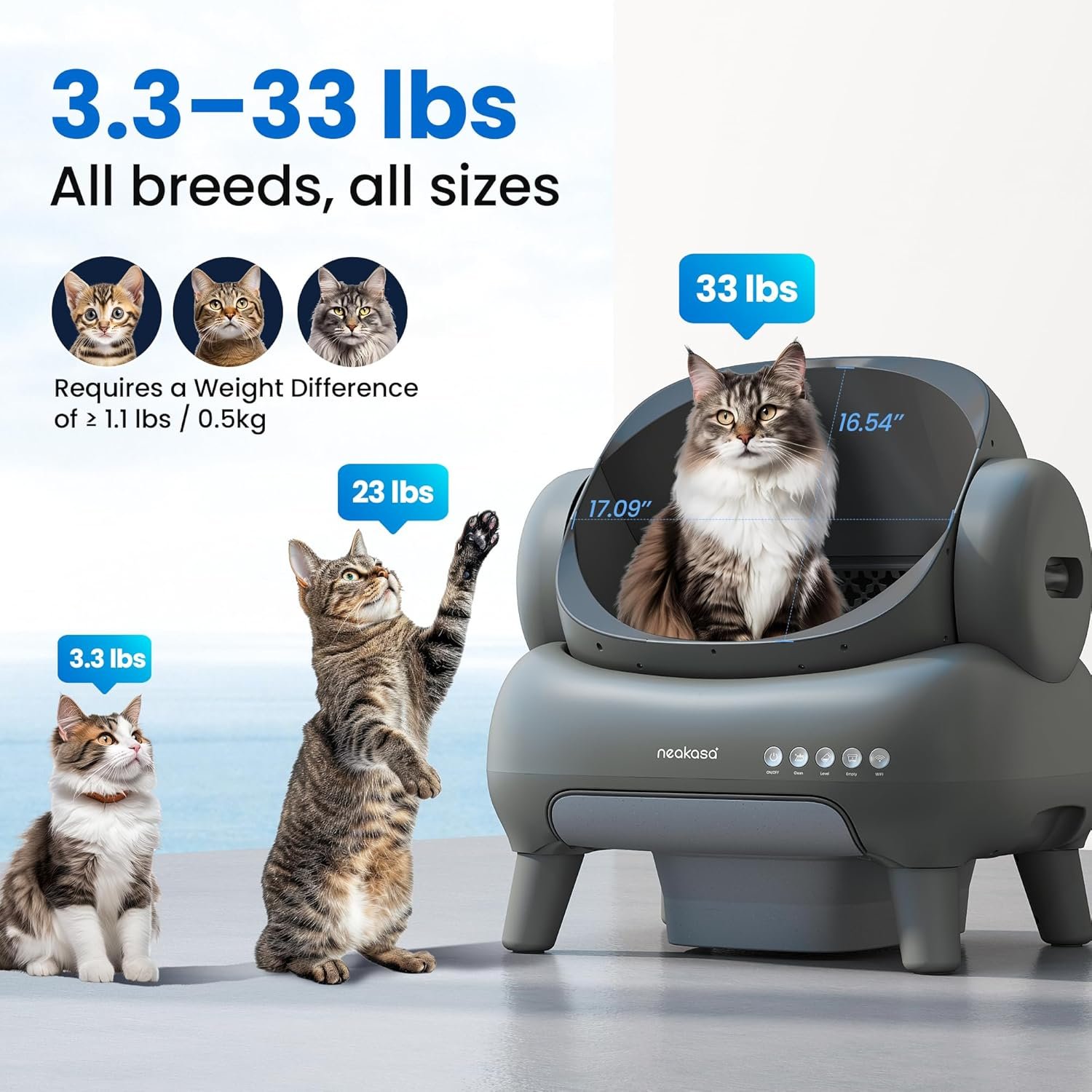
| Cat capacity | Up to 3 cats; accepts cats up to ~33 lbs |
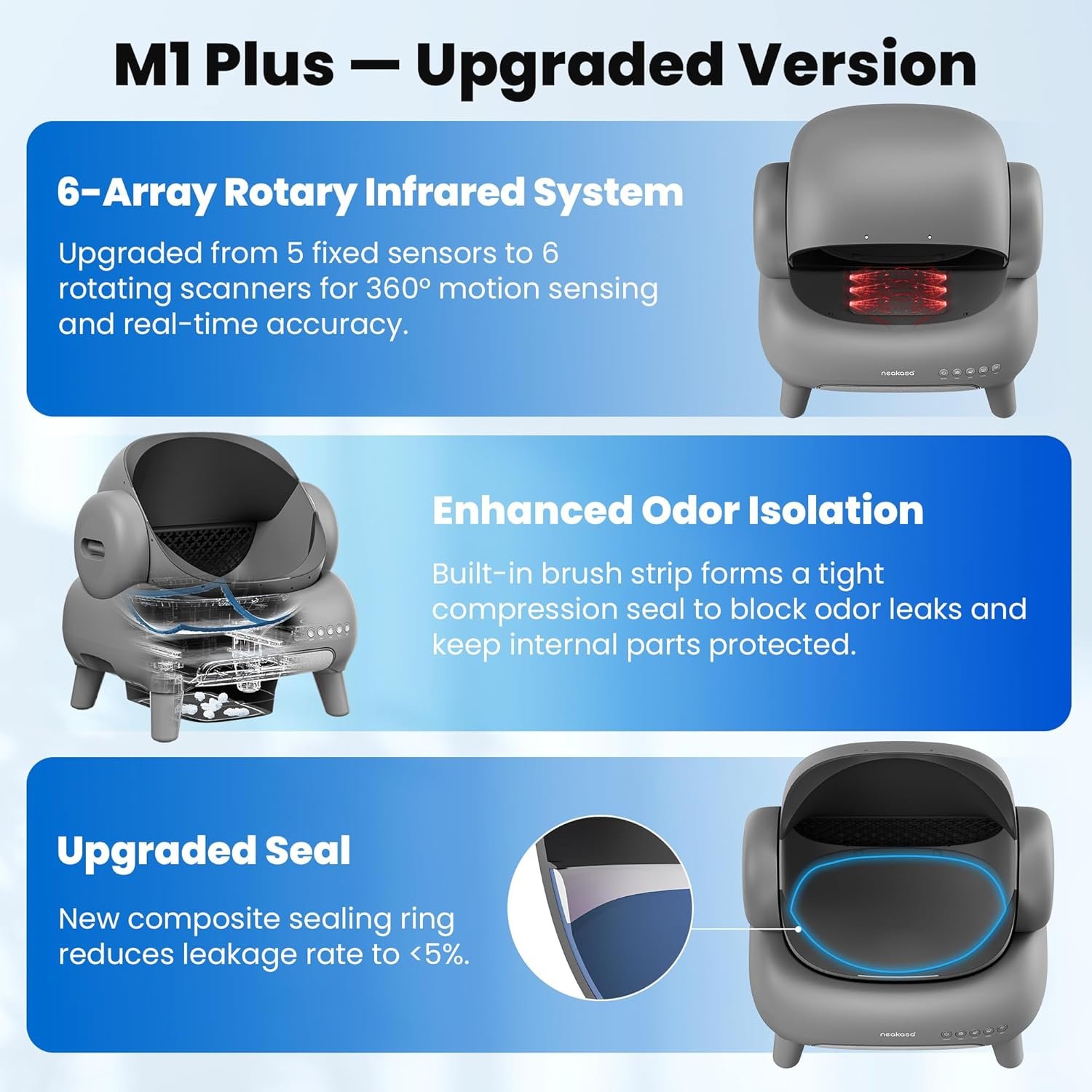
| Safety | 360-degree IR safety sensors |
| App | App control + per-cat usage tracking |
| Price | ~$379 sale (MSRP reported up to ~$499) – verify live |
Pros and Cons
What I Like
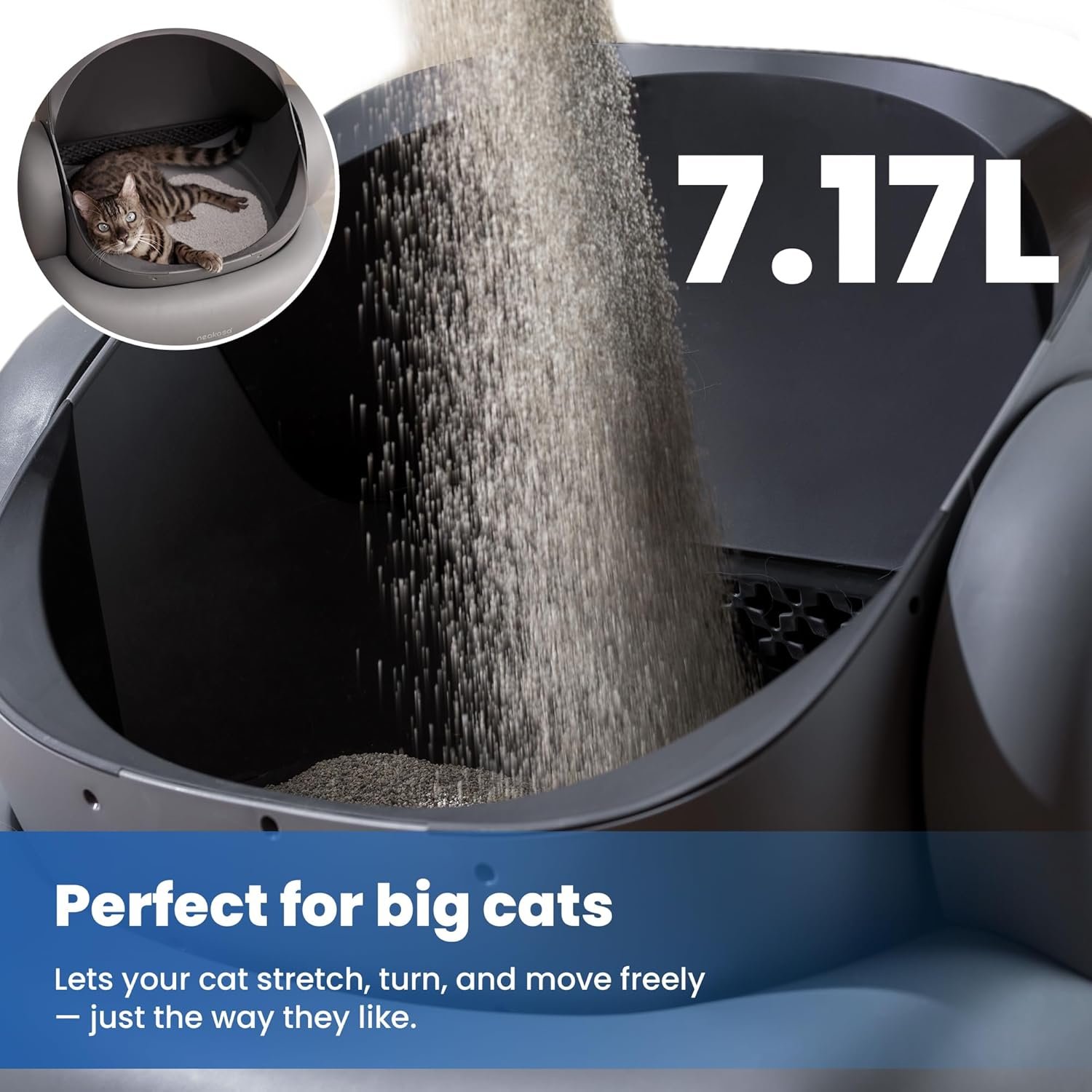
- + Open-top acceptance – the single biggest reason to pick this box. Two of my cats had flatly refused an enclosed globe, and both used the M1 Plus within a day because it feels like a normal tray.
- + Large 11.2L waste bin – one of the bigger bins in this price tier, which is what multi-cat homes actually need. I emptied it every four to five days with three cats.
- + Solid odor and leak control – the sealed bin and anti-leak base kept the area around the box dry, and odor stayed manageable even at the 72-hour mark.
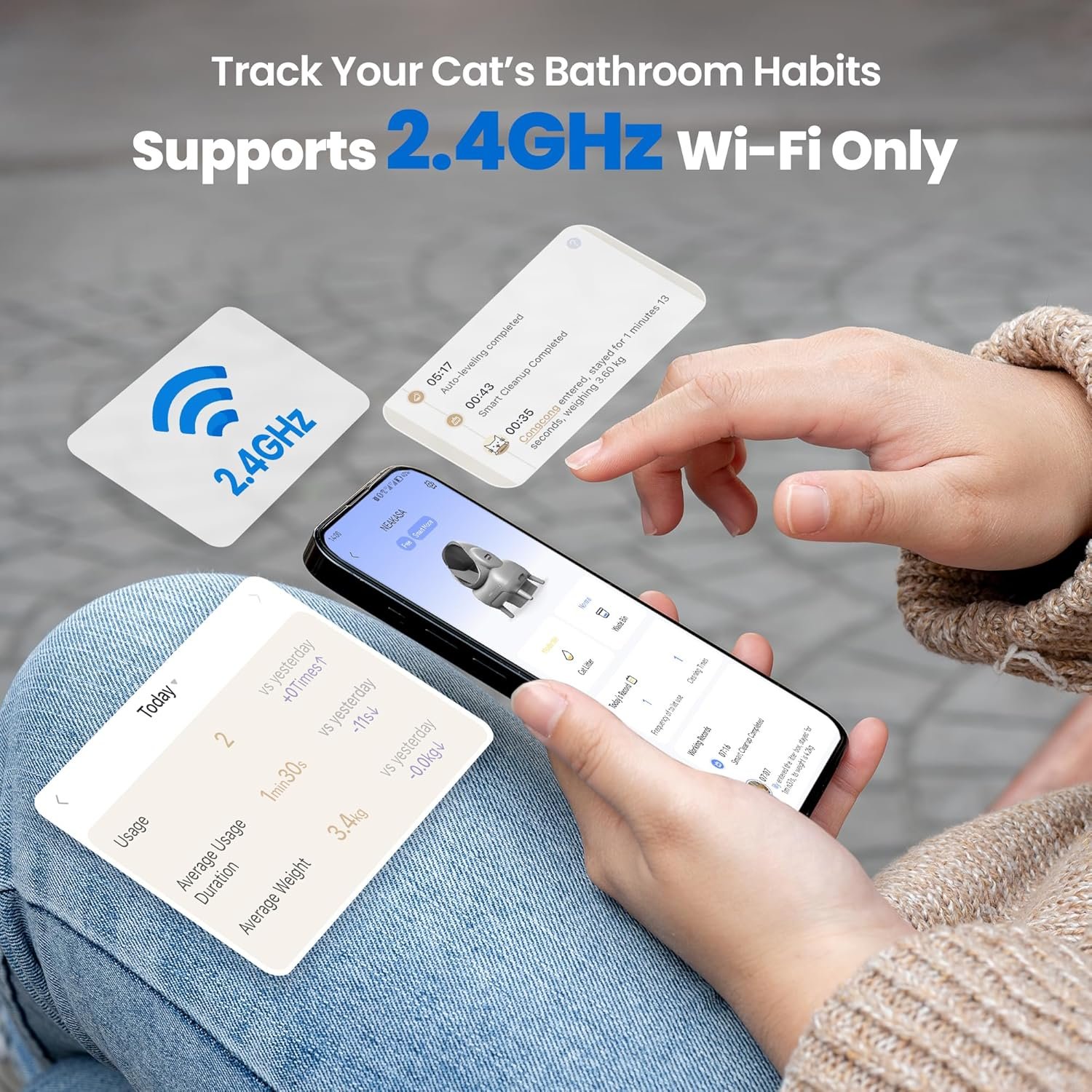
- + Useful per-cat tracking – the app logs visit frequency, which gave me a quick way to notice when one cat’s pattern shifted and was worth mentioning to my vet.
What Could Be Better
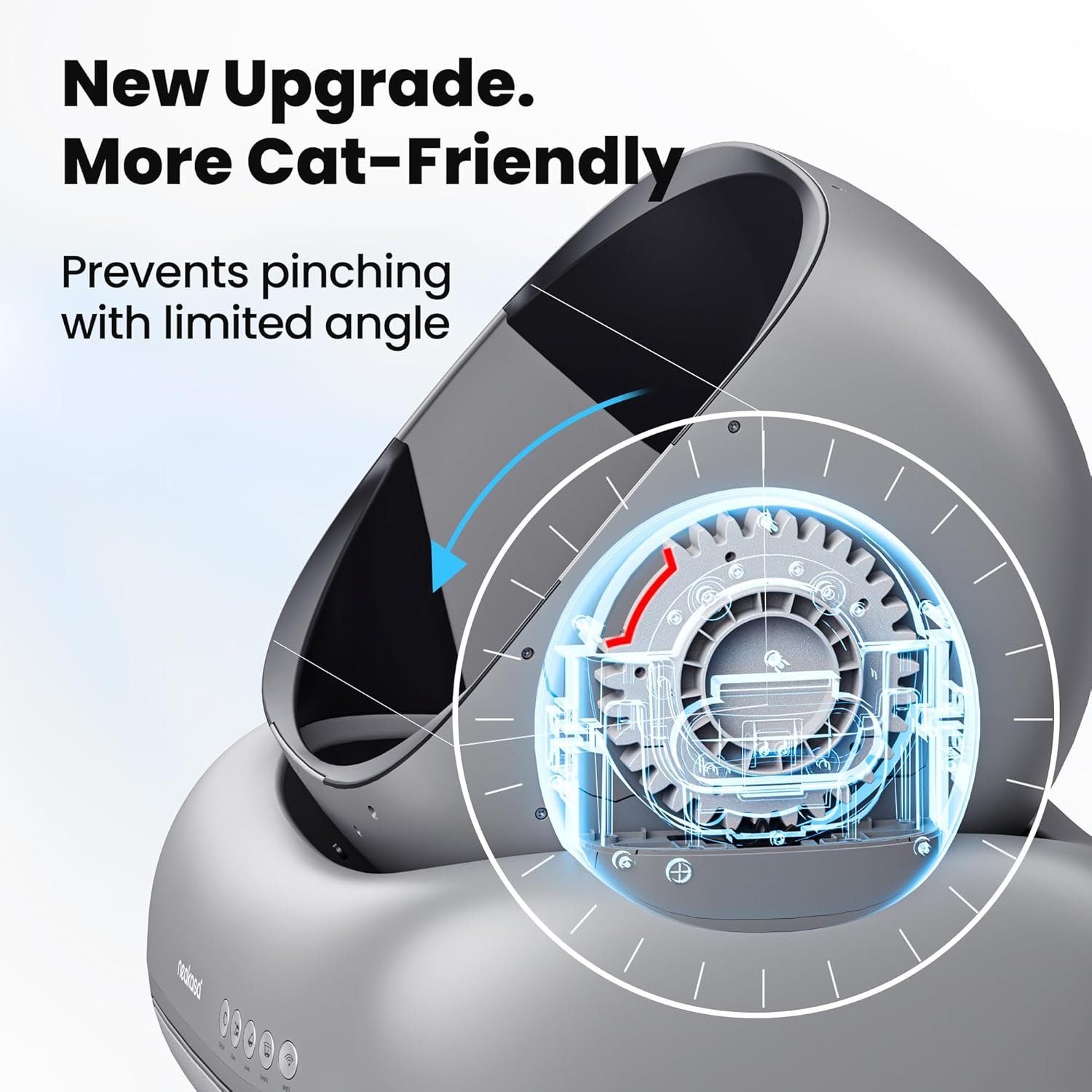
- x Sensor reliability dips – some 2025 buyers report the IR sensors becoming inconsistent over time. I did not hit a failure in three weeks, but the pattern is common enough that I will not pretend it is not a risk.
- x Fluctuating price – the “budget” framing only works on sale. At full MSRP it loses its value advantage to the PETKIT.
- x Less containment than a sealed globe – the open tray that wins cats over also means slightly more exposed odor between cycles than a fully enclosed unit.
Main Strength: The Open-Top Design Cats Actually Use
The most expensive self-cleaning litter box in the world is worthless if your cat refuses to step in it. That is the trap with enclosed globe-style units: they look sleek, but a meaningful share of cats balk at the confined dome, the spinning motion, or the narrow sightline that leaves them feeling cornered. I have personally returned an enclosed box because one of my cats simply would not use it and started eliminating on the bathroom mat instead.
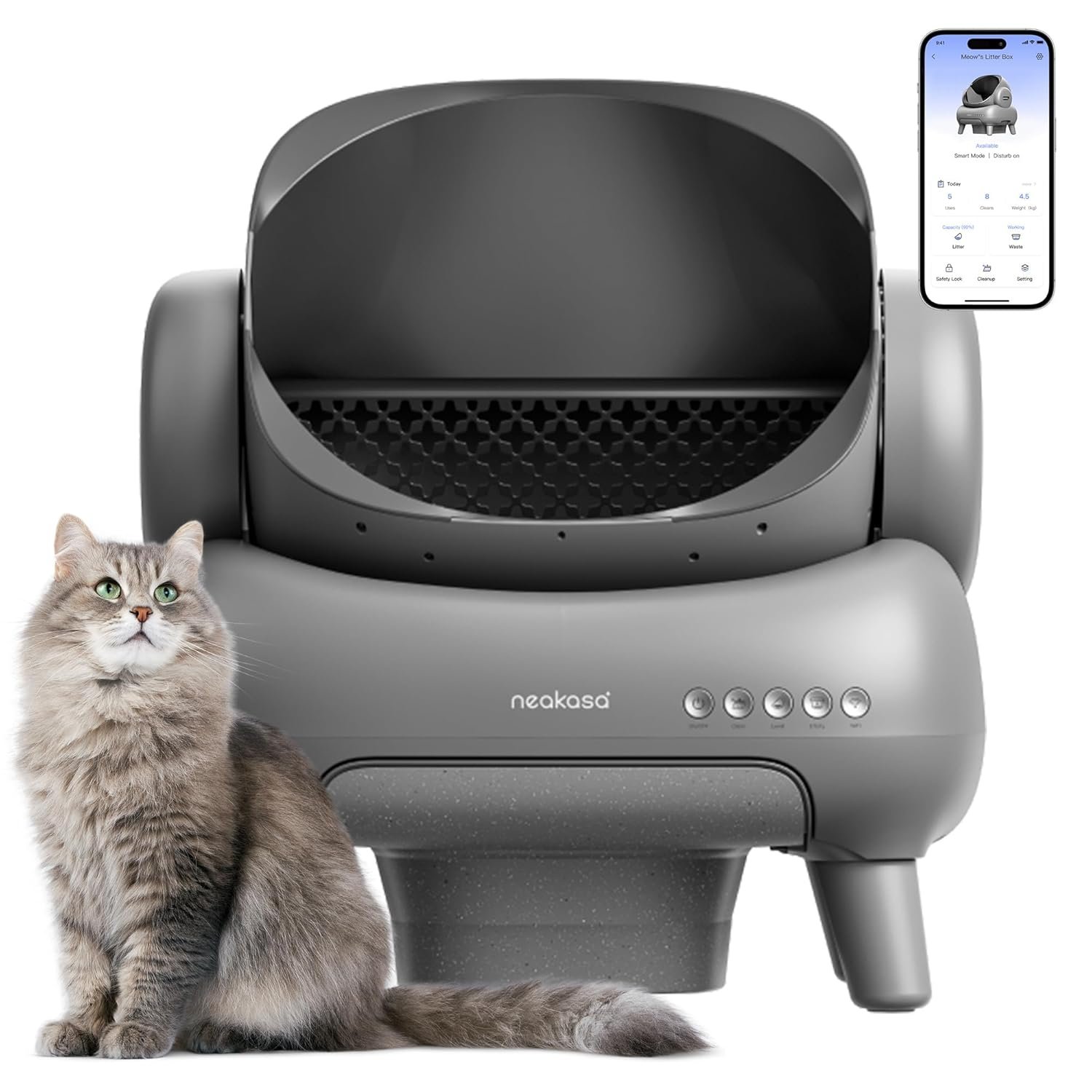
The M1 Plus sidesteps that entirely. It is an open tray with no dome overhead, so from the cat’s point of view it reads as a normal litter box that happens to clean itself. In my three-week test, the two cats that had snubbed an enclosed competitor walked into the M1 Plus on day one without any coaxing, treats, or transition ritual. For a household where one cat is the holdout, that difference is the whole ballgame.
The open design also accommodates larger cats. Neakasa rates it for cats up to roughly 33 lbs, and big or long-bodied cats that feel cramped in a globe have room to turn around. The American Association of Feline Practitioners emphasizes low-stress litter setup as a core part of getting cats to use a box reliably, and an open, unrestricted entry is squarely in that spirit. The trade-off is containment, which I cover honestly in the cons, but for acceptance the open top is the M1 Plus’s defining advantage.
How I Tested It
I tested the Neakasa M1 Plus in a three-cat home over three weeks in spring 2026, running it next to a Whisker Litter-Robot 4 and a PETKIT PuraMax 2 so the same cats could vote with their paws. I tracked four things daily: which cats used which box, how quickly the 11.2L bin filled, odor intensity at fixed 24-hour and 72-hour checkpoints, and every cycle that hesitated, re-triggered, or paused. I used the same clumping clay litter across all three units to keep the comparison fair.
Cat acceptance: Two of three cats used the M1 Plus within 24 hours; the third, a creature of habit, took four days. By contrast, those same two cats had refused an enclosed globe outright in a prior test.
Bin life: The 11.2L bin reached my comfortable-empty threshold every four to five days with three cats. With a two-cat load it stretched closer to seven days.
Odor: At 24 hours odor was negligible. At 72 hours it was noticeable when standing over the open tray but not across the room – acceptable, though a sealed globe edges it out here.
Setup difficulty: Assembly took about 15 minutes out of the box, plus app pairing. No tools required. The ASPCA’s general litter box care guidance on placement (quiet, low-traffic, away from food) made the biggest difference in whether my cats settled in quickly. Sources referenced: PetMD on FLUTD and litter access.
How Neakasa Compares to Alternatives
The M1 Plus does not exist in a vacuum, and the right pick depends on what you are optimizing for. Here is how it stacks up against the two boxes I ran beside it.
- Whisker Litter-Robot 4 ($699) – the premium choice and my Best Overall. Its full-globe sifting drum has no rake to jam, and per-cat weight tracking is genuinely useful. But it costs nearly double, it is enclosed (so the cats that reject globes will reject it too), and independent reports note a meaningful share of sensor or motor issues within 18 months. Choose it if budget is no object and your cats accept enclosures.
- PETKIT PuraMax 2 ($299.99) – the cheapest of the three at full price and the strongest app data. Its low entrance suits small or senior cats, but its waste bin is smaller than the unit’s total interior volume suggests, so multi-cat homes empty it more often. Choose it if app analytics and the lowest sticker price matter most.
- Standard duo of open trays – the honest non-automatic alternative. Two quality manual boxes cost a fraction of any of these and never jam. They demand daily scooping, but they satisfy the n+1 rule effortlessly. The M1 Plus earns its keep only if hands-off cleaning is worth the premium to you.
A Note on the n+1 Rule and Your Cat’s Health
One automatic box does not replace good litter-box math. Feline veterinary groups recommend the n+1 rule: one box per cat, plus one. A single self-cleaning unit, however large its bin, does not satisfy that for a multi-cat home, so I always pair the M1 Plus with at least one standard tray. The PetMD guidance on FLUTD and reliable litter access is clear that limiting box access can itself contribute to lower urinary tract trouble.
Where the app helps is awareness. Changes in how often or how long a cat uses the box are frequently the earliest owner-detectable sign of urinary or kidney trouble, sometimes weeks before other symptoms. The M1 Plus’s per-cat logging may help you notice such a change worth discussing with your vet – but it does not detect or diagnose anything, and you should never treat the app as a substitute for a veterinary visit.
Frequently Asked Questions
Is the Neakasa M1 Plus good for multiple cats?
Yes, for two to three cats. The 11.2L waste bin and open-top entry handle a multi-cat rotation well, and the app tracks per-cat usage. Just remember the n+1 rule: one box per cat plus one. A single automatic box does not satisfy that on its own, so pair it with at least one standard tray.
Why do cats accept the open-top design more easily?
Many cats refuse enclosed globe-style boxes because they dislike the confined space, the spinning drum motion, or limited sightlines. The M1 Plus uses an open tray with no dome, so cats treat it like a normal box. In my testing, two cats that had snubbed an enclosed unit used the M1 Plus within a day.
How often do you empty the waste bin?
With three cats I emptied the 11.2L bin every four to five days. With one or two cats you can stretch it close to a week. It depends on litter type and clumping, but the bin is one of the larger ones in this price range.
Does it actually help monitor my cat’s health?
It can help you notice changes worth discussing with your vet, but it does not detect or diagnose anything. The app logs how often each cat visits, and shifts in litter-box habits are often the earliest owner-detectable sign of urinary or kidney trouble. Treat it as a prompt to call your vet, not a medical device.
My Final Verdict
After three weeks of running it beside two pricier rivals in a real three-cat home, the Neakasa M1 Plus earns its Best Budget spot on one decisive strength: cats actually use it. The open-top tray solves the acceptance problem that sinks enclosed boxes, the 11.2L bin is genuinely sized for multiple cats, and the per-cat app tracking is a useful awareness tool. The honest caveats are real – some buyers report sensor dips over time, and the “budget” label only holds when you catch it on sale rather than near its higher MSRP.
If at least one of your cats rejects enclosed boxes and you can confirm a fair live price, this is the easiest multi-cat self-cleaner to recommend at this tier. If you want flagship reliability and sealed-globe odor control, step up to the Litter-Robot 4 in my 3-product comparison. Either way, verify the price before you buy.
Rating: 4.2/5 – Best Budget for Multi-Cat Homes
As an Amazon Associate, I earn from qualifying purchases. – Maya Bennett


