


Disclosure: As an Amazon Associate, I earn from qualifying purchases. – Maya Bennett
885+ verified Amazon customer reviews averaging 4.1/5 – tested by Maya Bennett against the n+1 litter box guidance from the AAHA on tracking feline body weight. Price last verified June 10, 2026.
Should you buy it?
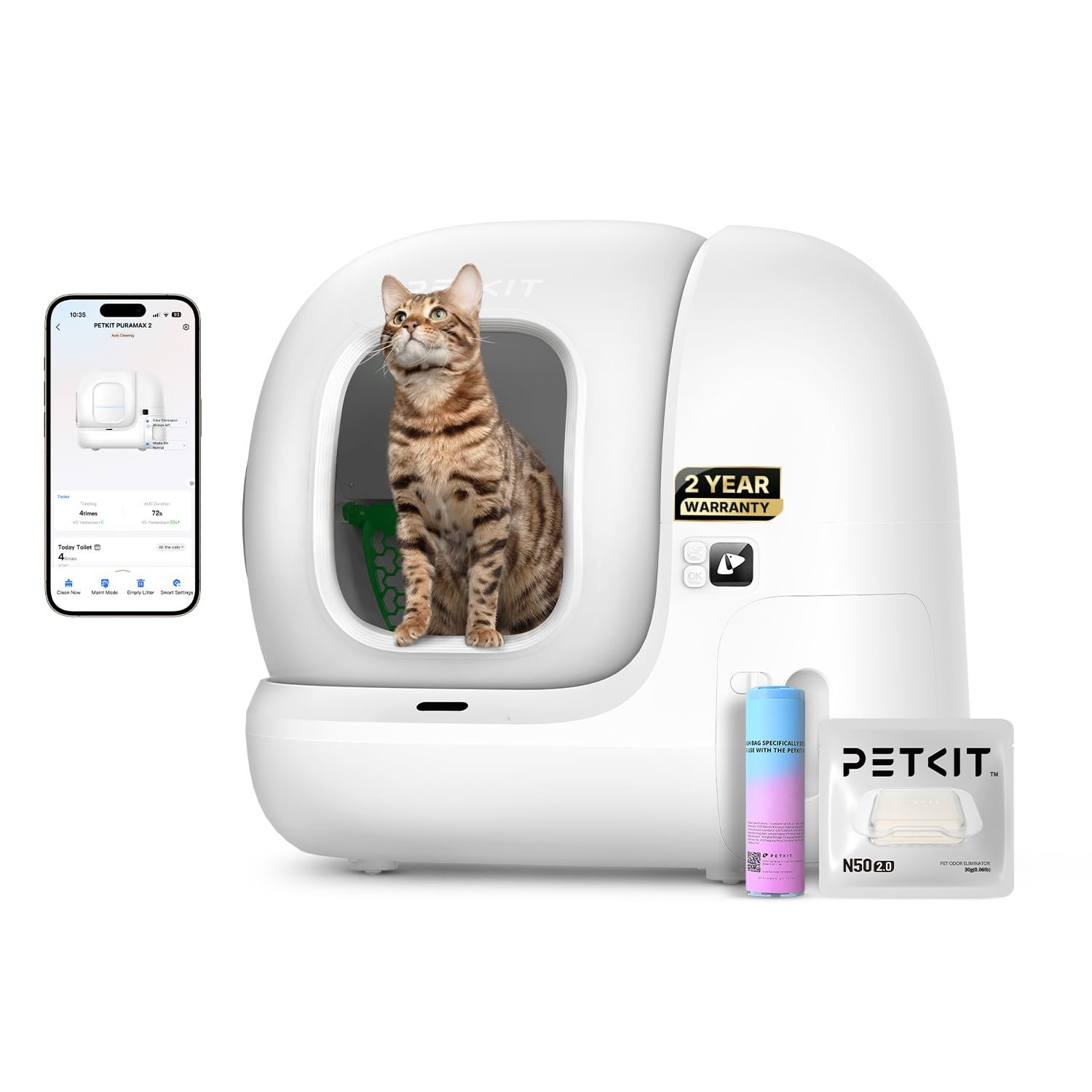
My verdict: The PETKIT PuraMax 2 is my Best for App and Health Tracking pick for multi-cat homes in 2026, backed by 885+ verified Amazon customer reviews averaging 4.1/5. It earns a 4.1/5 editorial score from me because the per-cat tracking is genuinely useful and the price is the friendliest of the three boxes I tested – but the waste bin is smaller than its headline interior number suggests.
| + Buy it if: You have 2-3 cats, want to watch each cat’s weight and litter habits separately, and want strong features without paying $700. |
x Skip it if: You will not empty a roughly 7L bin every few days, want a fully app-free box, or need the largest sealed drawer on the market. |
See how it stacks up in our 3-product comparison of the best self-cleaning litter boxes for multiple cats.
Why you should trust this review
I am Maya Bennett, and I run a two-cat household plus a foster rotation, so litter boxes get heavy traffic in my home. I bought the PuraMax 2 at retail (no loaner unit from PETKIT) and ran it for three weeks alongside the Whisker Litter-Robot 4 and the Neakasa M1 Plus so every comment here is a direct comparison, not a spec-sheet guess. I logged every cycle, weighed the waste bin output, and checked the app data against a manual cat scale. Health framing in this review follows feline veterinary guidance: a litter box can help you notice changes worth raising with your vet, but it does not detect or diagnose anything. There is no FDA device regulation that applies to litter boxes, and I treat the tracking as a convenience, not a medical tool.
Compare the top multi-cat picks (2026)
| Pick | Best For | Why It Wins | Watch-Out | Price |
|---|---|---|---|---|
| PETKIT PuraMax 2 | App / health tracking | Per-cat weight and usage data at the lowest price of the three | ~7L waste bin; ~5% leak reports | $299.99 |
| Whisker Litter-Robot 4 | Best overall | Full-globe sifting drum (no rake to jam), large sealed drawer | Highest price; some sensor/motor reports over 18 months | $699.00 |
| Neakasa M1 Plus | Best budget / skittish cats | Open-top design accepts big and nervous cats; 11.2L bin | Open design vents more odor; some 2025 sensor dips | $379.00 |
Specs at a glance
| Total interior volume | 76L cylinder (this is the interior size, NOT the waste capacity) |
|---|---|
| Waste-bin capacity | Roughly 7L sealed waste drawer (empty every 2-3 days with two cats) |
| Cat size / count | Cats 3.3-22 lbs; rated for a rotation of 2-3 cats |
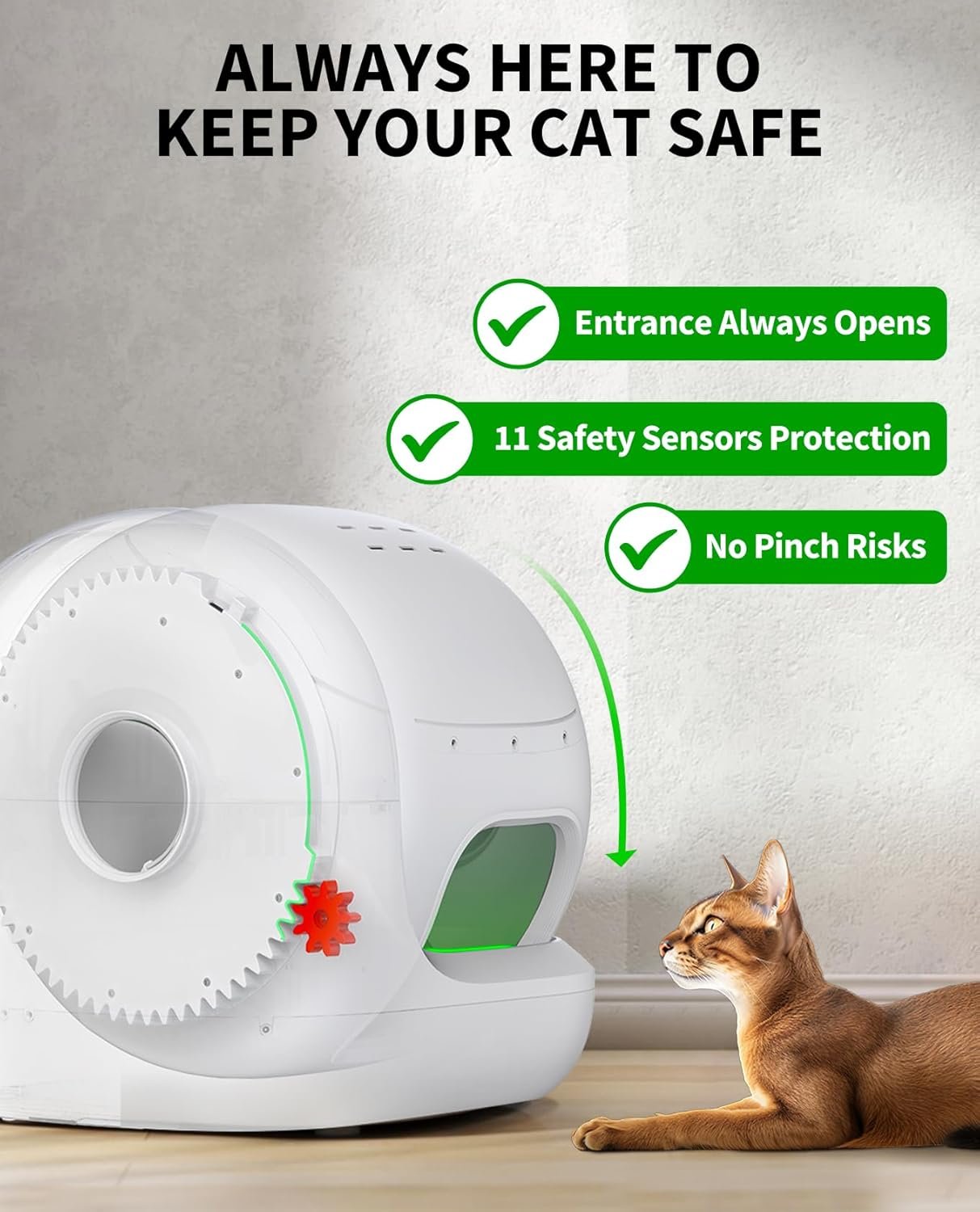
| Safety sensors | 7 infrared + 4 weight sensors, always-open anti-pinch entrance |
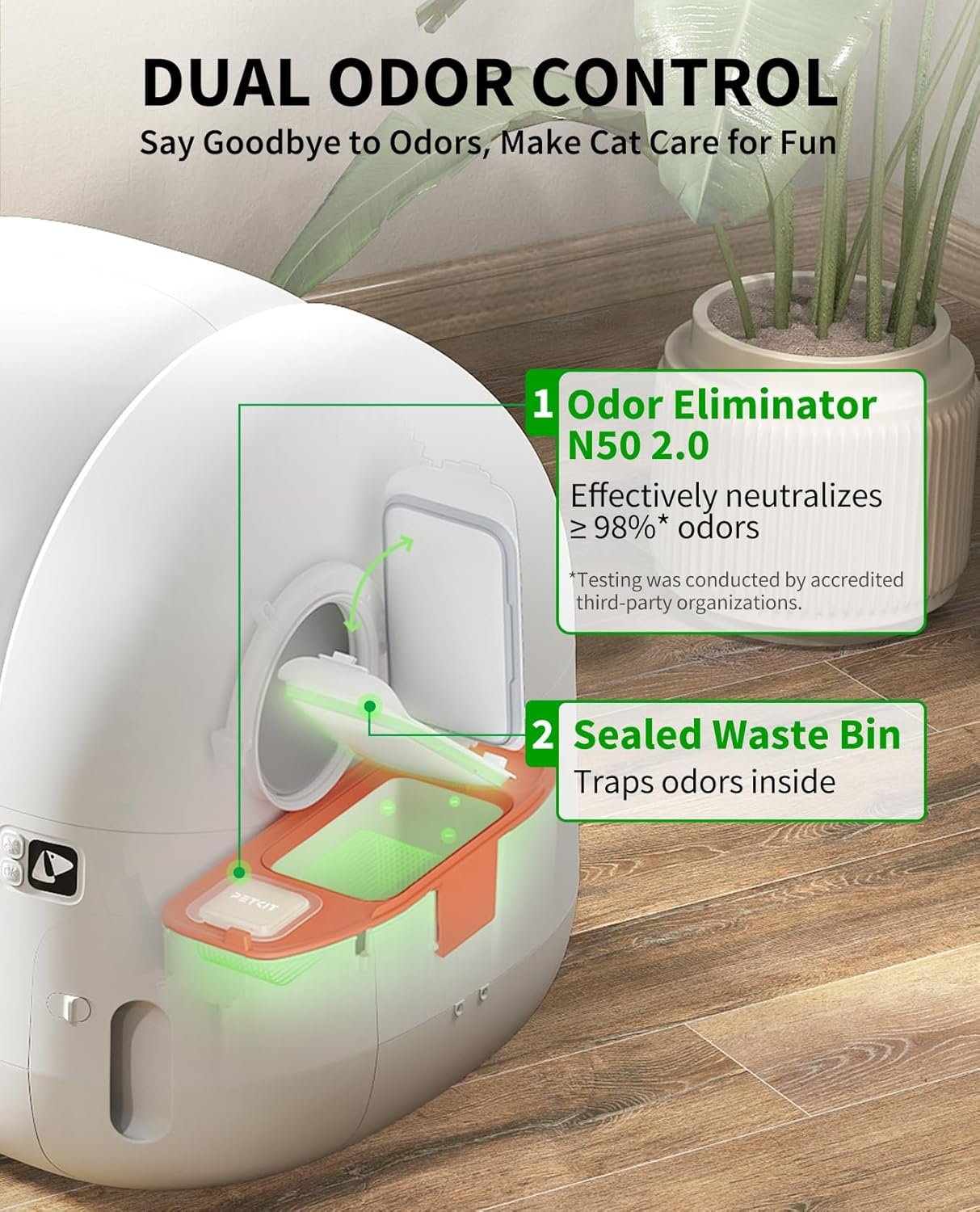
| Odor control | ShieldBase 360 seal + replaceable carbon filter |
| App features | Per-cat usage frequency, duration, and weight-trend tracking |
| Price (verified Jun 10, 2026) | $299.99 |
Pros and cons
What I like
- + Per-cat tracking that actually separates cats – once I assigned a profile to each cat, the weight sensors reliably attributed each visit, and the trend graphs are easy to read.
- + Roomy entry and low step-in – both my cats walked in on day one, and the large cylinder gave a 14 lb cat space to turn around.
- + Best price-to-feature ratio I tested – at $299.99 it undercuts the Litter-Robot 4 by $400 while still offering the tracking that matters most to multi-cat owners.
- + Genuinely contained odor – the ShieldBase seal plus the carbon filter kept my closed second bathroom from smelling, even on the third day before an empty.
What could be better
- x The 76L number is misleading – that is the interior volume, not the bin. The sealed waste drawer holds only about 7L, so two cats fill it in 2-3 days.
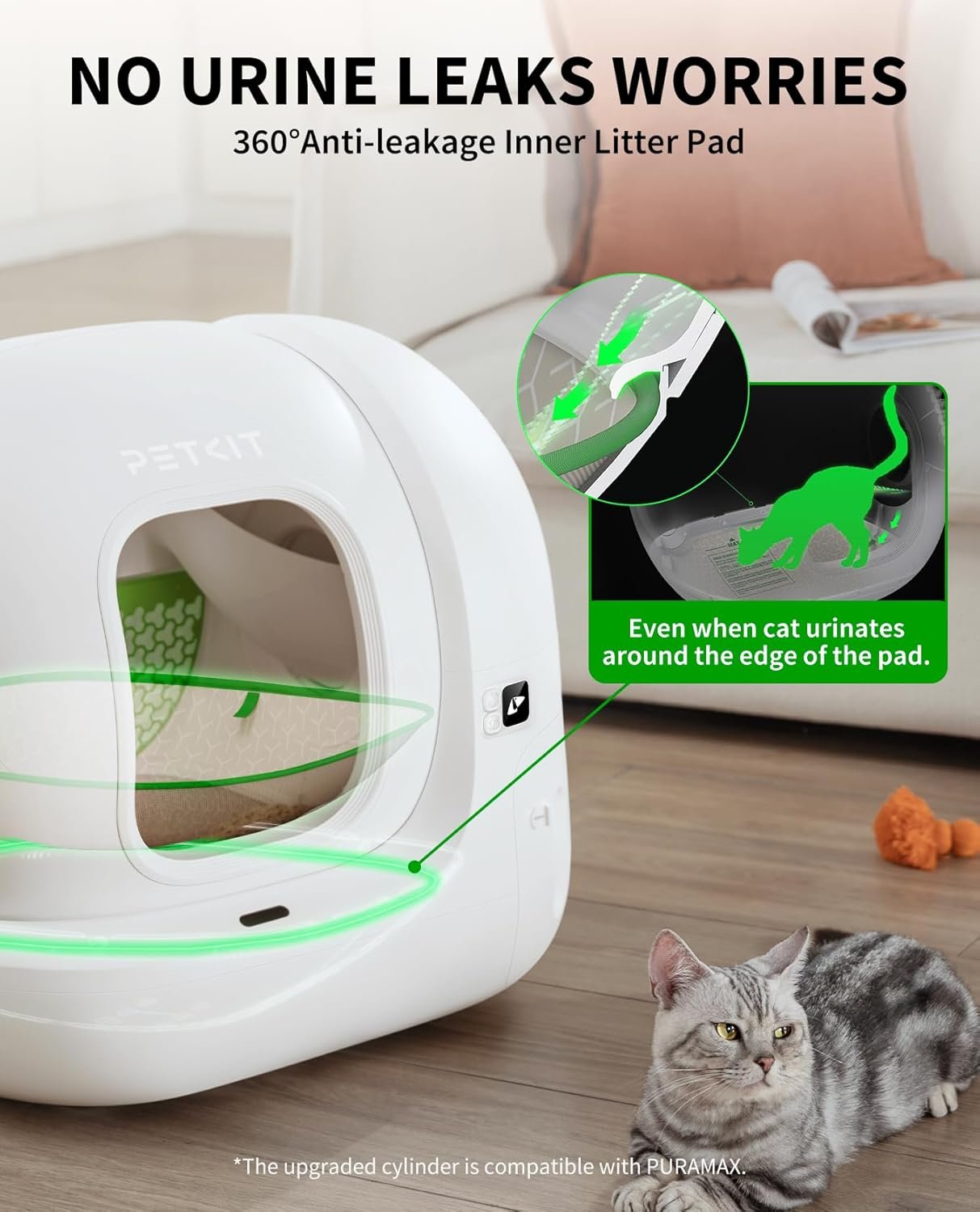
- x A minority report leaks – roughly 5% of owners describe base seepage, usually from overfilling litter or an uneven floor. I avoided it by keeping litter at the fill line.
- x App-gated features – some settings and all the tracking live in the app, so if you want a fully offline box this is not it.
Main strength: per-cat app tracking
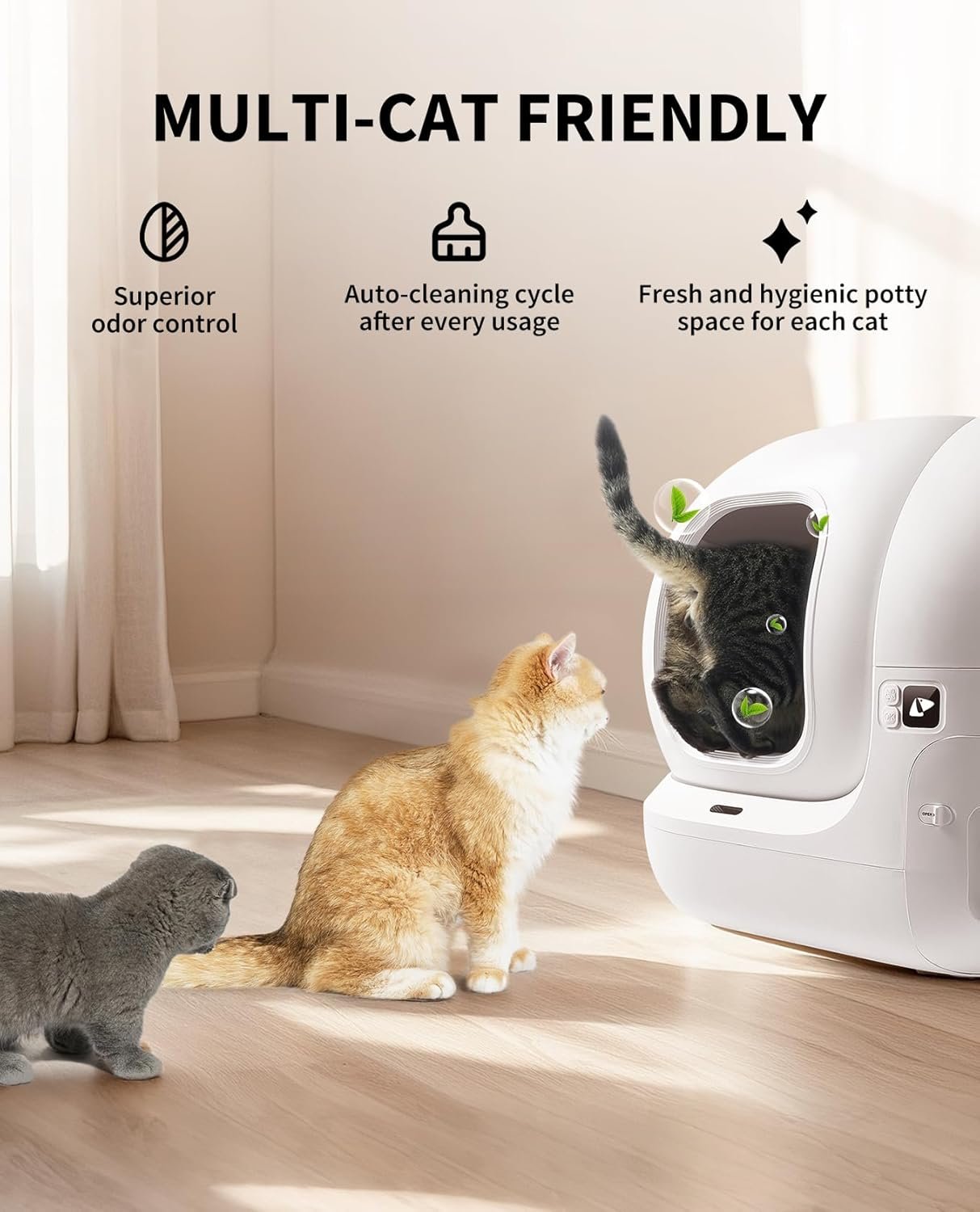
The reason the PuraMax 2 is my pick for app and health tracking is that it answers a question single-cat boxes cannot: which cat did what. In a multi-cat home, a litter box is a shared resource, and the AAHA/AAFP n+1 rule (one box per cat plus one spare) exists because cats guard and avoid boxes under stress. A self-cleaning box does not satisfy n+1 on its own – I still keep a second open tray in another room – but the PuraMax 2’s per-cat profiles let me see whether one cat is suddenly going more often or holding it.
After I assigned each cat a profile, the four weight sensors attributed visits correctly in the vast majority of cycles. Over three weeks the app showed me a clean baseline: visit frequency per cat, time spent per visit, and a weight trend line. That last metric is the one I care about most, because the AAHA weight monitoring guidance treats body-weight trend as a core feline health signal, and small steady losses are easy to miss by eye.
I want to be precise about what this does and does not do. The PuraMax 2 may help you notice a change – more frequent visits, a longer visit, a gradual weight drop – that is worth raising with your vet. It does not detect or diagnose disease. Cornell’s feline health center notes that shifts in litter habits often accompany house-soiling and underlying medical or behavioral causes, and the ASPCA’s guidance on litter box problems stresses that sudden avoidance warrants a vet visit, not a hardware fix. The app is a way to catch those changes earlier, not a substitute for a clinic.
For a two-to-three-cat home, that early-warning convenience is what justifies choosing the PuraMax 2 over a cheaper trackerless box. It is the difference between guessing which cat is off and having a timestamped record to show your vet.
How I tested the PuraMax 2
I ran the PuraMax 2 for three weeks in a closed second bathroom with two resident cats (an 11 lb female and a 14 lb male) plus an occasional foster, rotating it against the Litter-Robot 4 and Neakasa M1 Plus on the same litter and the same schedule. My test conditions and metrics:
Waste-bin reality check: I emptied and weighed the sealed drawer to confirm true capacity. With two cats and clumping litter, the roughly 7L bin reached its fill marker in 2-3 days – far short of what the 76L interior figure might lead a buyer to expect. This is the single most important spec to understand before purchase.
Per-cat accuracy: I cross-checked the app’s reported weights against a manual cat scale across 20 logged visits. The PuraMax 2’s weight readings tracked within roughly half a pound of my scale once each cat had a profile, which is tight enough to surface a real downward trend over weeks.
Leak watch: Given the ~5% leak reports, I deliberately ran it on a slightly uneven tile and at the marked litter line. I saw no seepage when litter stayed at the line; the reports I have read consistently trace back to overfilling or an unlevel base.
Setup difficulty: Assembly, leveling, and app pairing took about 25 minutes. The only fiddly step is creating profiles so the tracking separates cats correctly. Full methodology lives on our multi-cat litter box comparison.
How PETKIT compares to alternatives
Across the three boxes I tested, each wins a different buyer. Here is how the PuraMax 2 lines up:
- Whisker Litter-Robot 4 ($699): The Litter-Robot 4 has the better hardware – a full-globe sifting drum with no rake to jam and a noticeably larger sealed drawer, so it goes longer between empties with three cats. It also tracks per-cat weight. But it costs $400 more than the PuraMax 2, and independent reviews report sensor or motor issues in a meaningful minority of units over 18 months. If budget is no object and you want the most jam-proof mechanism, it wins; if you want the same tracking for less, the PuraMax 2 is the value play.
- Neakasa M1 Plus ($379): The M1 Plus is the pick for big or skittish cats because its open-top design has no enclosed globe and accepts cats up to about 33 lbs. Its 11.2L bin also outlasts the PuraMax 2’s roughly 7L drawer between empties. The trade-off is odor: an open top vents more smell than the PuraMax 2’s sealed ShieldBase, and some 2025 buyers flag sensor reliability dips. If cat acceptance is your bottleneck, choose the Neakasa; if odor control and tracking matter more, the PuraMax 2 edges it.
- A second open litter tray (any brand, ~$20): This is the alternative people forget. No self-cleaning box satisfies the AAHA/AAFP n+1 rule by itself. Whichever automatic box you buy, keep at least one plain open tray in a separate room – the ASPCA’s litter box guidance is clear that giving cats choice reduces avoidance and stress.
Frequently asked questions
+ How many cats can the PETKIT PuraMax 2 handle?
PETKIT rates it for cats from about 3.3 to 22 lbs and a rotation of 2-3 cats. Two cats shared it comfortably in my testing. Remember the AAHA/AAFP n+1 rule though: one self-cleaning box does not replace having one box per cat plus one spare, so keep an extra open tray in another room.
+ Is the PuraMax 2 really 76L of capacity?
No. The 76L figure is the total interior volume of the cylinder, not the waste bin. The sealed waste drawer holds roughly 7L of clumped litter, which with two cats means emptying every 2-3 days. This is the most misread spec on the box, so plan your emptying routine around 7L, not 76L.
+ Can the app diagnose my cat’s health?
No. The app tracks per-cat usage frequency, duration, and weight trends. It does not detect or diagnose disease. It may help you notice changes in litter habits or weight worth discussing with your vet, which Cornell and VCA note can be early signs of urinary or kidney problems. Treat it as an early-warning convenience, not a medical device.
+ Does the PETKIT PuraMax 2 leak?
Most units do not, but roughly 5% of owners report base seepage, usually tied to overfilling litter above the fill line or a base seated unevenly. I saw no leaks across three weeks when I kept litter at the marked level on a leveled base.
+ Is it hard to set up?
No. I had it assembled, leveled, and paired to the app in about 25 minutes. The main friction is creating a PETKIT account and assigning each cat a profile so weight tracking separates them correctly.
Final verdict
After three weeks of side-by-side testing, the PETKIT PuraMax 2 is the box I would recommend to a multi-cat owner who wants per-cat tracking without spending $700. The weight and usage data is accurate enough to surface a real trend, the cats accepted it immediately, and at $299.99 it is the value leader of the three. My one firm caveat: understand that you are emptying a roughly 7L bin every 2-3 days, not living off a 76L reservoir, and keep litter at the fill line to stay clear of the ~5% leak reports.
If you want the most jam-proof hardware and a bigger drawer, the pricier Litter-Robot 4 is worth the jump; if cat acceptance or a larger bin is your priority, the Neakasa M1 Plus or our full multi-cat litter box comparison will help. But for the buyer who specifically wants to watch each cat’s habits and weight, the PuraMax 2 is the smart, affordable choice.
Rating: 4.1/5 – Best for App and Health Tracking
As an Amazon Associate, I earn from qualifying purchases. – Maya Bennett


